
What "Home Essentials" Actually Means
The word "essential" gets stretched far beyond its meaning in home retail. Marketing routinely frames convenience items, seasonal décor, and gadgets as must-haves, which makes it harder for new householders to know where to actually start.
A genuine home essential is something that supports a basic daily function — sleeping, eating, hygiene, safety, or maintaining the space itself. That's a short list by design. Everything beyond it is either a quality-of-life upgrade or a personal preference, both of which are legitimate but shouldn't crowd out the fundamentals.
Before buying anything, it helps to separate items into three buckets: true necessities (you can't function safely or comfortably without them), strong conveniences (they prevent recurring friction), and nice-to-haves (they add comfort or style but can wait). This framing is the foundation for every smart purchasing decision that follows. For a detailed category-by-category breakdown, see this quick reference guide to standard household supply categories.
The Core Categories Every Household Needs
Rather than a room-by-room list, thinking in functional categories gives a clearer picture of what a home actually needs to operate:
- Sleep setup: A mattress appropriate for the sleeper's needs, bedding suited to local climate, and adequate window coverage for dark sleep.
- Food preparation: Basic cookware, a cutting surface, essential utensils, and reliable food storage. This doesn't require a fully outfitted kitchen — it requires the items used most days.
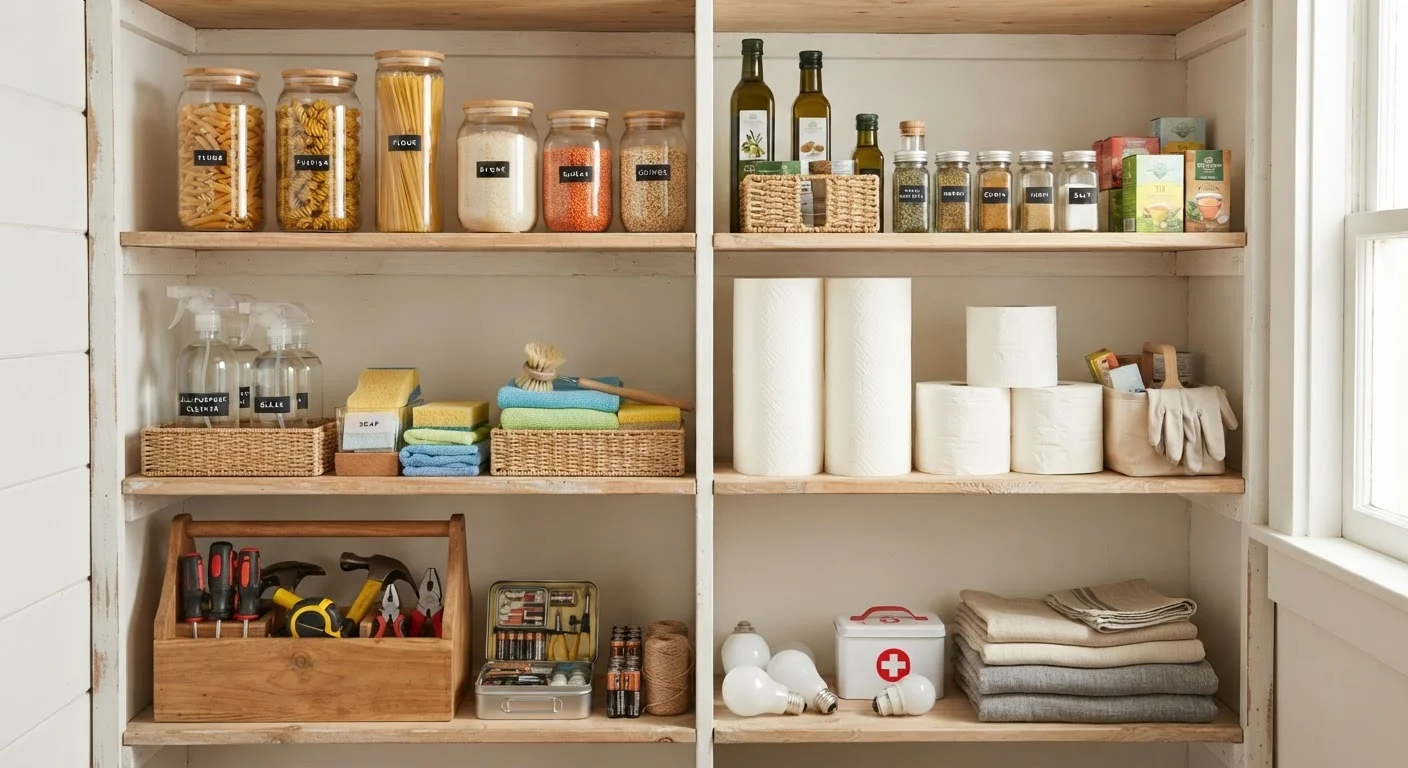
- Cleaning and maintenance: Mop, vacuum or broom, surface cleaners, and a basic toolkit for minor repairs. Deferred maintenance compounds quickly.
- Hygiene and bathroom: Towels, a shower curtain if applicable, and bathroom storage to keep the space functional.
- Safety basics: Working smoke detectors, a carbon monoxide detector if the home uses gas or has an attached garage, and a basic first-aid kit.
- Light and temperature: Adequate lighting in every occupied room and either heating or cooling appropriate to the climate.
For a room-by-room walkthrough of these categories in action, the room-by-room home essentials checklist is a practical companion resource.
When equipping a kitchen from scratch, focus first on three items used in nearly every meal: a 10-inch skillet, a medium saucepan, and a chef's knife. These three cover the vast majority of everyday cooking before anything else is needed.
New households frequently over-invest in specialty cookware they use rarely while underinvesting in the few pieces that do daily work. Concentrating initial spending on high-frequency items prevents this common imbalance.
Install smoke and carbon monoxide detectors on move-in day — before furniture, before unpacking. Test them immediately and note the battery replacement date in your calendar.
Safety equipment is the one category where deferral carries genuine risk. Most local codes require working detectors, and the cost of compliance is minimal compared to the function they serve.
How to Prioritize When Budget Is Limited
When money is tight, sequence matters more than completeness. Trying to furnish and equip an entire home at once almost always leads to poor decisions — rushed purchases, impulse buys, and items that don't fit the space or the household's actual habits.
A practical approach: cover safety and sleep first (non-negotiables), then food preparation, then cleaning. Seating, storage, and décor can follow as funds allow. This order reflects what creates daily discomfort or risk most quickly if absent.
Furnishing a home on a tight budget requires a different mindset than shopping without constraints — our dedicated guide covers the planning process in detail before you spend a dollar.
One underused strategy: identify which items you'll use daily versus occasionally, then weight spending accordingly. A daily-use item that costs more but lasts ten years may represent better value than a cheaper version replaced every two.
How Needs Evolve Over Time
A household's essential needs at move-in are rarely the same two or three years later. Life changes — household size, work arrangements, health considerations, cooking habits — all shift what's genuinely necessary versus what made sense at the start.
Common inflection points include: adding a household member (which may change sleep, storage, and kitchen needs), working from home (creating a legitimate need for a dedicated workspace), or a health change (which might affect everything from mattress type to bathroom setup).
It's worth doing a periodic review — roughly annually — to identify items that are worn out, no longer used, or missing. This isn't about buying more; it's about keeping the household functional without accumulating clutter. The case for restraint is practical: owning fewer, better-chosen things tends to produce a more efficient, easier-to-maintain home.
Avoiding Common Pitfalls
Several patterns consistently lead households to spend more than they need to or to end up with items that don't serve them well:
- Buying for an imagined lifestyle: Kitchen equipment for elaborate cooking you don't do, or furniture suited to a larger space than you have.
- Underestimating replacement cycles: Some items — like mattresses, pillows, and cleaning tools — degrade in ways that aren't always obvious but affect daily function. Knowing roughly when categories need replacing prevents both premature replacement and excessive wear.
- Conflating marketing claims with genuine need: A substantial amount of what's positioned as essential is optional. Common myths about what every home needs separates well-established household wisdom from assumptions shaped by advertising.
- Ignoring tech and security implications: As smart home devices become more common household purchases, they introduce considerations beyond function. Smart home security habits are worth building early, before the number of connected devices grows.
Building a Long-Term Home Setup
The goal isn't a perfectly stocked home from day one — it's a home that works well and gets incrementally better over time. That means making deliberate choices about where to invest more and where spending more adds little real value.
Some categories consistently reward a higher initial investment: mattresses, cookware used daily, and tools that take heavy use. Others — decorative items, seldom-used specialty appliances — rarely justify premium pricing. The guide to household items that tend to last a decade or more offers research-grounded guidance on where durability tracks with cost.
As your home matures, technology can play a useful supporting role. Smart lighting systems, for example, can reduce energy use and add meaningful convenience — but work best when introduced after core household needs are already stable.
The clearest measure of a well-set-up home isn't how much it contains, but how rarely daily life is interrupted by something missing, broken, or inadequate. That's the standard worth building toward.
This article is for general informational purposes only. Costs, product availability, and household needs vary widely. Always verify local safety requirements — such as smoke detector regulations — with the relevant authorities in your area.