

Why a Weekly Meal Plan Makes a Real Difference
Walking into a grocery store without a plan is one of the most reliable ways to overspend and under-nourish. Research consistently links meal planning with healthier dietary patterns, reduced food waste, and lower household food costs. For budget-conscious households, a structured weekly routine can help close the gap between good intentions and what actually ends up on the table.
This checklist walks you through the full planning cycle — from auditing your pantry to prepping ingredients — so you have a repeatable system you can adapt to your family's needs and your weekly budget. If you're also working to understand where your money goes more broadly, our spending audit guide offers a useful complement to this process.
Use the checklist below as a working reference. You don't need to complete every item perfectly — the goal is progress, not perfection.
Pantry & Inventory Review
Meal Planning
Grocery List & Shopping
Batch Prep & Storage
End-of-Week Review
Tools and Resources to Support Your Planning
You don't need specialized equipment to meal plan effectively, but a few basic tools make the process considerably smoother. If you're setting up or streamlining your kitchen, our guide to a functional kitchen without overbuying can help you prioritize what's genuinely useful.
Meal planning notebook or printable template
Provides a structured space to map out the week's meals, track inventory, and write shopping lists by hand.
Reusable produce bags and clear storage containers
Keep prepped vegetables and batch-cooked ingredients organized and visible in the fridge, reducing waste.
Kitchen scale
Helps portion batch-cooked proteins and grains accurately to stretch ingredients across multiple meals.
Grocery store app or weekly circular
Lets you check current sales on produce and proteins before finalizing your shopping list.
Digital meal planning app
Automates shopping list creation and stores recurring meal plans for quick reuse week to week.
Avoid Over-Planning on the First Try
Scheduling elaborate meals for every night of the week can lead to burnout and wasted groceries when life gets in the way. Start with planning three to four dinners and build from there as the habit develops. Flexibility is a feature, not a flaw — a good meal plan bends without breaking.
Building Nutritional Balance Into Your Plan
A balanced weekly plan doesn't require precise calorie counting or complicated dietary formulas. At its core, it means ensuring most meals include a protein source, a variety of vegetables, and a complex carbohydrate — with room for flexibility and enjoyment. Eating patterns matter more than any single meal.
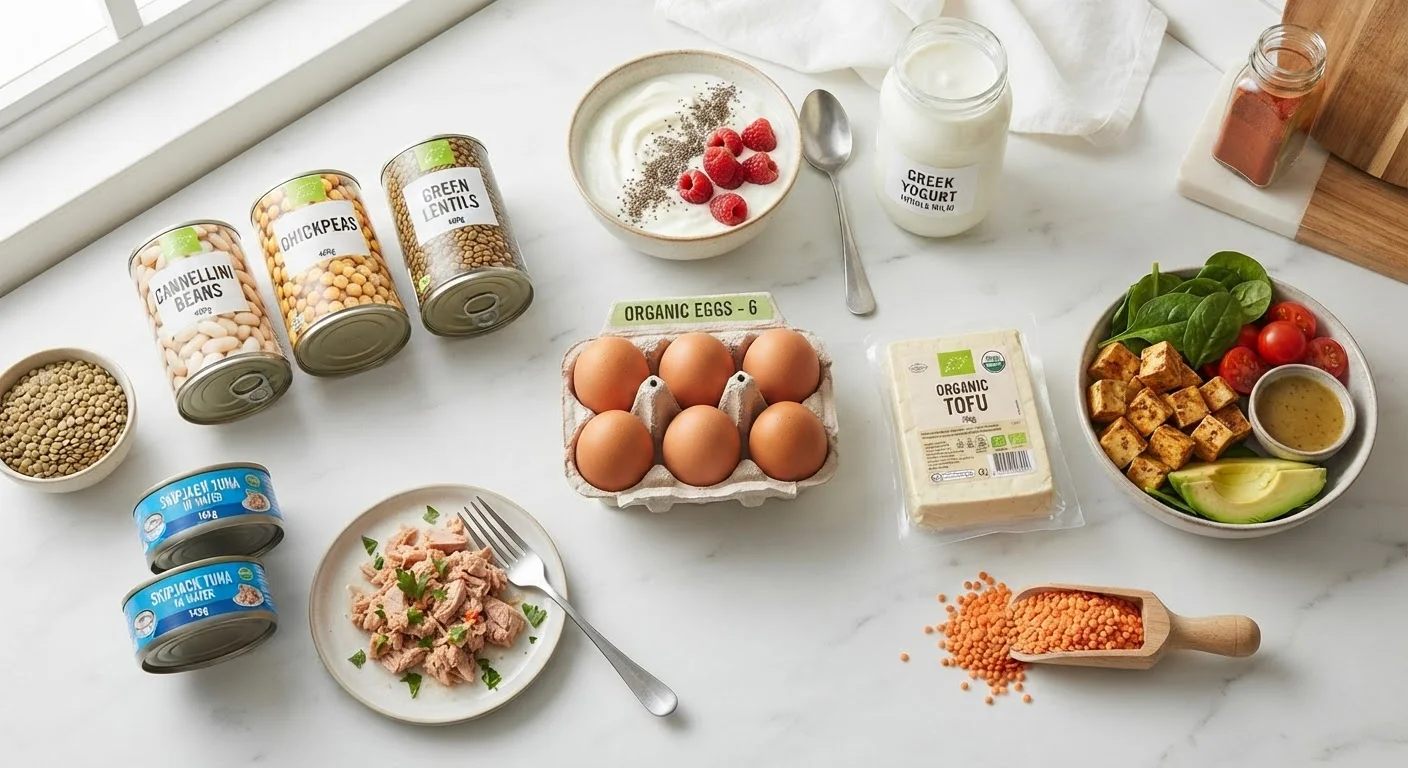
Protein is often the most expensive part of a grocery budget, but it doesn't have to be. Eggs, canned fish, lentils, beans, and tofu are all nutrient-dense options at a fraction of the cost of most cuts of meat. For a closer look at affordable options, see our guide to affordable high-protein foods.
Seasonal produce tends to be cheaper and fresher than out-of-season alternatives. Frozen vegetables are nutritionally comparable to fresh and offer significant cost savings with no prep waste. Building several meals around overlapping ingredients — for example, roasting a large tray of vegetables that works across multiple dishes — is one of the most effective ways to stretch both your budget and your cooking time.
Meal planning also has a quieter benefit: reducing the daily mental load of deciding what to eat. That kind of decision fatigue is real. Pairing a weekly meal plan with a weekly mental wellness check-in can help you stay grounded across both physical and emotional dimensions of health.
This article is for general informational and educational purposes only. It is not a substitute for personalized advice from a registered dietitian or qualified healthcare professional. Individual nutritional needs vary; consult a professional for guidance tailored to your health circumstances.