
Why Most Furniture Budgets Fall Short
Most people set a furniture budget based on a rough number in their head — and then blow past it within the first purchase. The reason is almost never reckless spending; it's incomplete planning. A budget that only accounts for sticker prices ignores the real cost of furnishing a home.
Before committing any money, it helps to run through a structured financial checklist. Our room-by-room financial checklist walks through affordability, timing, and necessity — the same questions that apply to any major household purchase. Start there if you haven't already.
A smart furniture budget accounts for four things: the pieces themselves, the costs surrounding their purchase, the space they need to fit, and the timeline over which you'll buy them. Skip any one of these and the budget breaks down.
Write It Down Before You Shop
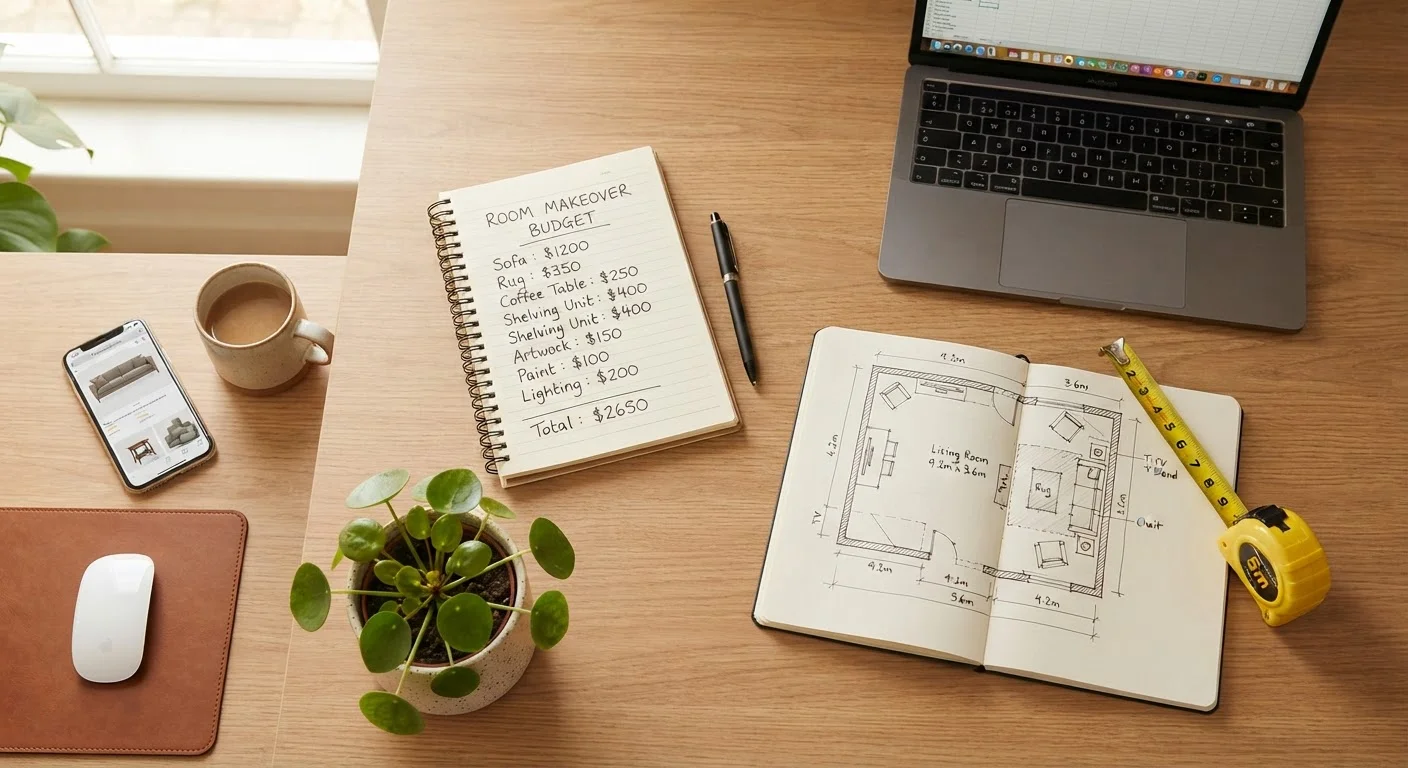
A written budget — even a simple spreadsheet with item names, estimated costs, and a 15% buffer column — is significantly more effective than a mental number. It creates a reference point you can return to before each purchase, which reduces impulse decisions and scope creep.
Start with Space, Not Style
The single most common budget mistake is buying furniture you love that doesn't fit your room — then discovering it on delivery day. Returns, restocking fees, and replacement purchases can cost hundreds of dollars that a tape measure would have prevented.
Before browsing anything, measure every room you plan to furnish. Note doorway widths and stairwell clearances, not just floor area. These dimensions determine which pieces are even physically possible, which narrows your options and protects your budget from impulse decisions. Our guide on how furniture dimensions affect small-space living explains exactly how scale and proportion work in tighter rooms.
Once you have measurements, create a simple priority list: what does each room absolutely need to function? A bedroom needs a bed. A dining room needs a table and chairs. Everything else is secondary. Anchor your budget to necessities first.
15–20%
Extra cost beyond furniture sticker price
Delivery, assembly, and disposal fees routinely add this percentage to total furniture expenditures, according to consumer home-goods research.
1 in 3
Shoppers who exceed their furniture budget
Industry consumer surveys consistently find that a significant share of furniture buyers spend more than planned, often due to unanticipated add-on costs.
4–15 years
Lifespan range: particleboard vs. solid wood
Material durability varies widely; particleboard pieces typically last 4–7 years under normal use, while solid wood can last 15 or more.
The Hidden Costs That Blow Budgets
The sticker price is just the beginning. Furniture purchases routinely carry additional costs that shoppers don't anticipate:
- Delivery fees: White-glove delivery — where the item is brought inside and placed in a room — often costs $50–$200 or more depending on the retailer and your location. Curbside delivery is cheaper but requires you to haul pieces inside yourself.
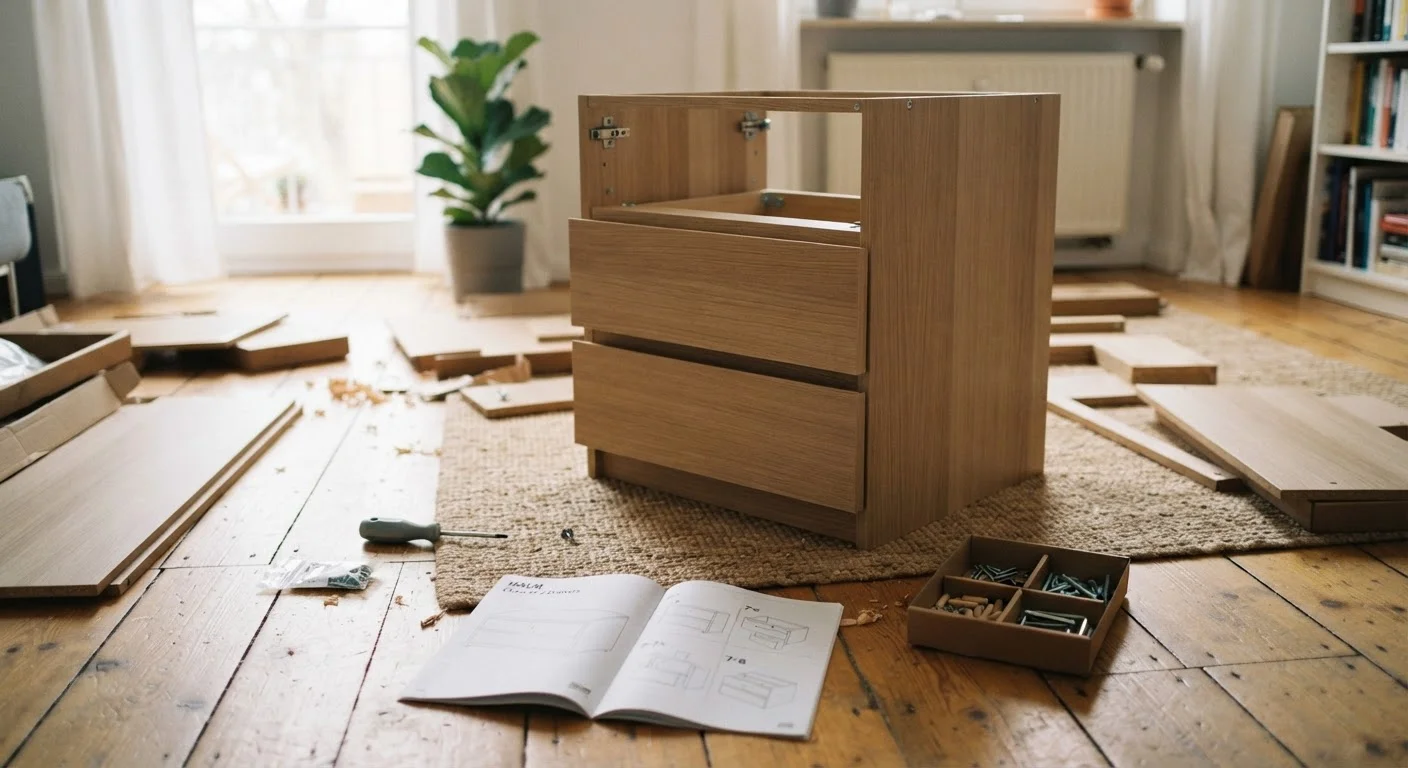
- Assembly charges: Some retailers charge separately for in-home assembly. If you're buying flat-pack furniture, understand that assembly errors can damage pieces beyond return eligibility. See our guide on why flat-pack furniture fails and how to assemble it before tackling this yourself.
- Old furniture disposal: Hauling away your old sofa or mattress may cost $50–$150 through a junk removal service or retailer take-back program.
- Protective products: Furniture pads, felt glides, mattress protectors, and fabric treatments are small individual costs that add up across a full room.
- Return shipping or restocking fees: These can run 10–20% of the item price if you need to send something back.
Budget an additional 15% above your item total to cover these incidental costs — it's rarely wasted.
How Material Choice Affects Total Cost
Not all furniture is built to last the same number of years, and that directly affects its true cost. A particleboard dresser at $150 that lasts four years costs more per year than a solid wood dresser at $350 that lasts fifteen. Understanding material trade-offs is central to smart budgeting.
Our breakdown of solid wood, engineered wood, and particleboard covers what each material actually delivers at different price points. The short version: engineered wood (plywood, MDF) often hits the best middle ground for budget shoppers — more durable than particleboard but far less expensive than solid wood.
When budgeting, consider the use intensity of each piece. High-traffic items like sofas, dining chairs, and bed frames warrant a higher per-item budget because they absorb more wear. Low-use items like a guest room nightstand can reasonably be lower-cost.
Phasing Purchases Over Time
Trying to furnish every room at once is one of the fastest ways to overspend. A phased approach — buying what you genuinely need first and adding over time — keeps spending controlled and allows you to reconsider decisions before they're made.
A practical phasing structure for a new home or apartment might look like this:
- Month 1–2: Bedroom (bed, mattress), kitchen table and chairs — the essentials for daily function.
- Month 3–4: Living room seating and storage.
- Month 5–6: Secondary pieces — rugs, shelving, accent furniture.
This approach also gives you time to live in a space before committing to furniture that might not suit how you actually use the room. Many people discover that a smaller sofa or a different table configuration works better once they've experienced the space firsthand.
For a broader framework on household spending, the Smart Spending hub offers practical strategies for stretching every dollar across home purchases.
New vs. Secondhand: Budget Implications
Secondhand furniture can dramatically reduce your total spend, but it introduces its own costs and risks that belong in your budget calculation. Transportation (renting a truck or hiring movers), cleaning supplies, and potential repairs can offset some of the savings.
The secondhand vs. brand-new furniture trade-offs guide offers a detailed comparison. For upholstered pieces in particular, inspection is critical — our sofa inspection checklist covers what to look for before committing to any used piece.
As a general rule, secondhand works best for solid-wood case goods (dressers, bookshelves, dining tables) that can be evaluated structurally on the spot and cleaned easily. It carries more risk with upholstered pieces, mattresses, and anything with complex mechanisms.
Building Your Final Furniture Budget
Pull everything together using this framework:
- Step 1 — List every room and every needed piece.
- Use your room measurements and priority list to define scope. Don't include wants — only functional needs for now.
- Step 2 — Research realistic price ranges for each item.
- Use current retail listings to get ballpark figures. Note the low and mid-range prices; avoid anchoring on the lowest number you can find.
- Step 3 — Add 15% for hidden costs.
- Apply this buffer to your total item cost, not per piece.
- Step 4 — Assign a phase to each purchase.
- Determine what must happen in month one and what can wait. This converts a daunting total into manageable monthly targets.
- Step 5 — Build in a decision checkpoint.
- Before each purchase, ask whether the item still fits the plan and the room. Revisit the Home Improvement hub for context on upgrades that affect furniture planning.
A furniture budget isn't just a spending cap — it's a decision-making tool. The more complete it is upfront, the less likely you are to find yourself scrambling mid-project or settling for pieces that don't serve you well long-term.