
What Multifunctional Furniture Actually Means
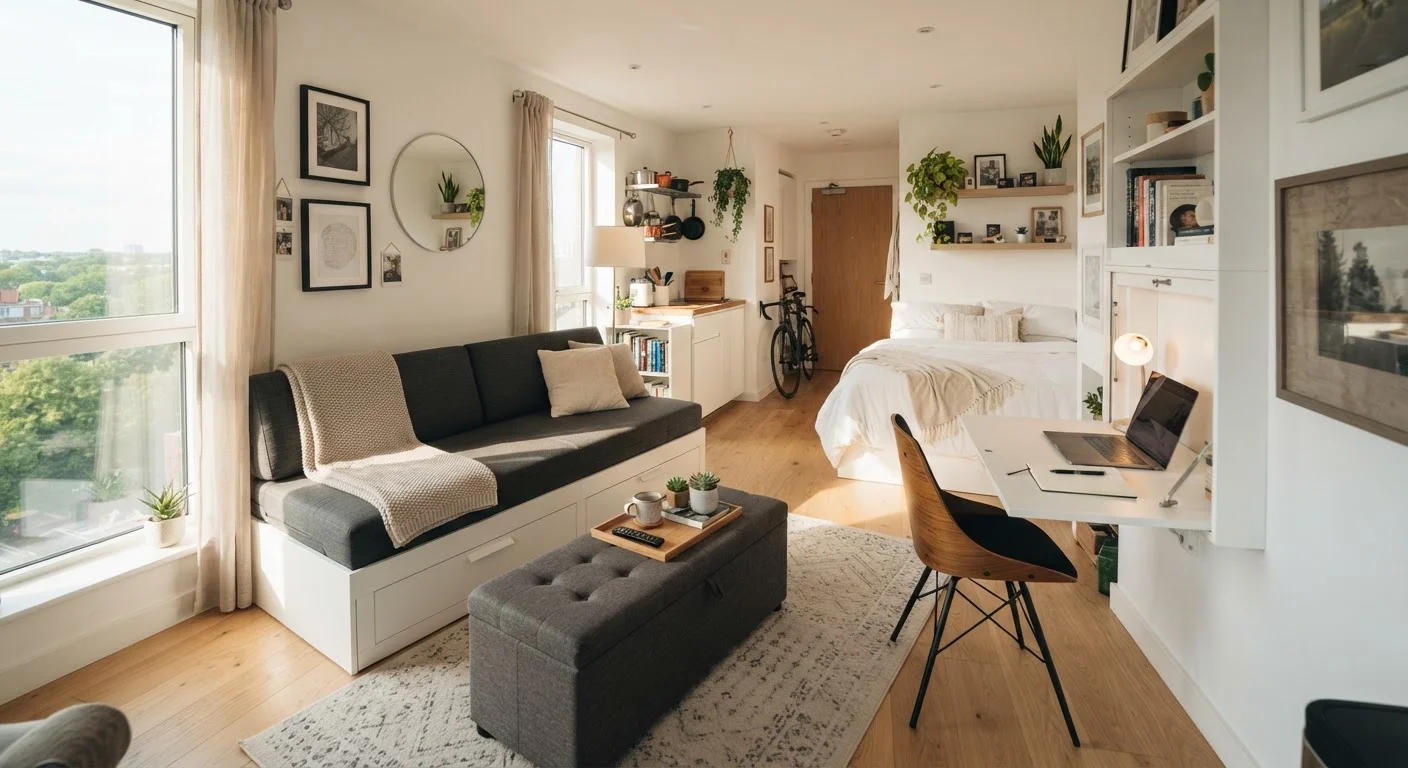
Multifunctional furniture refers to any piece designed to serve more than one distinct purpose — a sofa that folds into a bed, a dining table that expands or collapses, a storage ottoman that doubles as a coffee table, or a bed frame with built-in drawers. The category spans everything from simple storage benches to wall-mounted murphy beds with attached desks.
The appeal is straightforward: in a 400-square-foot apartment, a piece that handles two jobs means one less item you need to find room for. Before diving into specifics, it helps to think about your actual daily routines. Knowing your priorities before you start buying prevents you from purchasing a convertible piece that looks clever but never gets used in its secondary function.
The Real Advantages
When the match between piece and lifestyle is right, multifunctional furniture delivers measurable benefits beyond just saving space.
Reduces total furniture count in small spaces
One piece replacing two or three reduces both purchase cost and the number of items competing for floor space, which is particularly valuable in studios and one-bedroom apartments.
Can lower overall furnishing spend
When a single piece genuinely replaces multiple purchases, the net cost may be lower than buying each item separately — though this depends heavily on piece quality and price.
Improves room flexibility and layout options
A fold-down desk or a sofa bed allows a room to serve different functions at different times of day, which matters when square footage is fixed but daily needs vary.
Reduces visual clutter in tight quarters
Fewer pieces in a small room creates a less crowded feel, which has a tangible effect on how livable and spacious the space feels day to day.
Built-in storage addresses a common pain point
Pieces with integrated storage — beds with drawers, ottomans with lids — solve a practical problem without requiring additional furniture like dressers or shelving units.
~37%
Share of U.S. renters living alone
U.S. Census Bureau data shows a significant portion of renters occupy units solo, making space efficiency a priority for a large segment of the furniture market.
500–600 sq ft
Typical studio apartment size range
According to commonly cited real estate surveys, the average U.S. studio apartment falls in this range, leaving little margin for redundant or oversized furniture.
For those furnishing room by room on a phased budget, the math can genuinely work out. A storage bed, for instance, replaces a standard bed frame and a separate dresser or under-bed storage bins. That's one purchase instead of two or three. See our guide to phasing furniture spending across multiple rooms for a framework on prioritizing what to buy first.
The Real Drawbacks
Multifunctional furniture involves real trade-offs that marketing images tend to gloss over. Understanding them upfront saves frustration later.
Mechanisms add failure points over time
Any piece with hinges, sliders, or fold-out components introduces mechanical complexity that can wear or break, especially under daily use. Lower-cost versions are particularly vulnerable.
Comfort is often compromised in conversion mode
A sofa bed is rarely as comfortable as a dedicated mattress, and a folding chair rarely matches a purpose-built dining chair. Frequent users of the secondary function tend to notice this quickly.
Higher upfront cost than basic single-purpose pieces
Well-made multifunctional furniture typically costs more than an equivalent single-purpose item, meaning the value equation only works if you consistently use both functions.
Conversion can be time-consuming or awkward
Some transformations require clearing surrounding space, removing cushions, or significant physical effort — a routine inconvenience if the function is needed daily.
Harder to replace one function independently
If the piece wears out or no longer meets your needs in one of its roles, you can't simply replace that part — the entire piece needs replacing, which can negate earlier savings.
The mechanism question is especially important. A sleeper sofa that's pulled out every night faces far more mechanical stress than one used occasionally for guests. If you're relying on a conversion function daily, inspect the hardware quality closely — or read detailed user reviews focused specifically on long-term durability, not just appearance. Our look at flat-pack assembly pitfalls is also worth reviewing if the piece ships unassembled, since improper assembly accelerates wear on moving parts.
What to Evaluate Before You Buy
Measure Twice, Buy Once
Before purchasing any multifunctional piece, measure your space in both its everyday configuration and its converted state. A murphy bed, for example, needs several feet of clearance in front when lowered. A sofa bed requires open floor space behind the coffee table to unfold fully. Skipping this step is one of the most common and costly mistakes in small-space furnishing.
A few practical questions narrow the field quickly:
- How often will you use the secondary function? If the answer is rarely, a standard single-purpose piece may serve you better and last longer.
- Does it fit your actual dimensions? Measure the space in both configurations — a sofa that unfolds into a bed needs clearance in front as well as to the sides.
- What's the weight rating and mechanism warranty? Higher-use pieces should have documented load limits and ideally a warranty on moving parts.
- Is the primary function comfortable? A sofa you sit on every day should feel good as a sofa first. Its conversion ability is a bonus, not a replacement for comfort.
For anyone furnishing an entire small space, the room-by-room priorities guide for first-time renters helps identify which rooms benefit most from multifunctional pieces and which don't need them. Similarly, the principle applies beyond furniture — the multi-use vs. single-purpose tool debate follows the same logic across household items.
Where Multifunctional Pieces Tend to Pay Off Most
Some categories consistently deliver better value than others:
- Storage ottomans
- Low mechanical complexity, minimal comfort compromise. One of the safest multifunctional purchases across most budgets.
- Extendable dining tables
- Practical in small kitchens or dining areas — compact daily, expandable when needed. Look for solid leg support in the extended position.
- Storage beds and bed frames with drawers
- Strong value in bedrooms that lack closet space. No moving mechanisms to fail; the storage is simply built in.
- Fold-down wall desks
- Useful in homes without a dedicated office. Works best when mounted into wall studs rather than drywall anchors alone.
Living smaller overall tends to reinforce the value of each of these categories. If you're interested in the broader case for owning fewer but better-chosen things, this practical look at owning fewer things connects the same thinking to everyday home management.