
Why Flat-Pack Assembly Goes Wrong
Flat-pack furniture has made it possible to furnish a home on a modest budget — but only if the pieces actually hold together. The frustrating reality is that most failures aren't caused by poor materials alone. They stem from avoidable assembly errors that compromise structural integrity from the first day of use.
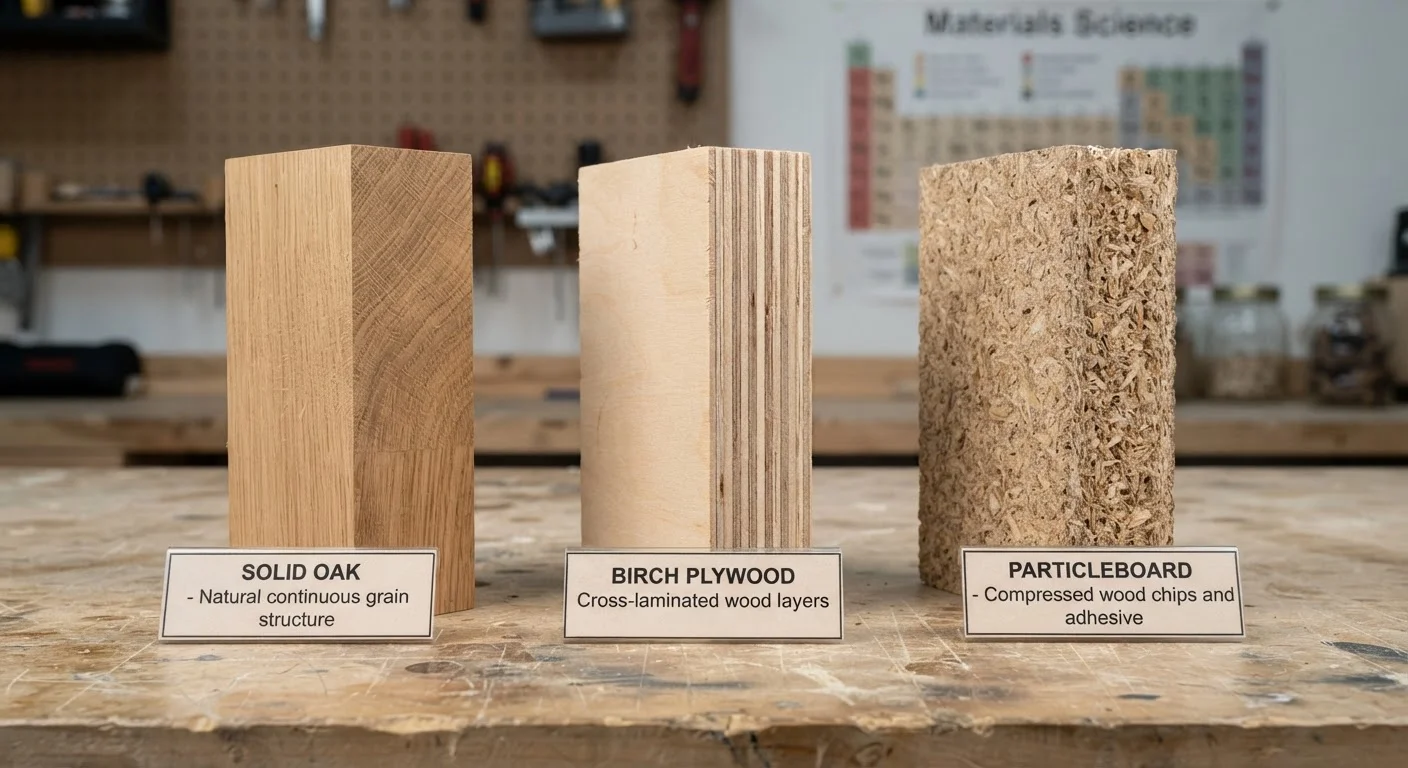
Understanding how particleboard and engineered wood behave is essential context here. These materials don't recover from mistakes the way solid wood does. A stripped cam lock or a cracked dowel hole is permanent. That means assembly is a one-shot process where careful technique pays real dividends.
The mistakes below are the ones that most reliably shorten the life of an otherwise functional piece — and each one is preventable.
Skipping the parts inventory before starting assembly.
Why it happens: Eager to make progress, most people open the box and start building immediately without checking what's inside against the parts list.
Over-tightening fasteners into particleboard or MDF panels.
Why it happens: The instinct is to tighten until things feel solid, but particleboard doesn't grip the way solid wood does — it compresses and crumbles around the fastener if torque is applied beyond the material's limit.
Assembling components in the wrong order.
Why it happens: Instructions are often poorly illustrated, and it's tempting to interpret steps loosely or combine them to save time.
Leaving the back panel unattached or only loosely fitted.
Why it happens: The back panel on shelves and cabinets is thin and sometimes feels like a cosmetic afterthought rather than a structural element.
Assembling on an uneven or cluttered surface.
Why it happens: Assembly is often done wherever the box lands — a carpeted living room with obstacles, or a garage floor with slight dips.
Forcing misaligned dowels or cam lock receivers.
Why it happens: When a joint doesn't align immediately, the natural response is to apply more force rather than back up and re-examine the fit.
Getting Assembly Right From the Start
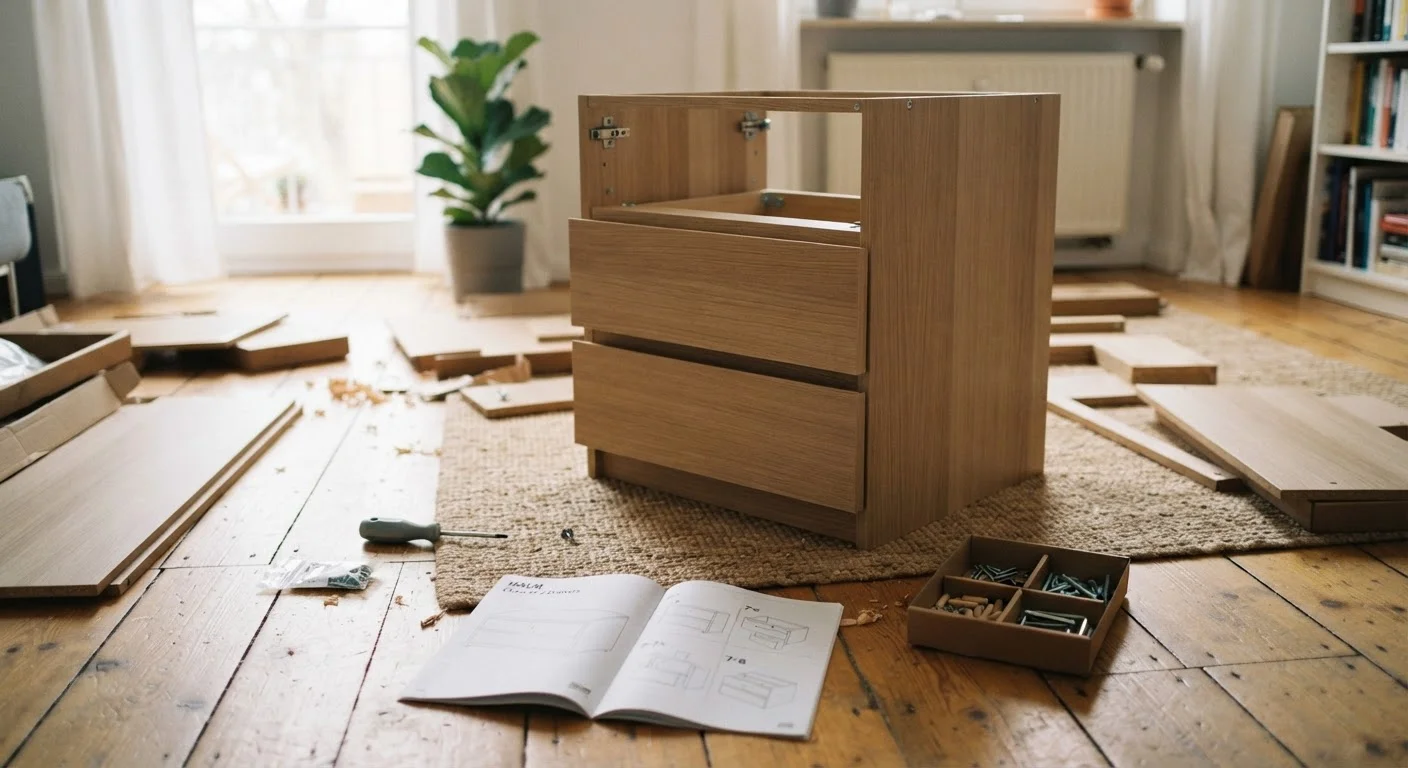
Good flat-pack assembly isn't about speed — it's about sequence and patience. Before turning a single cam lock, clear enough floor space to lay all panels flat without stacking them. Tight spaces force improvised positioning, which leads to misaligned joints and cross-threaded fasteners.
Never Use a Power Drill Without a Torque Clutch
Using an uncalibrated power drill to drive cam bolts or screws into particleboard is one of the fastest ways to destroy a piece before it's even finished. Particleboard has very low resistance to overtorque — the material surrounding a fastener can crumble in seconds. Always set your drill's torque clutch conservatively, and finish tightening by hand. When in doubt, use a manual screwdriver for the final turns on all fasteners.
Work on a soft surface like carpet or a moving blanket to protect panel faces and prevent sliding. Keep fasteners sorted by type in small bowls or sections of an egg carton — confusing a short screw for a long one mid-assembly is a surprisingly common source of damage.
Once the piece is assembled, don't immediately load it with weight. Give cam locks and glued joints time to seat fully. If the instructions include a diagram showing the back panel installation, treat that step as load-bearing, not cosmetic — an unattached or loosely fitted back panel is the single biggest contributor to wobble and eventual joint failure in shelving and cabinetry.
For ongoing care after assembly, simple maintenance habits make a meaningful difference. See our guide to extending the life of affordable furniture for practical steps. And if you're still in the planning phase, furnishing a home on a tight budget covers how to prioritize purchases so assembly mistakes on one piece don't set back your whole plan.