
The Three Materials Hiding Behind the Word 'Wood'
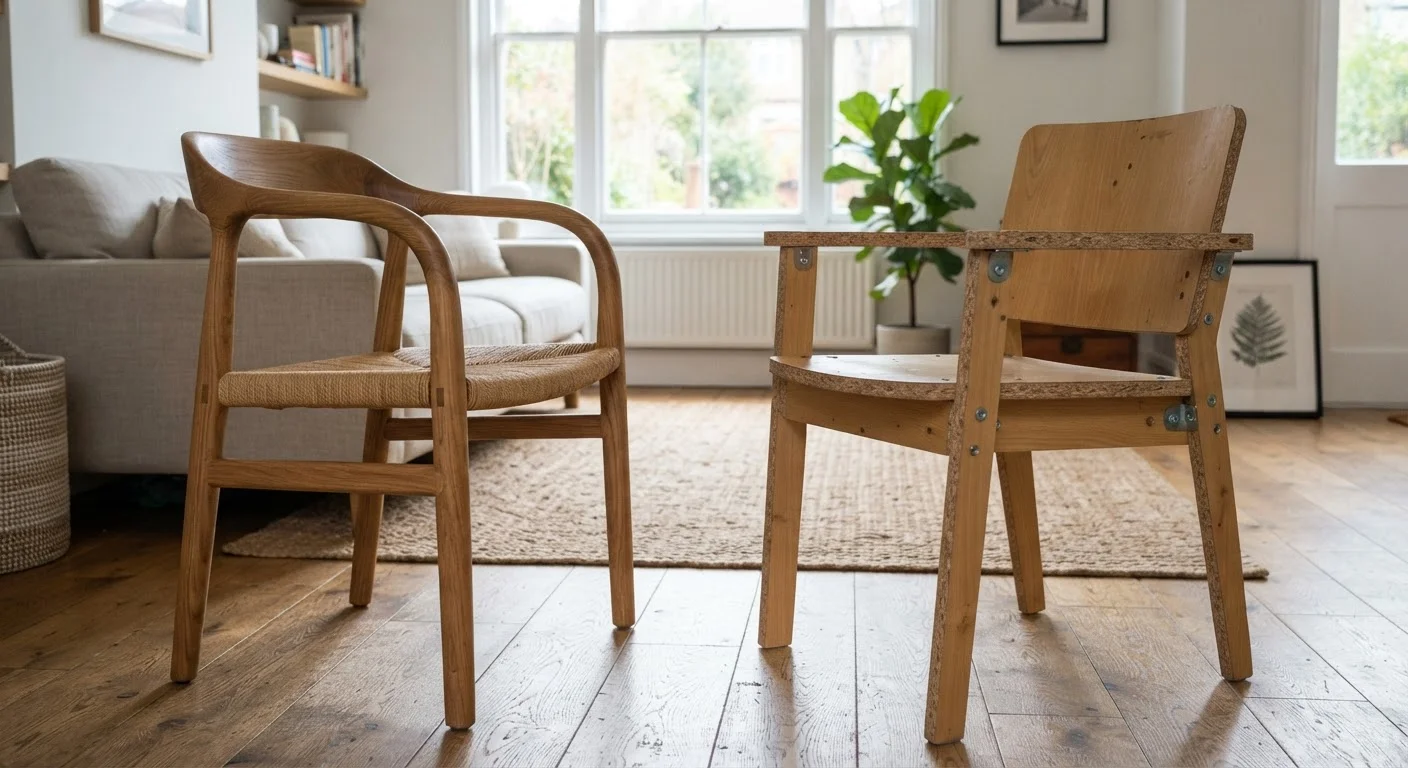
Walk through any furniture store or scroll any product listing and you'll see the word "wood" used loosely. It may mean lumber cut directly from a tree, or it may mean compressed wood scraps held together with glue. These materials perform very differently in real homes, but they can look nearly identical on the surface.
Understanding the difference isn't about chasing the most expensive option — it's about matching the right material to the job. If you're furnishing a home on a tight budget, knowing which corners are worth cutting can save you money without leaving you with furniture that falls apart in two years.
Here's what each material actually means and what it delivers.
Solid Wood: Built to Last, Priced to Match
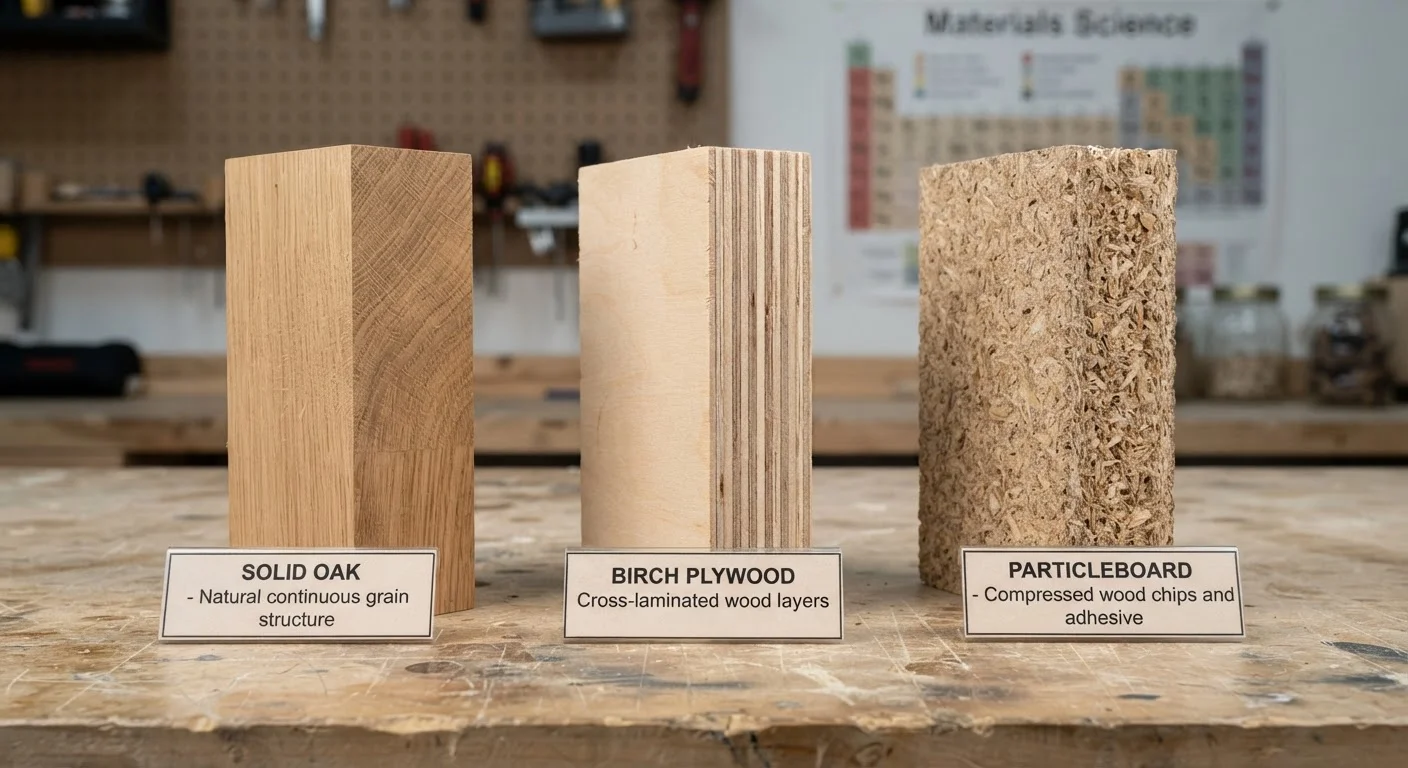
Solid wood is milled directly from timber — oak, pine, maple, walnut, and similar species. It's the most structurally sound option for furniture that takes a beating: dining tables, bed frames, bookshelves under heavy load. Properly cared for, solid wood furniture can last decades and be refinished or repaired when it shows wear.
The tradeoffs are cost and sensitivity to environment. Solid wood expands and contracts with humidity changes, which can cause cracking or warping in extremely dry or damp spaces. Hardwoods like oak and maple are more resistant to denting than softwoods like pine, which matters for high-use surfaces.
Check the Species, Not Just the Category
When a listing says "solid wood," that covers a wide range of quality and durability. Pine and rubberwood are genuinely solid but softer and more prone to denting than hardwoods like oak, maple, or ash. If longevity matters, look for the specific wood species named in the product details — not just the material category.
Price varies significantly by wood species. Furniture described simply as "solid wood" may use pine or rubberwood — functional but softer than hardwoods. The species name in the product listing tells you more than the material category alone.
Engineered Wood: The Practical Middle Ground
Engineered wood is made by bonding wood layers, fibers, or veneers with adhesive under pressure. The two most common types in furniture are plywood and medium-density fiberboard (MDF).
- Plywood is made from thin wood layers glued with alternating grain directions, which gives it excellent strength and screw-holding ability. It resists warping better than solid wood in high-humidity rooms.
- MDF is made from fine wood fibers pressed into dense, smooth panels. It takes paint exceptionally well and has a uniform surface, but it's heavier than plywood and doesn't hold screws as reliably at edges.
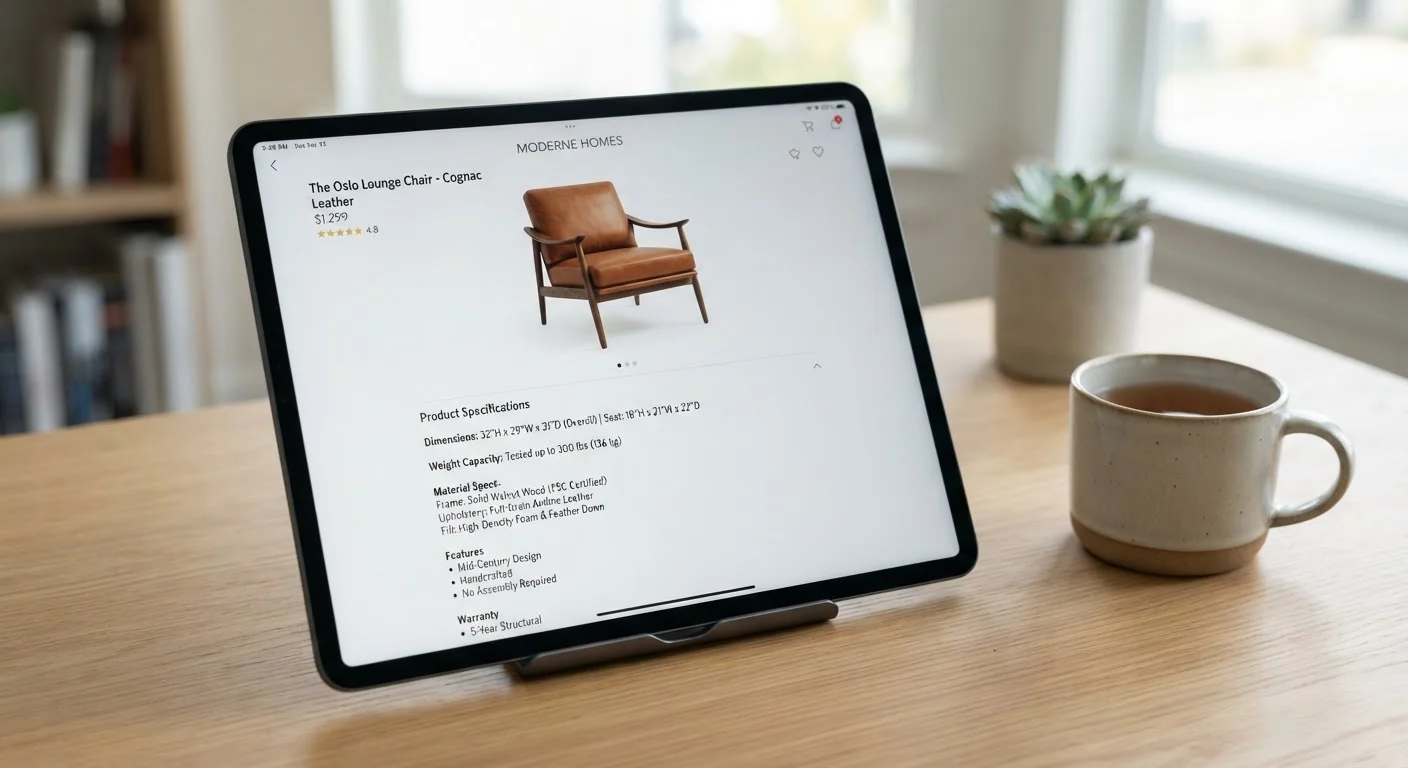
Engineered wood is widely used in mid-range furniture — often with a wood veneer or paint finish on top that makes it indistinguishable from solid wood at a glance. For pieces like TV stands, nightstands, or shelving units, it's often the most sensible choice. Learning to read a furniture listing's material specs helps you know exactly what you're getting before you buy.
~65%
Share of flat-pack furniture using particleboard or fiberboard
Industry estimates suggest the majority of ready-to-assemble furniture sold in the U.S. is built primarily from particleboard or MDF rather than solid wood.
2–5x
Typical price premium of solid hardwood over particleboard equivalents
Comparable furniture pieces in solid hardwood commonly cost two to five times as much as particleboard versions, depending on species and construction complexity.
CARB Phase 2
U.S. formaldehyde emission standard for composite wood products
The California Air Resources Board Phase 2 standard is the benchmark emission limit for formaldehyde in composite wood panels sold or manufactured in the U.S., established under the Formaldehyde Standards for Composite Wood Products Act.
Particleboard: Budget Territory With Real Limits
Particleboard is manufactured from wood chips, shavings, and sawdust bound together with resin. It's the least expensive wood-based material and is found in a significant share of flat-pack and entry-level furniture.
Its main weaknesses are well-documented. Particleboard absorbs moisture readily, causing it to swell, bubble, or delaminate — which is why particleboard furniture rarely survives a bathroom or a leak. It also holds screws poorly, especially near edges, making reassembly after moving a common failure point.
That said, particleboard has a legitimate role in low-stress applications. A bookshelf in a dry bedroom, a desk in a climate-controlled office, or temporary furniture for a transitional living situation are all contexts where particleboard can serve adequately. The mistake is expecting it to perform like solid wood in demanding conditions.
If you're weighing whether low cost upfront is actually a good deal, understanding the difference between cheap and affordable furniture is worth the read.
Making the Right Call for Your Budget and Your Home
No single material is right for every situation. A useful framework is to match material durability to the demands of the piece:
- High-stress, long-term pieces (bed frames, dining tables, primary seating structures): solid wood or high-quality plywood are worth the investment.
- Mid-use pieces (dressers, bookshelves, desks, TV stands): engineered wood — particularly plywood or quality MDF — typically performs well at a meaningfully lower price.
- Low-stress or temporary pieces (side tables, storage in dry spaces, accent furniture): particleboard can be appropriate if you're working with a tight budget and have realistic expectations about longevity.
Also consider where the piece will live. Kitchens, bathrooms, and basements introduce moisture that punishes particleboard quickly. If you're planning a larger home refresh, thinking through your full furniture budget end-to-end helps you allocate more where it counts and less where it doesn't.
The most important habit is reading material disclosures carefully. "Wood construction" or "wood finish" in a product description does not confirm solid wood. Look for explicit language: solid pine, plywood core, MDF with veneer. That specificity is what lets you shop with confidence at any price point.