
Why Protein Costs More Than It Should — and How to Change That
Protein has a reputation for being expensive. Specialty shakes, premium cuts of beef, and trendy functional foods can make meeting daily protein goals feel like a luxury. In reality, many of the most protein-rich foods available are staples that have been affordable for generations — they just don't get the marketing attention that pricier products do.
General dietary guidance from public health organizations suggests that most adults benefit from adequate daily protein to support muscle maintenance, immune function, and overall metabolic health. But the specific amount that's right for you depends on your age, activity level, and health status — a registered dietitian or healthcare provider is the right resource for personalized guidance.
What follows is a practical look at high-protein foods that are genuinely accessible on a tight grocery budget. For broader strategies on eating nutritiously without overspending, see our guide on eating well on a tight budget.
Eggs
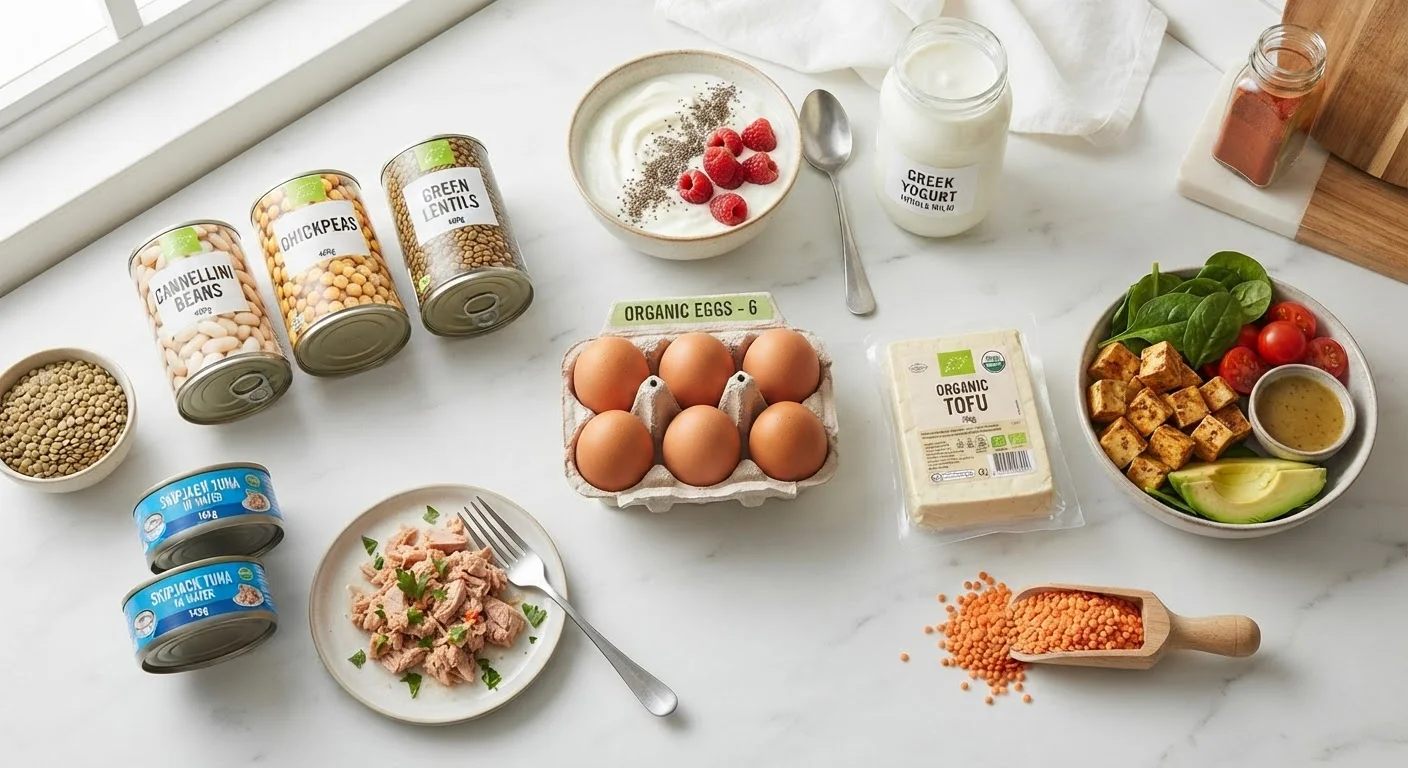
Eggs consistently rank among the most cost-effective protein sources available. A single large egg contains roughly 6 grams of protein, along with essential vitamins and healthy fats. A carton of a dozen eggs typically costs a fraction of what an equivalent amount of protein would cost from many meat sources.
Eggs are also highly versatile — they work at breakfast, lunch, or dinner, and they require minimal cooking equipment. Hard-boiling a batch at the start of the week provides a quick, portable protein option throughout the day.
Eggs deliver complete protein and essential nutrients at one of the lowest costs per serving.
Canned Tuna and Canned Salmon
Canned fish is frequently overlooked, but it's one of the most protein-dense, shelf-stable foods available at a low price point. A standard can of tuna provides approximately 20–25 grams of protein. Canned salmon offers a similar protein profile along with omega-3 fatty acids, which support cardiovascular health according to established nutritional research.
Both options require no cooking, have a long shelf life, and work well in salads, sandwiches, or simple pasta dishes. Choosing options packed in water rather than oil reduces unnecessary added calories if that is a personal dietary consideration.
Canned fish offers a potent mix of protein and healthy fats with virtually no preparation required.
Dried and Canned Lentils
Lentils are a standout among plant-based proteins. A cooked cup contains roughly 18 grams of protein along with substantial fiber, iron, and folate. Dried lentils are among the least expensive foods by weight available in most grocery stores, and unlike dried beans, they require no soaking — they cook in about 20–30 minutes.
Canned lentils are slightly more expensive but still highly affordable and ready to use immediately. They work well in soups, grain bowls, or as a base for plant-forward dishes.
Lentils provide more protein per dollar than almost any other food, plant-based or otherwise.
Dried or Canned Beans
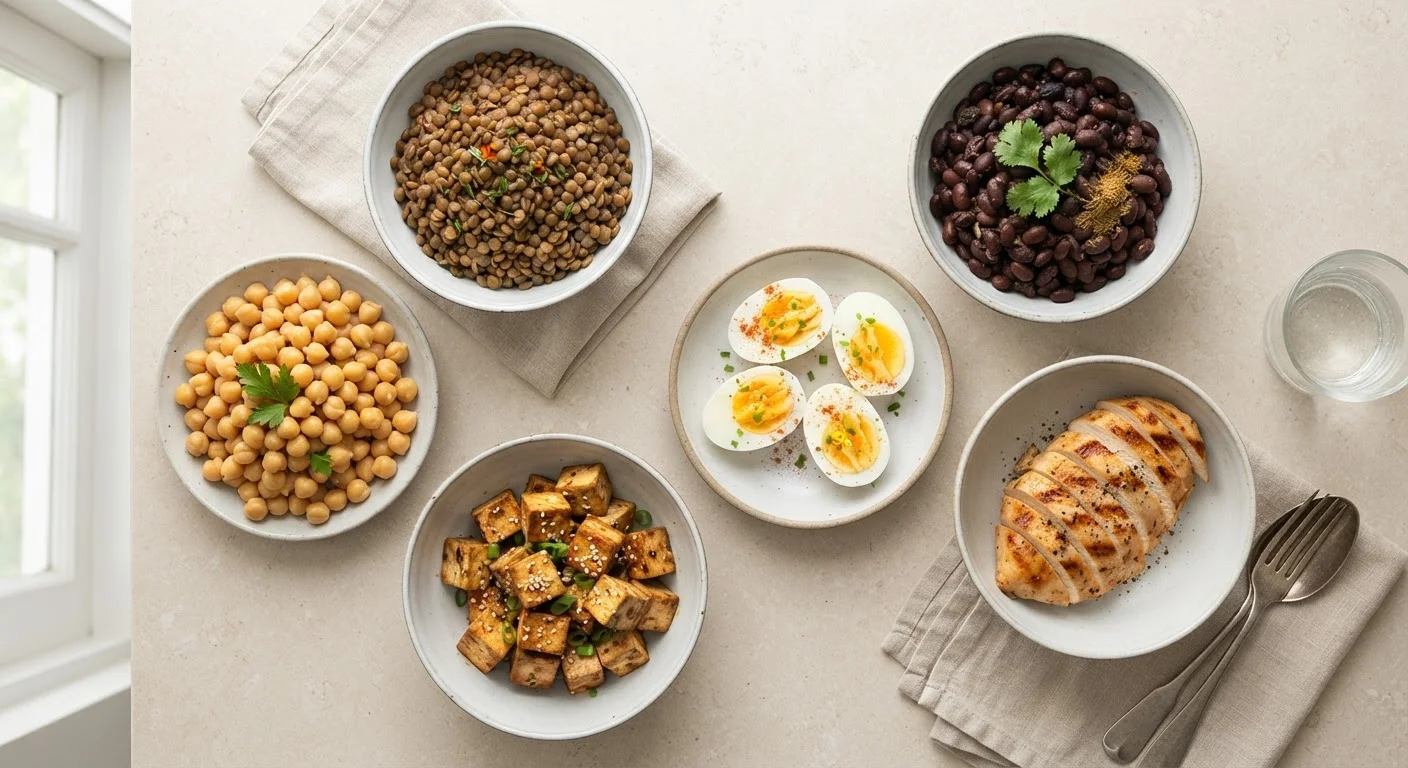
Black beans, pinto beans, kidney beans, and chickpeas are all affordable, protein-rich staples. A cooked cup of most bean varieties provides 14–16 grams of protein. Dried beans are the most economical option and can be batch-cooked and frozen in portions. Canned beans offer speed and convenience at a modest price premium.
Beans pair well with grains — combining them with rice, for example, creates a meal with a complementary amino acid profile that covers a broader range of essential proteins than either food provides alone.
Beans paired with grains form a complementary protein combination that supports a complete amino acid profile.
Cottage Cheese
Cottage cheese is a dairy-based protein that often costs significantly less than Greek yogurt while delivering a comparable protein punch — typically 12–14 grams per half-cup serving. It's high in casein protein, which digests slowly and may support satiety between meals, according to general nutritional understanding.
It can be eaten plain, blended into smoothies, or used as a substitute for ricotta in savory dishes. Lower-fat varieties are available for those managing overall fat intake under a healthcare provider's guidance.
Cottage cheese is an underrated, affordable dairy protein with a mild flavor that adapts to many recipes.
Peanut Butter and Other Nut Butters
Peanut butter provides around 7–8 grams of protein per two-tablespoon serving and contains healthy unsaturated fats. Large jars of peanut butter represent excellent value on a per-serving basis compared to most protein-dense snacks. Natural peanut butter — with just peanuts and salt as ingredients — tends to have a cleaner nutritional profile.
Other nut butters like almond or sunflower seed butter offer similar benefits and may be appropriate for those with peanut sensitivities, though always consult a healthcare provider regarding allergies.
Peanut butter is one of the most calorie- and protein-efficient pantry staples available at a low cost.
Frozen Edamame
Edamame — young, whole soybeans — is a complete plant protein, meaning it contains all nine essential amino acids. A half-cup serving provides roughly 9 grams of protein. Frozen edamame is widely available, affordable, and cooks in minutes by steaming or microwaving.
It works as a standalone snack, a salad topper, or a simple side dish. Soy-based foods like edamame are among the most research-supported plant protein sources, with decades of nutritional study behind them.
Edamame is a rare plant food that delivers all nine essential amino acids at a low cost per serving.
Making These Foods Work in Your Kitchen
Knowing which foods are high in protein is only part of the equation — the other part is actually using them. Dried legumes, for example, require soaking and longer cook times, but batch cooking on a weekend can yield portions for the entire week. Eggs, canned fish, and cottage cheese require almost no preparation at all, making them ideal for busy households.
Rotating among several protein sources also provides a broader range of nutrients. Beans and lentils, for instance, contribute significant dietary fiber alongside protein — a nutrient that most Americans fall short on. Pairing plant and animal sources throughout the week can help cover a wider nutritional base. For a deeper look at how these two categories compare nutritionally, our article on plant protein vs. animal protein breaks down the key differences.
If you're building or reorganizing your kitchen to cook more at home, it's worth knowing which tools actually earn their place — our resource on setting up a functional kitchen without overbuying can help you avoid unnecessary purchases. And for staying organized week to week, a weekly meal-planning checklist can help reduce waste and last-minute spending.
Stretch Your Protein Budget Further
Buying dried beans and lentils in bulk and cooking them in large batches can dramatically reduce cost per serving. Portioning and freezing cooked legumes means you always have a protein source ready without the cost premium of canned goods. Pairing these with eggs or canned fish throughout the week creates variety without significantly increasing your grocery spend.
This article is for general informational and educational purposes only and is not a substitute for professional medical or dietary advice. Consult a qualified healthcare provider or registered dietitian for guidance specific to your health needs.