
Why Car Maintenance Myths Stick Around
Automotive advice spreads fast — from older relatives, well-meaning friends, and decades-old habits that were once reasonable but no longer apply to modern vehicles. The result is that many drivers spend money on services they don't need, skip ones they do, or make decisions based on outdated rules of thumb.
These myths aren't harmless. They can drain your wallet through unnecessary service visits and, in some cases, lead to real mechanical problems down the road. Our guide to the lifetime cost of skipping maintenance explains how misplaced habits — in either direction — shift costs over time.
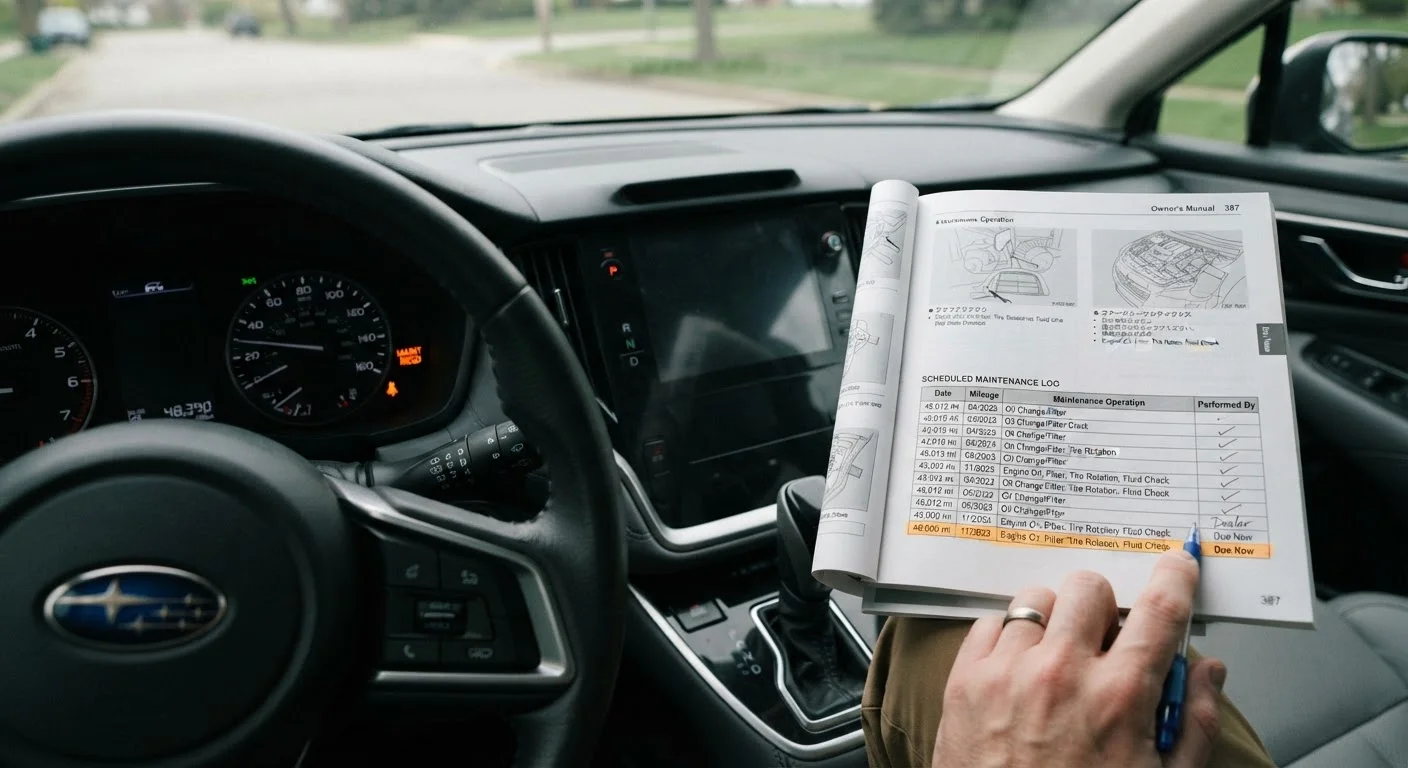
The best single source for accurate maintenance guidance is your vehicle's owner's manual. It's written for your specific engine, drivetrain, and operating conditions. No forum post or general rule replaces it.
Myth
You need to change your oil every 3,000 miles, no matter what.
Fact
Most modern vehicles can go 5,000 to 10,000 miles or more between oil changes, depending on the oil type and the manufacturer's specifications.
The 3,000-mile rule dates back to an era of older engine technology and conventional motor oils. Today's engines are built to tighter tolerances, and synthetic oils are formulated to last significantly longer without breaking down. Many manufacturers now specify intervals of 7,500 or even 10,000+ miles for vehicles using full synthetic oil.
Changing oil more frequently than necessary wastes money and generates unnecessary waste oil. Check your owner's manual for the interval your engine actually requires. For a deeper look at how oil types differ, see our guide to synthetic vs. conventional motor oil.
Myth
Premium fuel gives your engine a performance boost, even if it doesn't require it.
Fact
If your engine is designed for regular-grade fuel, premium provides no measurable benefit and is simply a wasted expense.
Premium fuel has a higher octane rating, which helps prevent premature ignition (called knock or ping) in engines with high compression ratios. If your engine isn't designed for it, the extra octane does nothing useful. Modern engines with knock sensors will adjust automatically for lower-grade fuel, but engines built for regular don't gain anything by running premium.
Your owner's manual will clearly state whether premium fuel is required or merely recommended — those are two different situations. Required means the engine needs it to perform correctly. Recommended means you may see modest benefits in performance-oriented conditions, but regular is still acceptable for everyday driving.
Myth
You should warm up your car for several minutes before driving in cold weather.
Fact
Modern fuel-injected engines reach operating temperature faster by being driven gently, not by idling in the driveway.
Long warm-up idling made sense for older carbureted engines that needed time to stabilize fuel mixture. Today's engines use electronic fuel injection and computer-controlled systems that adjust automatically from the moment you start the car. Extended idling in cold weather actually washes oil off cylinder walls as unburned fuel dilutes the oil, which can increase engine wear.
The better approach: start the car, give it 30 to 60 seconds, then drive gently for the first few miles while the engine comes up to temperature. This warms the engine, transmission, and wheel bearings more efficiently than sitting still.
Myth
The tire pressure you should use is the maximum number printed on the sidewall.
Fact
The correct tire pressure for your vehicle is found on the door placard or in the owner's manual — not on the tire itself.
The number molded into the tire sidewall is the maximum pressure the tire can safely hold, not the recommended operating pressure. Inflating to that number typically overinflates the tire, which reduces the contact patch with the road, leads to uneven wear in the center of the tread, and can make handling less predictable.
The pressure listed on the sticker inside your driver's door jamb is calculated for your specific vehicle's weight and handling characteristics. Check pressure when tires are cold (driven less than a mile) for an accurate reading. Our article on tire pressure and fuel economy covers the full impact of getting this right.
Myth
You need to flush your coolant every year to keep the engine safe.
Fact
Coolant flush intervals vary widely by vehicle — many modern formulations are designed to last 5 years or 100,000+ miles.
Older green-dye coolant formulas did degrade relatively quickly and required more frequent attention. Many vehicles today use long-life coolant — often orange, pink, or blue — engineered to last far longer before it loses its corrosion-inhibiting properties. Flushing on an arbitrary annual schedule wastes money and good coolant.
Check the type of coolant your vehicle requires and its specified service interval. You can also check coolant condition with inexpensive test strips. For a broader look at the fluids under your hood, our guide to checking car fluids is a practical starting point.
Following the Right Schedule — Not the Wrong Habits
Once you know which myths to ignore, the next step is building habits around what your vehicle actually requires. Your car's maintenance schedule outlines mileage-based intervals for everything from oil to transmission fluid to brake inspections — in plain language.
Keeping a record of completed services is equally important. A vehicle maintenance log helps you catch patterns, stay on schedule, and protect any applicable warranty coverage. If you want to understand which tasks you can reasonably handle yourself, our DIY maintenance guide walks through what's safe for most drivers and what genuinely requires a professional.
Don't Swing From Over-Servicing to Under-Servicing
Debunking myths about unnecessary services doesn't mean skipping maintenance altogether. Skipping genuinely needed services — like brake inspections, transmission fluid changes, or air filter replacements — can lead to costly repairs. The goal is following the right schedule, not the shortest possible one. See what deferred maintenance actually costs over a vehicle's life.
Smart maintenance isn't about doing more — it's about doing the right things at the right intervals. Your owner's manual, a reliable mechanic, and accurate information are the only tools you need to keep your car running well without wasting money on services that aren't due.