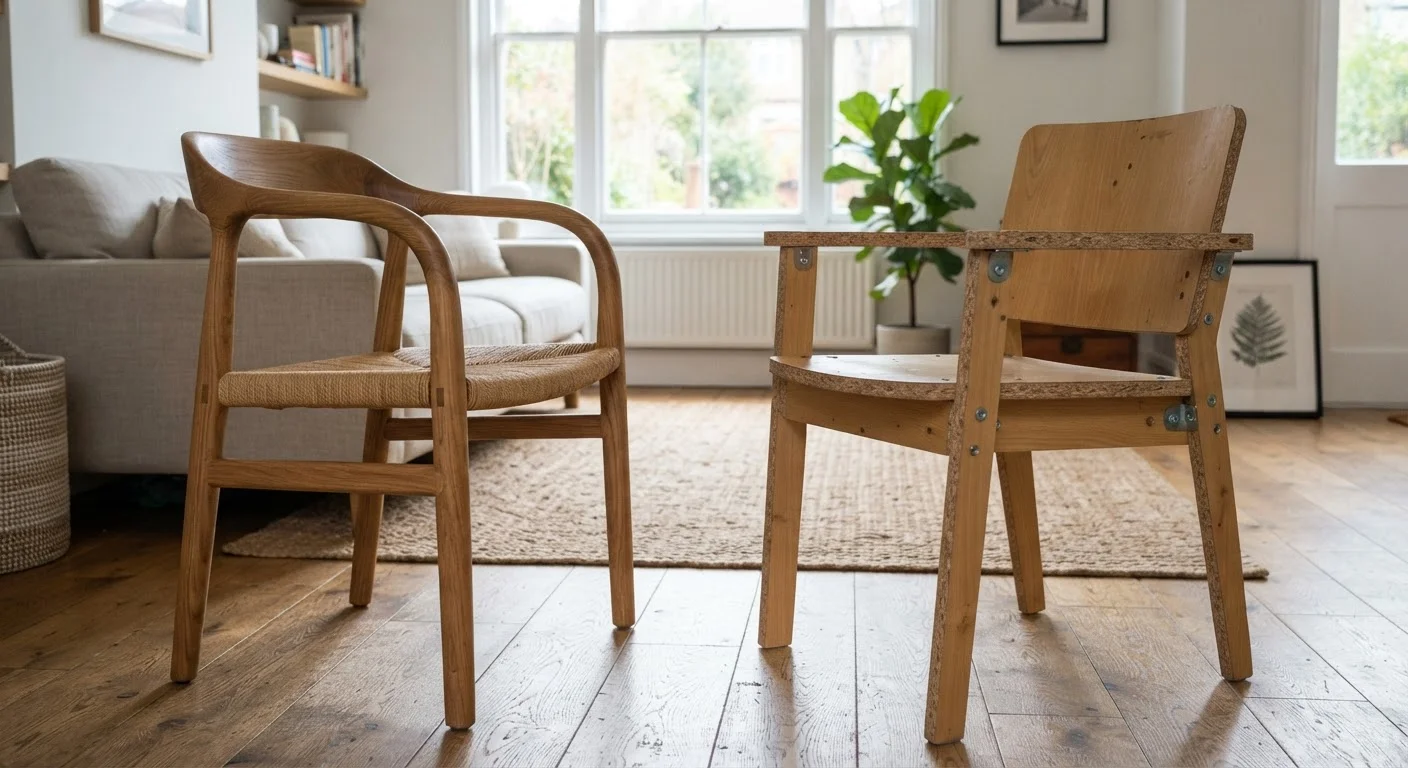


Why Discount Furniture Gets a Bad Rap
Walk into any discount furniture retailer and you'll likely hear a familiar refrain from friends or family: "You get what you pay for." It's one of those spending rules that sounds airtight — until you examine it closely. The truth is that the relationship between price and quality in furniture is messier than that saying suggests. Some expensive pieces are overpriced for the name, while some affordable ones are genuinely well-built.
Understanding where assumptions end and facts begin can save you real money — and spare you from a couch that collapses in six months. For a broader look at how common spending rules hold up under scrutiny, see spending myths that sound like common sense.
Myth
Furniture from discount retailers is always lower quality than furniture from full-price stores.
Fact
Quality varies widely at every price tier. Some discount retailers source from the same manufacturers as higher-end chains.
Price is one signal of quality, but it's not a reliable one on its own. Furniture markup can be substantial at traditional retailers — covering showroom rent, sales staff, and brand positioning. Discount retailers often reduce those overhead costs, which can allow them to sell comparable pieces at lower margins. What determines actual durability is the frame material, joinery method, and upholstery density — not the name on the storefront. Always examine construction details directly rather than inferring quality from price.
Myth
You can't return furniture if something goes wrong at a discount store.
Fact
Return and warranty policies vary by retailer and product category — discount stores are not uniformly restrictive.
Some discount furniture retailers offer return windows and limited warranties that are comparable to traditional furniture stores. Others are more restrictive, particularly on assembled or clearance items. The key is to read the specific policy before purchasing, not assume the worst based on price point. Ask about the return window, whether the item needs to be unassembled, and what's covered if a defect appears after delivery. Policy details are typically posted in-store and online.
Myth
Discount furniture always requires complicated assembly that most people can't handle.
Fact
Assembly complexity ranges from minimal to significant, and many discount pieces require no more tools than a screwdriver.
Assembly requirements differ by product type and retailer, not by whether the store is a discounter. Some fully assembled pieces are sold at discount stores; some high-end retailers sell flat-pack items. Before purchasing, check the product listing or box labeling for assembly details. If a piece does require self-assembly, look for clear instruction indicators — a parts count and step diagram are usually visible on the packaging or product page. Assembly difficulty is a factor to evaluate, not a foregone conclusion.
Myth
Buying cheap furniture saves money in the long run.
Fact
Frequent replacement of low-quality pieces often costs more over time than a single, better-made purchase.
This is the flip side of the "all discount furniture is bad" myth. Some pieces at discount retailers are genuinely low-quality and will wear out quickly — meaning you'll spend more replacing them than you would have on a more durable option. The goal isn't to avoid discount retailers entirely, but to distinguish low-price-and-durable from low-price-and-fragile. Cost-per-year-of-use is a more useful frame than purchase price alone. A $300 sofa that lasts eight years represents better value than a $150 sofa replaced every two.
Myth
Discount stores only carry outdated or unfashionable styles.
Fact
Many discount retailers update their inventory seasonally and carry contemporary styles comparable to full-price competitors.
Furniture trends filter down through all price tiers relatively quickly. Discount retailers often refresh their collections to stay competitive, particularly as consumer expectations have risen. That said, selection at any given store will be narrower than at a large furniture showroom, and specific finishes or configurations may not be available. The practical approach is to identify the style and dimensions you need first, then shop across price tiers to find the best construction quality within your budget.
What Actually Matters When Buying at a Discount Store
Once you've cleared away the myths, the practical question becomes: how do you shop well at a discount retailer? The answer comes down to construction details, not sticker price. Solid wood or metal frames, tight joinery with no wobble, and cushions with high-density foam are signs of a piece built to last — regardless of where it's sold. Particleboard frames, stapled joints, and thin cushioning are warning signs regardless of price.
Return policies are another variable worth checking before you buy. Discount stores can have more restrictive return windows, especially on assembled items. Ask before you commit, and if possible, inspect the floor model rather than relying solely on a box photo. For a deeper breakdown of what separates durable furniture from furniture that just looks like a deal, see the real difference between cheap and affordable furniture.
Watch Out for Restrictive Return Windows
Some discount retailers require returns within 30 days, and assembled items are often ineligible for return entirely. Before purchasing, confirm the return policy in writing — either at the register or through the retailer's website. If you're ordering online, check whether delivery fees are deducted from any refund. Don't assume the policy mirrors what you'd expect from a traditional furniture store.
It's also worth knowing your channel. Online and in-store discount shopping involve different trade-offs — assembly previews, return logistics, and color accuracy all shift depending on where you buy. Online vs. in-store furniture shopping on a budget walks through those differences in detail.
Finally, be honest about your actual needs. Marketing pressure can push people toward items they don't need at any price point — discount or otherwise. Common myths about what every home needs is a useful gut-check before any big purchase.