
Why the Channel You Choose Matters on a Budget
When every dollar counts, the decision to shop online or in-store isn't just a matter of convenience — it directly affects how much you pay, what you get, and what happens if something goes wrong. Before spending anything, it helps to understand the structural differences between the two channels. Our guide on furnishing a home on a tight budget covers how to plan your priorities before you even start browsing.
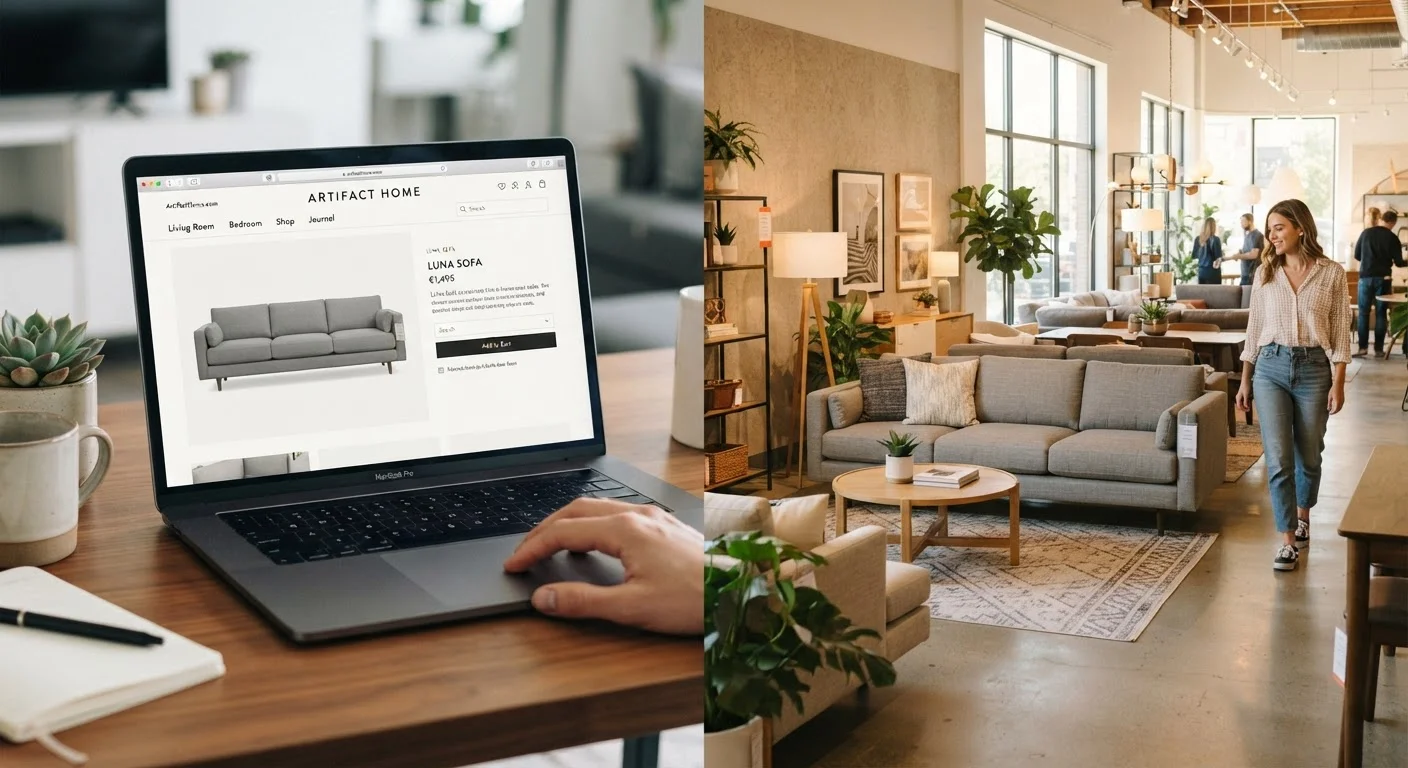
The core tension: online retailers typically operate with lower overhead and can pass savings to consumers, but they also shift risk onto the buyer. In-store retailers offer tangibility and immediate accountability, but their prices often reflect real estate and staffing costs.
| Online Shopping | In-Store Shopping | |
|---|---|---|
| Price | Often lower sticker price | Higher sticker, less hidden cost |
| Selection | Vast, unbounded by floor space | Limited to what's stocked locally |
| Quality assessment | Relies on photos and reviews | Hands-on inspection possible |
| Delivery fees | Can be significant for large items | Often included or lower for local delivery |
| Returns | Fees or restrictions common | Easier in most cases |
| Assembly | Usually required, flat-pack | Sometimes pre-assembled or available |
| Color/scale accuracy | Photos can mislead | See true color and size in person |
The Real Costs Hidden in Online Furniture Orders
Low sticker prices are the main draw of online furniture shopping, but the total landed cost — what you actually pay by the time the piece is in your home — can look very different from what's in your cart.
- Shipping and freight fees: Smaller items often ship free, but large pieces (sofas, dining tables, dressers) frequently carry white-glove or threshold delivery charges ranging from $50 to well over $150.
- Return friction: Many online furniture retailers charge restocking or return shipping fees that can run 15–20% of the item price. Some only accept returns at a physical drop-off location, which may require renting a vehicle.
- Assembly: Flat-pack furniture sold online is often more complex to assemble than packaging suggests. Third-party assembly services add cost if you can't do it yourself.
For a fuller picture of what belongs in your furniture budget beyond the price tag, see everything that goes into a smart furniture budget.
What In-Store Shopping Protects You From
Walking into a showroom gives you information that no product photo can replicate. You can test cushion firmness, check drawer slide quality, assess whether a finish looks cheap under real lighting, and measure a piece against your own frame. These are material factors when you're buying on a budget — a sofa that feels flimsy in person is a poor investment at any price.
In-store shopping also tends to compress the risk of material disappointment. Understanding what you're actually buying is especially important given how much variation exists between furniture grades. Our overview of solid wood, engineered wood, and particleboard explains what those differences mean for durability and value at entry-level price points.
That said, in-store limitations are real. Floor models represent a curated selection, and clearance or floor-sample pricing can be inconsistent. Price-matching policies vary widely, and not all stores will honor online competitors' prices.
Bring Measurements and Swatches to the Showroom
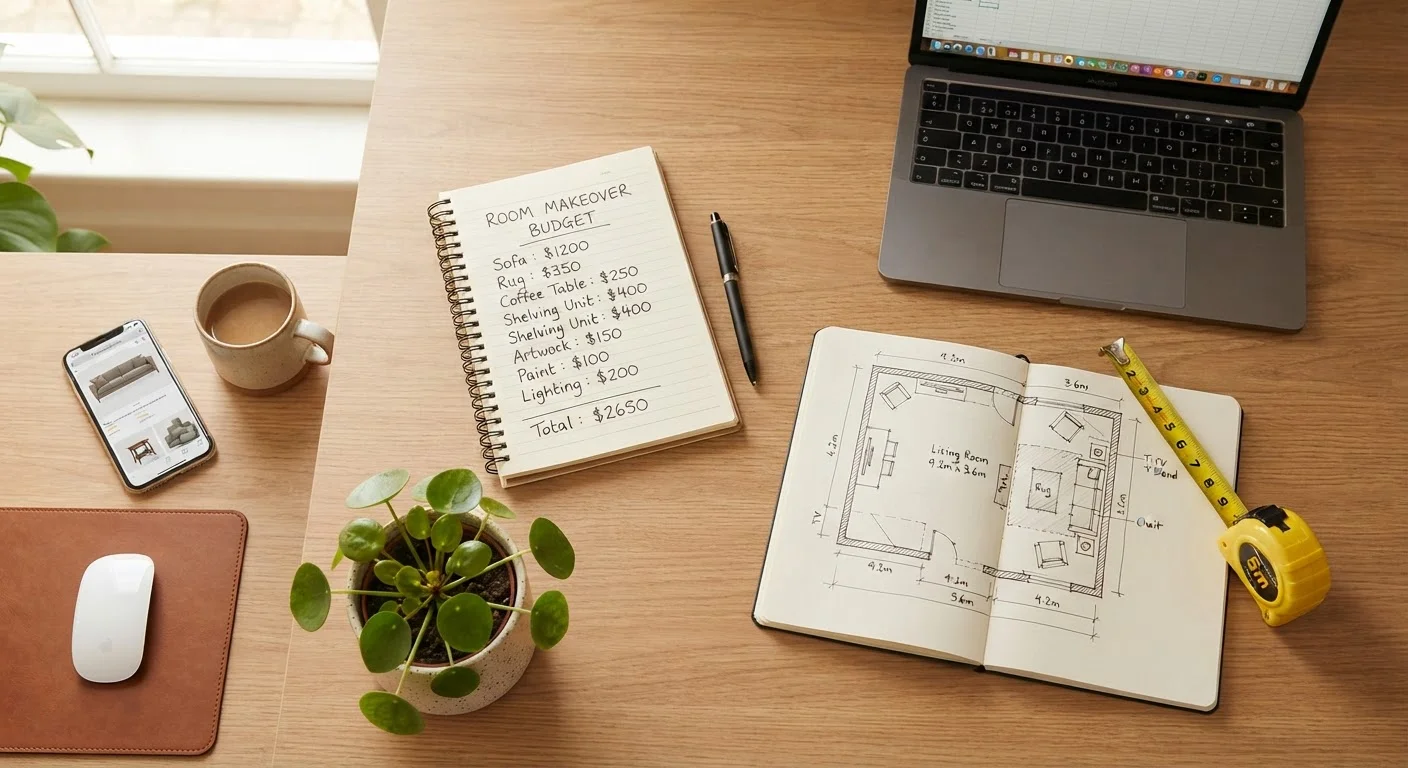
Before visiting a furniture store, measure your room carefully and note doorway widths — pieces need to fit through your home, not just the floor plan. If you have existing upholstery or paint colors, bring a photo or fabric swatch so you can compare under showroom lighting. This simple prep step prevents costly returns and repeat trips.
Using Both Channels Together
The most effective approach for budget shoppers is rarely all-or-nothing. A practical hybrid strategy looks like this:
- Use online tools to establish a baseline price range and identify what styles and dimensions you need.
- Visit showrooms to physically evaluate construction quality on any piece you plan to use heavily — seating, bed frames, dining chairs.
- Cross-reference: if you find something you like in-store, check whether the same or comparable item is available online for less. Factor in delivery costs on both sides.
- Reserve purely online purchases for lower-risk items: bookshelves, side tables, decorative pieces where quality variance matters less.
If you're equipping more than one room, a phased approach helps you avoid over-committing budget early. See our guidance on prioritizing furniture spending across multiple rooms for a structured framework.
It's also worth separating online shopping from secondhand sourcing, which carries its own distinct trade-offs. Our comparison of secondhand vs. brand-new budget furniture can help you decide whether used pieces belong in your plan.