
Why Multi-Room Furnishing Needs a Different Strategy
Furnishing a single room is a contained problem. Furnishing three or four at once is a resource allocation challenge — and most people approach it with the wrong mental model. The instinct is to buy something for every room right away so nothing feels embarrassingly bare. The result is usually shallow coverage everywhere: mediocre pieces in every room instead of solid, livable furniture where it actually counts.
A phased approach treats your furniture budget the same way a contractor treats a project budget: money flows toward the highest-impact work first, and lower-priority areas wait until resources are available. This isn't deprivation — it's the difference between a home that functions well from day one and one that feels perpetually unfinished.
If you haven't yet done the groundwork of planning a whole-home furniture approach, our guide to furnishing a home on a tight budget covers the foundational decisions to make before spending anything.
Set Your Total Budget First
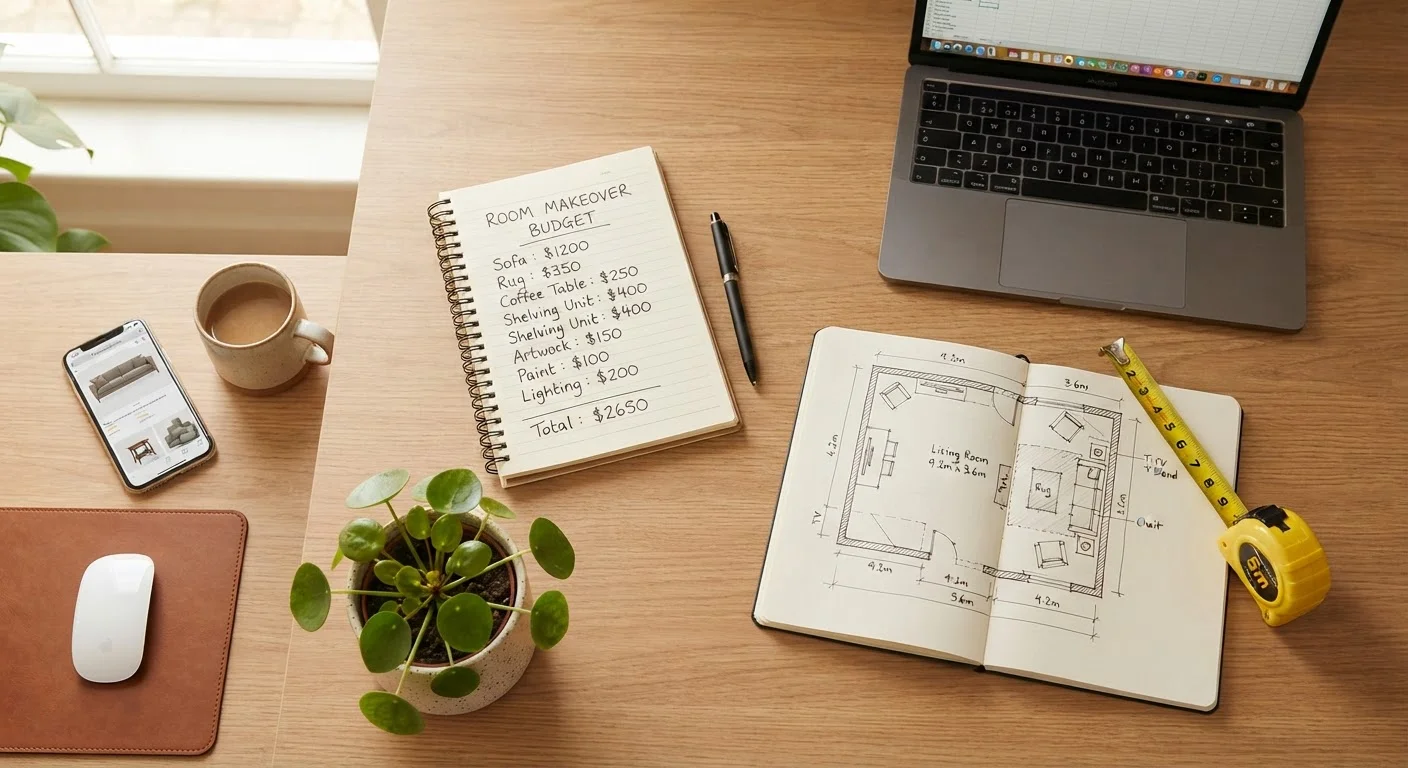
Before buying a single piece, establish a firm ceiling for all furniture spending combined — not per room. Without a whole-home number in place, it's easy to overspend in one room and leave others unlivable. Write the number down, and treat it as a constraint, not a guideline.
First-time renters furnishing a new place face a slightly different version of this challenge — one where the order of priorities is shaped by lease timing and move-in conditions. Our room-by-room guide for first-time renters addresses that specific scenario in detail.
The Step-by-Step Approach
Follow these steps in order. Skipping the planning steps to get to shopping faster is the most common reason multi-room furnishing efforts go over budget or produce regret purchases.
What you will need
Tape measure
Measure every room and doorway before purchasing any piece to avoid sizing mistakes.
Graph paper or free room-planning app
Sketch room layouts to scale so you can visualize furniture placement before committing.
Spreadsheet or budgeting app
Track planned versus actual spending across all rooms in one place.
Smartphone camera
Document room dimensions, existing finishes, and inspiration references while shopping.
Establish a single whole-home budget ceiling
Before assigning any money to individual rooms, decide on a single total you're willing to spend on furniture across your entire home. This ceiling number is non-negotiable. See our guide to building a smart furniture budget for a detailed breakdown of every cost category to factor in, including delivery, assembly, and disposal of old pieces.
Write the number down and share it with anyone else involved in purchase decisions. Ambiguity at this stage leads to overspending at every stage after it.
Rank every room by daily use, not emotional attachment
List every room you're furnishing and assign each a tier: Tier 1 — used every day (primary bedroom, main living area, kitchen eating area); Tier 2 — used several times a week (home office, dining room); Tier 3 — used occasionally (guest room, formal sitting room, hobby space).
This ranking, not your personal excitement about a space, should drive spending allocation. An unfurnished guest room is inconvenient. An unfurnished bedroom or workspace actively disrupts your daily life.
Allocate budget percentages by tier, not by room count
A common mistake is dividing the total budget equally across rooms. Instead, weight your allocation toward the tiers that matter most. A reasonable starting framework: 60–70% of the total to Tier 1 rooms, 20–25% to Tier 2, and the remainder — or nothing yet — to Tier 3.
If your Tier 1 rooms would require more than 70% to furnish adequately, that's a signal your overall budget may need revisiting before you proceed. Our room-by-room financial checklist can help you stress-test each planned purchase before committing.
Identify which pieces can serve multiple rooms
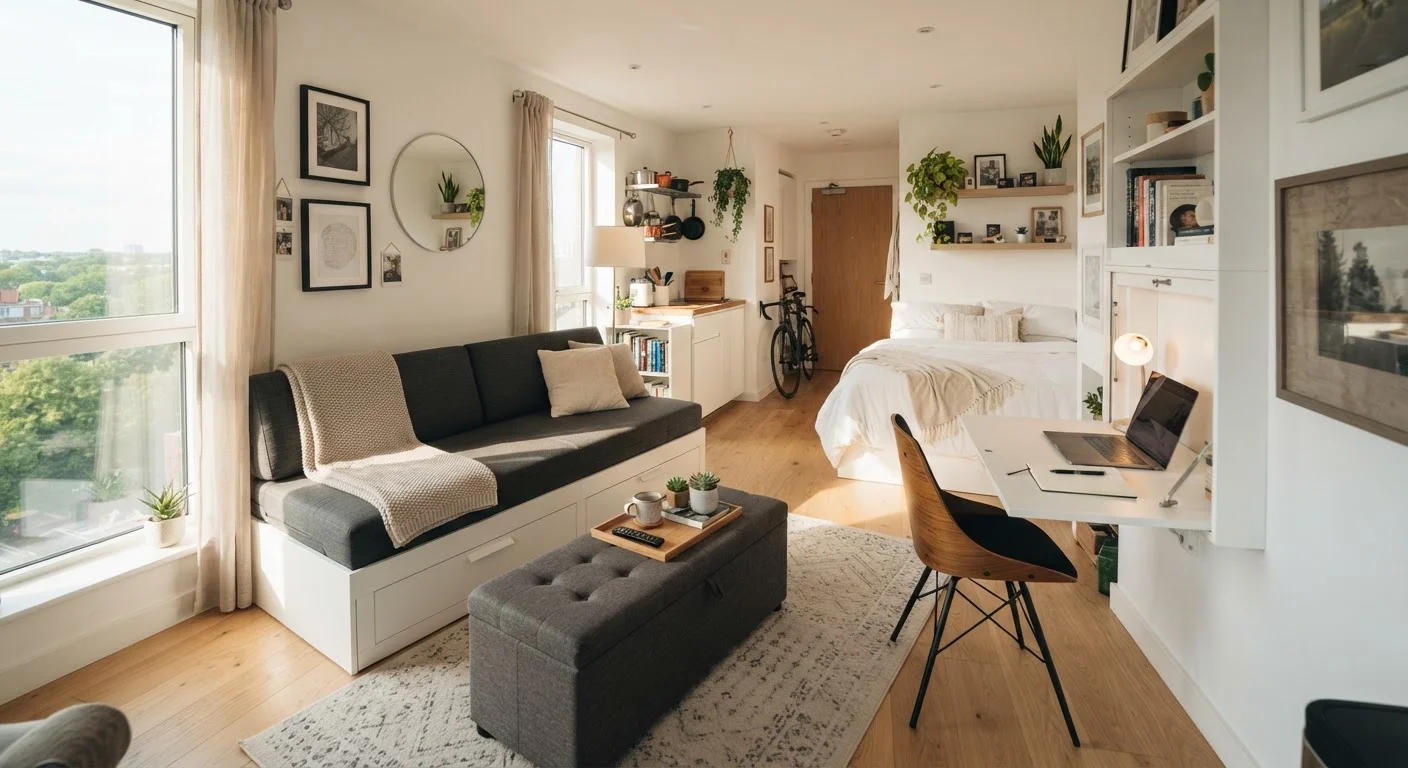
Before finalizing any room's item list, look for overlap. A sturdy bench can work at the foot of a bed and later move to an entryway. A compact dining table can double as a desk. Consolidating needs into fewer, more versatile pieces reduces total spend significantly.
Multifunctional furniture is especially valuable when you're furnishing multiple rooms at once — every piece that eliminates the need for a second purchase is money returned to your buffer or reallocated to a higher-priority item.
Build a phased purchase plan with hard decision gates
Phase 1 covers Tier 1 rooms only. Write out the specific pieces for those rooms, with a price cap per item. Do not begin Phase 2 purchases until Phase 1 is complete and paid for — not just ordered. Decision gates prevent the common trap of spreading spending so thin that no room is properly furnished.
If you're also navigating a renovation alongside your furnishing, stagger furniture purchases to avoid paying for storage or getting pieces damaged before a room is ready.
Evaluate new versus secondhand for each line item
Once your item list is set per phase, decide for each piece whether new or secondhand makes more sense. Upholstered items and mattresses carry more risk when bought used; solid wood, metal, and hard-surface pieces are generally lower risk. Our secondhand versus new comparison covers the key trade-offs in detail.
Also consider where you shop. Online versus in-store shopping each has distinct cost and convenience implications depending on the piece type and your situation.
Let Phase Two Wait a Month
After completing your first-phase purchases, pause for 30 days before buying anything for lower-priority rooms. Living in the space gives you a clearer sense of what you actually need versus what seemed necessary on paper. This cooling period consistently prevents regret buys.
For a broader look at how furniture spending fits into your overall household financial picture, the stocking a home on a tight budget guide covers the full range of household purchases — not just furniture — and how to sequence them without financial strain. And if smart spending across all categories is a priority, the Smart Spending hub has resources to help you stretch every dollar further.