
The Core Trade-Off: Price vs. Predictability
The fundamental tension between secondhand and new budget furniture comes down to one question: how much uncertainty are you willing to accept in exchange for savings? Before buying anything, it helps to understand how to plan and prioritize your furniture spending so you're not making decisions in a vacuum.
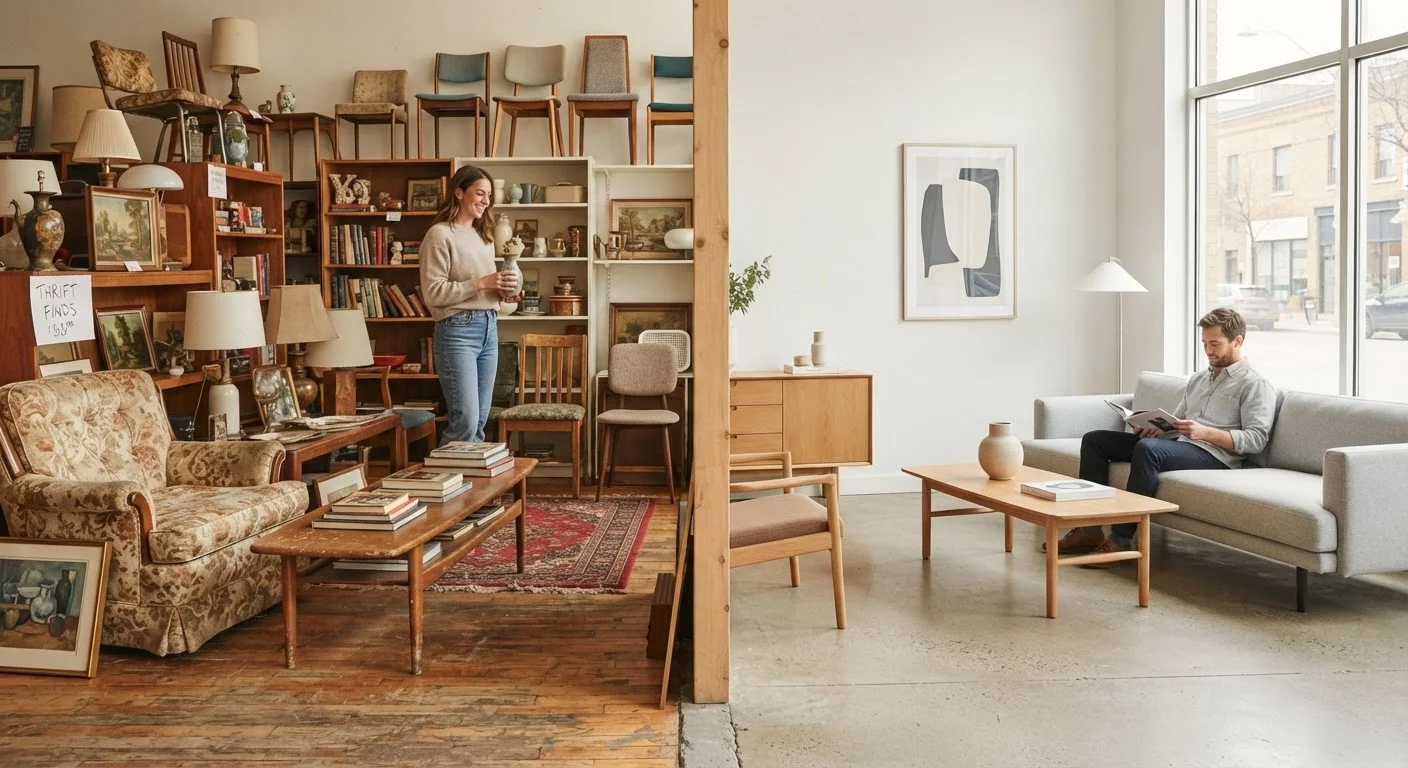
Secondhand furniture — sourced from estate sales, resale marketplaces, thrift stores, or private sellers — typically costs far less than equivalent new pieces. The savings can be substantial on case goods like dressers, bookshelves, and dining tables, where older construction sometimes used denser materials than what's available at comparable price points today.
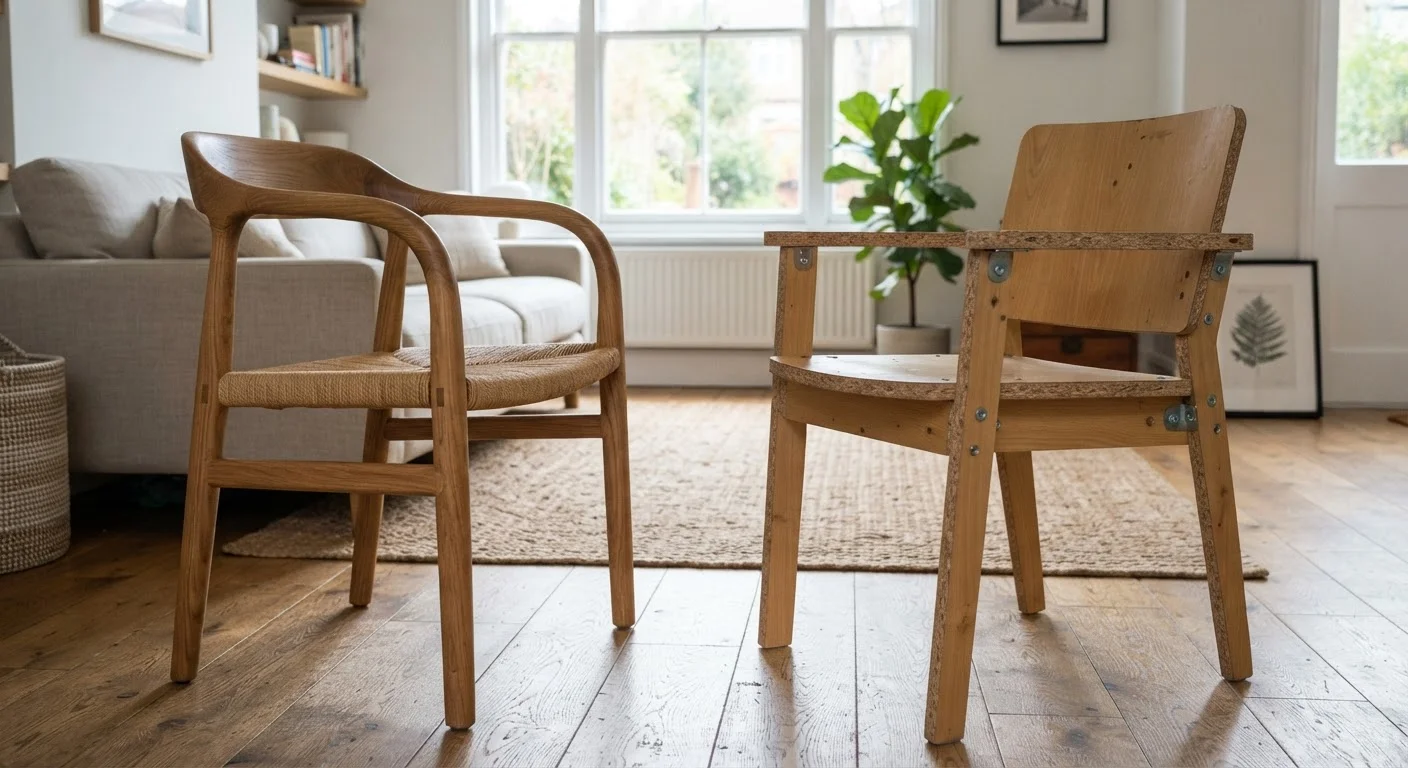
New budget furniture, on the other hand, gives you a known starting point. You see exactly what you're getting, it arrives uncontaminated, and most retailers offer at least a basic warranty. The trade-off is that entry-level price points often mean thinner materials, particleboard construction, and limited durability over time. Price and value aren't the same thing, and that distinction matters especially at the low end of the new-furniture market.
Where Secondhand Has a Real Advantage
For hard-surface furniture — wood tables, metal bed frames, solid dressers — buying used often delivers more material value per dollar. Pieces manufactured before widespread use of low-density particleboard and thin MDF can genuinely outlast new items at the same price point. If you spot a dovetail-jointed dresser or a solid hardwood dining table at a thrift shop, you may be looking at construction quality that's difficult to find new under $300.
The savings extend further when you consider that secondhand sellers are often motivated to move items quickly. Negotiating is common and generally accepted in private-sale settings. You can also find pieces with character — interesting patinas, older design styles, or unique shapes — that aren't available at entry-level retail.
That said, the search takes real time and effort. Finding the right piece in good condition requires multiple trips, careful inspection, and sometimes transportation you have to arrange yourself. Knowing which pieces to prioritize helps you focus your secondhand search where it's most likely to pay off.
| Criterion | Secondhand Furniture | Brand-New Budget Furniture |
|---|---|---|
| Upfront cost | Generally lower | Fixed retail price |
| Condition certainty | Variable — inspect carefully | Known, as-described condition |
| Warranty / recourse | Rarely any | Basic warranty typical |
| Material quality potential | Can be high for older pieces | Limited at low price points |
| Time investment | High — requires active searching | Low — browse and order |
| Upholstered piece risk | Higher — odors, allergens possible | Lower — clean from factory |
| Style consistency | Difficult across multiple pieces | Easy within a product line |
| Hidden costs | Transport, cleaning, repairs | Delivery fees, assembly |
Where New Budget Furniture Makes More Sense
Upholstered pieces are where the secondhand calculation gets complicated. Sofas, armchairs, and mattresses carry risks that are hard to fully assess — odors embedded in foam, allergens, and in some cases pest concerns. For these categories in particular, new budget options often represent a more defensible choice. Always inspect secondhand sofas thoroughly before committing, because surface appearance doesn't tell the whole story.
New furniture also wins on consistency. If you're furnishing multiple rooms at once and want a cohesive result, sourcing everything secondhand makes matching finishes and styles an ongoing challenge. New entry-level lines let you coordinate across rooms without the guesswork. For a practical framework on allocating your budget across rooms, see how to prioritize furniture spending across multiple rooms.
Warranties, however modest, provide at least some recourse if something arrives damaged or fails early. Secondhand purchases are almost always final sale.
~45%
Americans who have bought used furniture
Consumer surveys consistently find that nearly half of U.S. adults have purchased pre-owned furniture at some point, reflecting widespread acceptance of the secondhand market.
30–70%
Typical savings range buying secondhand
Depending on condition, category, and source, used furniture is commonly priced at 30 to 70 percent below comparable new retail prices, though actual savings vary widely.
$50–$150+
Estimated transport cost for large used items
Renting a van or hiring independent movers to haul a large secondhand furniture item typically adds $50 to $150 or more, depending on distance and local market rates.
Hidden Costs That Narrow the Gap
Sticker price is only part of the equation. Secondhand furniture may require cleaning supplies, professional upholstery treatment, minor repairs, or replacement hardware — costs that add up. If you don't own a truck or large vehicle, renting one or hiring a hauler can add $50–$150 or more per trip, depending on your location.
New budget furniture carries its own hidden costs: delivery fees, assembly time, and — for very low-priced flat-pack items — potentially earlier replacement. A complete furniture budget accounts for all of these factors, not just the purchase price. Whether you're buying new or used, shop with total cost in mind rather than the number on the tag.
The secondhand-vs-new decision isn't entirely unlike other used-vs-new purchases. The same logic that applies to weighing a new versus used car purchase — factoring in condition, hidden costs, and your own risk tolerance — translates well to furniture decisions on a budget.