
Why the Distinction Matters for Your Wallet
When you're furnishing a home on a budget, the instinct is to focus on sticker price. That's understandable — but it's also where many shoppers go wrong. A $150 dresser that falls apart in 18 months costs more over time than a $280 dresser that holds up for a decade. The real question isn't "how little can I spend?" but "how much value am I actually getting?"
Cheap furniture is defined by shortcuts: thin materials, weak joints, low-grade hardware. Affordable furniture is defined by honest value — reasonable materials used competently, priced without the premium of a brand name. That distinction is everything when you're working with limited dollars. See our guide to furnishing on a tight budget for a full framework before you start shopping.
Myth
If furniture is expensive, it must be well-made.
Fact
Price reflects brand markup, retail margins, and design licensing as much as construction quality.
A recognizable brand name or a high-end retailer's tag adds cost that has nothing to do with how the frame is joined or what the drawer bottoms are made of. Conversely, some furniture sold at discount retailers uses the same factories and materials as pieces sold at two or three times the price. Focus on construction details — joint type, material density, hardware quality — not the logo on the box. Common myths about discount retailers covers this in more detail.
Myth
Particleboard furniture is always a bad investment.
Fact
Particleboard and MDF furniture can perform well for years when properly sealed, assembled correctly, and kept away from moisture.
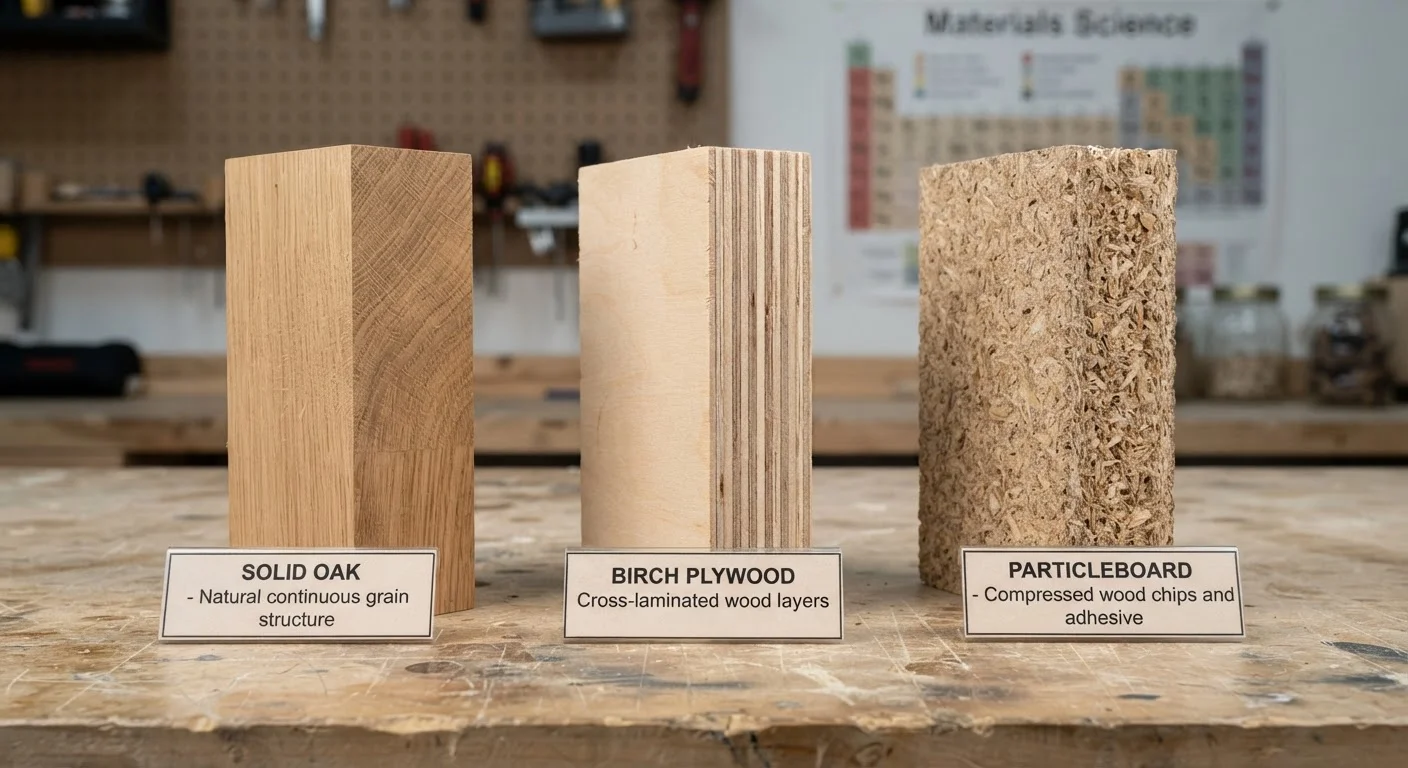
The real enemy of engineered wood furniture isn't the material itself — it's moisture and poor assembly. A well-finished particleboard bookcase in a dry room, assembled with care and not overloaded, can last many years. The problem arises when edge banding is thin or poorly adhered, when pieces are placed in humid environments like bathrooms, or when flat-pack assembly is rushed. Knowing the limitations of the material helps you use it appropriately rather than avoiding it entirely.
Myth
Cheap and affordable are just two words for the same thing.
Fact
"Cheap" describes low quality; "affordable" describes accessible pricing. A piece can be one without being the other.
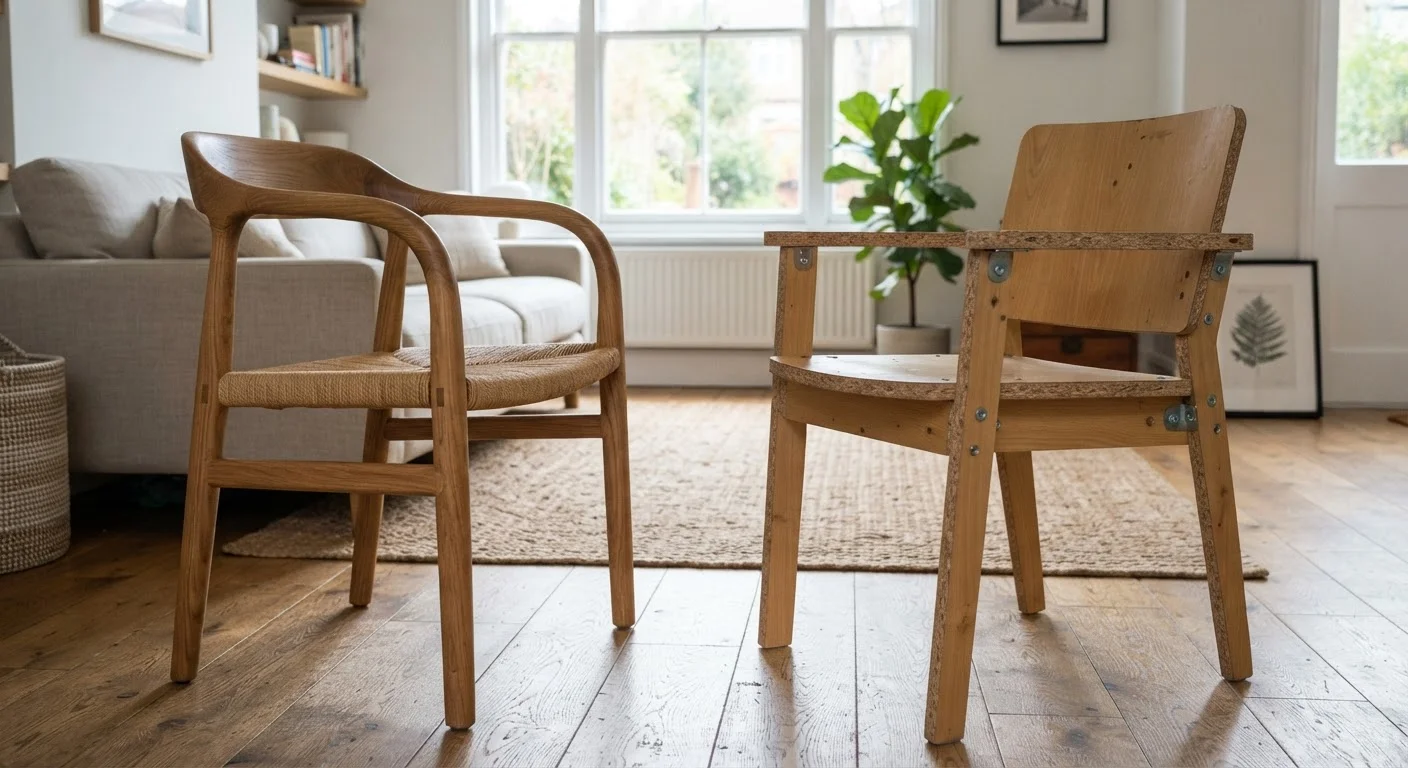
This isn't just semantic. Cheap furniture cuts corners on materials, joinery, and hardware to hit a low price point regardless of longevity. Affordable furniture prioritizes honest construction within a realistic budget — it may use engineered wood instead of solid hardwood, but the joints are sound, the hardware works, and the finish holds up. The goal for budget shoppers should always be affordable, not merely cheap. Paying slightly more for a better-built piece almost always costs less over time.
Myth
Assembly-required furniture is inherently lower quality than pre-assembled pieces.
Fact
Flat-pack furniture varies widely in quality; some knock-down designs are engineered to be surprisingly sturdy when assembled correctly.
The flat-pack format is about shipping efficiency, not a quality ceiling. What determines durability is the thickness of the panels, the type of fasteners used, and how many connection points are built into the design. A flat-pack piece with cam locks, wooden dowels, and thick MDF panels can outperform a pre-assembled piece using thin stapled frames. Follow assembly instructions precisely, apply wood glue to dowel joints where permitted, and don't overtighten cam fasteners — these steps alone significantly affect how long a piece holds together.
Myth
Buying secondhand is always smarter than buying new budget furniture.
Fact
Used furniture has real trade-offs — hidden damage, hygiene concerns, and missing hardware — that new budget pieces don't carry.
Pre-owned furniture can offer genuine value, but it isn't automatically the smarter choice. Older pieces may have structural damage that's hard to detect before purchase, upholstered items can harbor allergens or pests, and flat-pack furniture that's been disassembled once often doesn't hold as firmly the second time. New affordable furniture, by contrast, comes with known materials, assembly instructions, and at minimum a basic manufacturer warranty. Weighing secondhand against new budget furniture helps you think through which approach fits your specific situation.
What to Actually Inspect Before You Buy
Whether you're shopping in-store or online, a few concrete checks separate furniture that will last from furniture that looks good in a warehouse photo.
- Joints and connections: Dovetail and mortise-and-tenon joints indicate quality construction. Staples and basic metal brackets alone are warning signs.
- Weight: Heavier pieces generally use denser materials. Pick up a drawer, open a cabinet door, press down on a shelf. Flimsiness shows up immediately.
- Drawer operation: Pull drawers out fully and push them back. They should glide smoothly and close flush. Side-mounted metal runners are more durable than simple plastic guides.
- Edge finishing: On particleboard and MDF furniture, exposed or poorly sealed edges absorb moisture and swell. Look for clean, fully wrapped edges with tight laminate adhesion.
- Hardware: Hinges, handles, and drawer pulls should feel solid. Thin stamped metal or lightweight plastic hardware wears out quickly with daily use.
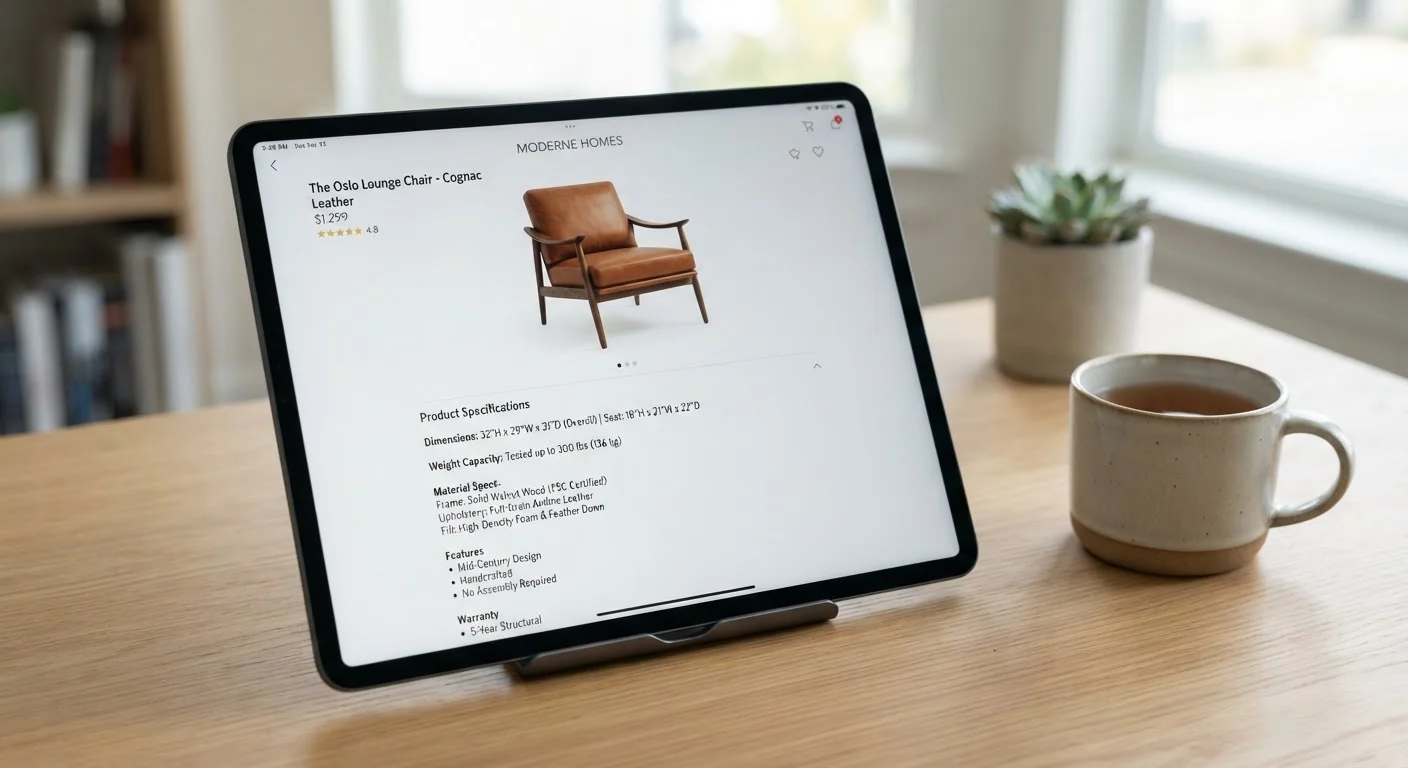
For a deeper look at what product listings actually tell you, reading furniture specs carefully is a skill worth developing before you click "add to cart."
~7 years
Average lifespan of low-quality upholstered furniture
Industry estimates from furniture trade associations suggest entry-level upholstered pieces average around 7 years with typical household use, compared to 15+ years for well-constructed mid-range alternatives.
3x
Cost difference between cheap and quality dining chairs over a decade
When replacement cycles are factored in, consumer research suggests that replacing cheap chairs every 2–3 years can cost roughly three times more than purchasing better-constructed chairs upfront.
Material choice also matters more than most shoppers realize. Understanding solid wood versus engineered wood versus particleboard will help you set realistic expectations for any price point. And if you land on a reasonable piece, basic furniture care habits can meaningfully extend its lifespan.