
Where These Myths Come From
Retailers, lifestyle media, and social media influencers have a shared interest in expanding your definition of "essential." The result is a cultural script that tells new homeowners and renters they need a long, expensive list of products before they can live comfortably. Most of that script is fiction.
Understanding which beliefs are manufactured and which hold up is the first practical step toward spending less and living just as well. If you're stocking a new place, our guide to separating genuine necessities from nice-to-haves is a useful companion to what follows.
Myth
Every home needs a full matching furniture suite from day one.
Fact
A functional home only needs core pieces to start; the rest can be added as budget and needs become clear.
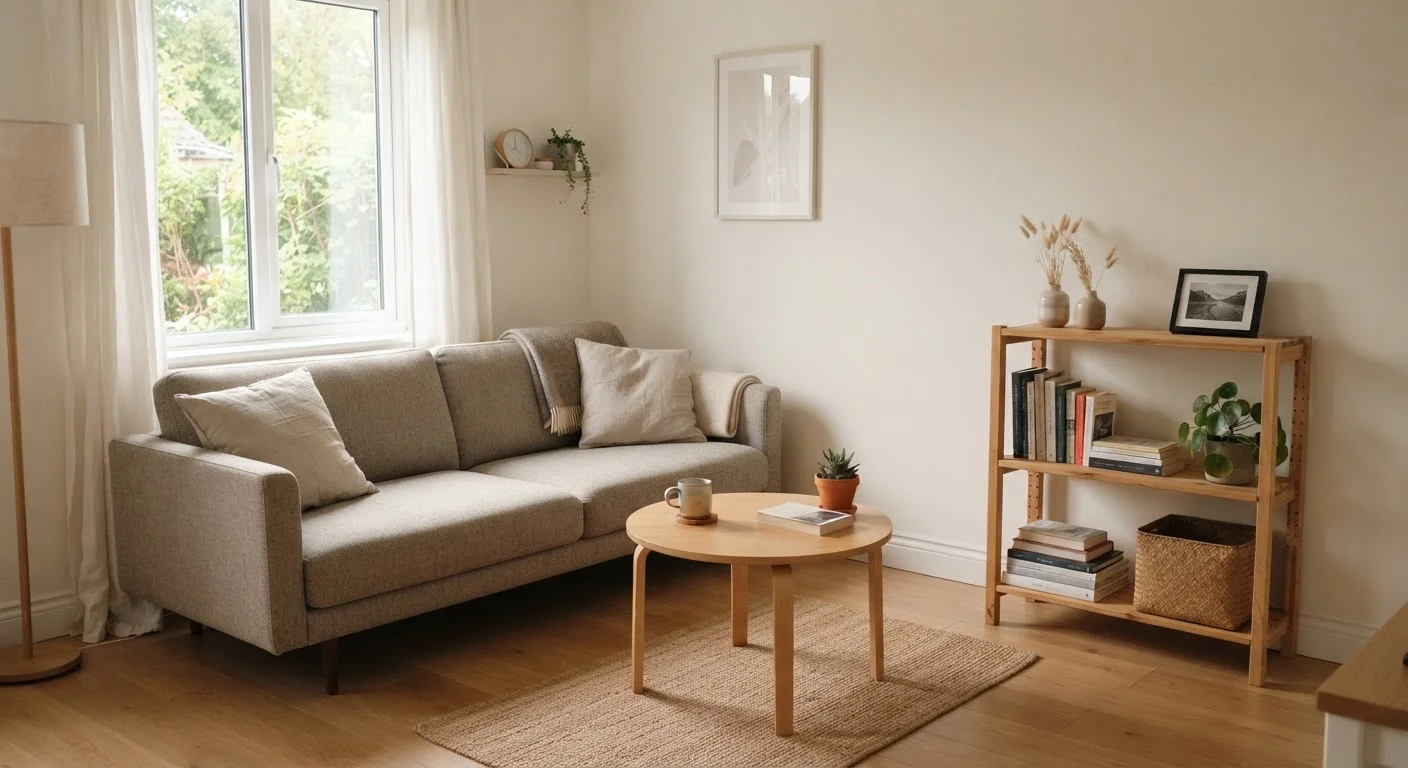
Matched furniture sets are a retail invention designed to sell more at once. In practice, a sofa, a bed frame, and a table are enough to function. Filling every room immediately often leads to purchases that don't fit the space or your habits. Build gradually, and you'll make fewer regrets. Common myths about buying furniture at discount retailers challenges several related assumptions about sourcing furniture affordably.
Myth
You need the latest smart home technology to have a well-run household.
Fact
Smart home devices add convenience for some households but solve no problems that simpler, cheaper alternatives can't already handle.
Voice-controlled lighting and app-enabled thermostats are genuinely useful for certain lifestyles and accessibility needs, but they're not universal must-haves. A manual programmable thermostat costs a fraction of a smart model and performs the same core function for most households. Start with the basics; add technology only when it addresses a real friction point in your routine. For an honest look at what home tech actually delivers, see home tech basics.
Myth
High-end cookware and appliances are necessary for a properly equipped kitchen.
Fact
A well-equipped kitchen depends on a small set of versatile tools, not expensive or numerous ones.
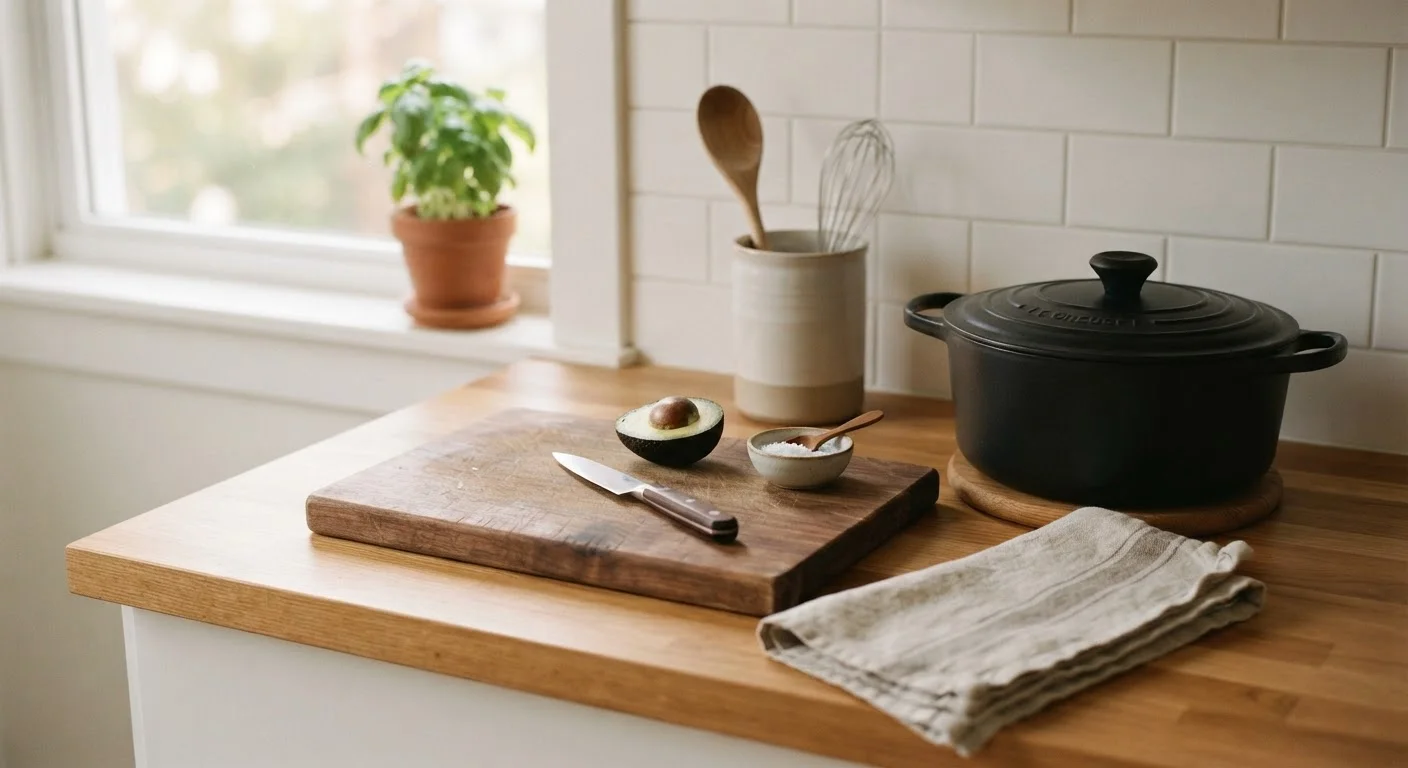
Professional-grade cookware is marketed heavily to home cooks, but cooking performance at home is far more dependent on technique and ingredient quality than pan material. A single durable skillet, a saucepan, and a sheet pan will handle the vast majority of home cooking tasks. Specialty appliances — air fryers, egg cookers, quesadilla makers — tend to duplicate functions that basic tools already cover, then accumulate in cabinets unused.
Myth
A guest bedroom is a home essential for any serious household.
Fact
Guest sleeping arrangements are a convenience, not a necessity, and can be addressed with lower-cost, flexible solutions.
A dedicated guest room is a luxury that makes sense only if guests are a regular and frequent reality in your life. For most households, occasional visitors are handled just as well with a quality air mattress, a fold-out sofa, or even a well-reviewed sleeping pad. Dedicating an entire room — and furnishing it — to rare use is a significant cost with a low return. The want vs. need distinction explored in personal finance terms applies just as directly here.
Myth
Every home needs a full set of cleaning appliances and tools.
Fact
Most homes function well with a vacuum, a mop, and a few basic cleaning cloths — duplication adds cost, not cleanliness.
Cleaning product marketing is particularly aggressive about creating categories of specialized tools for every surface type. In reality, a small number of multi-purpose cleaners and basic equipment handles nearly all household cleaning. Steam mops, robotic vacuums, and UV sanitizers have genuine uses in specific situations, but they aren't baseline requirements. Buy the basics, evaluate real gaps, then add only what addresses an unmet need.
Thinking More Clearly About What Your Home Actually Needs
The myths above share a common thread: they replace personal judgment with a generic standard that happens to benefit sellers. The antidote isn't minimalism for its own sake — it's honest assessment of how you actually live.
Sunk-Cost Thinking Makes This Worse
Once an item is purchased, it's tempting to keep it to justify the spend — even when it's not being used. Recognizing an unnecessary purchase and rehoming or returning it quickly is better than holding onto clutter. Don't let a one-time mistake become a permanent fixture in your home.
A useful framework is to ask three questions before any household purchase: Does it solve a problem I have right now? Could something I already own do the same job? Will I use it at least weekly? If the answers are no, no, and no, the item is almost certainly a want dressed up as a need. For a deeper look at where that line sits, what makes a household item truly essential walks through a practical decision process. And if you want a comprehensive overview of how household needs evolve over time, the full picture on home essentials offers a longer-range perspective.
The goal isn't to own as little as possible. It's to spend on things that genuinely improve daily life — and skip the rest.