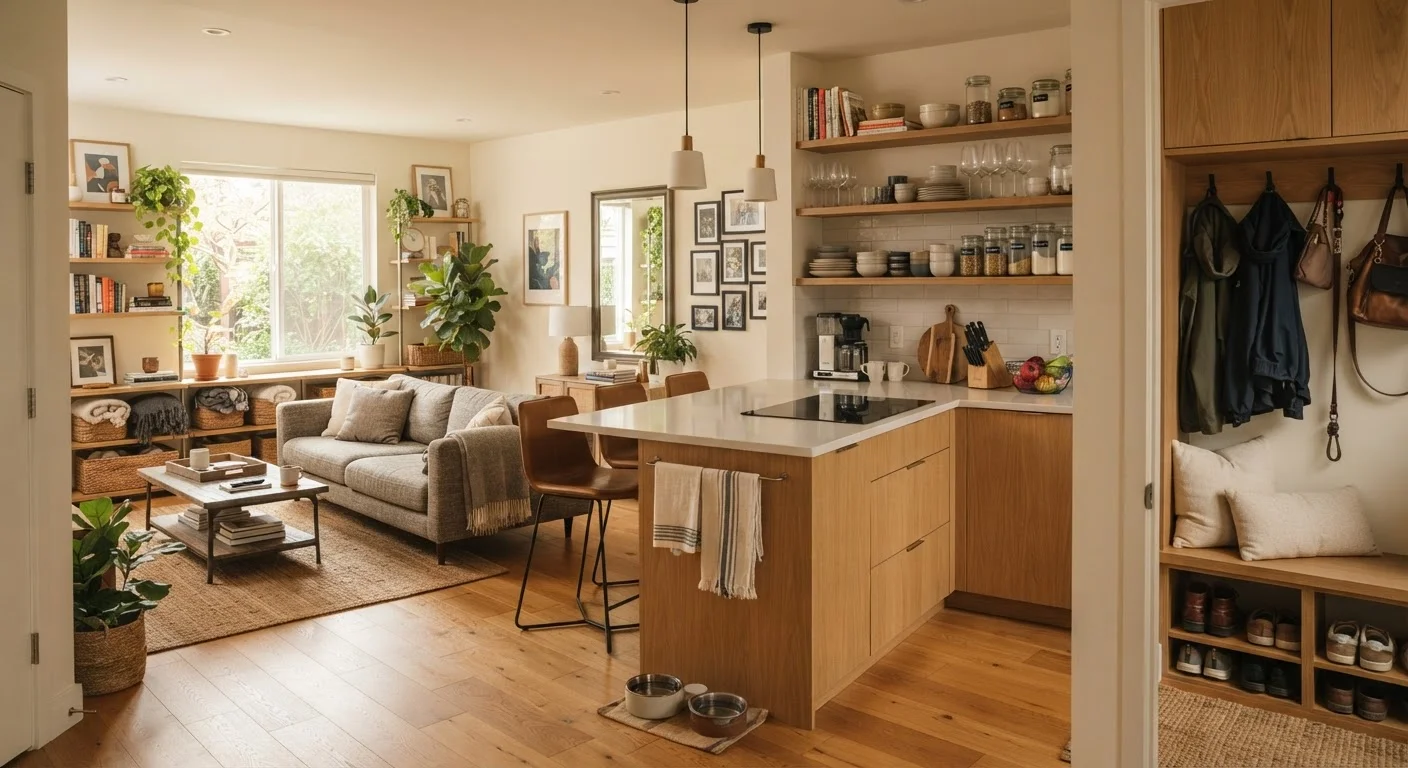

What 'Owning Less' Actually Means at Home
Owning fewer things isn't a lifestyle trend — it's a practical operating strategy for running a home more efficiently. The core idea is straightforward: every item in your home requires attention, whether that's cleaning, storing, repairing, or replacing it. Fewer items means fewer demands on your time, space, and wallet.
This doesn't mean living without comfort. It means identifying which possessions genuinely serve your household and removing the ones that don't. That process looks different in every home — a family of four will have different essentials than a solo renter — but the underlying logic holds across situations.
If you're working out which items genuinely belong in your home, the full picture on home essentials is a useful starting point for thinking through what you actually need versus what tends to accumulate by default.
The Real Advantages of a Leaner Household
The benefits of owning less compound over time. Less stuff means less to clean, less to maintain, and less cognitive load from navigating cluttered spaces. Here's where those gains tend to show up most clearly.
Less to clean, organize, and maintain daily
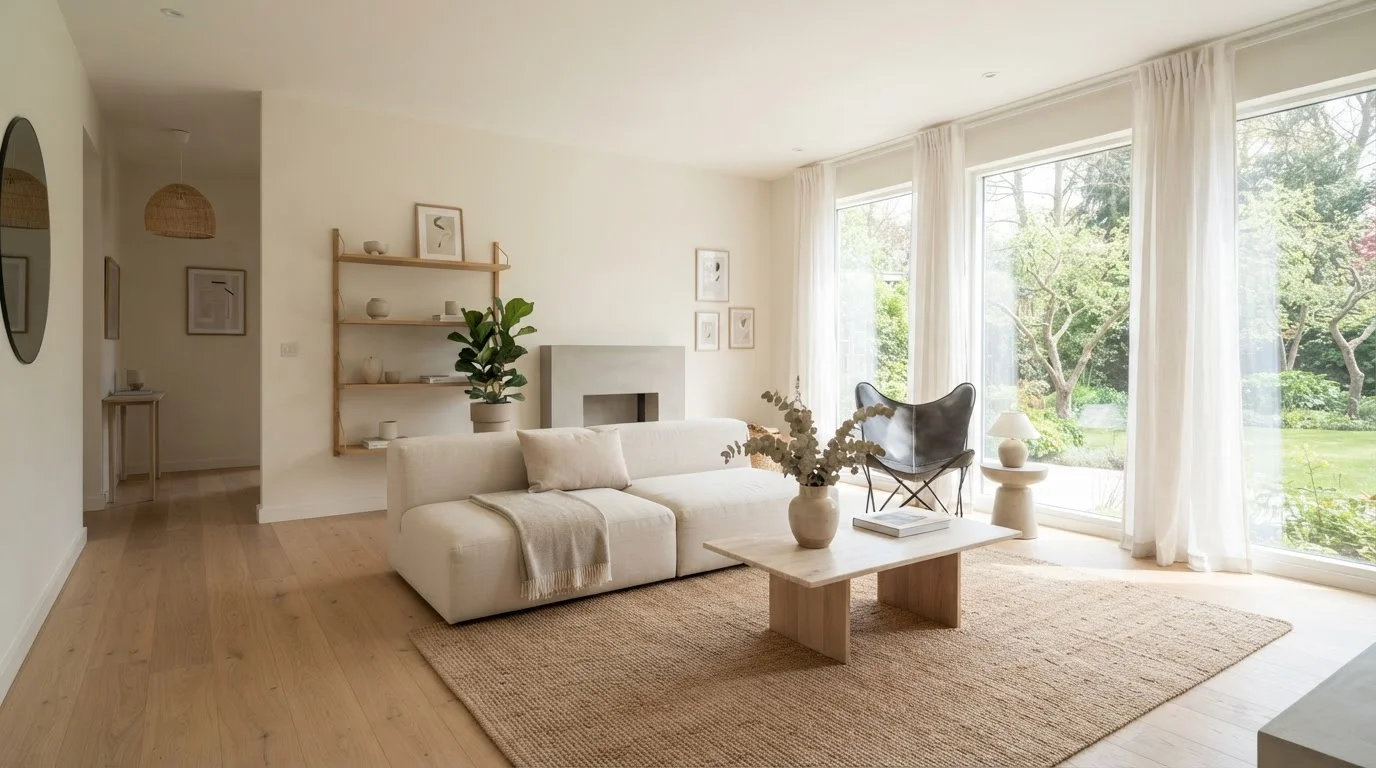
Fewer possessions directly reduces the time spent on household upkeep. Surfaces stay cleaner longer, and tidying takes minutes rather than hours when there's less to put away.
Lower ongoing household expenses
Each item you own carries a lifetime cost in repairs, replacements, and storage solutions. A smaller inventory shrinks that ongoing financial footprint over time.
Easier to find and use what you actually own
Overstuffed closets and drawers make it harder to locate items quickly, often leading to duplicate purchases. A leaner home makes everything more accessible and reduces waste.
Reduced decision fatigue in daily routines
Too many options — from what to wear to which pan to use — adds low-level mental friction to everyday tasks. Fewer choices can make routines faster and less draining.
More intentional use of available space
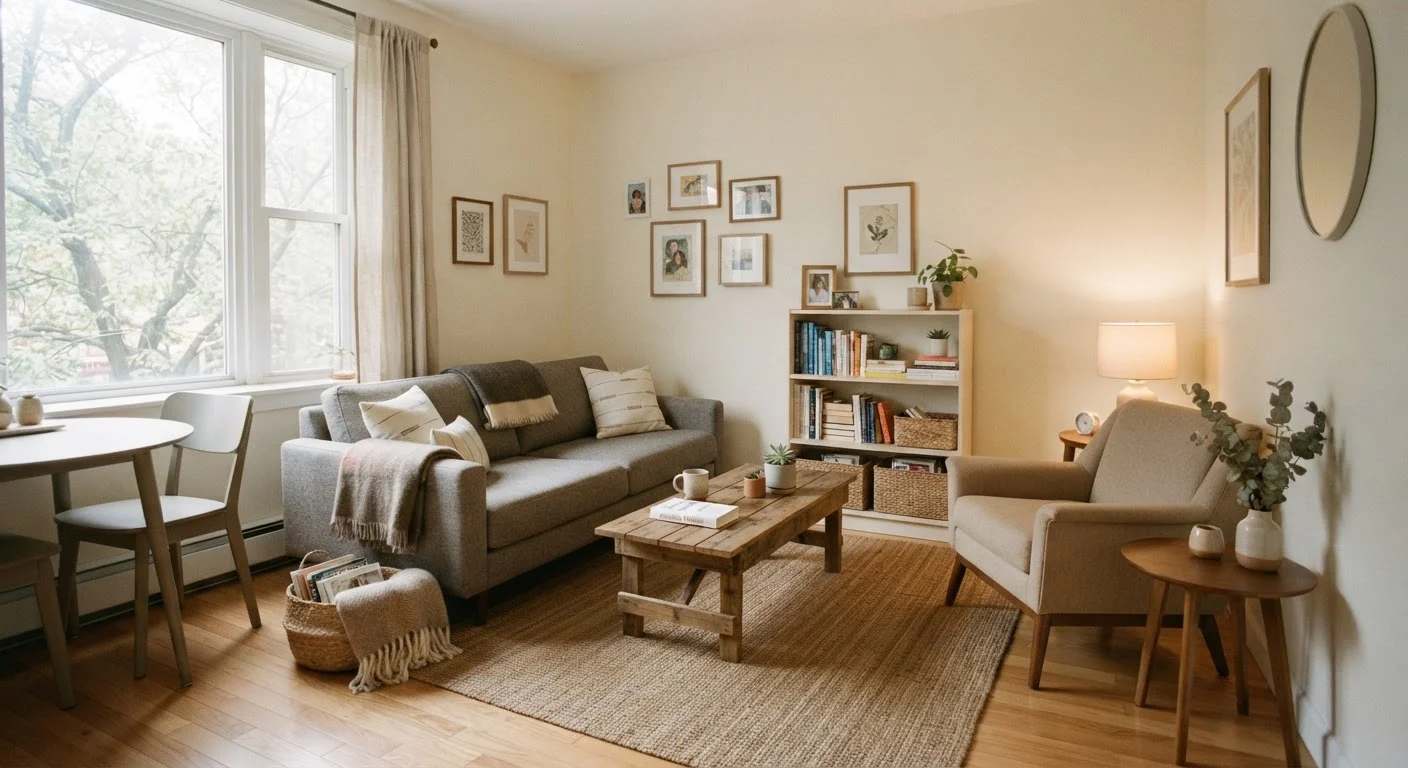
When possessions are deliberately chosen, rooms can be arranged for actual use rather than storage overflow. This is especially valuable in smaller homes and apartments.
25%
Of garage space used for storage, not cars
According to the U.S. Department of Energy, roughly one in four American households uses their garage primarily for storage rather than vehicles — a sign of how quickly possessions outpace available space.
40%
Of household items rarely or never used
Home organization research frequently estimates that a significant proportion of household possessions go unused for extended periods, contributing to clutter without adding functional value.
Beyond the financial angle, there's a functional one. Homes with fewer possessions are generally easier to organize and keep clean — which matters practically when you're managing a busy household. Rooms with clear surfaces take a fraction of the time to tidy compared to those with items stacked on every available inch.
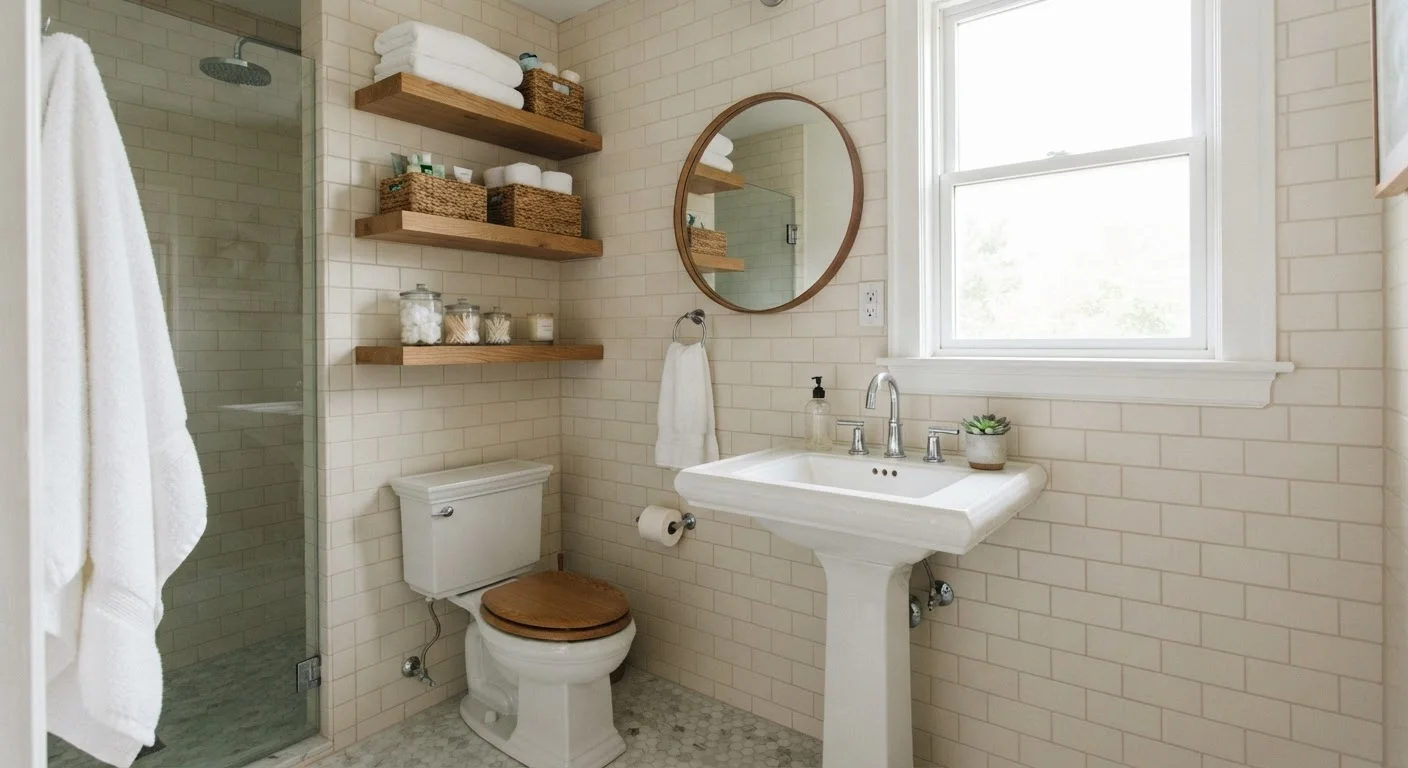
For households navigating limited square footage, this matters even more. The storage and layout ideas for small bathrooms article illustrates how decluttering and smarter item selection can transform even the tightest spaces without renovation.
The Honest Trade-Offs
Owning fewer things has real costs, and ignoring them sets people up for frustration. The biggest challenge is upfront: if you're buying fewer items, the ones you do buy need to work harder and last longer — which usually means spending more per item, not less overall.
Higher upfront cost per item required
Owning fewer things only works sustainably if what you do own is durable. That usually means spending more per purchase — a challenge for households on tight budgets.
Risk of discarding genuinely useful items
Aggressive decluttering can lead to removing things you'll need later, resulting in repurchasing at added cost. Distinguishing 'rarely used' from 'never needed' takes honest self-assessment.
Can require upfront planning and discipline
Running a leaner home isn't passive — it requires ongoing decisions about what enters the household. Without consistent habits, possessions tend to accumulate again over time.
May not suit every household or lifestyle
Households with children, hobbyists, or people with specific accessibility needs often require more items by necessity. A one-size approach to minimizing can create real functional gaps.
There's also a hidden risk in reducing too fast. Households that pare back essentials without first understanding what they genuinely use often end up re-buying items they discarded. That cycle is expensive and wasteful, which defeats the original purpose.
If budget is a constraint, the sequencing of purchases matters enormously. The guide to stocking a home on a tight budget covers how to prioritize household purchases without creating gaps that cost more to fill later.
Making Multi-Use Items Do the Heavy Lifting
One of the most practical tools for owning less without sacrificing function is the multi-use item. A single piece that serves two or three purposes displaces several single-purpose objects — reducing storage needs and purchase frequency simultaneously.
This principle applies to furniture, kitchenware, and household tools alike. A storage ottoman replaces both a coffee table and a separate storage bin. A cast iron skillet handles stovetop, oven, and grill cooking. A good chef's knife makes several more specialized blades unnecessary for most home cooks.
The multi-use household tools vs. single-purpose gadgets breakdown goes deeper on how to evaluate whether a versatile item actually replaces its single-use counterparts in practice — a worthwhile read before making any significant purchase.
For furniture specifically, multifunctional furniture for space-constrained homes offers guidance on what to look for when a single piece needs to earn multiple roles.
Multi-Use Doesn't Always Mean Better
A multi-purpose item is only worth owning if it performs each function adequately for your actual needs. A combination tool that does three things poorly can be less useful than a single dedicated item that does one thing well. Before consolidating, test or research whether the versatile option genuinely meets your standards for each intended use. In some cases — particularly in the kitchen or with precision tasks — a specialized tool remains the more practical choice.
Building Better Buying Habits From the Start
The most effective way to run a leaner home isn't aggressive decluttering — it's more deliberate purchasing from the outset. Every item that enters your home eventually needs to be cleaned, stored, or discarded. Front-loading that decision saves time and money over years.
A few questions worth applying before any non-essential purchase: Does this replace something I already own? Will it earn its storage space? Would I buy it again if I lost it? These aren't rigid rules, but they create a natural filter against accumulation.
For anyone setting up or resetting a home with budget constraints, furnishing a home on a tight budget lays out a planning framework that prioritizes function and durability before aesthetics — an approach that naturally supports owning fewer, better things. And in the kitchen specifically, setting up a functional kitchen without overbuying shows how a short list of quality tools outperforms a drawer full of gadgets in daily practice.