
Why Home Fitness Works for Beginners
Starting a fitness routine is often harder in theory than in practice. The biggest obstacle for most beginners isn't lack of motivation — it's the belief that getting fit requires a gym, expensive equipment, or some kind of prior experience. None of that is true.
Home fitness removes the logistical barriers that cause most people to quit before they start: no commute, no membership cost, no crowd to feel self-conscious in front of. Research consistently shows that adherence — sticking to a routine long enough for it to work — is the single most important factor in fitness progress. Anything that makes showing up easier directly improves your results.
For a deeper look at why bodyweight training holds its own against gym-based exercise, see our science-backed breakdown of no-equipment home fitness.
Consult a Professional Before You Begin
If you have a chronic health condition, joint pain, a recent injury, or have been largely sedentary for an extended period, speak with a qualified healthcare provider before starting a new exercise routine. This guide provides general educational information only and is not a substitute for personalized medical advice.
Setting Up Your Space
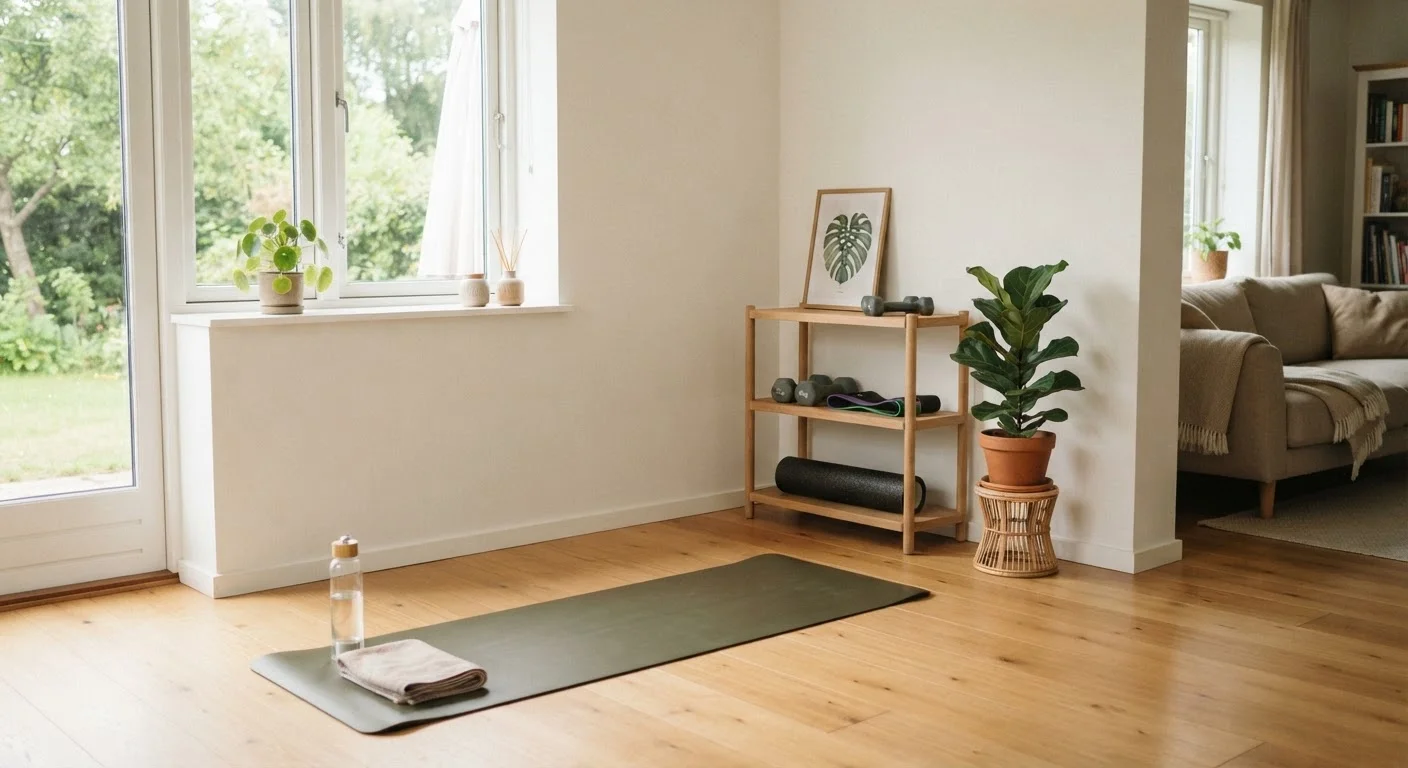
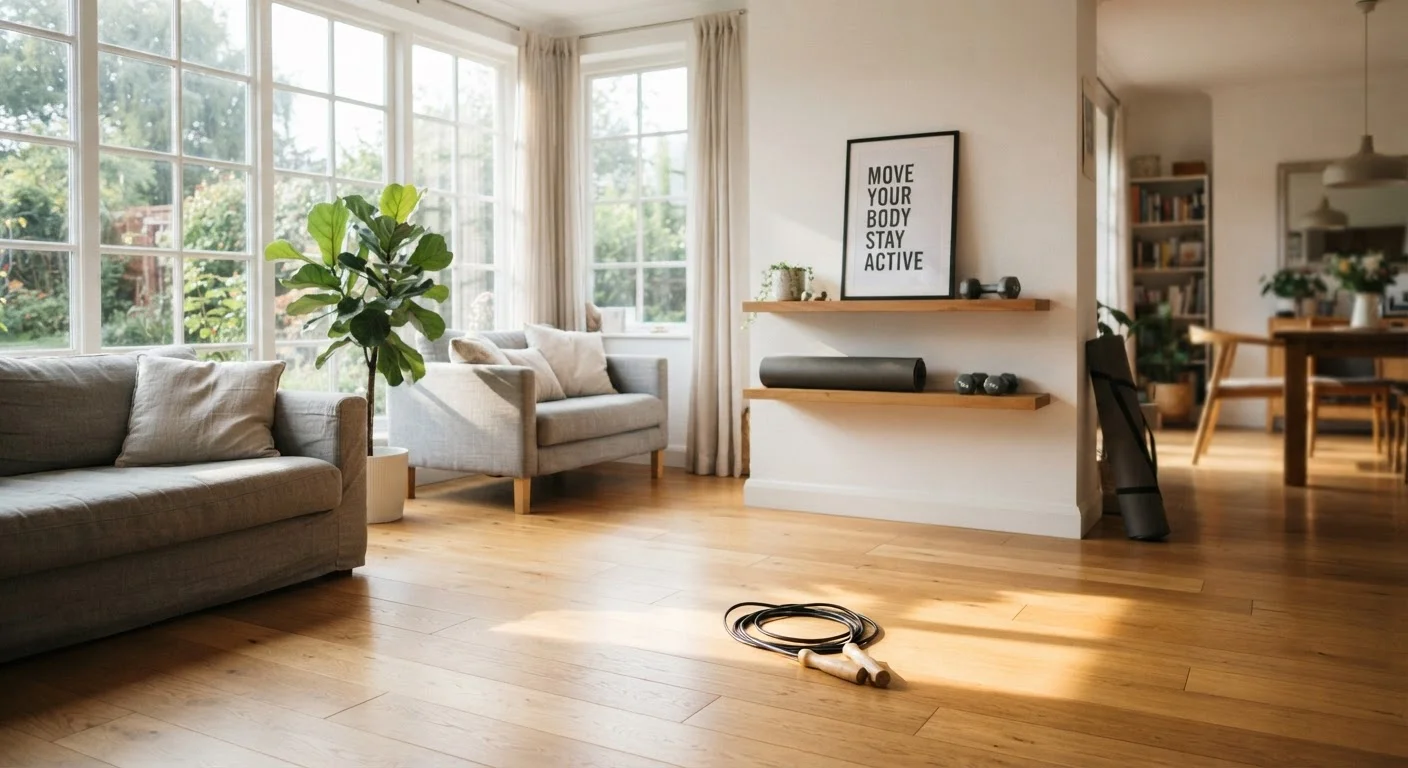
You don't need a dedicated room or special flooring. Most beginner workouts require only enough floor space to lie down and extend your arms — roughly a six-by-four-foot area. A cleared patch of living room, bedroom, or even a patio is more than sufficient.
A few practical considerations make workouts safer and more comfortable:
- Surface: A yoga mat or folded blanket cushions joints during floor exercises. Hardwood or tile works fine for standing movements.
- Ventilation: Open a window or run a fan. Good airflow helps manage body temperature, especially during cardio.
- Footwear: Supportive athletic shoes are worth using for most exercises. Bare feet are fine for low-impact floor work on a non-slip surface.
For a full checklist on creating a functional home workout area, visit our guide to setting up a safe home workout space.
Understanding the Building Blocks of Exercise
Effective fitness routines draw from three types of movement. Understanding each helps you build a balanced program rather than just doing random exercises.
Bodyweight exercise
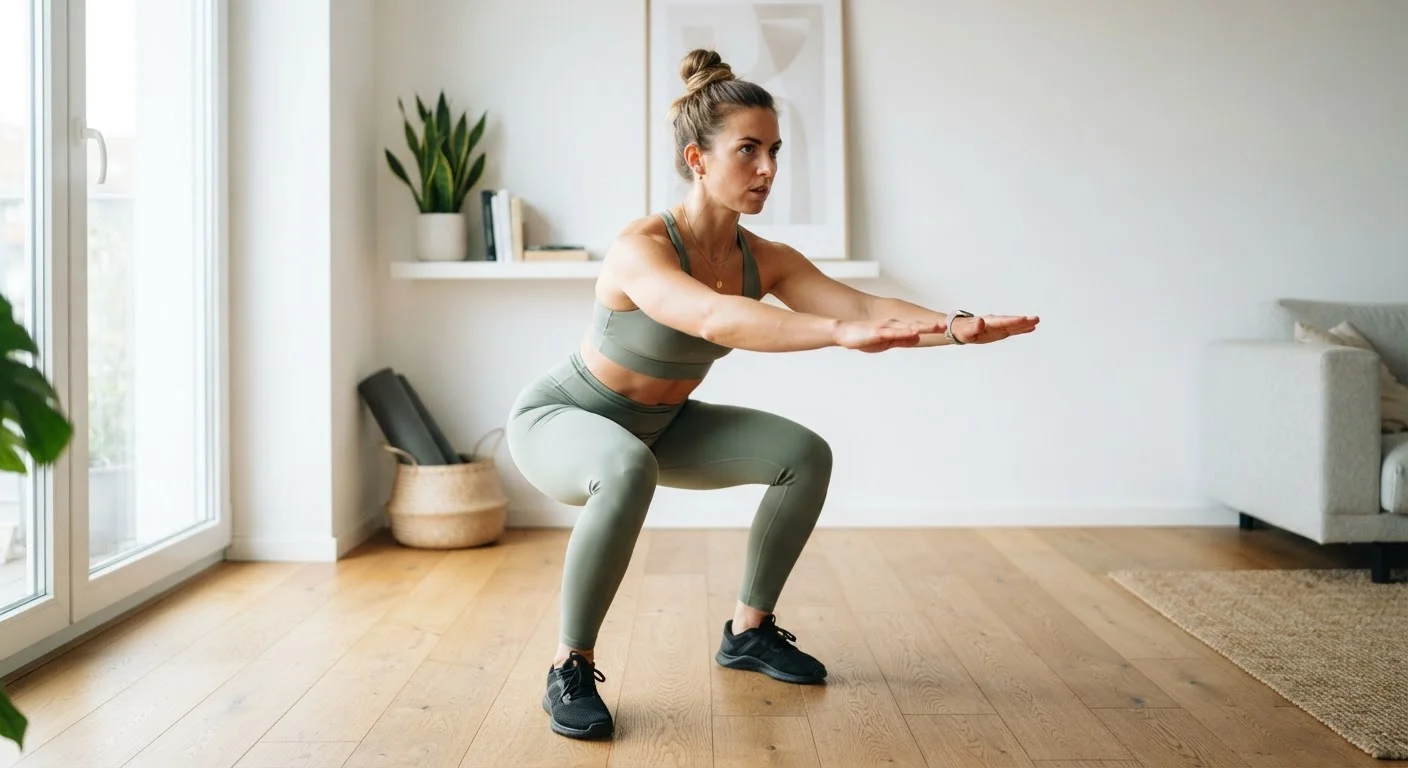
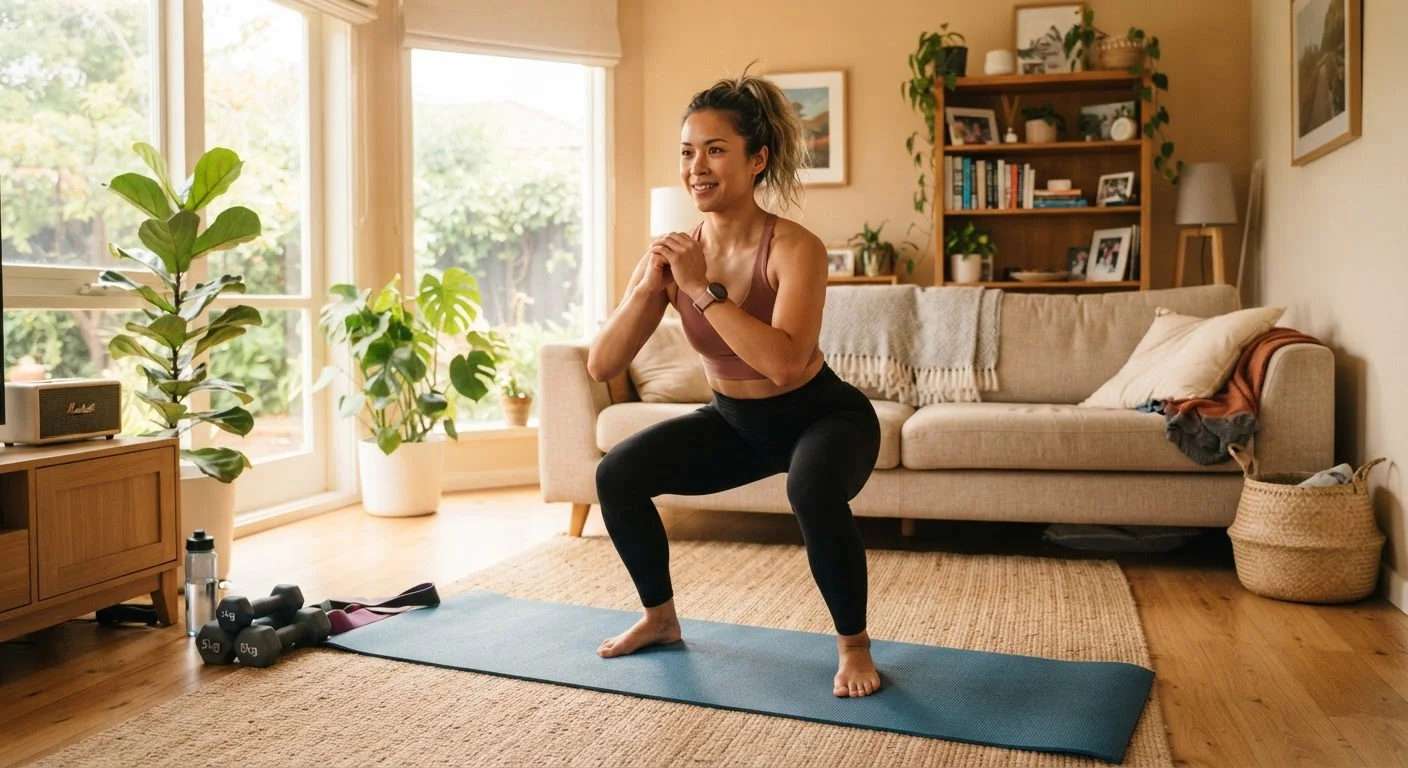
Any movement that uses your own body as resistance, such as squats, push-ups, or lunges — no weights or machines needed.
Repetitions (reps)
The number of times you perform a single movement in a row, for example, doing ten squats in a row equals ten reps.
Sets
A group of repetitions followed by a rest period. Three sets of ten push-ups means you do ten push-ups, rest, then repeat that cycle two more times.
Progressive overload
Gradually making exercise harder over time — by adding reps, sets, or difficulty — so your body keeps adapting and growing stronger.
Recovery
The rest time your body needs between workouts so muscles can repair and grow stronger. Skipping recovery increases injury risk.
Cardiovascular exercise (cardio)
Activities that raise your heart rate for a sustained period, such as jumping jacks, marching in place, or stair climbing, which strengthen the heart and lungs.
- Strength training
- Builds muscle and supports bone health. Bodyweight examples include squats, push-ups, and lunges.
- Cardiovascular exercise
- Trains heart and lung efficiency. Home options include jumping jacks, marching in place, and stair climbing. See cardio options that require no treadmill for more ideas.
- Flexibility and mobility work
- Reduces injury risk and supports joint health. Simple stretching at the end of a session counts.
For a full reference on how these categories work together, see Strength, Cardio, and Flexibility: A Reference Guide to Home Exercise Types.
Your First Week: A Simple Starting Point
The goal of your first week is not maximum effort — it's establishing the habit and learning how your body responds to movement. Aim for two or three sessions, each lasting 15 to 25 minutes, with at least one rest day between sessions.
A beginner-friendly session might include:
- A 3–5 minute warm-up: light marching in place, arm circles, and gentle hip rotations
- Two to three strength movements (e.g., bodyweight squats, wall push-ups, and a plank hold) performed for one to two sets each
- A short cardio burst of two to five minutes: jumping jacks or step-touches
- A 3–5 minute cool-down with slow, held stretches targeting the legs, hips, and shoulders
Keep movements slow and controlled. If something causes sharp pain — not normal muscle effort, but pain — stop and rest. Soreness in the day or two after a workout is common and expected; sharp or joint pain during exercise is a signal to pause and consult a professional.
Track Even the Smallest Wins
Write down what you did after each session — even just the exercises and how many reps. Seeing a two-week log on paper makes motivation far easier to maintain than relying on how you feel on any given day. A notes app on your phone works just as well as a dedicated journal.
When you're ready to build on this foundation, building a structured weekly routine is a natural next step.
How to Keep Going Without Burning Out
Consistency is built through sustainable habits, not intense bursts. The most common beginner mistake is doing too much too soon, hitting fatigue or soreness, and quitting. A slower start nearly always produces better long-term results.
Practical strategies for staying on track:
- Schedule sessions like appointments. Pick specific days and times, and protect them the way you would a work meeting.
- Expect off days. Missing one session is not failure. Missing one session and then skipping the next week is a pattern worth addressing early.
- Progress gradually. Add one extra rep or a slightly longer session every week or two rather than jumping to harder variations before you're ready.
- Pair exercise with food that fuels it. You don't need supplements or a special diet, but regular meals with adequate protein and carbohydrates support energy and recovery.
Nutrition Supports Your Effort
Exercise and nutrition work together. You don't need a special diet to start working out, but eating balanced, whole foods regularly will support your energy and recovery. Our Nutrition Basics hub offers practical, budget-friendly guidance on everyday healthy eating.
If time is a recurring obstacle, training principles for busy people covers strategies for making short sessions count. For a more complete long-term roadmap, Your Complete Home Fitness Playbook walks through progression, recovery, and staying motivated over time.
This article is for general informational and educational purposes only and does not constitute medical advice. Always consult a qualified healthcare professional before beginning any new exercise program, particularly if you have a health condition, injury, or other medical concern.