
Why Home Fitness Works (and Who It's For)
Home fitness has moved well beyond jumping jacks and dated workout videos. Research consistently shows that structured bodyweight training improves muscular strength, cardiovascular health, and metabolic function — outcomes once thought to require heavy equipment. For everyday Americans balancing work, family, and tight budgets, training at home removes the single biggest barrier to exercise: getting there.
No commute. No membership fees averaging $50–$60 per month. No waiting for machines. Whether you're a complete beginner or returning after a long break, the principles that drive progress are the same regardless of your zip code or floor plan. If you're just getting started, our guide Home Fitness for Absolute Beginners walks through the fundamentals before you break a sweat.
This article provides general health information and education only. It is not a substitute for advice from a qualified healthcare or fitness professional. Consult a professional before beginning any new exercise program, especially if you have existing health conditions.
Setting Up Your Space and Choosing Equipment
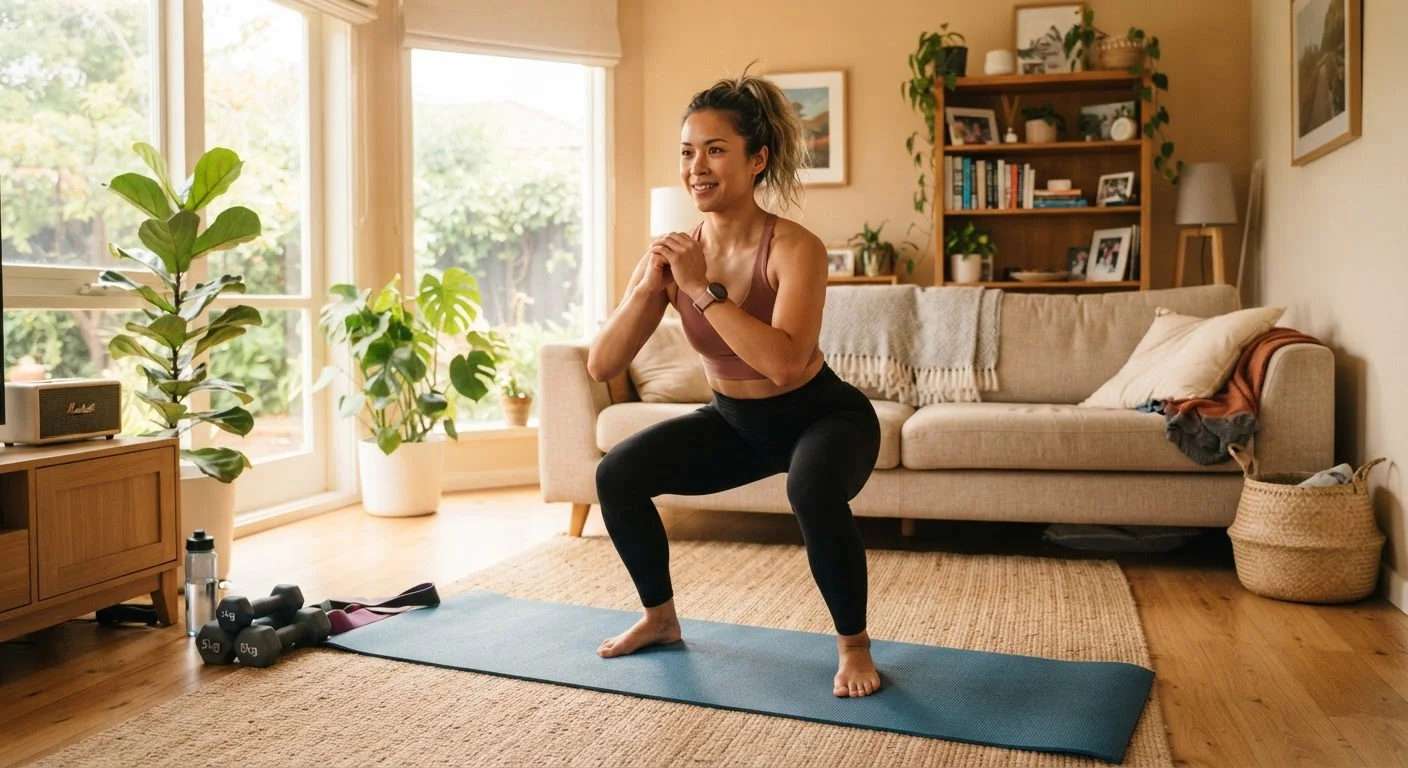
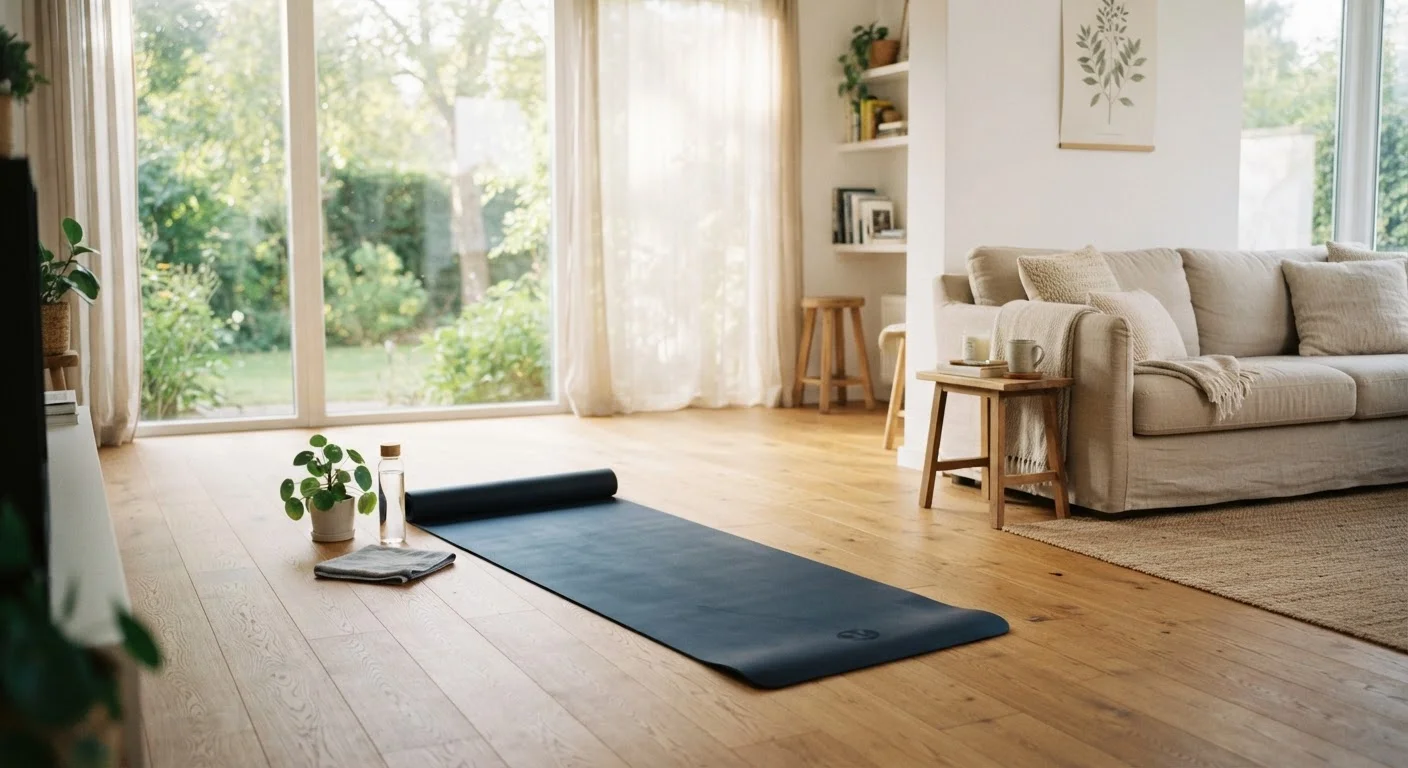
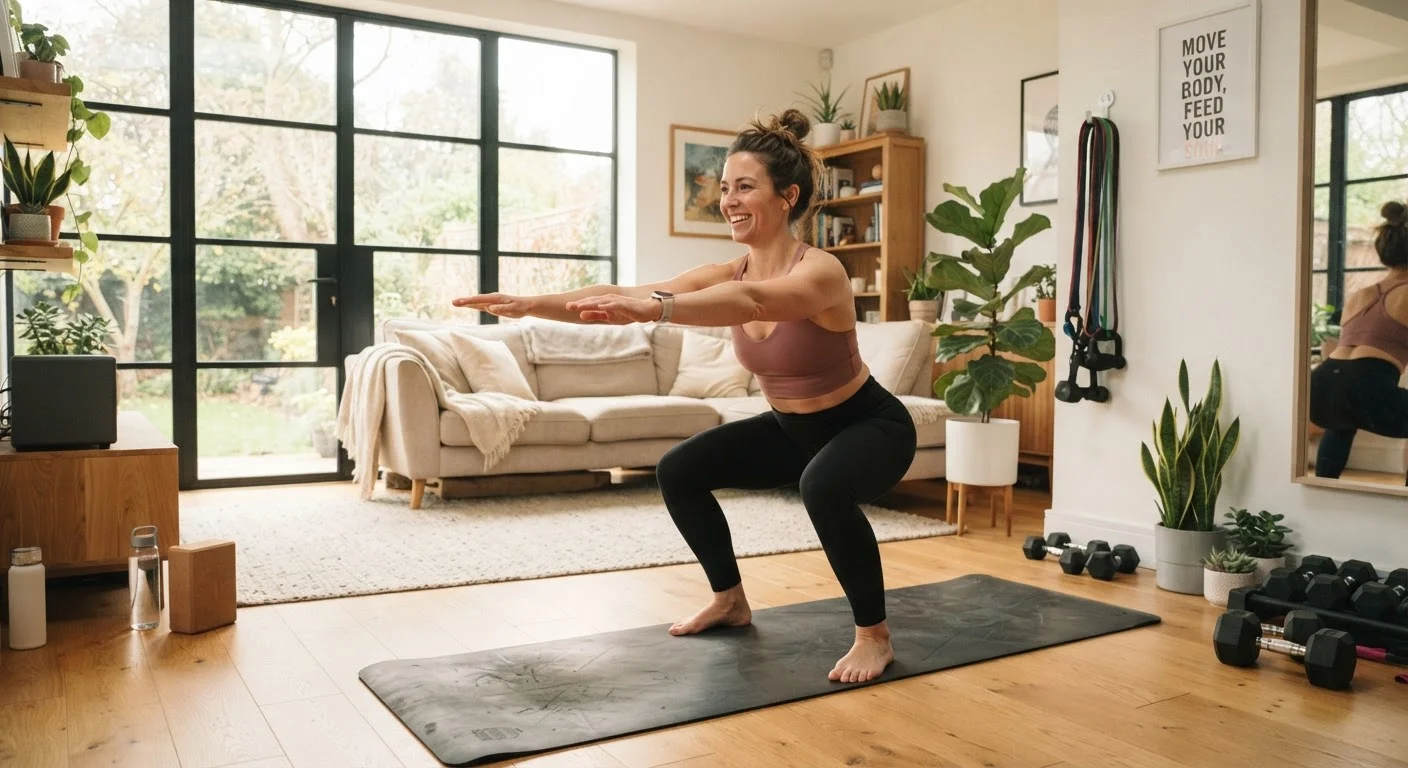
You need surprisingly little space — roughly a 6-by-4-foot clear area is enough for most bodyweight movements. A yoga mat protects your joints on hard floors and costs under $25 at most general merchandise retailers. Beyond that, the most impactful low-cost additions are a set of resistance bands (typically $10–$20) and a pair of adjustable dumbbells if your budget allows.
Resist the urge to buy equipment before you've established a habit. Many people accumulate gear that collects dust. Start with what you have, prove the routine sticks for four to six weeks, then invest selectively. When evaluating any equipment purchase, prioritize versatility — tools that support multiple movement patterns (push, pull, hinge, squat, carry) deliver the most value per dollar.
Before buying any fitness equipment, spend two full weeks training with only your bodyweight. This reveals exactly which movements feel limiting — and ensures any purchase addresses a real gap.
Most home fitness equipment goes unused because it's purchased before a training habit is established. Proving the habit first prevents wasted spending.
Use a 'minimum viable workout' rule: if you can't do your full session, do 10 minutes of your hardest movements only. Consistency over months matters far more than any single session's volume.
Behavioral research on habit formation shows that breaking the chain — skipping entirely — is far more damaging to long-term adherence than a shortened effort.
Good lighting and a dedicated corner — even a small one — signal to your brain that it's time to train. Environmental cues matter more than most people realize for habit formation.
Building Your First Routine
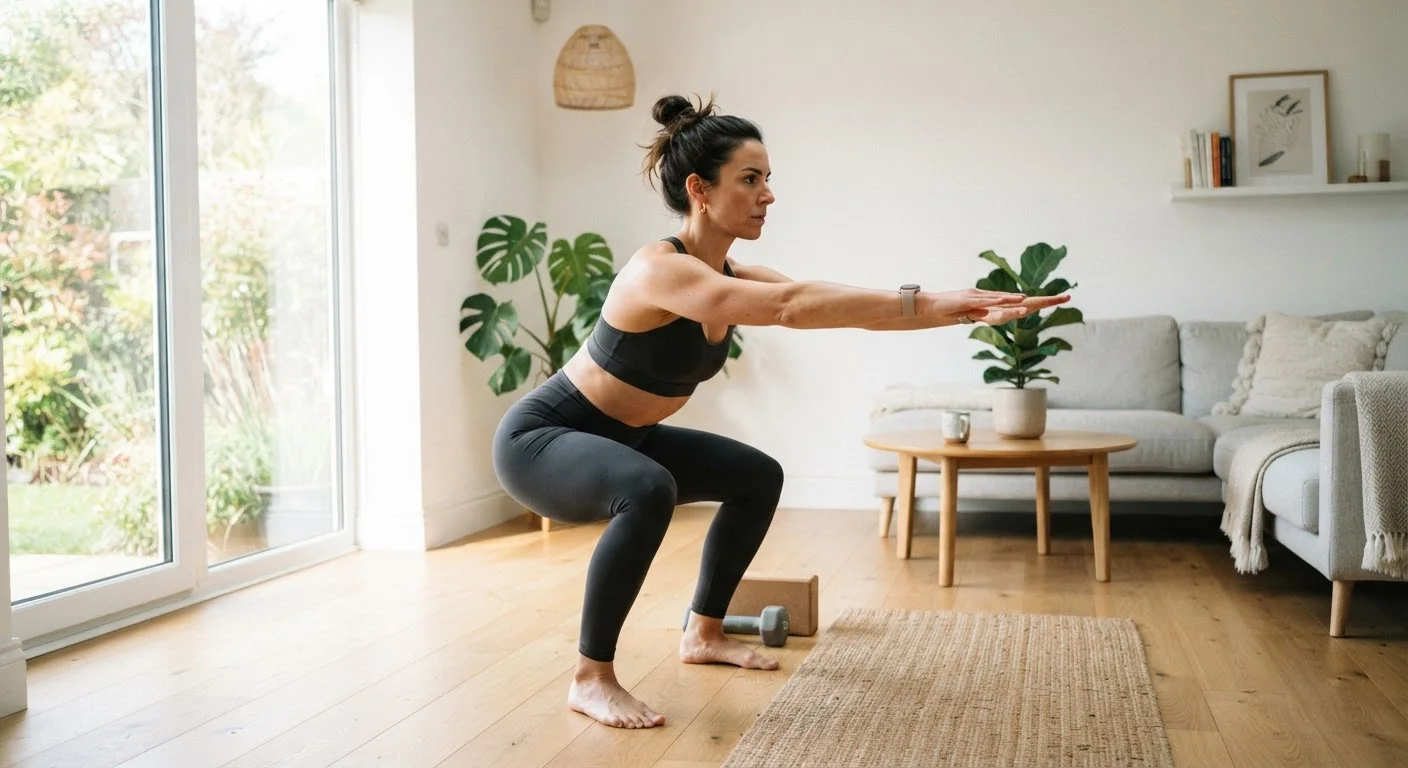
A well-structured home routine addresses five fundamental movement patterns: squat, hinge, push, pull, and core bracing. Together, these patterns train every major muscle group without a single machine. An example beginner framework might look like this:
- Squat pattern: Bodyweight squats, split squats, or step-ups
- Hinge pattern: Glute bridges, single-leg deadlifts with a water jug for load
- Push pattern: Push-ups (varied hand positions to adjust difficulty)
- Pull pattern: Resistance band rows, doorframe-assisted rows
- Core: Dead bugs, planks, bird-dogs
Aim for two to three sessions per week when starting out. Each session can be completed in 20–30 minutes. Our companion resource Building a Weekly Workout Routine Around Your Living Room offers a ready-to-use weekly schedule structured around exactly this approach. If your schedule feels tight, Home Fitness on a Tight Schedule covers how to maximize short sessions.
Progressive Overload: How to Keep Getting Stronger
Progressive overload — the practice of gradually increasing the demand placed on your body over time — is the foundational principle behind all fitness adaptation. Without it, even a good routine plateaus within weeks. With bodyweight training, overload doesn't require heavier weights; it comes from manipulation of variables.
$600+
Average annual gym membership cost
Based on reported average membership fees across major U.S. gym chains, excluding initiation fees or premium tiers.
2–3x/week
Minimum effective training frequency
General physical activity guidelines from major public health bodies suggest at least two days of muscle-strengthening activity per week for adults.
6 ft²
Minimum floor space needed for most bodyweight workouts
A standard yoga mat footprint is sufficient for the majority of push, squat, hinge, and core movements performed in home training.
Practical ways to apply progressive overload at home include:
- Increase reps or sets — Do 3 sets of 12 instead of 3 sets of 8.
- Slow the tempo — A 3-second lowering phase (eccentric) dramatically increases difficulty.
- Reduce rest time — Shortening rest from 90 to 60 seconds increases cardiovascular demand.
- Progress the movement — Move from regular push-ups to decline push-ups or archer push-ups.
- Add external load — A filled backpack, water jugs, or resistance bands add resistance without major expense.
Track your sessions in a simple notebook or free phone app. When you can complete all prescribed reps with good form and two to three reps left in reserve, it's time to progress.
Recovery, Rest, and Injury Prevention
Fitness gains happen during rest, not during the workout itself. Exercise creates stress; sleep and recovery convert that stress into adaptation. Most adults need seven to nine hours of sleep per night for optimal muscle repair and hormonal balance, according to general guidance from sleep health researchers.
Active recovery — light walking, gentle stretching, or mobility work on rest days — promotes blood flow without adding training stress. Mobility work, in particular, is chronically undervalued. Spending 5–10 minutes on hip flexors, thoracic spine, and ankle mobility after each session reduces injury risk and improves movement quality over time.
Know the difference between discomfort (the normal burn of working muscles) and pain (sharp, localized, or joint-based signals). Pain is a stop signal. If you experience persistent joint pain, unusual swelling, or sharp sensations during exercise, stop and consult a healthcare professional before continuing. Fueling recovery with adequate protein and overall calories matters too — our Nutrition Basics hub covers practical, affordable dietary guidance that complements any fitness routine.
Staying Motivated for the Long Haul
Motivation is unreliable as a primary driver; systems and identity are what sustain exercise over months and years. Behavioral research suggests that habit formation is more durable when exercise is attached to an existing routine (such as immediately after morning coffee) and when early wins are visible and recorded.
Practical strategies with strong real-world track records include:
- Minimum viable workouts: On low-energy days, commit to just 10 minutes. Usually you'll continue — and even if you don't, the habit chain stays intact.
- Progress photos and logbooks: Objective records combat the psychological effect of not feeling different day-to-day.
- Accountability partners: Sharing a weekly check-in with a friend — even via text — meaningfully increases adherence in behavioral studies.
- Vary stimulus, not structure: Keep the framework consistent while rotating exercises to prevent boredom without losing progressive continuity.
Reframe fitness as something you do for yourself rather than something you owe to an ideal outcome. Progress will not be linear — weeks will be missed, energy levels will fluctuate. Building resilience around imperfection is as important as any exercise selection.