
Why Cardio Without a Treadmill Is More Than a Compromise
Treadmills are one option for cardiovascular exercise — not the only one, and certainly not a prerequisite for meaningful aerobic fitness. A wide range of activities can deliver comparable cardiovascular benefit with far less cost and space. Understanding what these options are, and how to use them effectively, opens up home fitness to nearly anyone regardless of budget or living situation.
For a broader understanding of how cardio fits alongside strength and flexibility work, the reference guide to home exercise types is a useful companion. Below are six practical cardio methods worth adding to your routine.
Set Up Your Space Before You Start
Clear a zone of at least six feet by six feet before any session involving jumping or lateral movement. Remove rugs that might slip, check overhead clearance for rope work, and keep a water bottle nearby. A safe, organized space reduces injury risk and removes friction that might otherwise derail a session. See our guide to setting up a home workout area for a practical checklist.
Six Cardio Options That Work at Home
Jump Rope
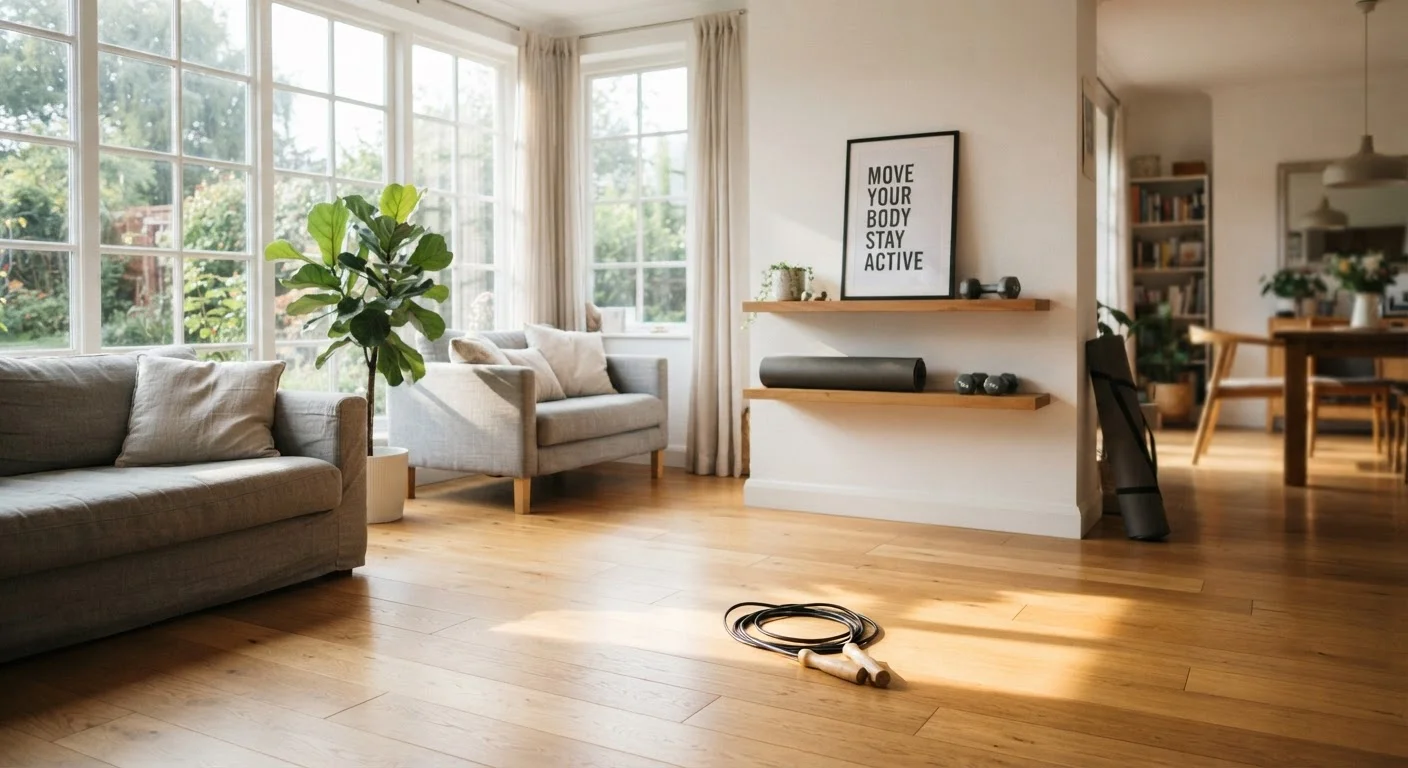
Few tools deliver as much cardiovascular work per dollar as a basic jump rope. Jumping rope elevates heart rate quickly, engages the calves, shoulders, and core simultaneously, and can be adapted from a slow, steady pace to high-intensity intervals. A 10-minute session can challenge even moderately fit individuals.
Beginners can start with shorter sets — jump for 20–30 seconds, rest, and repeat — gradually extending work periods as endurance builds. If coordination is a barrier, practice the arm motion without the rope first to develop timing. Ensure your ceiling height is adequate and use a surface with some give, such as a mat or low-pile carpet, to reduce joint stress.
A jump rope can deliver intense cardiovascular work in as little as 10 focused minutes.
Stair Climbing
If your home or apartment building has a staircase, you already own a cardio machine. Repeatedly ascending and descending stairs recruits the large muscle groups of the legs and glutes — exactly the muscle mass that drives elevated heart rate and caloric expenditure. It also builds functional lower-body strength as a secondary benefit.
A simple protocol: walk or jog up, walk down (descending at a controlled pace reduces impact and fall risk), and repeat for a set number of minutes. Those with knee concerns should prioritize the ascending portion and take the descent slowly. Check that the staircase is well-lit and that handrails are secure before beginning.
Stairs are an often-overlooked cardio tool that's already installed in millions of American homes.
Dance-Based Movement
Dancing to music is a legitimate aerobic activity that research has consistently linked to improved cardiovascular fitness, coordination, and mood. The informal nature of home dancing is an asset: there's no choreography required, no performance pressure, and it can be sustained longer than many traditional exercises simply because it's enjoyable.
Freely available video platforms host dance workout classes ranging from low-impact options to high-energy routines. Alternatively, putting on 20–30 minutes of upbeat music and moving continuously — shifting weight, stepping side to side, adding arm movements — can maintain an elevated heart rate without any structured format at all.
Dancing at home can sustain cardiovascular effort longer than many drills because enjoyment reduces perceived exertion.
Bodyweight Cardio Circuits
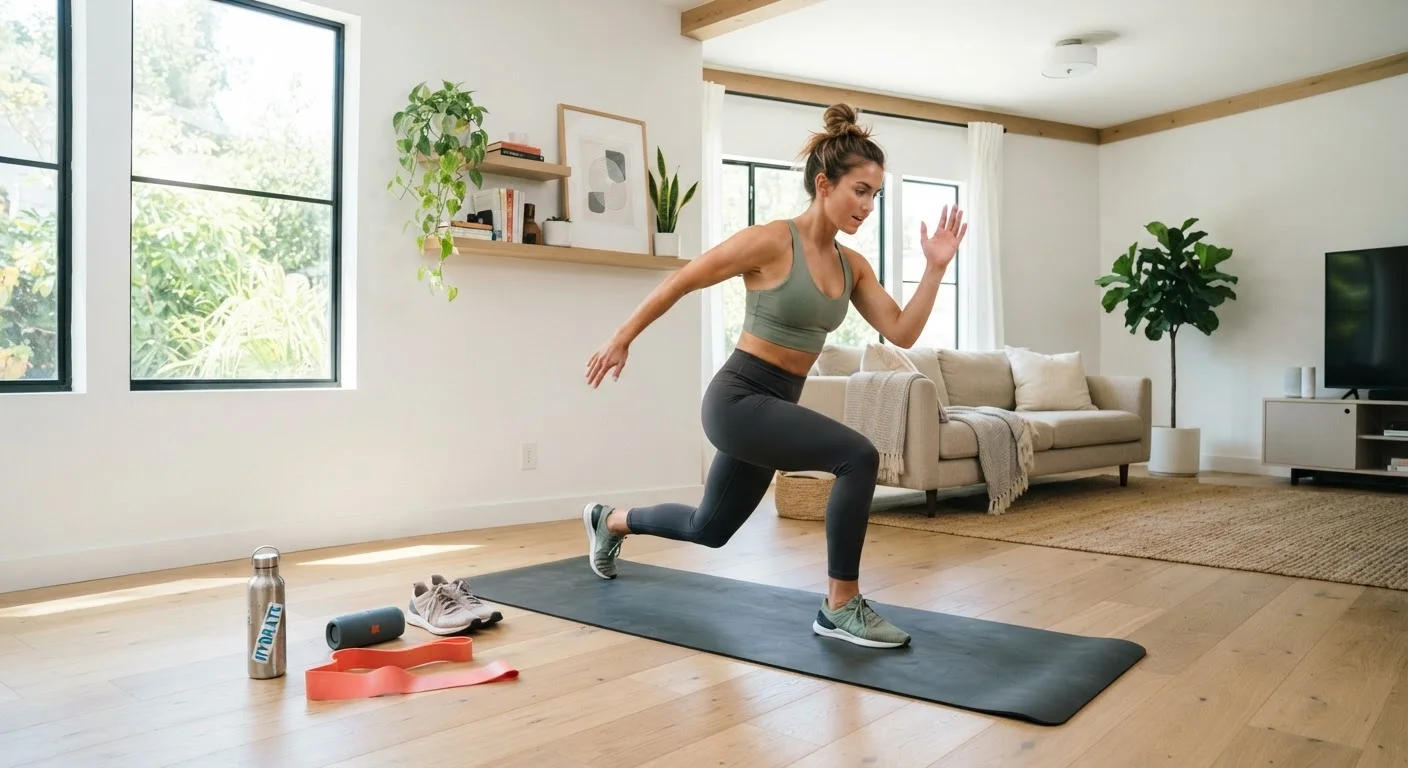
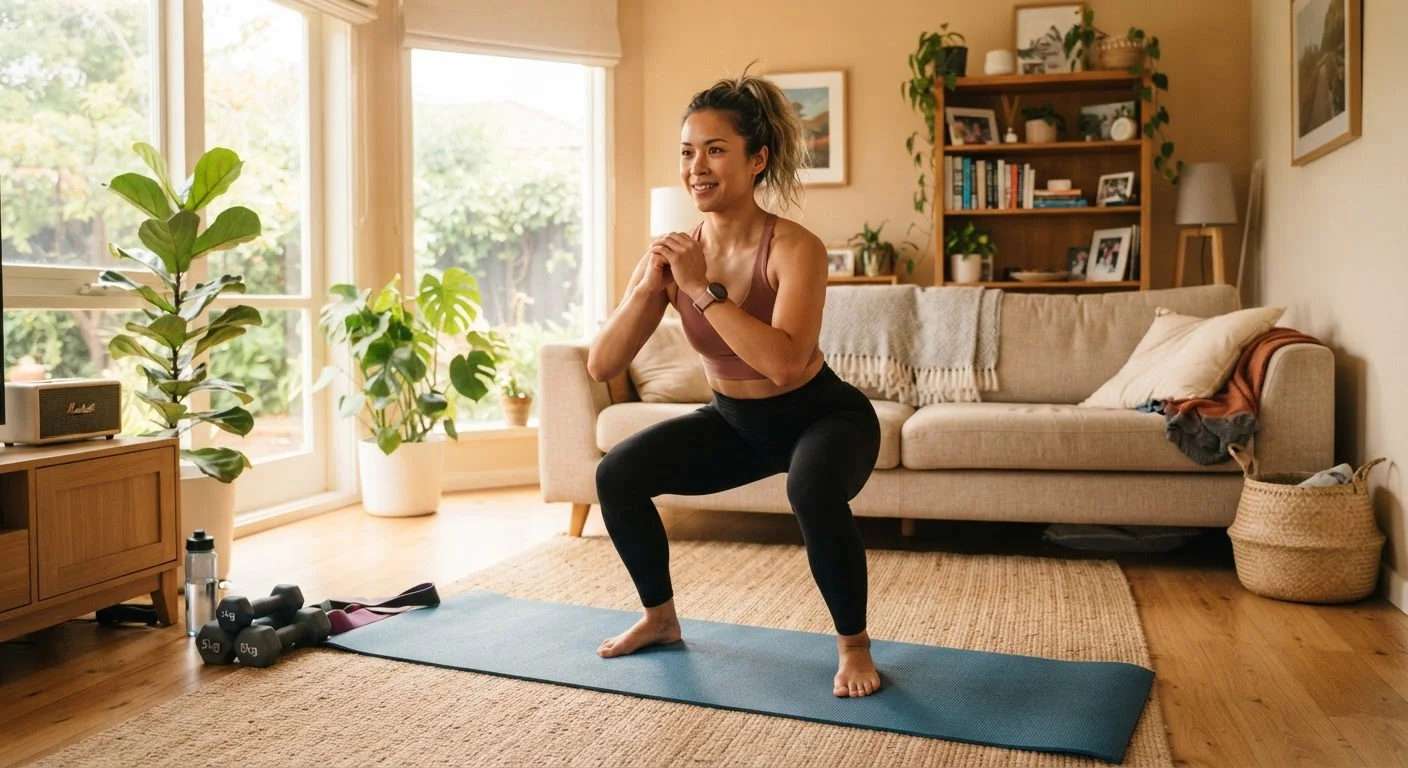
Movements like jumping jacks, high knees, mountain climbers, and squat jumps require zero equipment and can be organized into circuits that keep heart rate elevated continuously. The key principle is minimizing rest between exercises so the cardiovascular system stays engaged throughout — a format sometimes called circuit training.
A simple starter circuit: 30 seconds of jumping jacks, 30 seconds of high knees, 30 seconds of mountain climbers, 30 seconds of rest — repeated three to four times. For a deeper look at how these training formats compare, see what HIIT, LISS, and circuit training mean for home exercisers.
Chaining bodyweight movements with minimal rest keeps heart rate elevated without any equipment whatsoever.
Walking Indoors (Structured Pacing)
Walking laps through a home, hallway, or around a block is frequently underestimated as cardio. Brisk indoor walking — deliberately quickening pace, swinging arms, and maintaining upright posture — can raise heart rate meaningfully, particularly for beginners, older adults, or those returning from injury. It is low-impact, repeatable daily, and carries a very low risk of overexertion.
To increase intensity without going outside, add purposeful direction changes, step up and down from a sturdy step repeatedly, or carry light household objects (such as water bottles) to add mild resistance. The beginner's guide to home fitness offers additional grounding for those just starting out.
Brisk indoor walking remains one of the safest and most accessible cardio options for people at any fitness level.
Shadow Boxing
Shadow boxing — throwing punches, slips, and footwork combinations at the air — is a full-body cardiovascular workout used by competitive athletes and casual exercisers alike. It engages the core, shoulders, hips, and legs while maintaining an elevated heart rate through continuous movement. Because it requires no contact and no equipment, it is safe to practice in any modest open space.
Beginners can follow freely available guided shadow boxing videos or simply practice basic combinations (jab, cross, hook) while bouncing lightly on the balls of their feet. Sessions of 15–20 minutes at moderate intensity offer genuine aerobic benefit. Wearing comfortable, supportive footwear is advisable to protect ankles during lateral movements.
Shadow boxing engages the whole body and sustains aerobic effort with zero equipment and minimal floor space.
Choosing the Right Intensity for You
General public health guidance from organizations like the CDC suggests that adults aim for at least 150 minutes of moderate-intensity aerobic activity per week — or 75 minutes of vigorous-intensity activity — spread across most days. 'Moderate intensity' generally means you can speak in short sentences but would find it hard to sing. These are population-level guidelines, not personal prescriptions. Speak with a healthcare provider about what intensity range is appropriate for your specific health status, age, and fitness level.
Putting It Together
Variety helps sustain adherence over time. Rotating between jump rope, stair sessions, dance, and bodyweight circuits keeps workouts engaging while distributing stress across different muscle groups. The framework for building a weekly workout routine can help you organize these options into a balanced weekly schedule. For readers interested in whether bodyweight movement alone can drive real fitness gains, no-equipment home fitness: what actually works and why offers the underlying reasoning.
This article provides general health and fitness information for educational purposes only and is not a substitute for personalized medical or professional advice. Consult a qualified healthcare provider before beginning any new exercise program, especially if you have existing health conditions or concerns.