
Why Your Bodyweight Is a Legitimate Training Tool
Skepticism about no-equipment fitness is understandable. Gym culture has long equated progress with heavier barbells and fancier machines. But the underlying biology of how muscles adapt doesn't care about the source of resistance — only that sufficient tension is applied consistently over time.
When you lower into a squat or push yourself up from the floor, your muscles generate force against the load your own body provides. That force triggers microscopic muscle fiber stress, which the body repairs and reinforces during recovery. The result — given enough repetitions, difficulty, and rest — is increased strength and improved muscular endurance. This process is well-established in exercise science and isn't exclusive to weighted training.
For everyday Americans who want to stay active without a gym membership, this matters practically. You don't need to spend money to start improving your fitness. You need a plan, a few square feet of floor space, and an understanding of the principles that actually drive progress. See our beginner's guide to home fitness if you're starting from scratch.
Start With Form, Not Volume
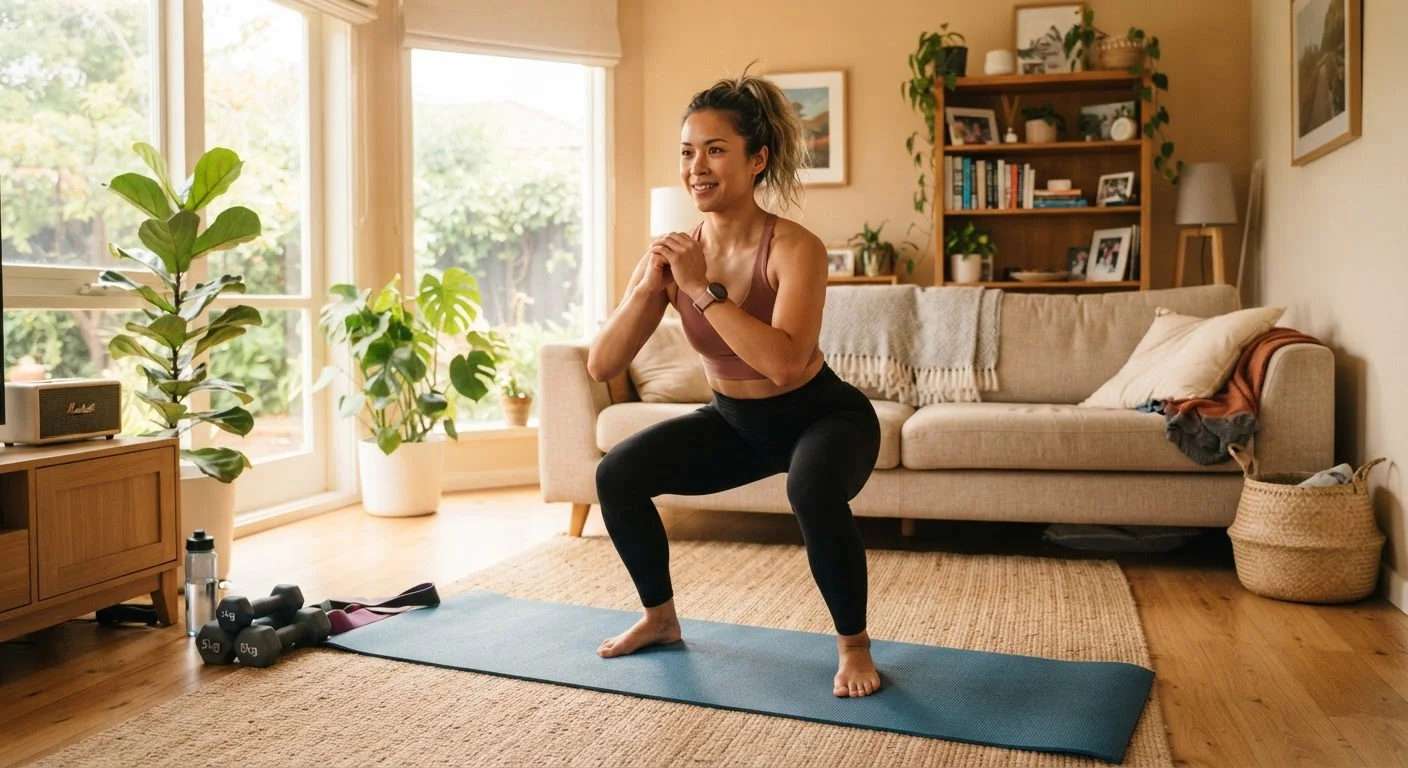
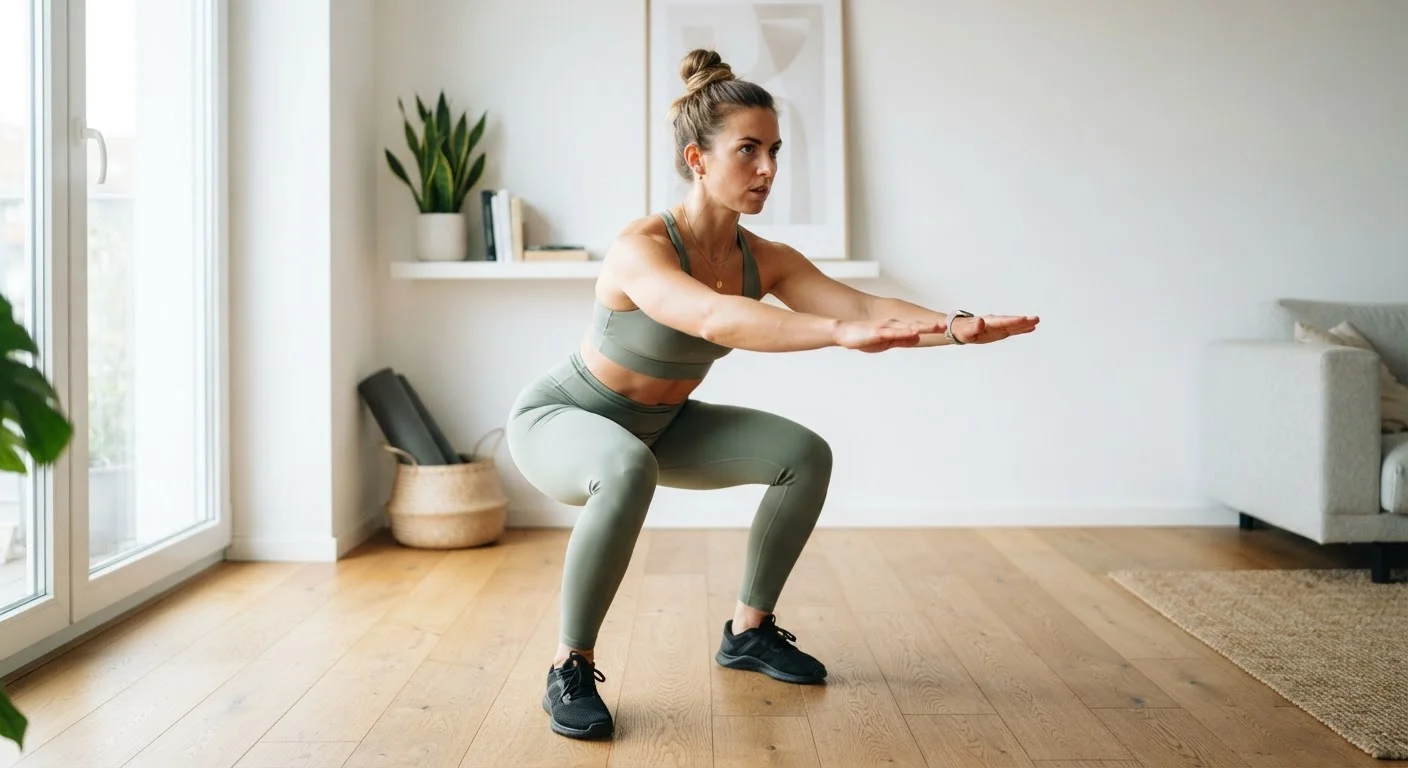
When beginning any bodyweight routine, prioritize movement quality over quantity. A correctly performed squat — knees tracking over toes, chest upright, controlled descent — builds the neuromuscular patterns that make future progression safe and effective. Add repetitions only after the movement feels controlled and consistent.
The Science of Progressive Overload Without Weights
Progressive overload — gradually increasing the demand placed on your body — is the single most important training principle regardless of equipment. With weights, progression typically means adding load. Without equipment, it means changing the variables you do control.
Those variables include:
- Leverage: Elevating your feet during a push-up shifts more load onto the upper chest and shoulders.
- Range of motion: A deeper squat recruits more muscle across a longer movement arc.
- Tempo: Slowing the lowering phase of a movement (the eccentric phase) increases time under tension without adding weight.
- Volume: Adding sets or repetitions over time is a straightforward progression strategy.
- Rest periods: Shortening rest between sets increases cardiovascular demand and metabolic stress.
These levers allow a well-designed bodyweight routine to remain challenging for months or years. Understanding and applying them separates a routine that plateaus quickly from one that delivers lasting results. For a closer look at how formats like circuits and interval training apply these principles, see what HIIT, LISS, and circuit training actually mean for home exercisers.
Movement Patterns That Deliver the Most Value
Not all bodyweight exercises are equally efficient. The most useful no-equipment movements tend to be compound — meaning they involve multiple joints and muscle groups simultaneously. This delivers more training stimulus per minute compared to isolated movements.
The foundational movement patterns worth prioritizing include:
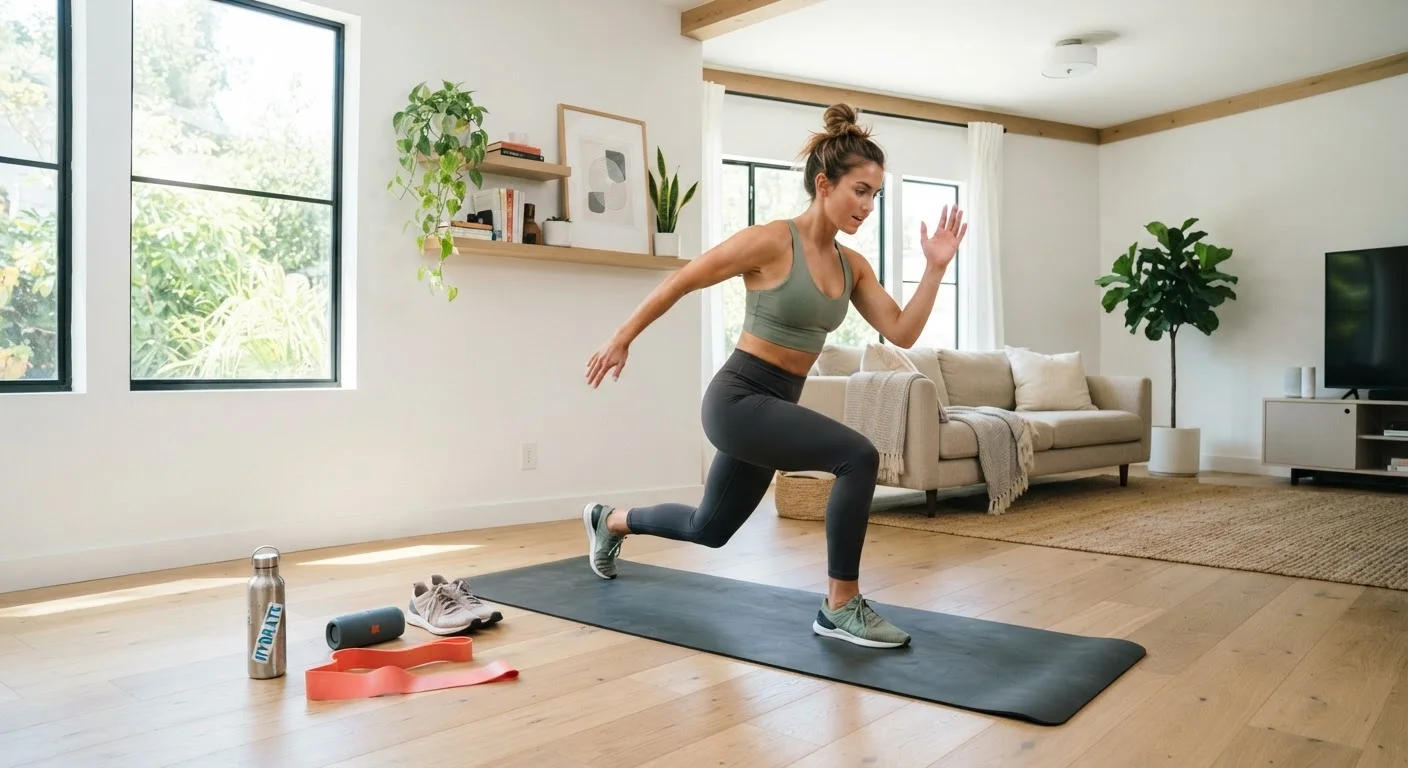
- Squat patterns (e.g., bodyweight squat, split squat): Train the quadriceps, hamstrings, glutes, and core together.
- Push patterns (e.g., push-up and its variations): Recruit the chest, shoulders, and triceps.
- Hinge patterns (e.g., glute bridge, single-leg deadlift): Target the posterior chain — glutes and hamstrings — which is undertrained in many sedentary adults.
- Pull patterns (e.g., inverted rows using a sturdy table edge): Address the upper back and biceps, areas often neglected in pure floor-based routines.
- Core stability (e.g., plank, dead bug): Build the foundational tension-control capacity that underpins all other movement quality.
A routine covering these five patterns two to three times per week provides comprehensive full-body training stimulus. If you're curious how bodyweight compares to adding basic tools, bodyweight training vs. resistance bands offers a useful side-by-side look.
150 min
Recommended weekly moderate activity for adults
According to the U.S. Department of Health and Human Services Physical Activity Guidelines for Americans, most adults benefit from at least 150 minutes of moderate-intensity aerobic activity weekly, plus muscle-strengthening on two or more days.
~80%
Adults not meeting strength training guidelines
CDC data has consistently indicated that the large majority of American adults do not meet the recommended muscle-strengthening activity guidelines, highlighting the scale of the opportunity for accessible, at-home training.
2–3x
Frequency most guidelines recommend for resistance training
Major health organizations, including the American College of Sports Medicine, generally recommend resistance training targeting all major muscle groups at least two days per week for general health benefits.
What Limits Results — and How to Address It
No-equipment training has real constraints worth being honest about. The most significant is that very high levels of absolute strength — the kind trained by competitive powerlifters or professional athletes — are difficult to develop without load that exceeds what one's own bodyweight provides. For the large majority of the population pursuing general fitness, health, and body composition goals, this limitation is largely irrelevant.
A more practical barrier is boredom and inconsistency. Without the structure of a gym environment or scheduled classes, many people find it harder to maintain a home routine long-term. Research on exercise adherence consistently identifies psychological and behavioral factors — not physical ones — as the primary obstacles to sustained activity.
Addressing this realistically means treating your routine with the same scheduling commitment you'd give any other appointment, varying movements deliberately to prevent staleness, and tracking progress in some form — even a simple log of sets and reps. For strategies on fitting training into a packed day, home fitness on a tight schedule covers the core principles that make short sessions more effective.
This article is for general informational and educational purposes only and does not constitute medical or fitness advice. Consult a qualified healthcare or exercise professional before beginning a new exercise program, particularly if you have any health conditions or concerns.