

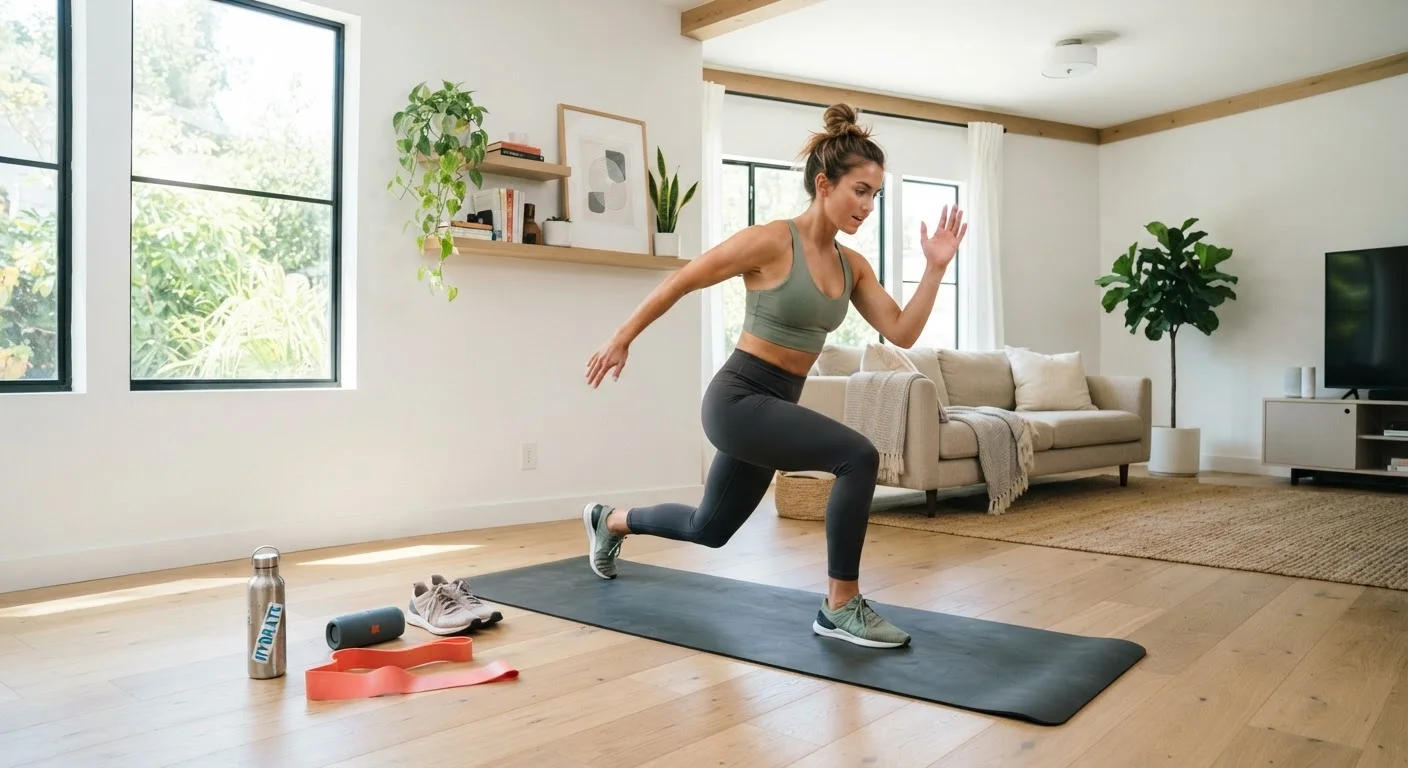
HIIT: What the Acronym Actually Means
High-Intensity Interval Training (HIIT) alternates brief periods of near-maximal effort with structured recovery periods. A basic example: 20 seconds of jumping jacks performed as hard as you can, followed by 40 seconds of rest, repeated for several rounds. The defining feature is the intensity during work intervals — it should feel genuinely challenging, not just moderately uncomfortable.
For home exercisers, HIIT is appealing because it requires no equipment and relatively little time. The exercises themselves — burpees, mountain climbers, high knees, squat jumps — use only bodyweight. Research published in exercise science literature consistently shows that short, high-intensity sessions can improve cardiovascular fitness and metabolic health, though individual results vary based on starting fitness level and consistency.
One important caution: the word "high-intensity" is not marketing language. True HIIT is demanding on joints, muscles, and the cardiovascular system. Common myths about short home workouts — including the idea that more is always better — are worth examining before jumping into a daily HIIT routine.
Start Honest About Your Intensity
One of the most common mistakes with HIIT is underestimating how hard the work intervals should feel — or overestimating how long you can sustain true high intensity. If you can hold a conversation during your "work" intervals, the effort level is likely closer to LISS. Honest self-assessment of intensity is more important than the specific exercises you choose.
LISS: The Underrated Option
Low-Intensity Steady-State (LISS) training means sustained movement at a moderate, consistent pace — typically 50–65% of your maximum heart rate — over a longer period. A brisk 30-to-45-minute walk is a textbook example. So is a slow jog, cycling at a comfortable pace, or following along with a low-intensity dance video in your living room.
LISS is often dismissed as "too easy" compared to HIIT, but that framing misses the point. It is highly sustainable, places less stress on connective tissue, and is easier to recover from — which means people are more likely to do it consistently. For beginners, those returning from injury, or anyone whose schedule makes high-intensity recovery impractical, LISS is often the smarter starting point.
At home, LISS options include walking laps around the neighborhood, stair climbing, or low-impact movement routines. For a broader look at cardio without equipment, cardio at home without a treadmill covers practical options in more depth.
150 min
Weekly moderate-intensity activity recommended by U.S. guidelines
The U.S. Department of Health and Human Services Physical Activity Guidelines for Americans recommend at least 150 minutes of moderate-intensity aerobic activity per week for adults — a target LISS-style movement can directly contribute to.
~20 min
Typical duration of an effective HIIT session
Exercise science research generally shows meaningful cardiovascular and metabolic benefits from HIIT sessions of 15–30 minutes, making it one of the more time-efficient formats studied.
2–3x
Recommended HIIT sessions per week for most adults
Most exercise physiology guidance suggests limiting true high-intensity interval sessions to two or three times per week to allow adequate recovery and reduce overuse injury risk.
Circuit Training: Structure Without Complexity
Circuit training links a series of exercises performed back-to-back with little or no rest between movements. You might do push-ups, then bodyweight squats, then plank holds, then lunges — moving from one to the next before resting. After completing all exercises in the sequence, that is one circuit; most sessions involve two to four circuits total.
The format builds both muscular endurance and cardiovascular fitness simultaneously, which makes it time-efficient. Because you're cycling through different muscle groups, one set of muscles rests while another works — a practical way to sustain effort without needing long breaks.
Circuit training is especially well-suited to home exercisers because it translates directly to bodyweight-only workouts. No-equipment home fitness explains the underlying principles that make bodyweight circuit work genuinely effective.
Choosing the Right Format for Your Situation
There is no objectively superior training format. The most effective method is the one you can perform safely, consistently, and with adequate recovery. A few practical considerations:
- Limited time: HIIT and circuit training both deliver meaningful stimulus in 20–30 minutes. Training principles for busy people outlines strategies for maximizing short workout windows.
- Joint sensitivity or low starting fitness: LISS is gentler and builds an aerobic foundation before adding intensity.
- Variety and motivation: Circuit training's changing exercises can reduce the monotony that causes people to quit.
- Recovery capacity: HIIT requires more recovery time between sessions; overdoing it can lead to fatigue or injury rather than improvement.
A practical approach many people find workable: combine one format per session and vary across the week. This provides different physiological stimuli and avoids overuse of any single movement pattern. As always, if you have existing health conditions or concerns, consult a healthcare professional before significantly changing your exercise routine.
This article is for general informational purposes only and does not constitute medical or professional fitness advice. Consult a qualified healthcare provider before beginning a new exercise program, particularly if you have any health conditions or concerns.