
Why Home Workout Myths Are So Persistent
Short home workouts have surged in popularity, and with that surge comes a flood of conflicting claims — some grounded in research, many rooted in fitness folklore. For everyday Americans trying to stay active without a gym membership, sorting fact from fiction isn't just academic. Acting on bad information can waste time, cause injury, or lead to abandoning a routine altogether.
The myths below are among the most common. Each has a kernel of appeal — they sound logical, and some have been repeated so often they feel like common knowledge. The evidence, however, tells a more nuanced story. For a plain-language breakdown of how popular workout formats actually compare, see what HIIT, LISS, and circuit training actually mean for home exercisers.
Myth
A workout has to be at least an hour long to do anything meaningful.
Fact
Research consistently shows that shorter, well-structured sessions — even 20 minutes — can meaningfully improve cardiovascular health, strength, and endurance.
The U.S. Department of Health and Human Services Physical Activity Guidelines recommend at least 150 minutes of moderate-intensity or 75 minutes of vigorous-intensity aerobic activity per week. Notably, those guidelines specify that sessions as short as 10 minutes count toward that total. What matters most is cumulative weekly volume and relative intensity, not the duration of any single session. Training principles for busy people explores how to structure short sessions for maximum effect.
Myth
You can target fat loss in a specific area by exercising that body part.
Fact
Spot reduction — the idea that working a specific muscle burns fat in that area — is not supported by exercise science. Fat loss occurs systemically, not locally.
When your body burns stored fat for energy, it draws from fat stores throughout the body — a process regulated largely by hormones and genetics, not by which muscles are contracting. Multiple studies, including research published in peer-reviewed sports science journals, have failed to demonstrate meaningful localized fat loss from targeted exercises. Doing abdominal exercises, for example, strengthens the core muscles but does not preferentially reduce fat around the midsection. Overall energy balance and whole-body exercise drive fat loss.
Myth
If you're not in pain, your workout isn't working.
Fact
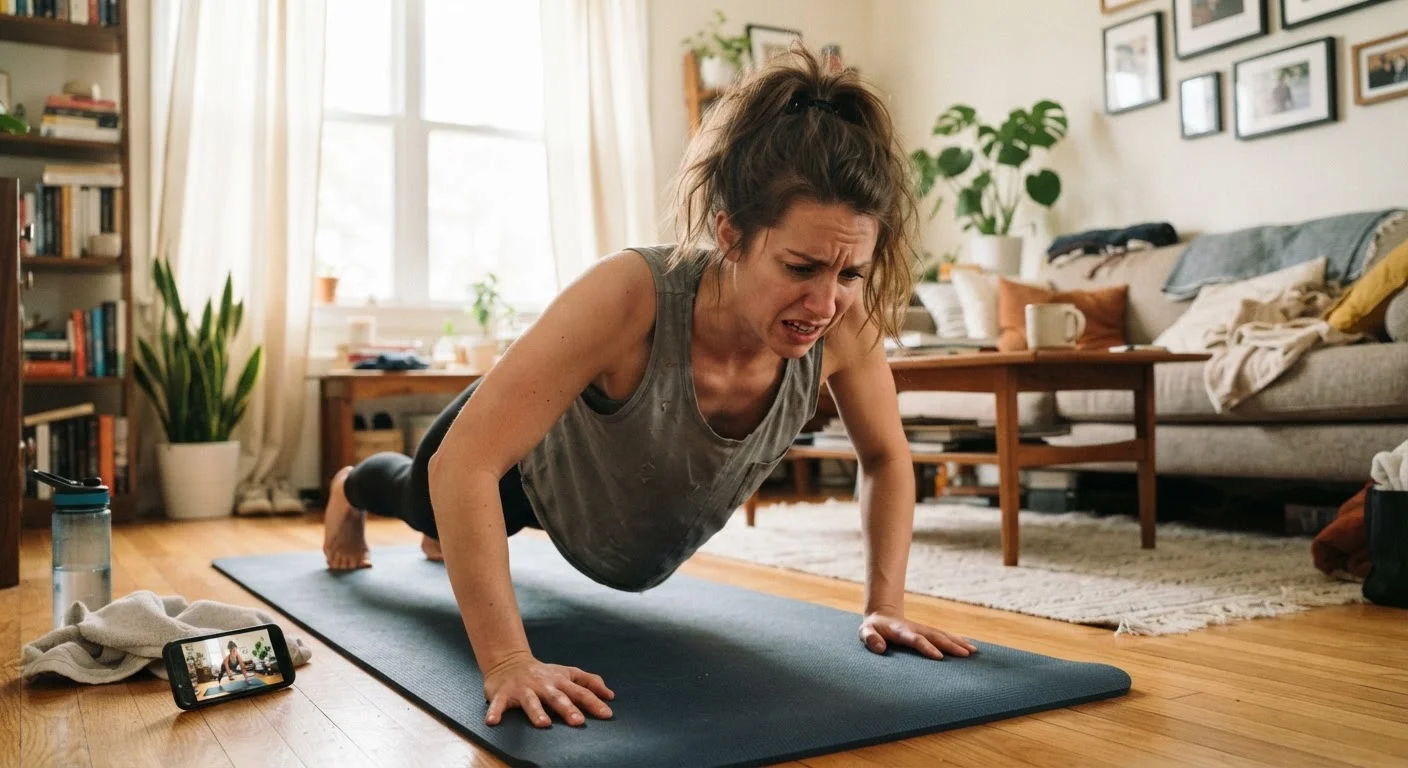
Discomfort from effort is normal; sharp or joint pain is a warning sign. Muscle soreness the day after a session is not a reliable measure of workout quality.
Delayed onset muscle soreness (DOMS) — the achiness felt 24 to 72 hours after exercise — occurs when muscles experience unfamiliar stress. It tends to diminish as the body adapts. Chasing soreness as a goal can push exercisers toward overtraining or injury. Sharp pain during a movement, pain at a joint, or pain that persists beyond normal recovery windows warrants medical attention rather than being pushed through. Progress is better measured by improvements in strength, endurance, or movement quality over time. For guidance on balancing effort and recovery, see the case for and against skipping rest days.
Myth
Bodyweight exercises are only for beginners and won't build real strength.
Fact
Bodyweight training can build meaningful strength and muscle when applied with proper progression — it's not just a stepping stone to weights.
The mechanism for muscle growth — progressive mechanical tension on muscle fibers — can be achieved with bodyweight movements. Exercises like push-up variations, single-leg squats, and pull-ups can be progressively loaded by changing leverage, range of motion, tempo, or volume. Research on resistance training supports the principle that muscles respond to the relative challenge placed on them, not the source of that load. No-equipment home fitness explains the science behind why bodyweight training delivers real gains.
Myth
Skipping rest days means faster results.
Fact
Adequate rest is when muscular adaptation and repair actually occur. Training without sufficient recovery can impair progress and increase injury risk.
Muscles do not grow during exercise — they grow during recovery, when the body repairs micro-tears in muscle tissue and reinforces them. Chronically under-recovering can lead to overtraining syndrome, characterized by declining performance, fatigue, mood changes, and elevated injury susceptibility. Most exercise guidelines recommend at least one to two rest or active recovery days per week, though individual needs vary based on training intensity, age, and overall health status.
What the Evidence Actually Supports
Cutting through the myths leads to a clearer picture: the fundamentals of exercise science apply whether you're in a commercial gym or your living room. Intensity, progressive overload (gradually increasing demand over time), adequate recovery, and consistency are the variables that drive adaptation — not the setting, the duration, or the level of discomfort you can endure.
150 min
Minimum weekly moderate exercise recommended
Per the U.S. Department of Health and Human Services Physical Activity Guidelines for Americans, sessions of any length — including short bouts — count toward this total.
~23%
U.S. adults meeting aerobic activity guidelines
CDC data consistently shows fewer than one in four American adults meet both aerobic and muscle-strengthening guidelines, underscoring the gap between recommendation and practice.
$0
Equipment cost for effective bodyweight training
Bodyweight resistance exercises require no equipment, making home training one of the most accessible and cost-effective fitness options available.
If you're just starting out, the most important move is choosing a routine you can realistically sustain. Home fitness for absolute beginners covers how to build that foundation safely. Once you're consistent, you'll likely encounter the plateau problem — progress stalling after a few weeks. Understanding why home workouts stop working can help you adjust before motivation drops.
Time-pressed exercisers also benefit from understanding the real trade-offs between session length and quality. Short workouts vs. long workouts examines what actually determines effectiveness beyond the clock.
This article is for general informational purposes only and does not constitute medical or personal fitness advice. Consult a qualified healthcare or fitness professional before beginning any new exercise program, especially if you have an existing health condition or injury.