
How to Use This Guide
This reference breaks home exercise into its three core categories — strength, cardiovascular, and flexibility/mobility — so you can quickly understand what each trains, why it matters, and how to include it without any gym membership or expensive equipment. Use it as a lookup tool alongside the weekly routine planner when you're ready to put these categories into a structured schedule.
If you're just getting started, the beginner's home fitness guide walks through how to approach each category safely before adding volume or intensity.
| Main exercise categories | Strength, Cardiovascular, Flexibility/Mobility |
| Equipment needed for bodyweight strength | None — floor space only |
| U.S. physical activity guidelines (aerobic) | 150–300 min moderate or 75–150 min vigorous per week (U.S. Department of Health and Human Services, 2018 Physical Activity Guidelines) |
| U.S. guidelines (muscle-strengthening) | 2 or more days per week (U.S. Department of Health and Human Services, 2018 Physical Activity Guidelines) |
| Flexibility recommendation | Major muscle groups stretched 2–3 days per week (American College of Sports Medicine) |
| Zero-cost home cardio options | Jumping jacks, marching in place, stair climbing, dancing |
Strength Training
What It Trains
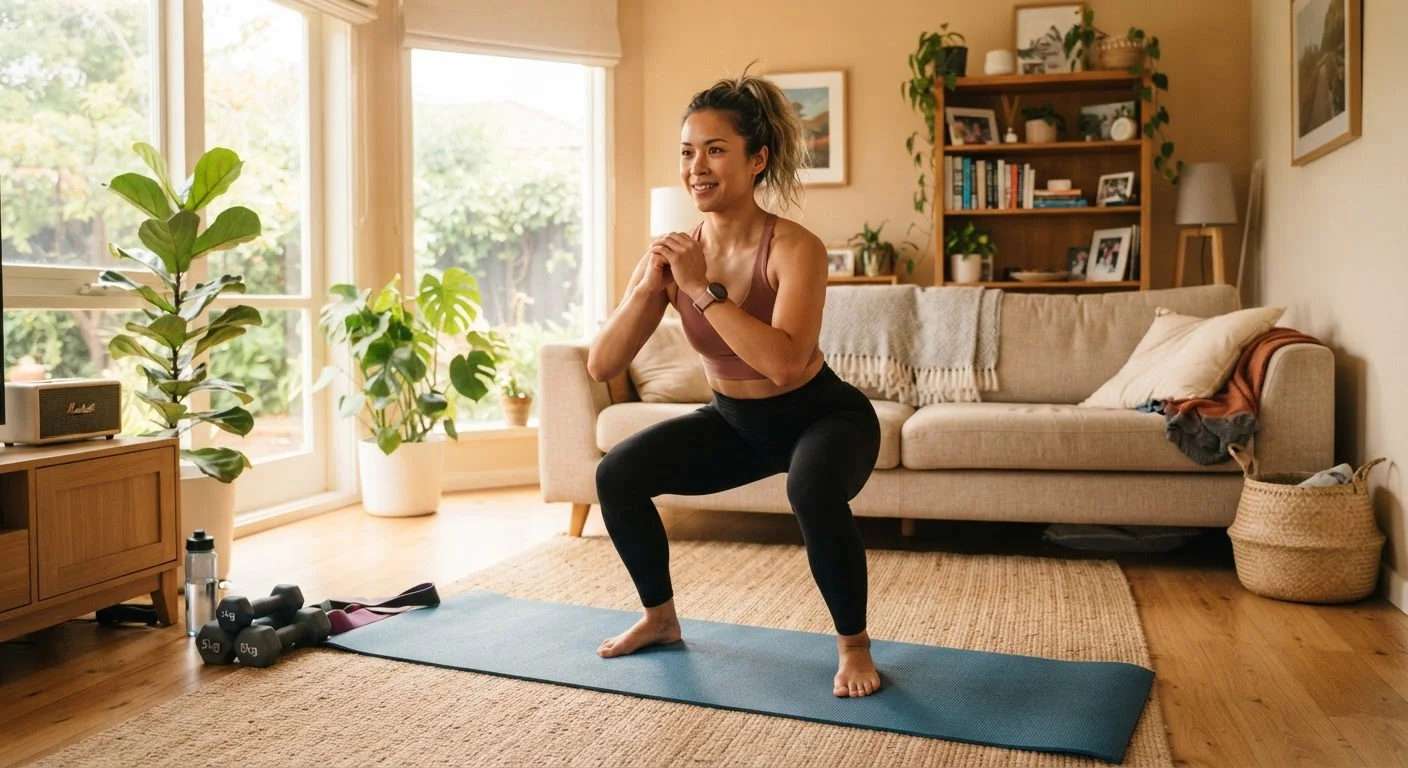
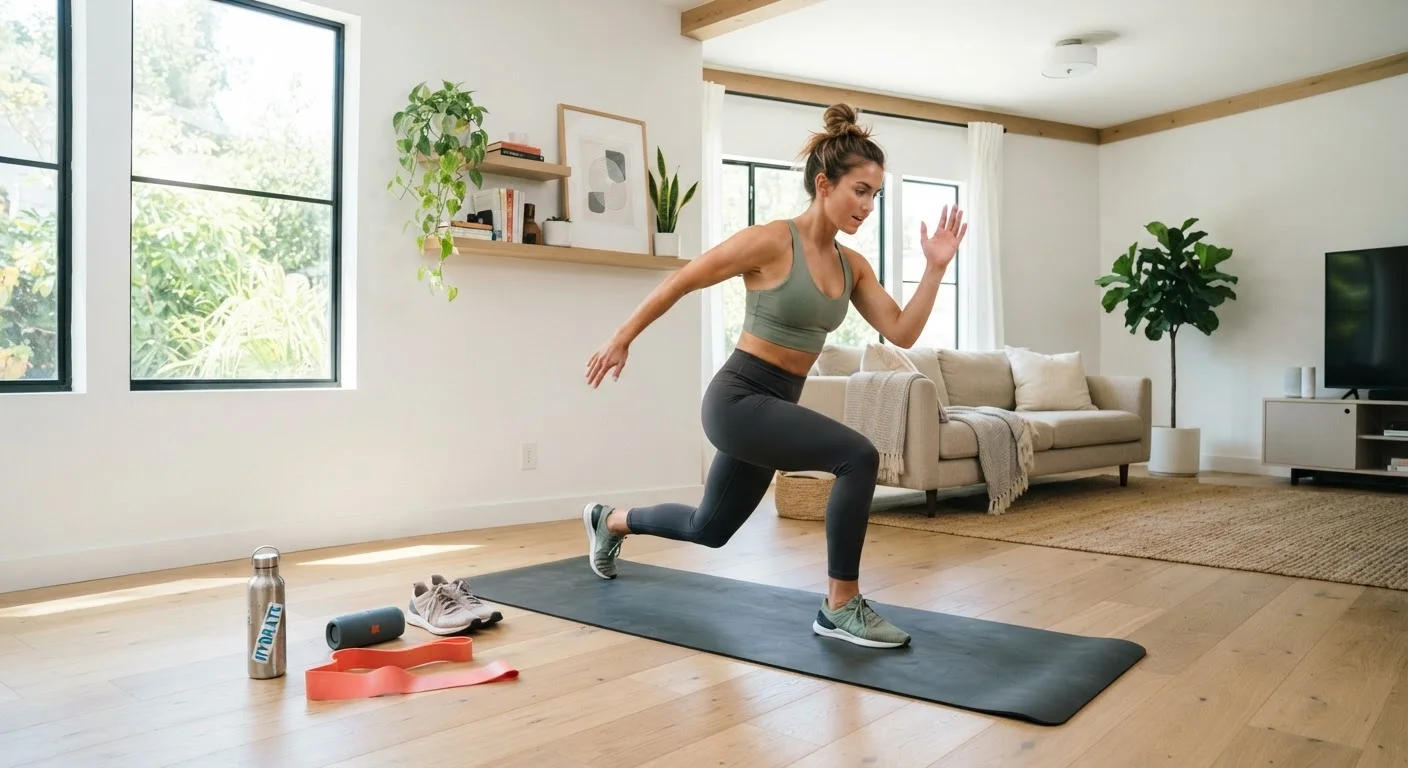
Strength training challenges your muscles to work against resistance, triggering adaptations that increase muscle size, endurance, and the force your body can produce. At home, bodyweight exercises — push-ups, squats, lunges, glute bridges, and planks — cover most major muscle groups without a single piece of equipment.
Why It Matters
Muscle mass supports everyday function: carrying groceries, climbing stairs, and maintaining balance. It also plays a role in metabolic health, bone density, and joint stability over the long term. Federal guidelines recommend muscle-strengthening activity at least two days per week for adults.
Key Concepts
- Progressive overload: Add challenge gradually — more repetitions, slower tempo, or a harder exercise variation — rather than jumping to weighted moves.
- Compound vs. isolation: Compound movements (squats, push-ups) train multiple muscle groups at once and are the most time-efficient for home routines.
- Isometric holds: Wall sits and planks build strength and stability without dynamic movement, making them accessible for small spaces.
Resistance training
Exercise that works muscles against an opposing force — such as bodyweight, bands, or weights — to build strength and muscle mass over time.
Cardiovascular exercise
Rhythmic, sustained physical activity that elevates the heart rate and challenges the cardiovascular system. Also called aerobic exercise or cardio.
Flexibility training
Exercises designed to lengthen muscles and improve the range of motion in joints, reducing injury risk and supporting recovery.
Mobility
The ability to move joints actively through their full range of motion with control. Related to flexibility but also depends on strength and neuromuscular coordination.
Progressive overload
Gradually increasing the challenge of an exercise — through more reps, slower tempo, or harder variations — so the body continues to adapt and improve.
Isometric exercise
A type of strength exercise where the muscle contracts without the joint changing angle, such as holding a plank or a wall sit.
Cardiovascular Exercise
What It Trains
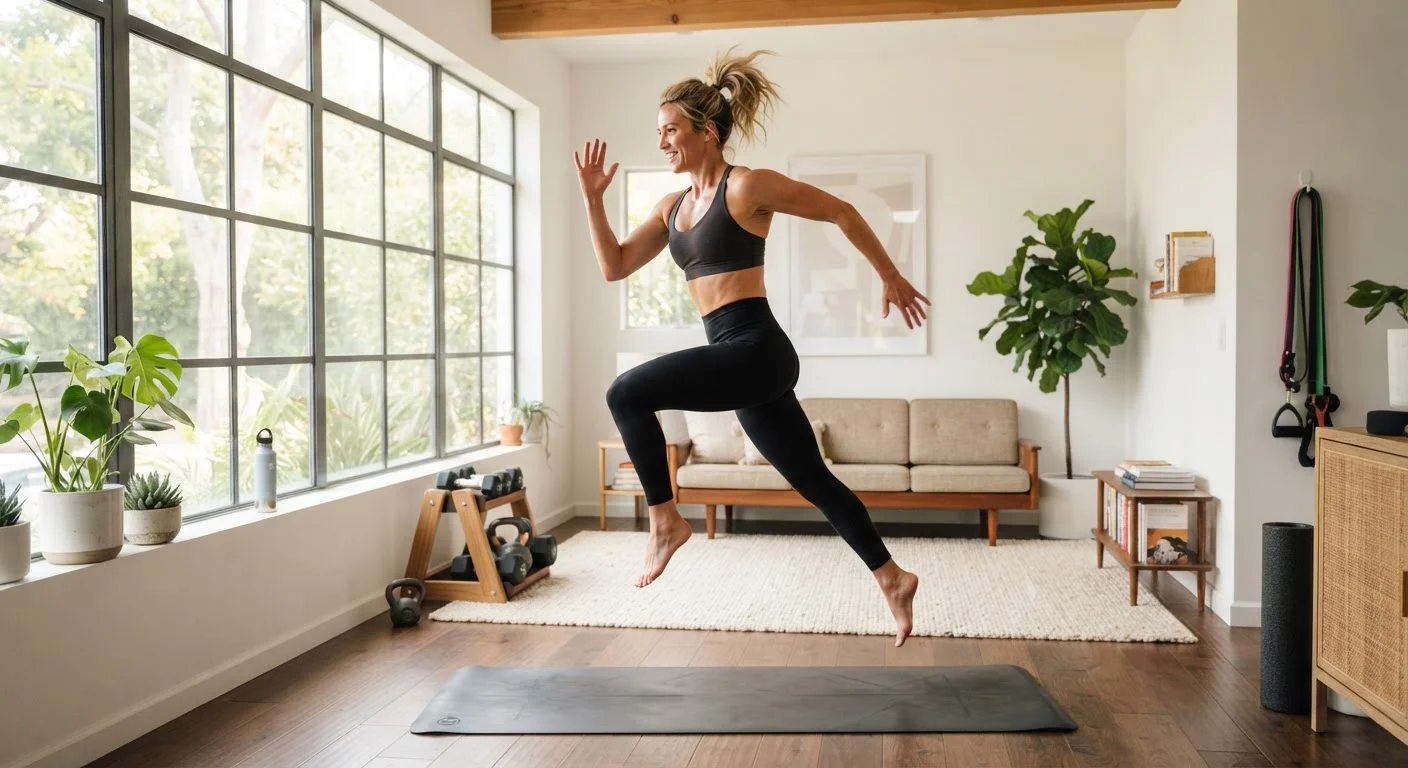
Cardio, or aerobic exercise, conditions the heart, lungs, and circulatory system. It improves the body's ability to deliver and use oxygen efficiently during sustained activity. At home, effective options include jumping jacks, high knees, stair climbing, dancing, shadow boxing, and low-impact marching.
Why It Matters
Regular aerobic activity is associated with reduced risk of cardiovascular disease, improved mood, better sleep quality, and healthy weight management, according to established public health research. For most adults, the goal is at least 150 minutes of moderate-intensity activity spread across the week.
Intensity Levels Defined
- Low intensity (LISS): Brisk walking or gentle marching — you can hold a conversation without difficulty.
- Moderate intensity: Your breathing is noticeably faster but you can still speak in short sentences.
- Vigorous intensity: You can say only a few words before needing to catch your breath.
For a deeper look at training formats like HIIT and circuit training, see what HIIT, LISS, and circuit training actually mean.
Flexibility and Mobility
What It Trains
Flexibility training lengthens muscles and connective tissue, while mobility work trains your joints to move actively through a full, controlled range of motion. Common approaches include static stretching (holding a position for 20–30 seconds), dynamic stretching (controlled movement through a range), and yoga-based flows.
Why It Matters
This category is often skipped but supports every other type of training. Good flexibility reduces the risk of muscle strains, helps offset the tightness that builds from sitting, and aids recovery between strength or cardio sessions. The American College of Sports Medicine suggests stretching major muscle groups at least two to three days per week.
Practical Home Options
- Static stretches: Hip flexor stretch, hamstring stretch, chest opener — held at the end of a workout when muscles are warm.
- Dynamic warm-up moves: Leg swings, arm circles, and hip rotations before a workout prepare joints without the risks associated with cold static stretching.
- Yoga and Pilates flows: Freely available through public libraries and online platforms; both combine mobility, stability, and body awareness.
Setting up your space properly supports all three categories. See how to set up a safe home workout area for practical setup guidance.
How the Three Categories Work Together
No single exercise type covers every dimension of fitness. Strength training builds capacity; cardio builds endurance; flexibility and mobility keep the body moving well and recovering efficiently. A balanced weekly routine draws on all three rather than focusing exclusively on one.
A simple mental model: think of strength as the engine, cardio as the fuel system, and flexibility as the maintenance that keeps both running smoothly. The Complete Home Fitness Playbook covers how to layer these categories into a progressive, long-term routine.
Supporting your workouts with sound nutrition also matters. The Nutrition Basics hub offers simple, budget-friendly eating guidance that complements any home exercise plan.
This article is for general informational and educational purposes only and does not constitute medical advice. Consult a qualified healthcare professional before beginning any new exercise program, particularly if you have an existing health condition or injury.