
More Than a Speed Metric
When shoppers compare phones, processor speed — usually quoted in gigahertz (GHz) — gets a lot of attention. But that single number captures only a small slice of what a chipset actually does. A mobile processor is an entire platform of specialized engines working in parallel, and its design choices ripple through nearly every experience you have with a phone.
Think of the chipset less like a single engine and more like a power plant for an entire city. It generates the processing muscle for apps, routes data to and from cellular and Wi-Fi radios, feeds the display, and continuously manages power draw — all at the same time. Understanding these roles separately makes it much easier to evaluate what a given phone will actually feel like to use. For a broader look at how specs translate to real-world use, our smartphone specs decoder walks through the full spec sheet in plain language.
The Cores Inside the Chip
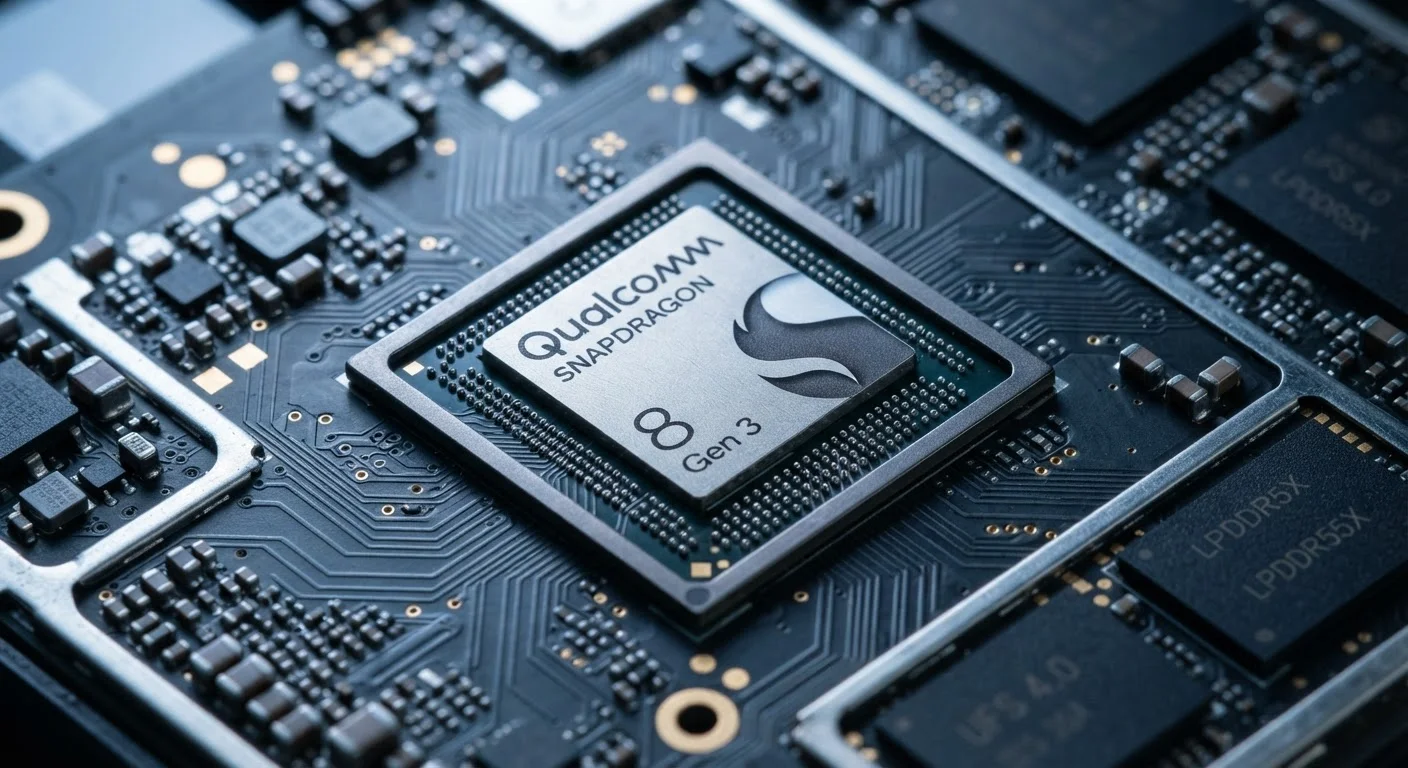
A modern mobile chipset contains several distinct processing units, each optimized for a specific job:
- CPU cores handle general computing tasks — opening apps, loading web pages, running the operating system. Most chipsets use a cluster of high-performance cores paired with a second cluster of power-efficient cores, so the phone can scale effort up or down based on demand.
- GPU (Graphics Processing Unit) renders visuals on screen and drives gaming performance. A stronger GPU also contributes to smoother scrolling and video playback.
- NPU (Neural Processing Unit) or AI Engine accelerates machine-learning tasks locally on the device. This is what enables real-time photo enhancement, on-device voice recognition, and predictive text without sending data to a remote server.
- ISP (Image Signal Processor) handles the computational work that turns raw sensor data into a finished photo or video frame — including noise reduction, color correction, and HDR merging.
- Modem manages cellular connectivity, including 4G LTE and 5G. The modem's design affects signal reliability, connection speeds, and how much battery is consumed maintaining a cellular link. For more on what 5G connectivity actually delivers in practice, see our 5G explainer.
~10 billion
Transistors in a flagship mobile chipset
Modern high-end mobile chipsets contain in the range of 10–16 billion transistors packed onto a chip smaller than a fingernail, enabling the parallel processing of multiple specialized engines.
3–5 years
Typical chipset software support window
The duration a chipmaker actively maintains drivers and security firmware for a processor generation directly limits how long the phones built on it can receive OS and security updates.
~30–40%
Power efficiency gain per process node generation
Industry analyses have historically found that moving to a newer manufacturing node (e.g., from 7nm to 5nm) can deliver roughly 30–40% improvement in power efficiency at comparable performance levels.
Why Manufacturing Process Matters for Battery Life
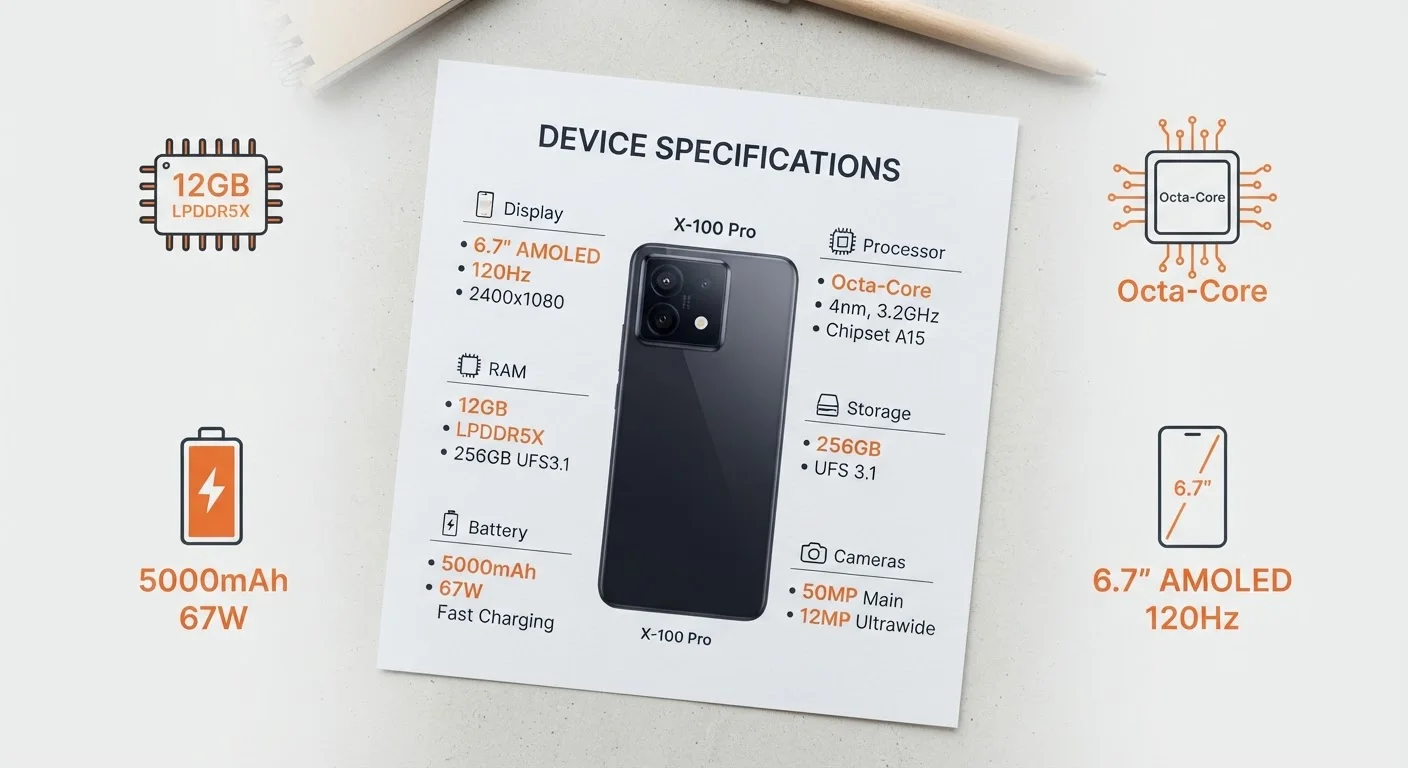
The nanometer (nm) figure associated with a chipset describes the size of the transistors used to build it. A smaller number generally means transistors are packed more densely and switch states using less electrical energy — which translates directly to less heat and longer battery life under load.
This is why two phones with the same battery capacity can have meaningfully different screen-on times. The phone built around a more efficient chipset generation is drawing less power to accomplish the same tasks. Battery chemistry and usage habits also play a role in long-term capacity, but the chip's efficiency sets the daily ceiling from day one.
Look Beyond the GHz Number
When comparing phones, check the chipset's manufacturing generation (the nm figure) alongside clock speed. A chip running at a slightly lower GHz on a newer, smaller process node will often deliver better battery life and thermal performance in daily use than a nominally faster chip on an older process. Manufacturer spec pages and independent chipset review sites typically publish both figures.
The Chipset's Role in Camera and AI Performance
The camera hardware — lens, aperture, sensor size — determines what light data enters the phone. What happens to that data afterward is almost entirely a chipset story. The ISP and NPU work together in milliseconds to apply noise reduction, merge multiple exposures for HDR images, recognize scenes to optimize settings, and stabilize video frames. A more capable chipset can do this processing faster, at higher quality, and with less battery drain.
This is why two phones with identical-resolution cameras can produce noticeably different photos. The computational photography pipeline, not just the sensor, defines the output. Camera spec sheets rarely surface this distinction, which makes understanding the chip underneath all the more important.
Software Longevity and the Chipset Connection
One underappreciated way a chipset affects a purchase decision is how long it can support software updates. Operating system updates and security patches require ongoing work from the chipmaker to maintain compatible drivers and firmware. When chipmakers stop supporting a processor generation, manufacturers find it significantly harder to keep the software current.
A phone built on a newer, actively supported chipset platform is more likely to receive OS upgrades and security patches for a longer stretch of time. For budget-conscious shoppers, this matters: a phone that stays secure and functional for four years instead of two delivers meaningfully better value per dollar, even if it costs more upfront. Understanding what end-of-support actually means can help frame this tradeoff clearly. When weighing whether it's time to upgrade at all, a structured checklist can help you decide whether a newer chipset genuinely changes the calculus for your situation.