
What Mini-LED Actually Is
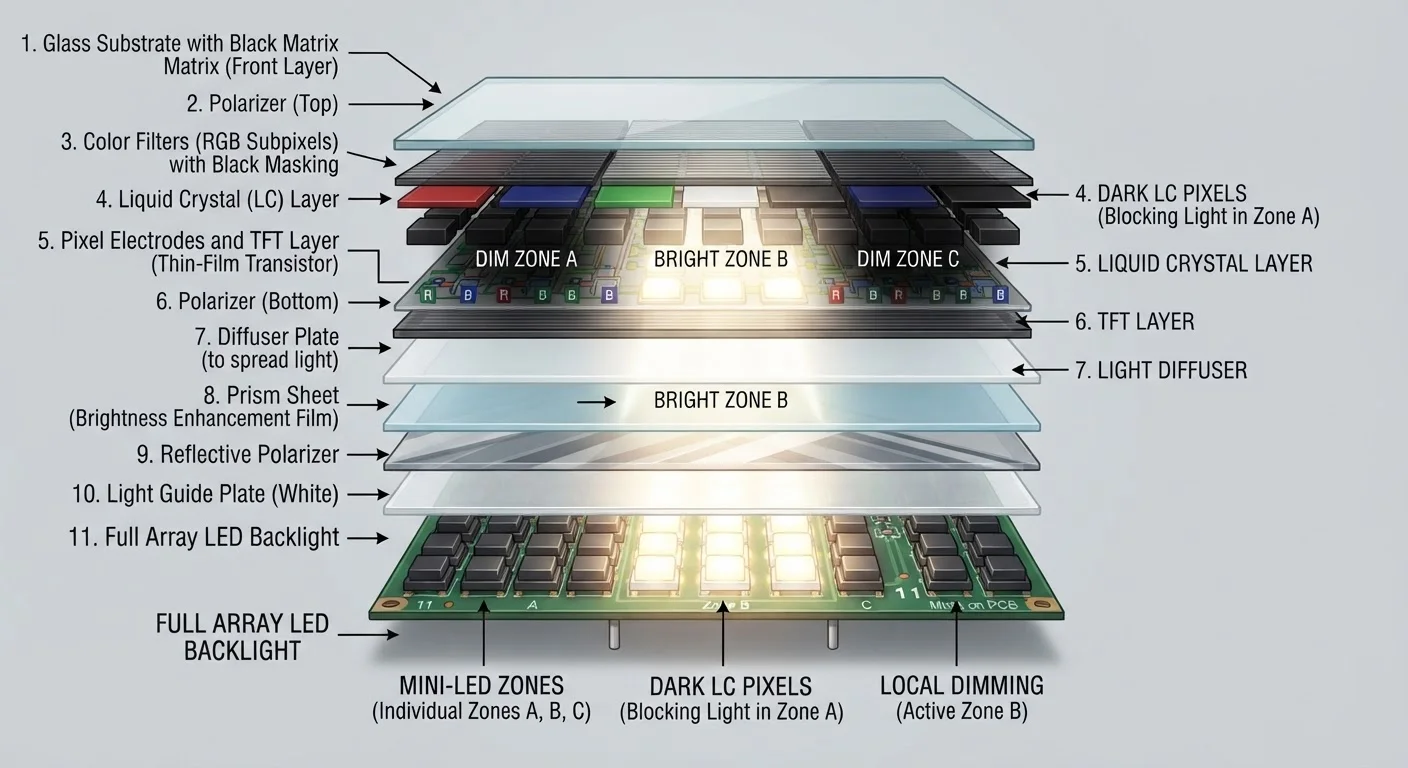
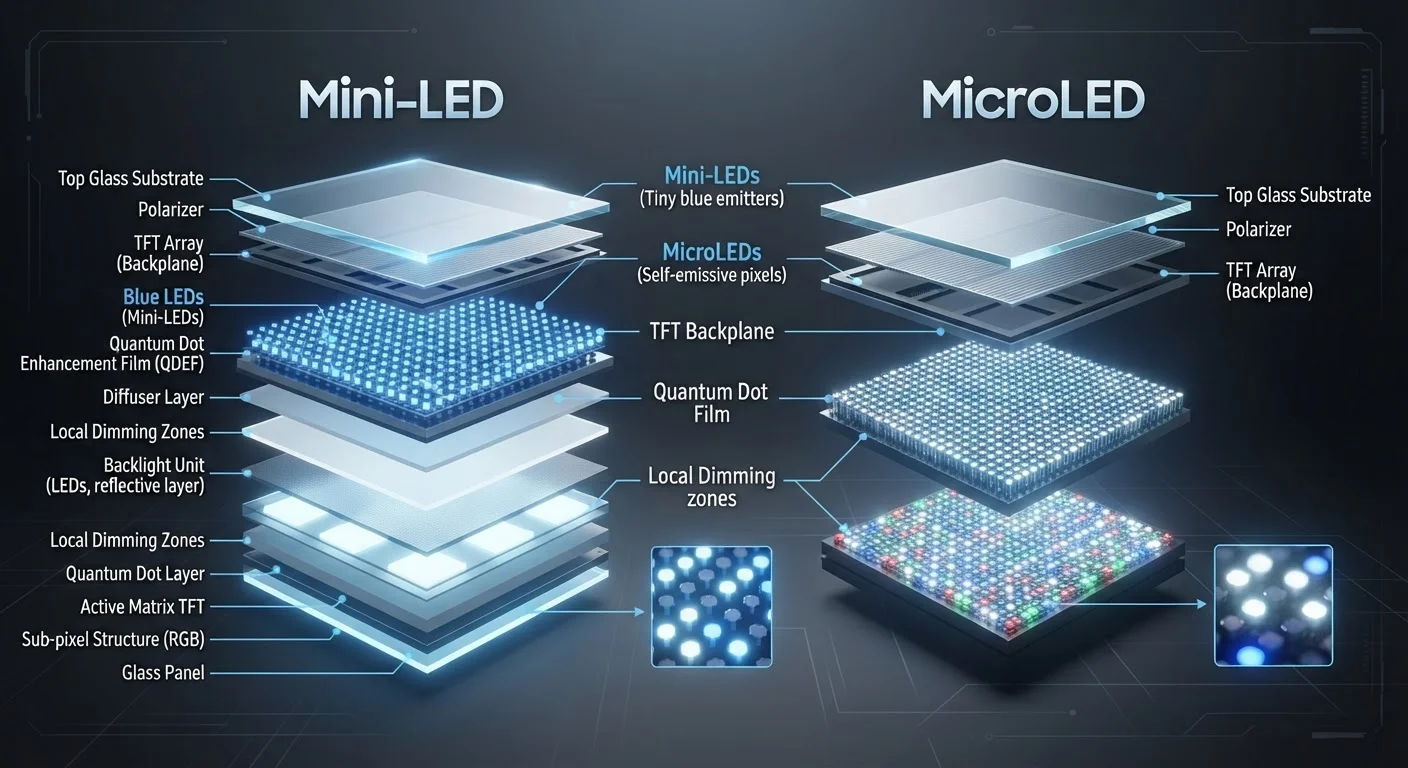
Despite the futuristic name, Mini-LED is fundamentally still a backlit LCD (liquid crystal display) technology. The difference is in the backlighting layer behind the LCD panel. Instead of using a relatively small number of larger LEDs to illuminate the screen, Mini-LED packs thousands of much smaller LEDs — typically between 0.1 mm and 0.2 mm wide — into the same space.
More LEDs mean more dimming zones. Dimming zones are independent groups of LEDs that can be brightened or darkened separately. A standard LED TV might have a few dozen zones; a Mini-LED panel can have hundreds or even over a thousand. This allows the TV to make bright stars in a night sky pop while keeping the surrounding blackness genuinely dark — a balancing act conventional LED TVs struggle with.
The underlying liquid crystal layer is still present, which means Mini-LED shares some limitations with traditional LED TVs, including a small amount of backlight bleed around bright objects and a slightly lower contrast ceiling compared to self-emissive technologies. Even so, the improvement over older LED backlighting is substantial and visible. For a broader look at how these backlight designs compare, see our guide to full-array local dimming vs. edge-lit panels.
What MicroLED Actually Is
MicroLED is a fundamentally different architecture. Instead of using LEDs as a backlight behind an LCD panel, MicroLED uses microscopic LEDs — each typically smaller than 0.1 mm — as the actual pixels themselves. Each pixel is its own individual light source that can be switched on, off, or dimmed completely independently.
This makes MicroLED a self-emissive technology, placing it in the same conceptual category as OLED (organic light-emitting diode). However, MicroLED uses inorganic semiconductor materials instead of organic compounds, which means it does not face the same risk of burn-in that has historically concerned some OLED owners. MicroLED panels can also reach very high peak brightness levels while maintaining precise black levels at the pixel scale.
The manufacturing challenge is immense. Placing tens of millions of microscopic LEDs onto a display substrate with near-zero defect tolerance requires precision that remains costly and difficult to scale. That is the primary reason MicroLED is not yet a mainstream consumer product. To understand how these self-emissive approaches compare to OLED, our breakdown of OLED, QLED, and LED covers the full landscape.
| Criterion | Mini-LED | MicroLED |
|---|---|---|
| Display architecture | LED backlight behind LCD panel | Each pixel is its own LED |
| Self-emissive pixels | No | Yes |
| Black level control | Per dimming zone (hundreds possible) | Per individual pixel |
| Peak brightness | Very high | Extremely high |
| Burn-in risk | Very low (LCD-based) | Very low (inorganic LEDs) |
| Consumer availability | Widely available now | Very limited; mostly commercial |
| Typical price tier | Premium to mid-premium | Extremely high; not mainstream |
| Backlight bleed risk | Low but possible | Essentially none |
Real-World Performance: Where Each Technology Shines
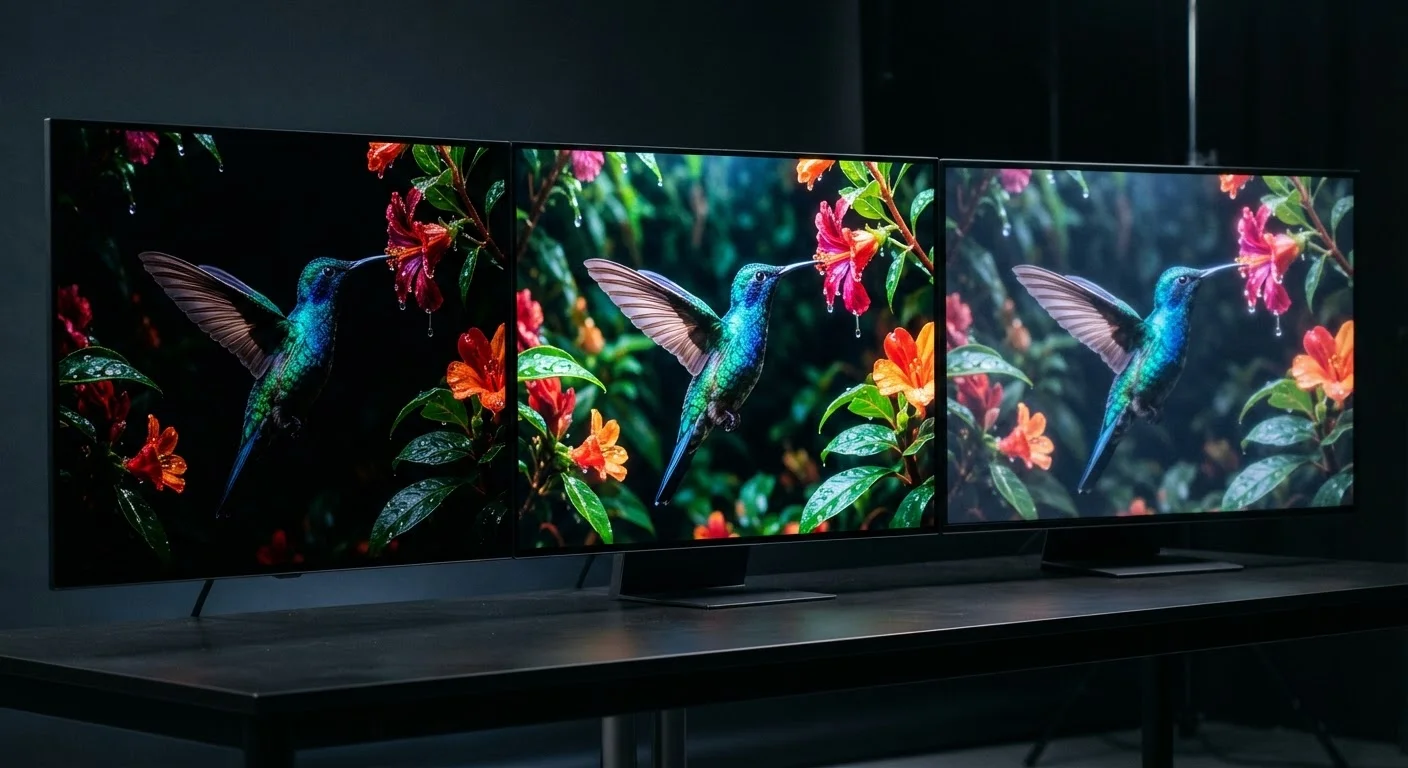
In everyday viewing, Mini-LED delivers a noticeably sharper contrast experience than standard LED TVs, particularly in scenes that mix very bright highlights with deep shadows — think action films, sports under stadium lights, or nature documentaries. HDR (high dynamic range) content, which is designed to exploit bright highlights and dark shadows simultaneously, benefits significantly from Mini-LED's expanded dimming capability.
MicroLED, where available, goes further. Because every pixel controls its own light output, there is no blooming (the faint halo that can appear around bright objects on LED screens) and no need to compromise brightness in one area to maintain darkness in another. The result is a picture that approaches the theoretical ideal for a flat-panel display.
That said, most viewers watching Mini-LED in a typical home environment would find the image quality compelling and more than adequate for everyday use. MicroLED's advantages are most visible in high-contrast, high-ambient-light settings — contexts more common in commercial installations than living rooms. If showroom brightness comparisons have ever confused you about what to expect at home, our article on showroom vs. home performance is worth reading before you decide.
1,000+
Dimming zones in high-end Mini-LED TVs
Advanced Mini-LED panels can include over a thousand independently controlled dimming zones, compared to a few dozen in conventional full-array LED sets.
<0.1 mm
Typical MicroLED pixel size
Individual MicroLED emitters are smaller than 100 micrometers, enabling extremely dense, high-resolution panels with per-pixel light control.
Millions
LEDs placed per MicroLED screen
A single MicroLED display requires placing tens of millions of microscopic LEDs with near-zero defects, which is the core manufacturing challenge limiting mass production.
Cost, Availability, and Who Each Technology Is For
Mini-LED panels appear across a wide range of TV sizes — from smaller sets around 55 inches up to very large screens — and are sold by multiple manufacturers at price points that, while typically premium compared to entry-level LED TVs, are accessible for many households. Laptop displays using Mini-LED backlighting have also become increasingly common, bringing the technology into portable computing.
MicroLED is currently a different story. Commercial-scale MicroLED displays exist and are in active use in high-end retail, broadcast, and luxury home theater installations, but the price per screen remains far beyond typical consumer budgets. Mainstream consumer MicroLED TVs are still a developing market segment, and pricing reflects the complexity of producing them.
For the budget-conscious shopper comparing real options available today, Mini-LED is the practical choice. MicroLED is worth tracking as the technology matures, but it is not a decision most buyers need to make right now. As you weigh display options, don't overlook how the TV's software platform shapes daily use — our comparison of smart TV platforms explains what changes beyond the picture quality itself.