
How LED Backlights Work — and Why Placement Matters
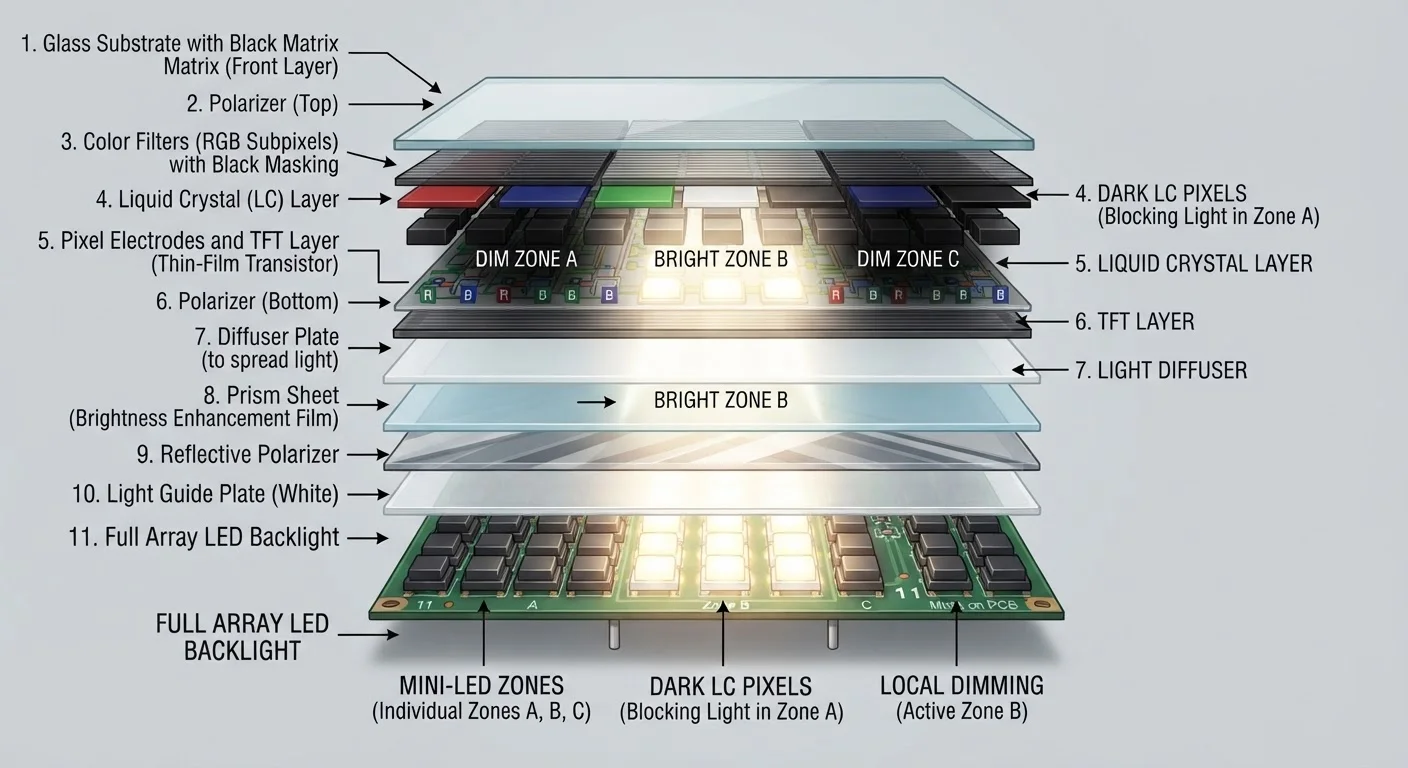
Most TVs sold today are LED-backlit LCD panels. The LCD layer creates the image, but it can't produce its own light — it needs a backlight shining through it. Where and how those LEDs are arranged determines the screen's ability to render both bright highlights and deep shadows simultaneously.
In an edge-lit panel, LEDs are positioned along one or more edges of the TV's frame — typically the bottom, sides, or all four edges. Light is then guided across the panel using a diffusion layer. This approach allows for very slim TV profiles, but the light source is always at the periphery, which makes precise brightness control across different parts of the screen inherently difficult.
Full-array panels spread LEDs across a grid behind the entire screen. When paired with local dimming — the ability to independently dim or brighten specific zones of that grid — the TV can darken the section of screen showing a night sky while keeping a bright moon in the corner properly lit. The result is measurably higher contrast and more controlled image rendering. For a broader look at how these fit into the display landscape, see our guide to OLED, QLED, and LED differences.
Key Differences in Practice
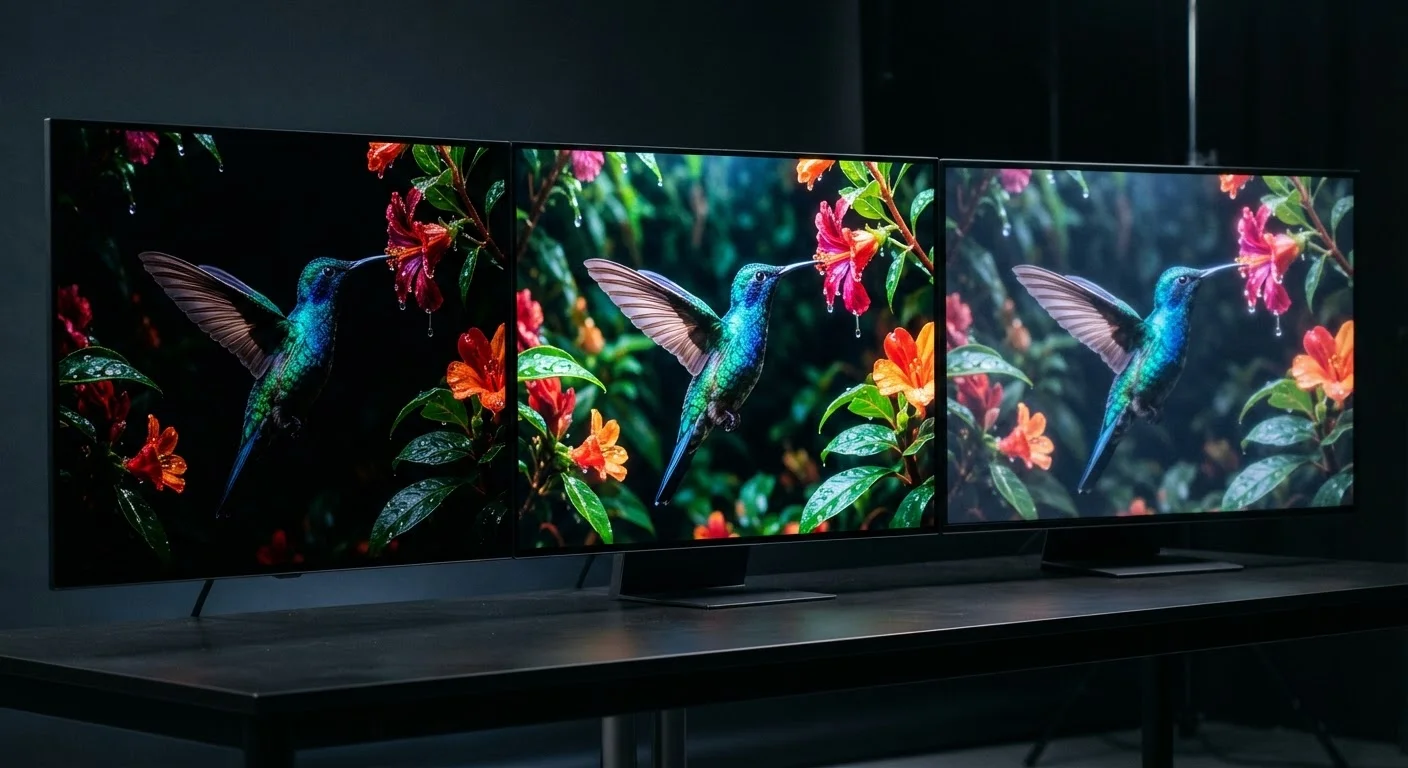
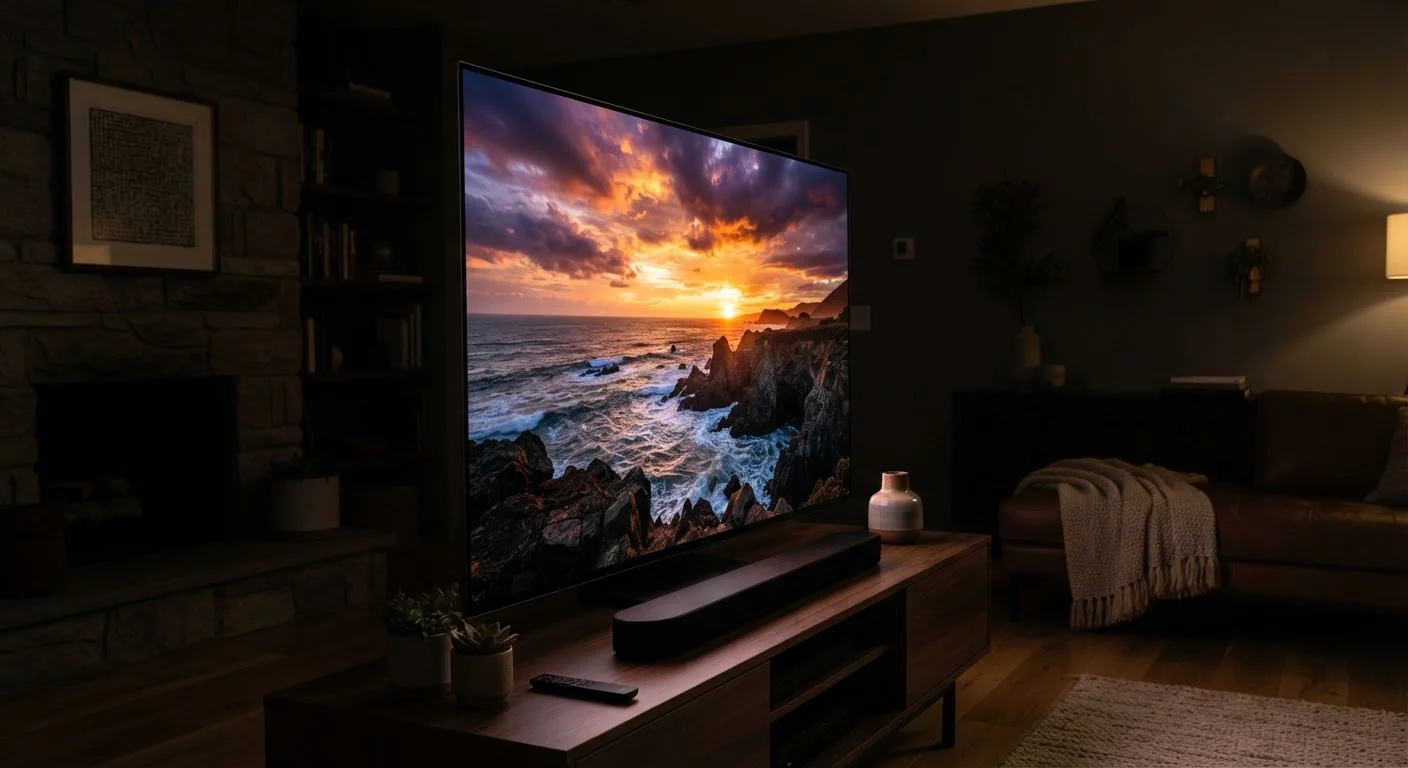
Understanding the specs is one thing — knowing what each type looks like on your wall is another.
| Criterion | Full-Array Local Dimming | Edge-Lit |
|---|---|---|
| LED placement | Grid behind entire screen | Along one or more frame edges |
| Black level / contrast | Strong — zones dim independently | Limited — light bleeds across screen |
| Blooming (halo effect) | Reduced, zone-count dependent | More noticeable on dark scenes |
| HDR performance | Better suited to HDR content | Can underperform HDR specs |
| TV thickness | Thicker chassis required | Very slim profiles possible |
| Typical price range | Mid-range to premium | Budget to mid-range |
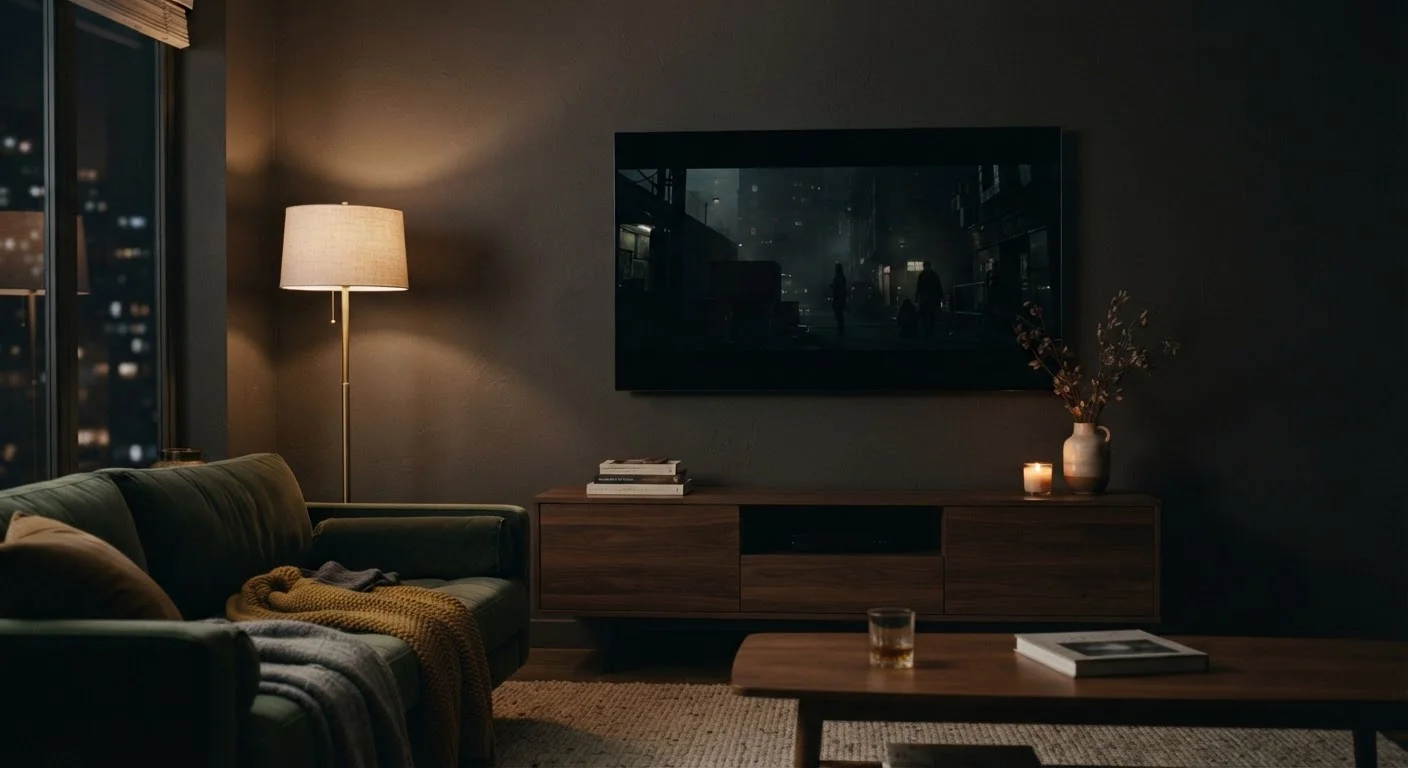
| Best room environment | Dim or controlled lighting | Bright or mixed ambient light |
Blooming is one of the most common edge-lit complaints. This is a halo of light that appears around bright objects on dark backgrounds — a subtitle against a black screen, for example. Because edge-lit panels can't dim a single region precisely, the glow spreads. FALD sets reduce blooming significantly, though the effect isn't entirely eliminated unless the dimming zones are very small. Some current FALD designs use hundreds of zones; lower-tier FALD sets may use only a few dozen, which limits their advantage.
Edge-lit panels also sometimes show hotspots — areas near the LED sources that appear brighter than the center of the screen. This is most visible on solid-color backgrounds and depends heavily on the quality of the diffusion engineering. You may notice this in a store if you display an all-gray test image — though be aware that showroom conditions aren't always representative of home use. Our article on why showroom TVs can look different at home explains this further.
HDR Compatibility and Backlight Type
HDR (High Dynamic Range) content is where backlight type becomes especially relevant. HDR is designed to show a wider range between the darkest and brightest parts of a scene, so a TV's ability to hit deep blacks while also reaching high peak brightness directly determines how convincing HDR looks. For a full breakdown of HDR formats and what they require, see our HDR explainer.
Edge-lit TVs often carry HDR certification, but their performance can fall short of the standard's intent. Without precise local dimming, lifting brightness in one area inevitably lightens nearby darker areas. FALD TVs, particularly those with a higher zone count, can better honor the contrast intent of HDR-graded content.
It's worth noting that FALD doesn't close every gap. Self-emissive technologies like OLED eliminate the backlight entirely — each pixel generates its own light, enabling pixel-perfect dimming with no blooming at all. If that level of precision matters to you, our OLED vs. QLED comparison covers those tradeoffs. For shoppers interested in where FALD is heading, Mini-LED vs. MicroLED explains the next evolution of zone-based dimming.
Zone Count Matters Within FALD
Not all full-array local dimming implementations are equal. A FALD TV with 16 dimming zones will behave noticeably differently from one with 500 zones. When comparing FALD sets, look for zone count in the specs or reviews — a higher number generally means tighter dimming control and less blooming, though diminishing returns apply beyond a certain threshold.
Choosing the Right Backlight for Your Room
Before deciding, consider where and how you actually watch TV. A few honest questions narrow the field quickly.
- How much ambient light is in the room? In a brightly lit space, your eyes adapt to the room brightness and the contrast advantage of FALD becomes less perceptible. Edge-lit sets perform more competitively in high-ambient-light environments.
- What do you watch most? Sports, daytime TV, and casual streaming in a lit room favor edge-lit. Dark-scene-heavy films, gaming, and dedicated home theater use favor FALD.
- How much does TV thickness matter? Edge-lit sets can be extraordinarily thin. If the TV needs to sit flush to a wall without a bulky mount depth, that's a real consideration.
- What's your budget ceiling? FALD panels add manufacturing complexity and cost. Edge-lit sets are widely available at lower price tiers.
Neither technology is universally superior — both involve real engineering tradeoffs. The complete guide to TV display technology can help you weigh these factors alongside panel type, resolution, and processing when making a final decision.