
Why Your Car Doesn't Stop the Moment You Decide To
Most drivers think of braking as a single event. In reality, it's three separate phases — and you only control one of them.
Perception time is how long it takes your brain to register that something dangerous is happening ahead. Reaction time is the gap between recognizing a hazard and physically moving your foot to the brake pedal. Only then does braking distance begin — the actual physical process of friction slowing your wheels to a stop.
Under normal conditions, perception and reaction together can take anywhere from 1.5 to 2.5 seconds. At 60 mph, your vehicle covers roughly 88 feet per second. That means before your brakes even engage, you may have traveled well over 100 feet. Add actual braking distance, and total stopping distance at highway speeds can easily exceed 240 feet.
This is why following distance isn't about politeness — it's about physics. That gap between you and the car ahead is the margin your body and vehicle need to prevent a collision. Understanding this is a core part of defensive driving that safety experts consistently emphasize.
How to Measure a Safe Following Gap
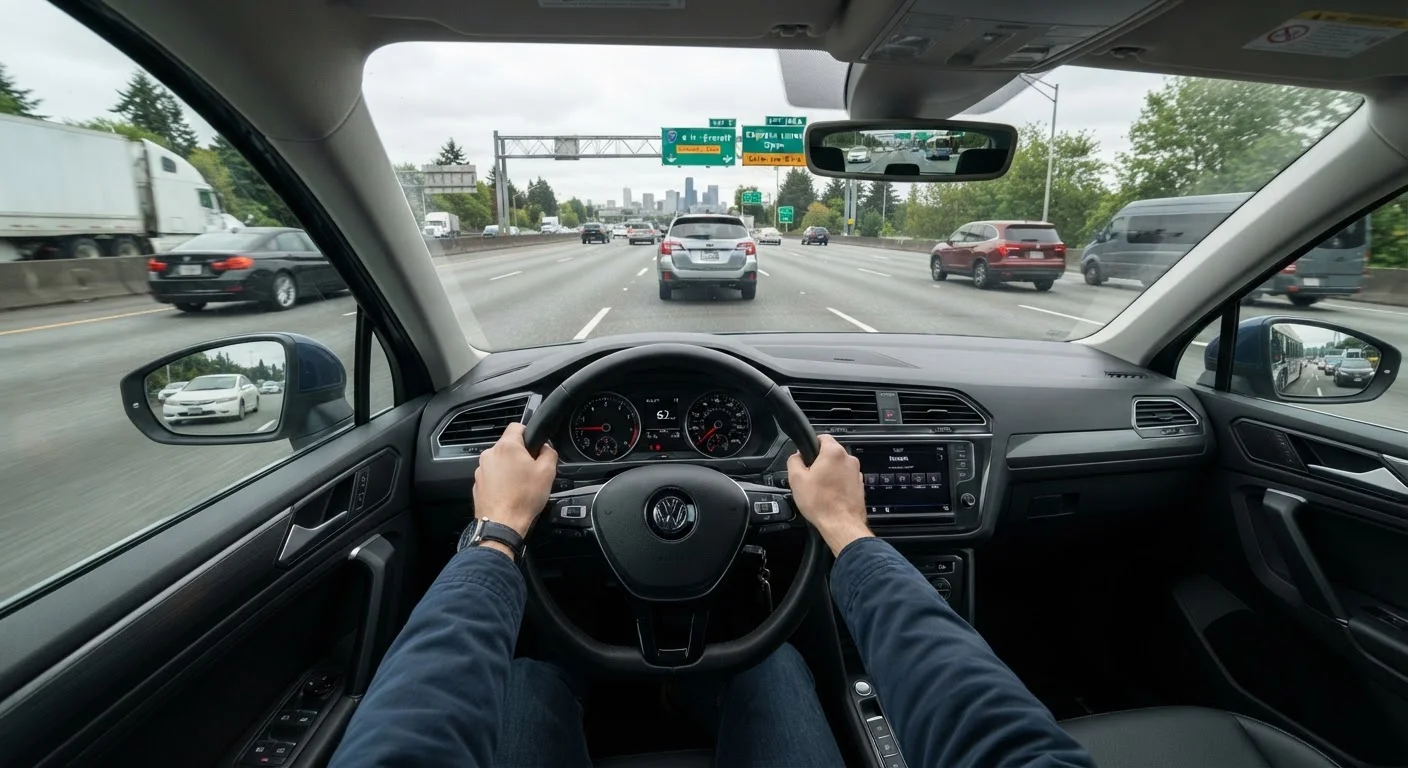
Speed makes distance deceptive. At highway speeds, a gap that looks comfortable from inside the car may only represent a second or two of cushion — far less than what you need.
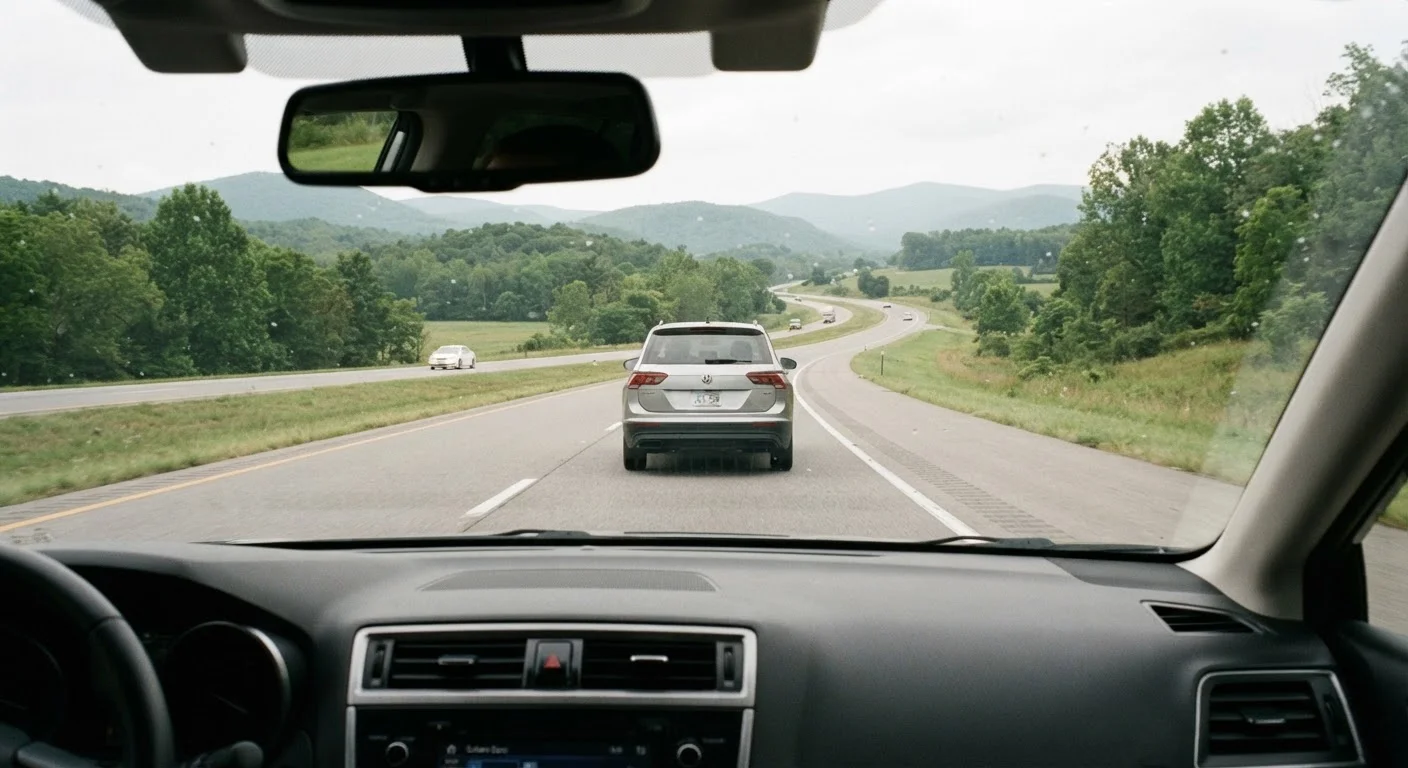
The widely recommended benchmark is the three-second rule. When the vehicle ahead passes a fixed landmark — a sign, an overpass, a painted line — count off three seconds. If you reach that same point before you finish counting, you're following too closely.
Three seconds is a minimum under ideal conditions: dry pavement, good visibility, a well-maintained vehicle. Add at least one or two more seconds for:
- Rain, snow, or ice
- Following a large truck or vehicle towing a trailer
- Reduced visibility (fog, glare, night driving)
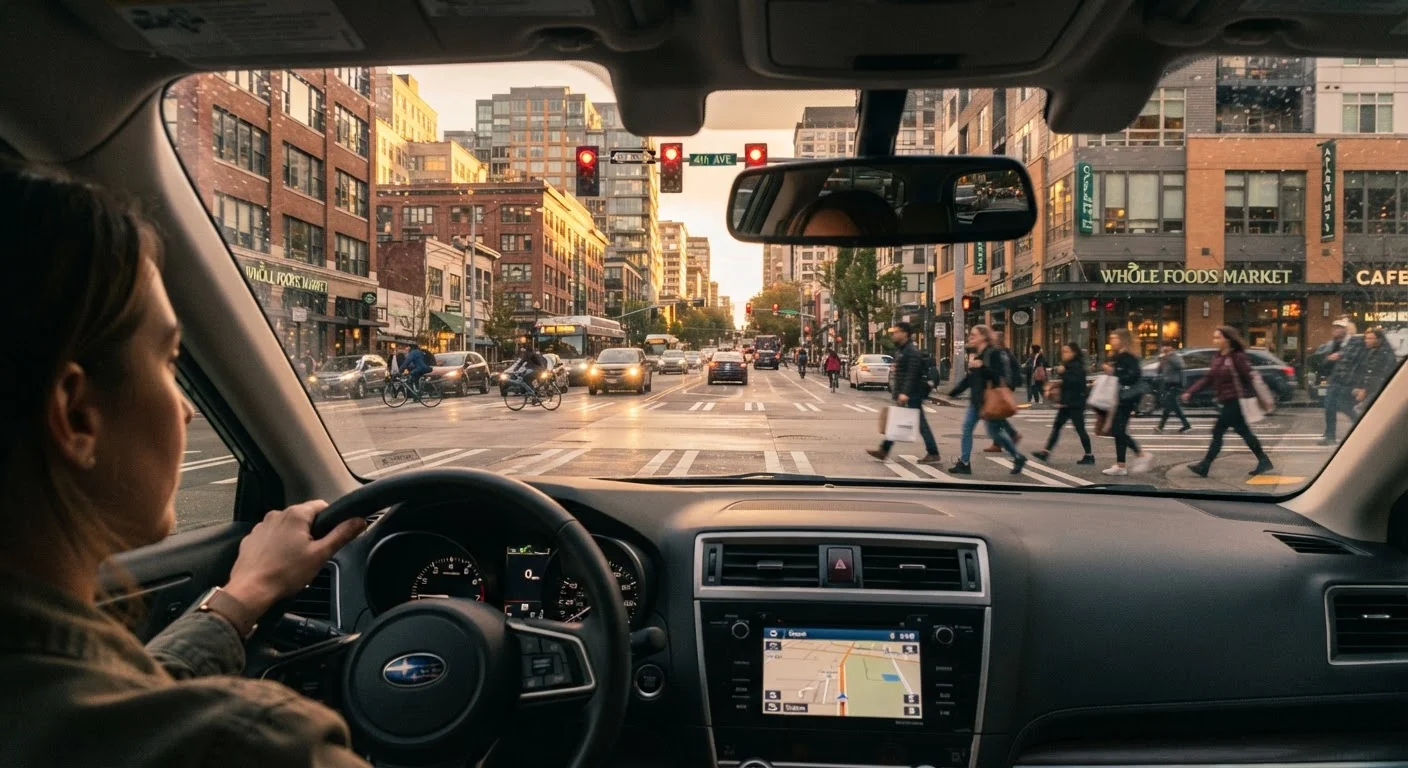
- Driving in heavy traffic where stops can be more abrupt
~240 ft
Estimated stopping distance at 60 mph
This is a general estimate under good conditions, combining perception, reaction, and braking phases; actual distance varies by vehicle and driver.
1.5–2.5 sec
Typical human perception and reaction time
Traffic safety research commonly cites this range for alert drivers under normal conditions; fatigue or distraction can increase it significantly.
50%+
Potential increase in stopping distance on wet roads
Reduced tire traction on wet pavement can extend braking distance by at least half compared to dry conditions, according to general road safety guidance.
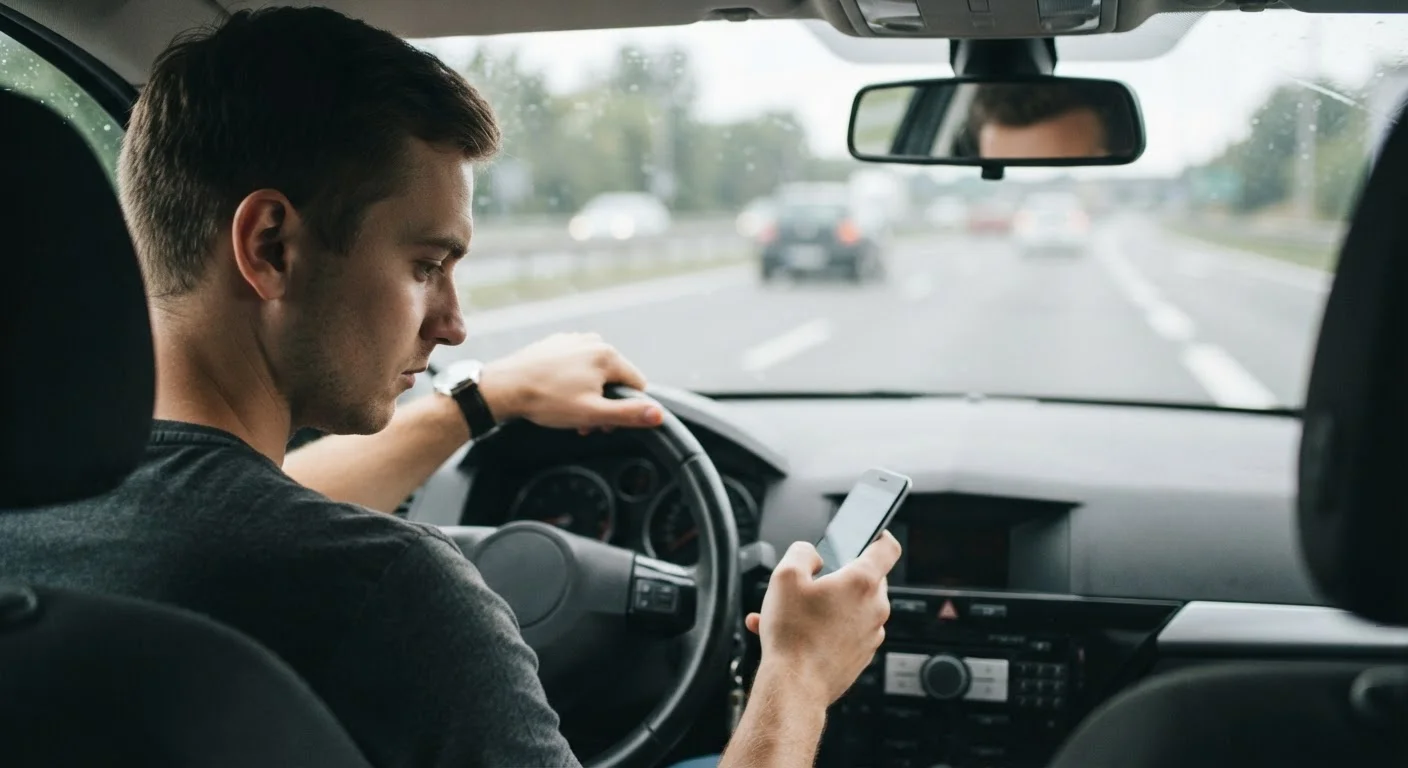
Fatigue and distraction can also lengthen your effective reaction time beyond what you'd expect when alert. Research on distracted driving consistently shows that attention gaps slow response times in ways drivers often don't notice in the moment.
Conditions That Change the Math
Braking distance isn't fixed — it's a function of speed, vehicle weight, tire condition, road surface, and brake health. When any of these factors change, so does the stopping distance.
Wet and icy roads reduce the friction between your tires and the pavement. On wet roads, stopping distances can increase by 50% or more. On ice, they can be several times longer than on dry pavement. A gap that felt safe in July may be dangerously short in January.
Tire condition matters more than many drivers realize. Worn tread reduces grip, especially in wet conditions. Underinflated tires can also affect braking performance. Routine tire maintenance is a direct safety factor, not just a mechanical concern.
Vehicle weight is another variable. A loaded pickup or an SUV carrying passengers and cargo needs more room to stop than an empty sedan. If you've added a trailer or roof cargo, that changes your stopping equation significantly.
Good situational awareness means accounting for these factors in real time — not just applying a fixed rule regardless of conditions.
What Tailgating Actually Looks Like in Practice
Tailgating — following too closely — is easy to recognize from outside a vehicle and surprisingly easy to rationalize from inside one. Drivers often feel they're keeping up with traffic, avoiding being cut off, or simply moving efficiently. But the physics don't bend to those justifications.
When you follow another vehicle at one second of distance, you've essentially eliminated any margin for human reaction. If that driver taps the brakes unexpectedly, there is no realistic path to avoiding contact. Rear-end collisions are among the most common crash types on American roads, and following distance is a direct contributing factor.
Being aware of what you can and can't see around the vehicle ahead also matters. Large vehicles ahead can obscure hazards — pedestrians, road debris, slowing traffic — until it's too late to respond safely. For a closer look at how visibility gaps compound following-distance problems, see our article on blind spots and mirrors. And when unexpected emergencies do occur, how you respond matters enormously — our overview of emergency situations on the road covers what trained responses typically look like.
The most reliable habit is straightforward: give yourself more space than feels necessary. In most driving situations, there's no meaningful cost to a larger gap — and the potential benefit is significant.