
What Situational Awareness Actually Means for Drivers
Situational awareness is your ability to perceive what's happening around your vehicle, understand what it means, and anticipate what might happen next. In driving terms, that translates to knowing where other vehicles are, what pedestrians and cyclists are likely to do, and which road conditions demand extra caution — all at the same time.
It's not a talent you're born with. It's a habit built through deliberate practice. Most drivers operate in a narrow visual tunnel, focused only on the car directly ahead. Skilled drivers actively scan the full environment. The difference between those two approaches often determines whether a close call becomes a collision.
For a deeper look at the principles that support this mindset, see our article on defensive driving fundamentals.
Core Scanning Practices Every Driver Should Build
These aren't advanced techniques — they're the foundational habits that separate attentive drivers from reactive ones.
Scan 12–15 seconds ahead of your vehicle, not just the bumper in front of you.
At highway speeds, 12 seconds of forward scanning gives you roughly a quarter-mile of preview. That's enough time to recognize a slowing lane, debris in the road, or a vehicle drifting out of its lane — and to respond calmly rather than react in panic.
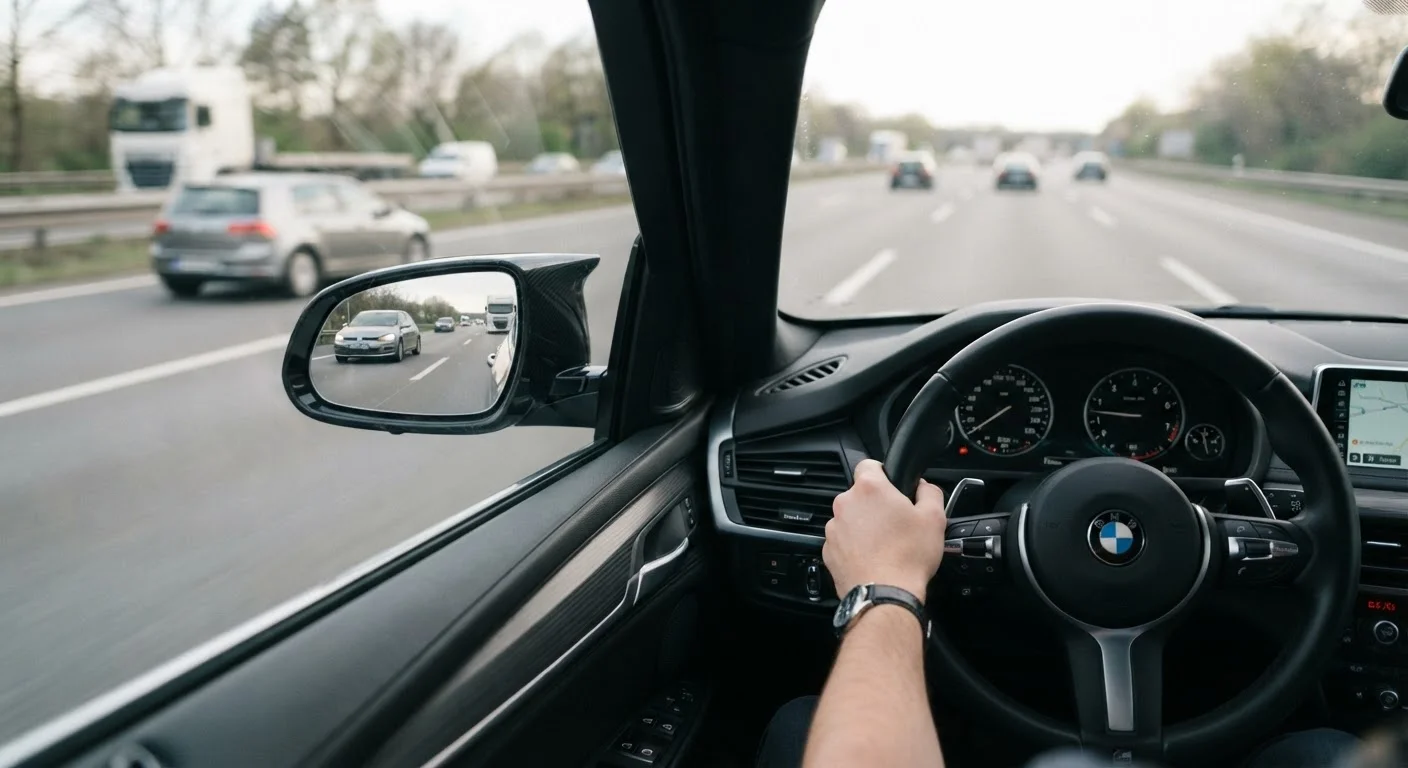
Check your mirrors every 5–8 seconds to maintain a complete picture of surrounding traffic.
Traffic behind and beside you changes constantly. Regular mirror checks prevent surprise — you'll know before changing lanes or braking whether a motorcycle is closing fast or a truck is tailgating. This habit also means you're less likely to be caught off guard during a sudden stop.
Identify an escape route before you need one.
Knowing where you could steer if the vehicle ahead stops suddenly — an open shoulder, an adjacent lane — prevents freeze responses. Having a pre-scanned exit option means your brain isn't making that decision under pressure for the first time.
Read other drivers' body language and vehicle cues before they signal.
Turn signals are often late or skipped entirely. Tire direction, a driver's head movement, or a vehicle drifting toward a lane line are earlier signals. Responding to these cues rather than waiting for an official signal adds several critical seconds of lead time.
Adjust your following distance to match conditions, not just the standard rule.
The standard three-second following gap is a minimum under ideal conditions. Rain, fog, heavy loads, or fatigue all require more space. A larger buffer expands your response time and keeps more road in your field of view. See our explainer on following distance and stopping physics for the mechanics behind this.
High-Risk Zones That Demand Extra Attention
Some locations generate a disproportionate share of crashes. Knowing which environments require heightened awareness helps you allocate your attention where it matters most.
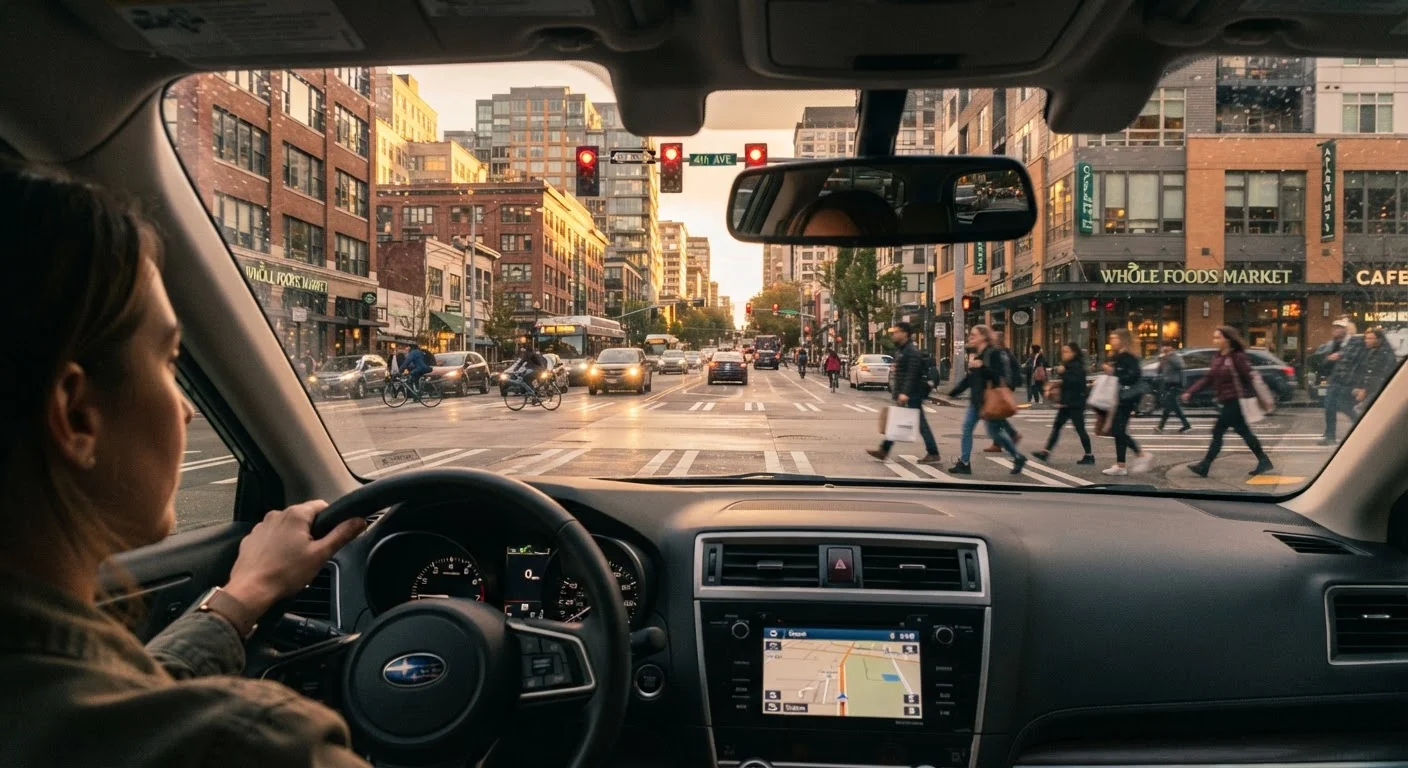
Intersections — Whether signalized or not, intersections are where most urban crashes occur. Cross-traffic can run red lights. Turning drivers may misjudge your speed. Pedestrians may step off the curb unexpectedly. Slow your approach when the light has been green for several seconds (it may be about to change), and scan left-right-left before entering.
Driveways and parking lots — Vehicles backing out may not see you. Pedestrians appear between parked cars without warning. Reduce speed and stay prepared to stop.
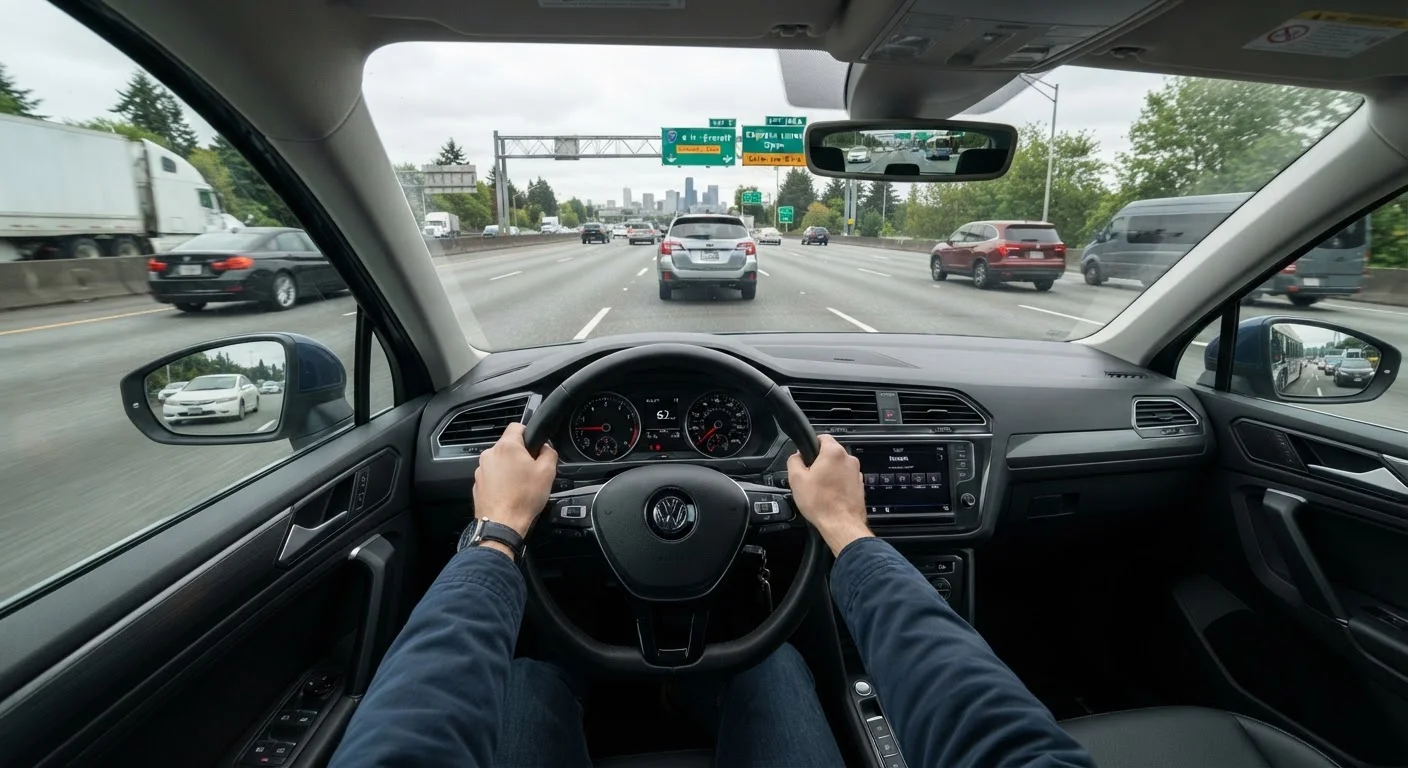
Highway merges and lane changes — Speed differentials are highest here. Check your blind spots and mirror coverage before every lane change, and allow merging drivers adequate space when it's safe to do so.
School zones and residential streets — Children move unpredictably and may dart into the road. Treat posted speed limits in these areas as a ceiling, not a target.
Scan the Sidewalk, Not Just the Road
Pedestrians and cyclists often give advance notice before they enter the road — a glance at traffic, a shift in weight, or a hand reaching toward a crosswalk button. Making eye contact (or trying to) with a pedestrian near a crosswalk is a quick way to confirm they've seen you before you pass. Don't assume.
Managing Attention Fatigue and Distraction
Even well-intentioned drivers lose focus. Mental fatigue, emotional stress, and in-car distractions all erode situational awareness faster than most people realize. Research on driver attention consistently shows that cognitive distraction — thinking about something else — reduces hazard detection even when your eyes are on the road.
~25%
Crash reduction linked to attentive scanning habits
Studies reviewed by the AAA Foundation for Traffic Safety suggest that cognitive distraction meaningfully reduces hazard detection, even when a driver's eyes appear to be on the road.
1.5 sec
Average driver reaction time before braking
NHTSA data indicates the typical perception-reaction time before a driver initiates braking is roughly 1.5 seconds — time that situational awareness can effectively extend by reducing surprise.
Practical steps to protect your awareness: set navigation before you drive, not while moving. Keep conversations short and simple when traffic is demanding. On long trips, stop every couple of hours rather than pushing through fatigue. If you feel your scanning become passive or mechanical, it's a signal to take a break.
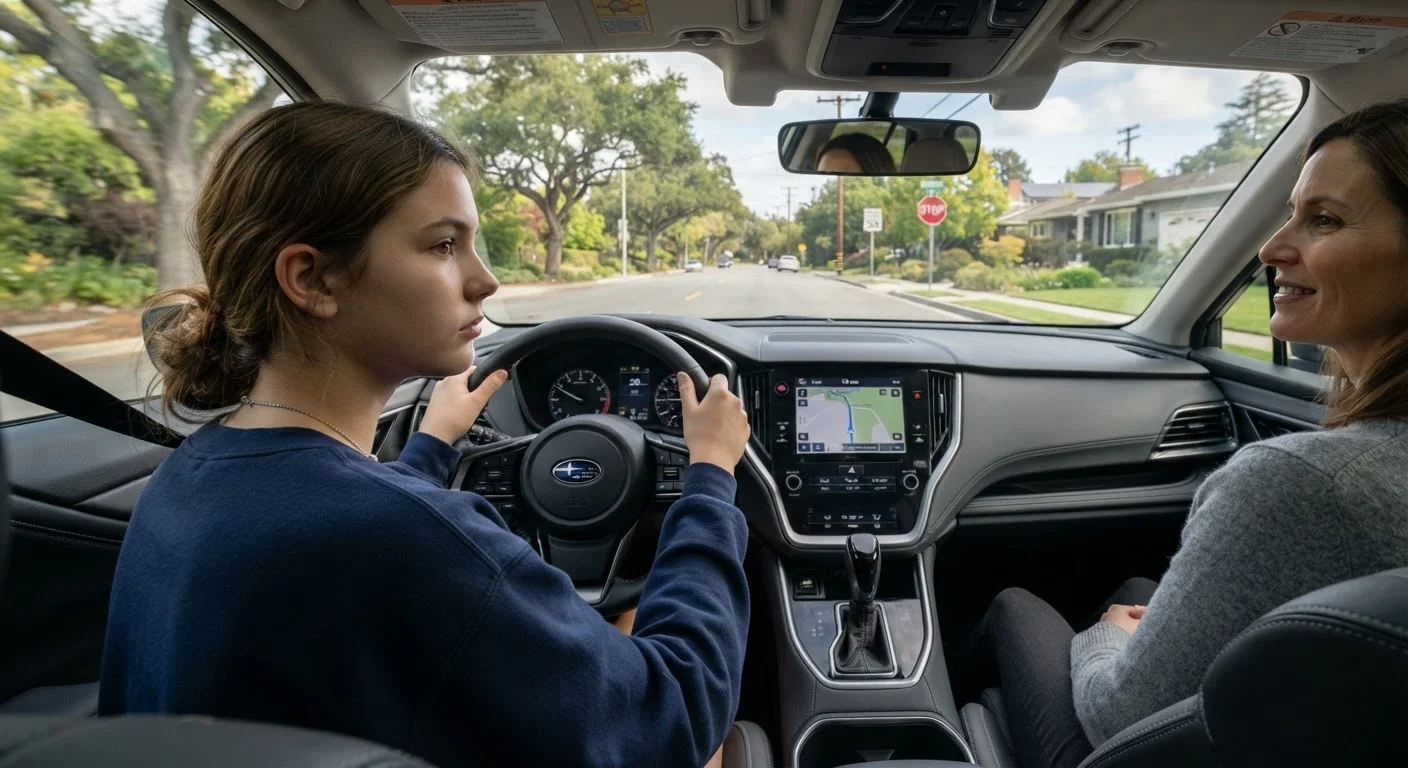
For newer drivers especially, building these habits early matters. Our guide on teen driver safety covers how attention habits develop in the first years behind the wheel.
Quick Actions to Sharpen Your Awareness Today
You don't need a formal driving course to start improving. These targeted habits can be practiced on your very next trip.
Strong situational awareness also reduces your reaction time in genuine emergencies. If you want to understand what that looks like under pressure, our article on emergency situations on the road walks through how trained responses compare to instinctive ones.