

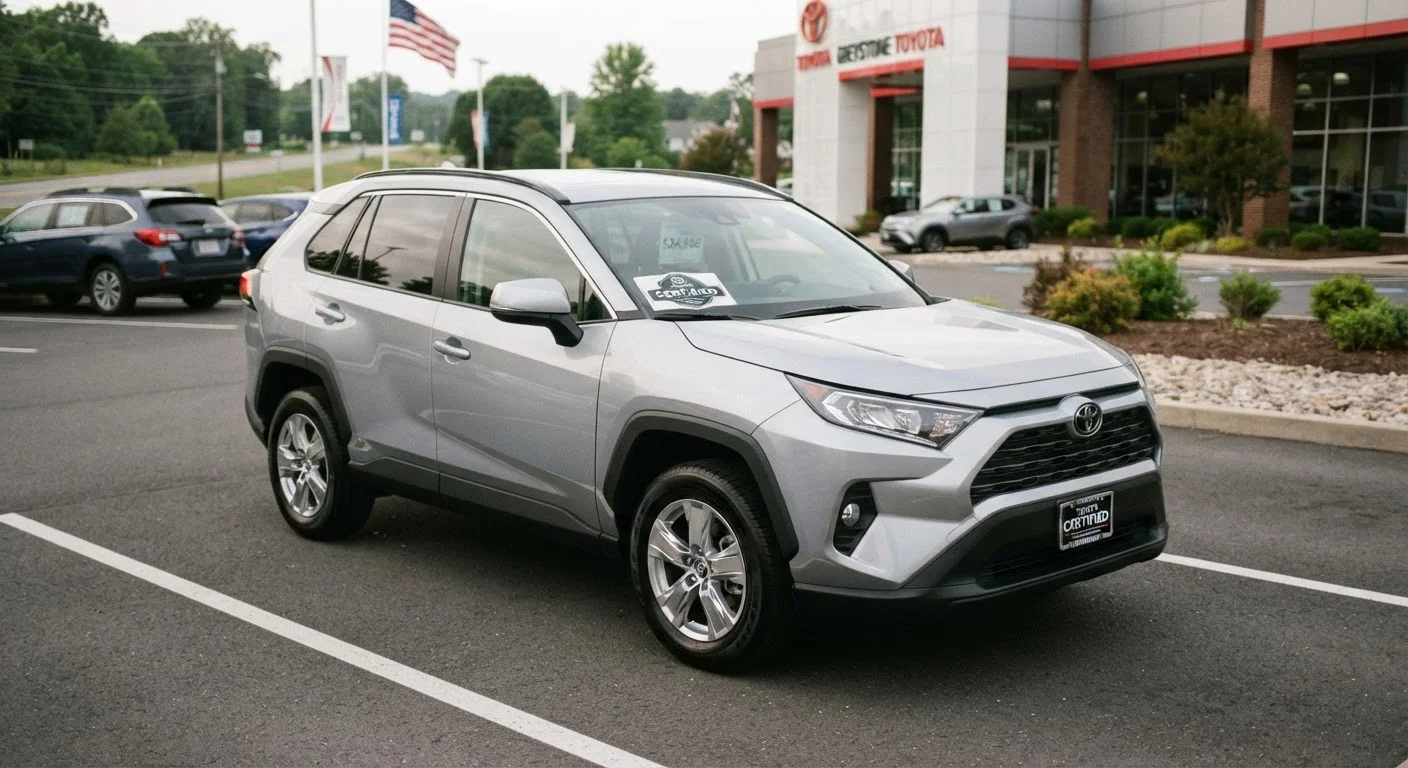
Two Very Different Types of Certification
When a car wears a CPO badge, it's either backed by the automaker — Ford, Toyota, Honda, and so on — or it's a program invented by the dealership itself. These are not the same thing, and the difference matters.
Manufacturer CPO programs are standardized across all franchised dealerships for that brand. The automaker sets the inspection criteria, the warranty terms, and often requires that a factory-trained technician perform the work. Vehicles typically must fall within a certain age and mileage range to qualify — often under six years old and under 80,000 miles, though this varies. The resulting warranty is backed by the manufacturer, not just the dealership.
Dealer-certified programs are created by individual dealerships. There's no automaker oversight, no industry-wide standard, and no uniform warranty behind them. One dealer's certified program might include a 150-point inspection and a 90-day powertrain warranty. Another's might amount to little more than a basic safety check and a handshake. These programs aren't necessarily fraudulent — some dealers run them responsibly — but there's no external body verifying the claims.
Before you get excited about any CPO label, ask directly: Is this program backed by the manufacturer, or is it a dealer program? That single question tells you a lot.
What the Inspection Actually Covers
Every CPO program promotes an inspection — often with a number attached, like "172-point inspection." These numbers can sound impressive, but the items on the checklist vary widely in significance.
A thorough manufacturer CPO inspection typically checks the engine, transmission, brakes, suspension, electrical systems, safety equipment, tires, and structural integrity. It should also screen for prior accident damage or flood history. Many programs require that failed components be repaired or replaced before certification is granted.
However, inspections have real limits. They reflect the condition of the vehicle on the day it was checked — not a forecast of its future reliability. A thorough inspection might still miss intermittent electrical faults, early-stage issues that haven't yet triggered warning signs, or problems that only show up under specific driving conditions.
This is why the pre-purchase inspection by an independent mechanic remains valuable even on CPO vehicles. The dealer's inspector works for the dealer. A mechanic you hire works for you.
Always Request the Full Inspection Checklist
Don't settle for a summary like '172-point inspection passed.' Ask the dealer to hand you the actual checklist with each item marked pass, fail, or repaired. If they're reluctant to provide it, that's information worth having. A legitimate CPO program should have no reason to withhold this documentation.
Also ask for the vehicle's history report — and understand what it can and can't tell you. Our article on vehicle history reports walks through its real limitations.
Reading the Warranty Before You Rely on It
The warranty is the most tangible benefit of buying CPO — but it has to be read carefully, not just summarized by a salesperson. A few things to look for:
- What's covered: Powertrain-only warranties cover the engine and transmission but leave out most everything else. Bumper-to-bumper (or comprehensive) warranties cover far more systems. Know which one you're getting.
- How long it lasts: Some CPO warranties extend the original factory coverage; others begin a fresh term from the date of purchase. There's a big difference between two years of remaining coverage and two additional years starting today.
- Deductibles: Many CPO warranties require a deductible per repair visit, often $50–$200. Factor this into your cost calculations.
- Transferability: If you sell the car before the warranty expires, can the next owner use it? Some programs allow this; others don't.
- Where repairs can be made: Manufacturer warranties typically require repairs at franchised dealerships. That can be convenient — or limiting, depending on where you live.
For a deeper look at how warranty coverage works and what can void it, see our complete guide to car warranties.
The Price Premium: Is It Worth It?
CPO vehicles typically cost more than comparable non-certified used cars — sometimes by several hundred dollars, sometimes by more. Whether that premium is worth paying depends on a few factors.
The warranty is the main thing you're buying. If the coverage is broad, long, and backed by the manufacturer, it may genuinely reduce your financial risk compared to a non-certified vehicle. The peace of mind has real value, particularly for buyers who don't want to absorb the cost of a major repair shortly after purchase.
On the other hand, if the CPO program is dealer-created, has a narrow powertrain-only warranty, and expires in 90 days, the premium may not be justified. You'd essentially be paying extra for an inspection you can't fully verify and coverage that barely extends beyond the sale.
Varies widely
Mileage limits across CPO programs
Most manufacturer CPO programs cap eligible vehicles at 60,000–80,000 miles, but dealer programs may impose no mileage ceiling at all.
$0–$200
Typical per-visit deductible range
Many CPO warranty contracts require a deductible each time a covered repair is performed, so factor this into your total cost of ownership.
Compare the CPO price against similar non-certified vehicles in your market, and weigh what the warranty actually covers. If the difference in price is significant and the warranty is thin, it may make more sense to buy a non-certified vehicle, invest in an independent inspection, and put the savings toward a vehicle service contract — or simply keep it in reserve for repairs.
For a broader look at buying through a dealership versus other options, our article on private seller vs. dealership trade-offs is a useful companion read.
And once you're ready to sit down at the dealership, our guide on what to do before you sign anything covers the questions to ask and documents to review before you commit.