

Why the Signing Table Is Where Buyers Lose the Most Ground
The most expensive mistakes in a car purchase rarely happen when you're comparing vehicles on the lot. They happen at the desk — when contracts appear in front of you and the assumption is that everything has already been decided. Understanding what to look for before you sign puts you in control of a process that's often designed to move quickly.
This checklist covers the full arc: what to do before you arrive, how to handle negotiation, what to scrutinize in the finance office, and what to confirm before driving off. Whether you're buying new or used, these steps apply. For context on where you borrow and why it matters, see our guide on dealer financing vs. outside lender pre-approval.
Pre-Approval Letter from Your Lender
Gives you a concrete financing rate to compare against whatever the dealership offers.
Vehicle History Report
Reveals past accidents, title issues, odometer discrepancies, and service records for used vehicles.
Independent Market Pricing Research
Helps you identify a fair price range for the vehicle before negotiating.
Calculator App
Lets you manually verify loan payment math and total interest costs against what the dealer presents.
Notepad or Phone Notes
Track every number and verbal commitment made during negotiation so you can cross-check the written contract.
Your Pre-Dealership Homework Matters More Than You Think
Walking in unprepared is the single biggest disadvantage a buyer can have. Knowing the fair market value of the vehicle, having a history report ready for used cars, and holding a pre-approved loan offer shifts the dynamic considerably. You're no longer relying on the dealership to tell you what's fair — you already know.
If you're still deciding between buying from a dealership versus a private seller, the trade-offs are real on both sides. Our comparison of private sellers vs. dealerships can help you think through that decision before you commit to a channel.
The Checklist: What to Verify and When
Work through these items in order — preparation first, then negotiation, then the contract, then the F&I office. Don't skip to the end. Many buyers focus on the test drive and gloss over the paperwork stage, which is where add-ons and fee inflation tend to appear quietly.
Before You Walk In
At the Dealership — During Negotiation
Reviewing the Purchase Contract
In the Finance and Insurance (F&I) Office
Final Checks Before You Leave
You Can Always Walk Away
No matter how much time you've spent at the dealership, you are not obligated to sign anything. If a number changes, an unexpected fee appears, or you feel pressured to decide quickly, it is completely reasonable to pause, take the documents home to review, or walk away entirely. A legitimate deal will still be there after you've had time to think.
The Finance and Insurance Office: What to Expect
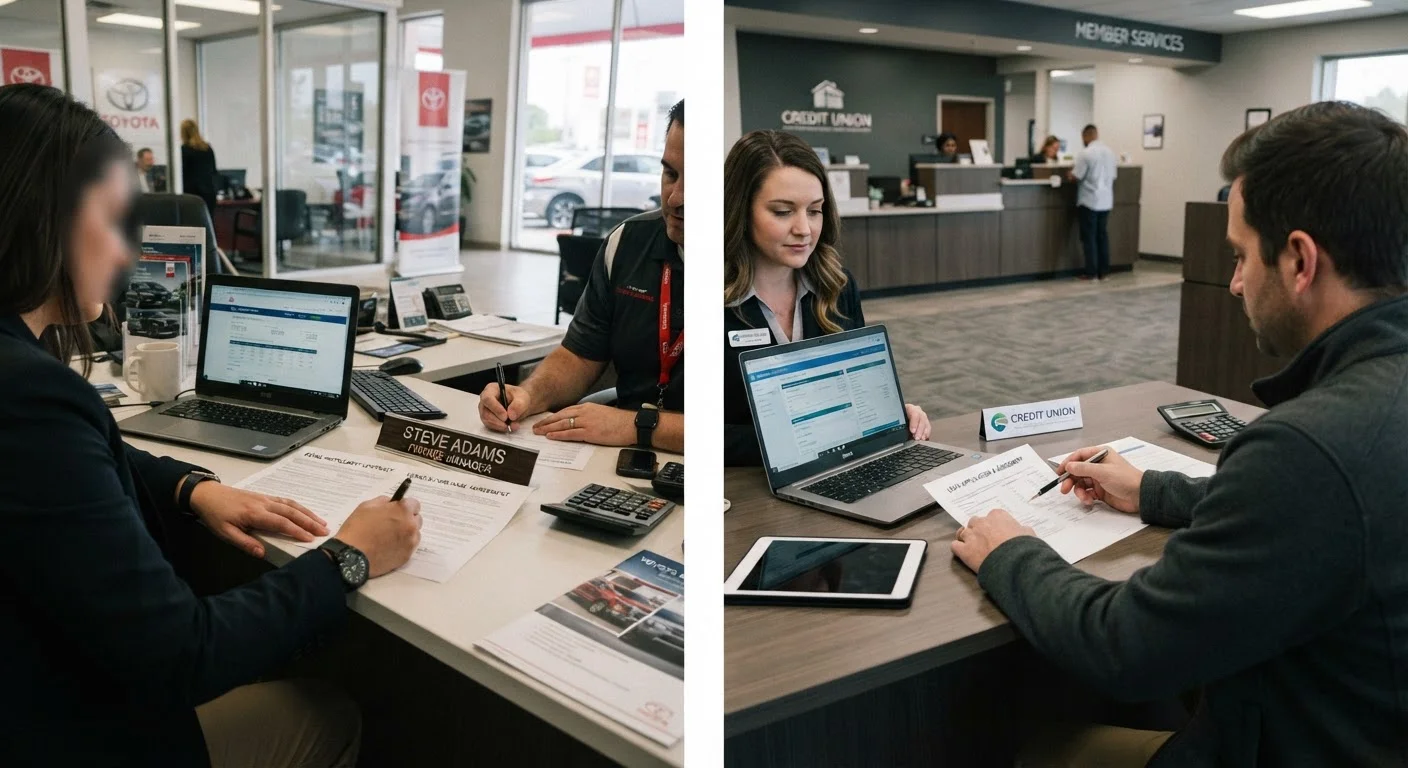
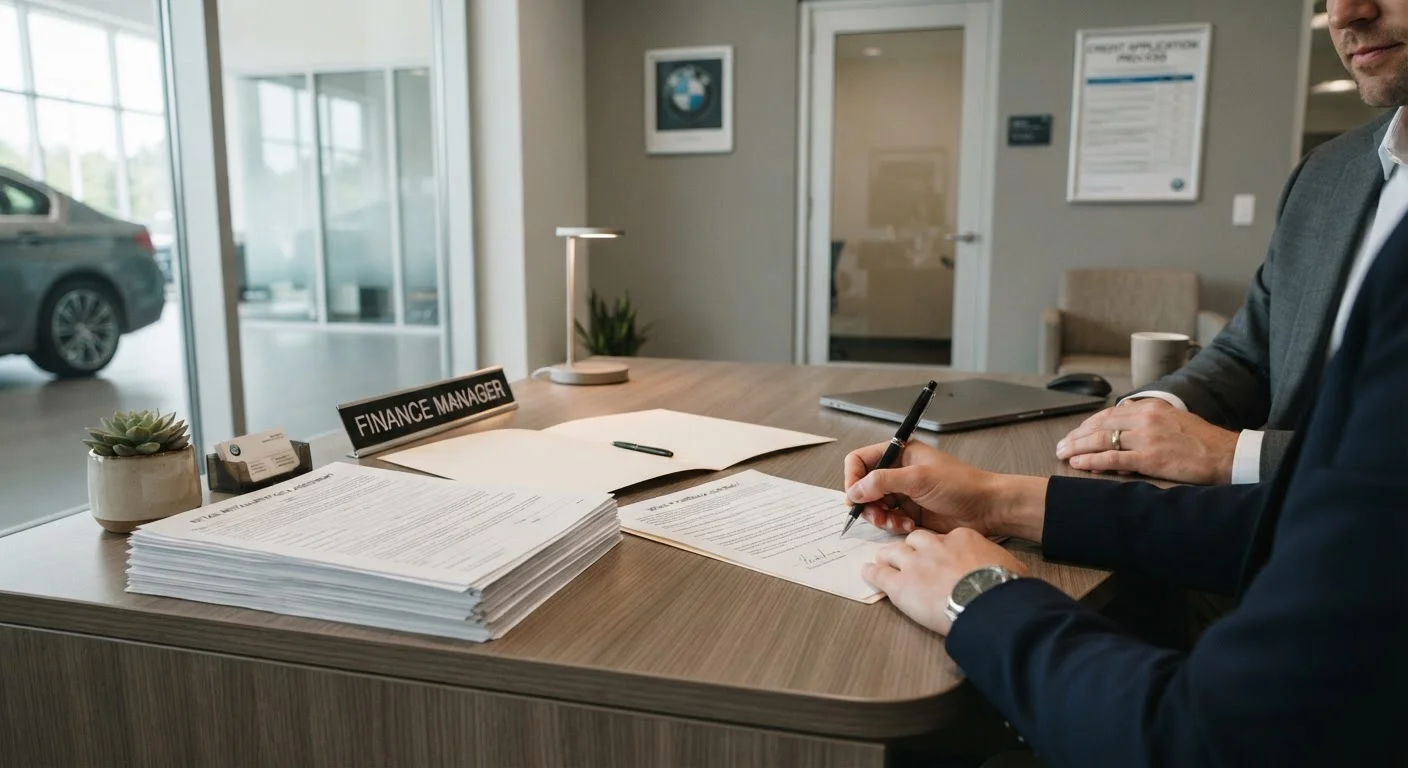
After agreeing on a vehicle price, most dealerships route buyers through the Finance and Insurance (F&I) office to finalize the loan and handle paperwork. This is also where a range of optional products — extended service contracts, GAP insurance, paint protection packages, and others — are typically presented. These products aren't inherently bad, but they're often introduced quickly and bundled into monthly payments in a way that makes their actual cost hard to evaluate on the spot.
GAP insurance, for example, covers the difference between what you owe on a loan and what your vehicle is worth if it's totaled — a concept worth understanding, but one that may also be available through your own auto insurer at a lower cost. Take your time evaluating each item individually.
For a deeper breakdown of what you'll encounter in that room and how to evaluate each offer clearly, see our guide to the F&I office.
Monthly Payment Focus Is a Common Trap
Dealers may steer the conversation toward monthly payments rather than the total purchase price. A lower monthly payment can hide a longer loan term or a higher interest rate — both of which cost you more overall. Always anchor your negotiation to the total out-the-door price first.
Verbal Promises Don't Hold Up
If a salesperson or finance manager promises a repair, an accessory, or a specific feature, it means nothing unless it appears in writing on the signed contract. Don't leave those commitments to memory or goodwill — insist they're documented before you sign.
After You Sign: Document and Confirm Everything
Once you've signed, the contract is binding — which is why the checklist items covering your final review matter. Confirm you have physical copies of every document. Verify that anything promised verbally is written in. Check that all keys, manuals, and accessories are present before you leave the lot.
Staying informed about how you operate your vehicle safely after purchase is just as important as how you buy it. The Auto Essentials driver safety hub covers key practices every driver should know once they're behind the wheel.
This article is for general informational and educational purposes only. It does not constitute legal, financial, or professional advice. Readers should consult qualified professionals and verify any figures or terms independently before entering into any vehicle purchase agreement.