

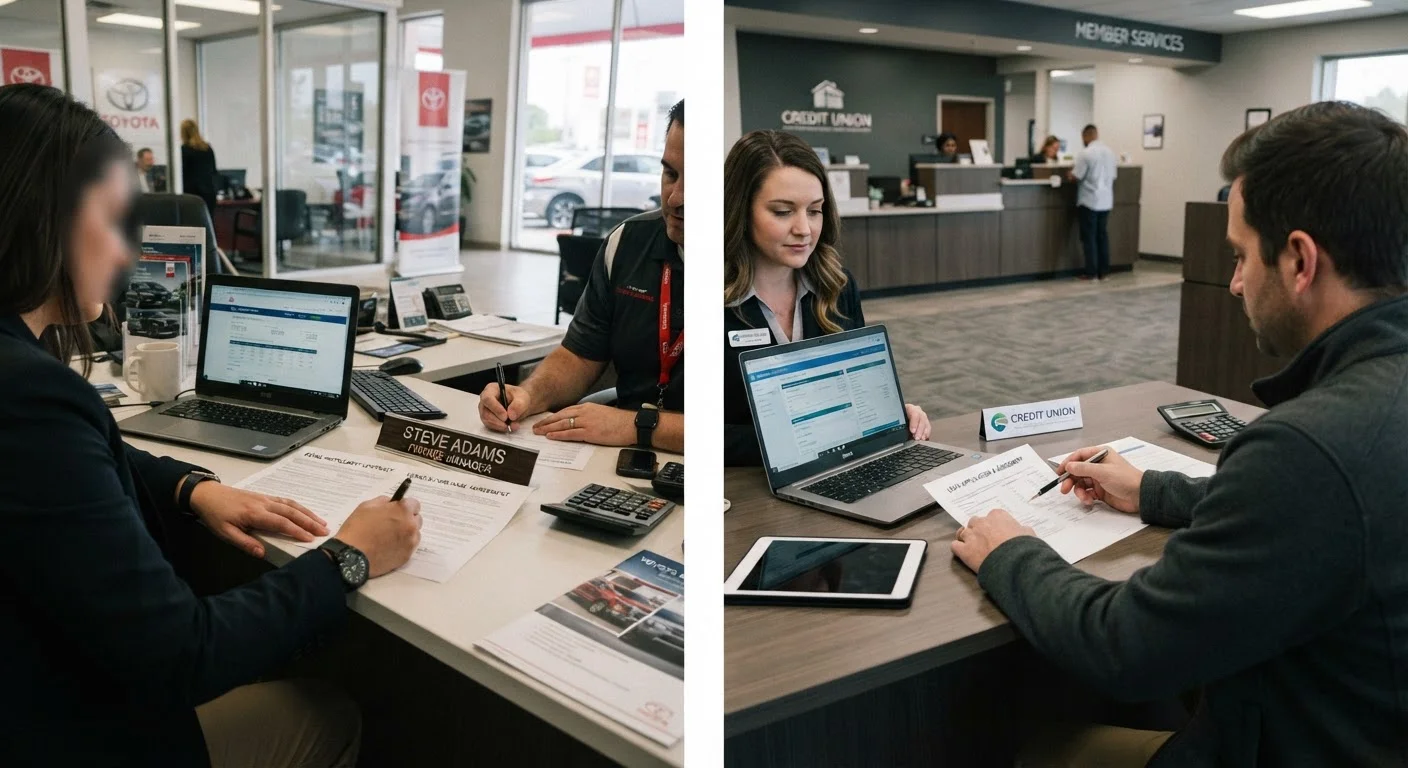
How Each Option Works
When you finance through a dealership, you fill out a credit application in the finance and insurance (F&I) office. The dealer submits that application to one or more lenders — banks, credit unions, or the automaker's own financing arm — and presents you with loan terms. It feels seamless because everything happens in one place.
Pre-approval works differently. You apply directly with a bank, credit union, or online lender before you step onto a lot. The lender reviews your credit and income, then issues a conditional offer stating the maximum loan amount and the interest rate you qualify for. You bring that offer with you like a budget ceiling.
One detail worth understanding: when a dealer arranges your loan, they often receive what's called a dealer reserve — a markup on the interest rate above what the lender actually quoted. That difference is a source of profit for the dealership. To learn more about how these profit layers work, see how car dealers make money on a sale.
Side-by-Side: Key Differences
The table below lays out the most important factors to consider when comparing these two paths.
| Criterion | Dealer Financing | Bank or Credit Union Pre-Approval |
|---|---|---|
| Where you apply | In the F&I office at the dealership | Directly with your chosen lender beforehand |
| Rate transparency | Rate revealed after credit check; markup possible | Rate known before you visit a dealer |
| Negotiating position | Dealer controls the financing conversation | Buyer enters with a benchmark rate in hand |
| Promotional rates | May access manufacturer subsidized rates (0% APR, etc.) | Not eligible for manufacturer promotions |
| Speed and convenience | One-stop; can close same day | Requires advance preparation and application |
| Lender options | Dealer's network of partner lenders | Any bank, credit union, or lender you choose |
| Credit inquiry timing | Occurs at the dealership during purchase | Occurs before shopping; rate-shop window applies |
One nuance on credit inquiries: when you apply for pre-approval at multiple lenders within a short period — typically 14 to 45 days depending on the scoring model — most credit scoring systems count those as a single inquiry for rate-shopping purposes. That makes it practical to compare a few lenders without meaningful credit-score damage.
When Dealer Financing Has a Real Advantage
The strongest case for dealer financing is a manufacturer-sponsored promotional rate. When automakers want to move inventory, they sometimes subsidize loans to offer rates well below the market average. These offers are only accessible through the dealer and their captive lender (the financing company the manufacturer owns). If you qualify and the promotion applies to the vehicle you want, that rate is worth taking seriously.
Convenience is a secondary advantage. If you have strong credit and limited time, the dealer can often match competitive rates and complete the paperwork the same afternoon. Just make sure you review every term carefully before signing — monthly payments aren't the whole story. What to do at a dealership before you sign anything walks through exactly what to check.
Why Pre-Approval Tends to Favor the Buyer
A pre-approval letter changes the dynamic in the finance office. Instead of learning your rate for the first time when you're already emotionally committed to a vehicle, you walk in knowing what a competitive rate looks like for your credit profile. That's useful leverage.
Credit unions in particular are worth contacting before you shop. As member-owned, nonprofit financial cooperatives, credit unions often offer lower interest rates than commercial banks on auto loans, and their loan officers may take more time to explain your options. Membership requirements vary but are frequently broader than people assume — many are open to anyone in a given region or profession.
Pre-approval also helps you keep price and financing as separate conversations. Dealers sometimes focus negotiations on monthly payment rather than total vehicle price, which can obscure the actual cost of the loan. Going in pre-approved means you can negotiate the car's price on its own terms first. For more on the research that supports this approach, see smart habits for researching a car before setting foot in a dealership.
This article is for general informational purposes only and does not constitute financial or legal advice. Loan terms, interest rates, and lender policies vary. Consult a qualified financial professional regarding your specific situation before making borrowing decisions.