
Why You Need Both Goals Running at Once
Many people assume they should wipe out all their debt before saving a single dollar. The logic makes sense on the surface — why earn 0.5% on a savings account while paying 20% interest on a credit card? But this all-or-nothing approach has a real-world flaw: the moment an unexpected expense hits, you have no cushion. That forces you to charge the expense right back onto the card you just paid down, and the cycle starts over.
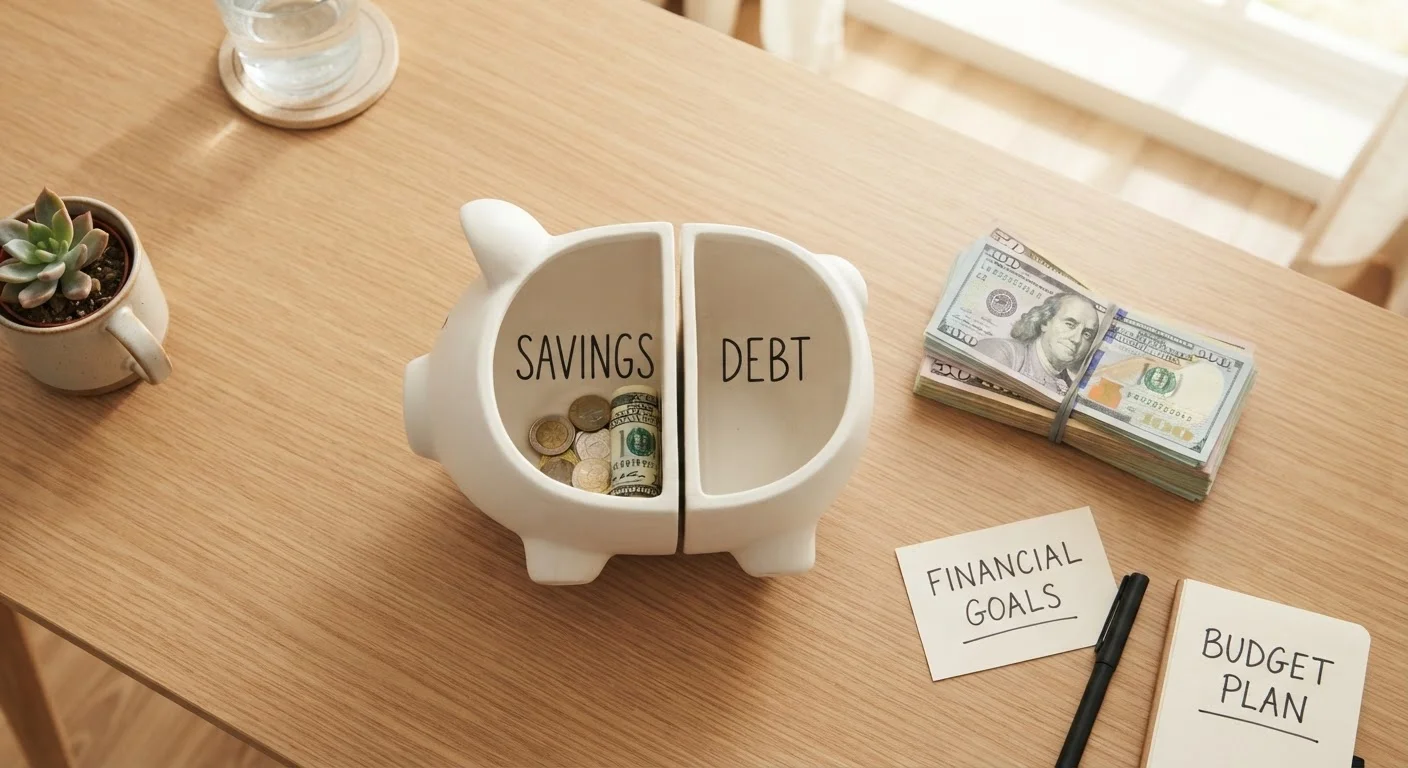
The smarter move is a split strategy — directing part of every paycheck toward a basic emergency fund while also chipping away at debt. This approach keeps you from being one car repair away from financial crisis. If you're new to thinking about these two goals together, our beginner's guide to managing debt and savings lays out the foundational concepts clearly.
The key insight is that a small, accessible emergency fund acts like a financial shock absorber. You don't need $10,000 in savings before attacking debt — most personal finance frameworks suggest $500–$1,000 is enough to protect you from common setbacks while you focus on repayment.
How to Divide Your Paycheck
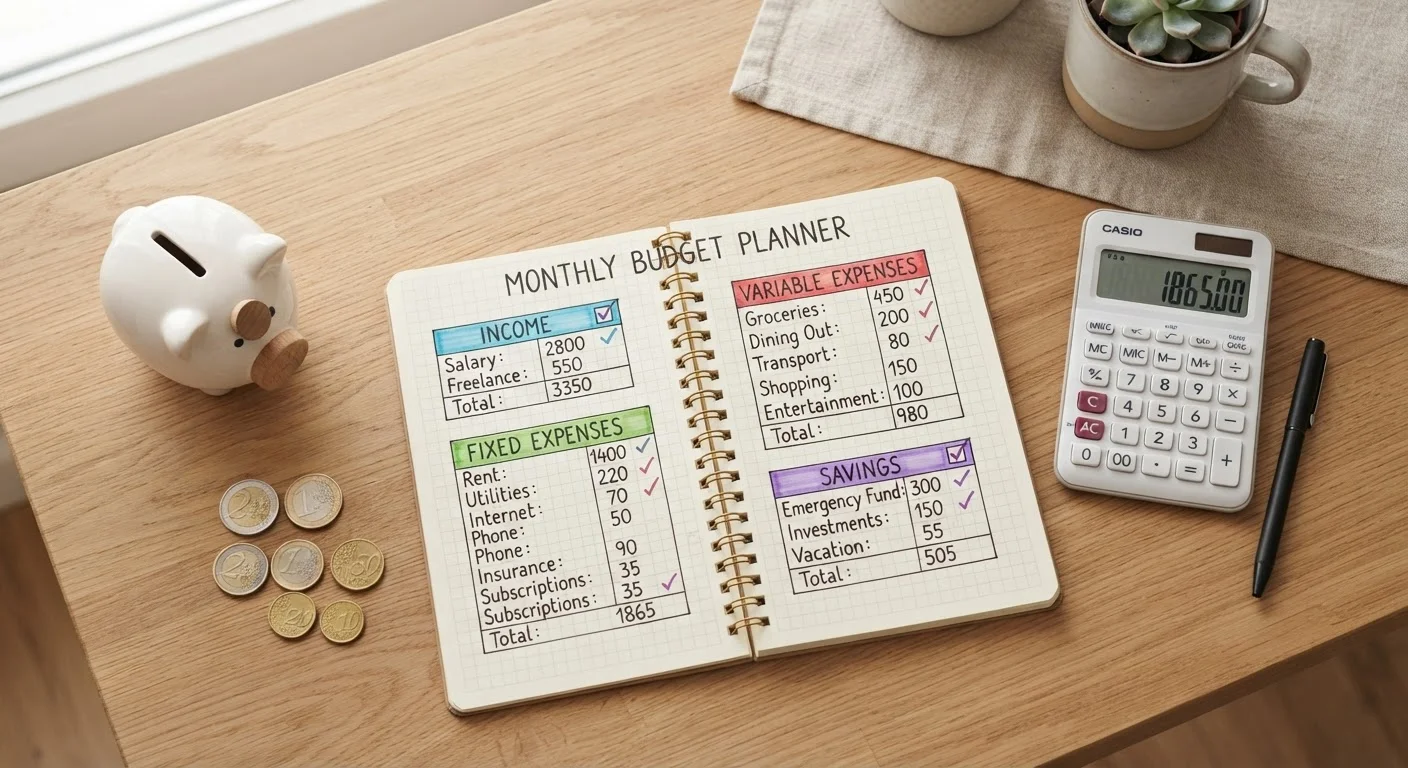
Before you split anything, you need a clear picture of your monthly take-home pay and your fixed obligations — rent, utilities, minimum debt payments, and groceries. Everything left over is your discretionary pool, and that's where the real decisions happen.
One widely used starting framework is the 50/30/20 rule and similar budgeting approaches. In a debt-focused variation, you might shift the "wants" percentage down and redirect that money toward accelerated debt payments or savings contributions. There's no single percentage that's right for everyone, but having a written allocation — even a rough one — is far better than guessing each month.
List every income source and your take-home total
Write down the net (after-tax) amount that lands in your account each pay period. If your income varies, use a conservative estimate based on your three lowest recent paychecks. This is your working number — not your gross salary.
Cover fixed necessities and minimum debt payments first
Before splitting anything, subtract your non-negotiables: rent or mortgage, utilities, groceries, transportation, insurance, and the minimum required payment on every debt. These come out before any allocation decision. Whatever remains is your discretionary pool.
Set a starter emergency fund target
If your emergency fund has less than $500–$1,000 in it, prioritize building to that threshold before aggressively increasing debt payments above minimums. A common approach is to direct 10–15% of discretionary income to savings until you hit this floor, then pivot that percentage toward debt.
Assign a percentage of discretionary income to extra debt payment
Once your starter fund is in place, direct the bulk of discretionary dollars — commonly 50–70% of what's left — toward paying above the minimum on your highest-priority debt. Which debt gets targeted first depends on the payoff strategy you choose. The debt avalanche and snowball methods each have their own logic worth understanding before you commit.
Automate both the savings transfer and the extra debt payment
Schedule a transfer to your savings account and an additional payment to your target debt for the day after each paycheck arrives. Automation means you never have to decide in the moment — the money moves before you have a chance to spend it elsewhere. The pay-yourself-first principle works on exactly this idea.
Track progress monthly and rebalance when milestones are hit
Each time a debt is fully paid off, take the payment you were making on it and redirect it to the next target debt or to growing your emergency fund further. This "roll-over" approach compounds your progress without requiring any increase in total spending discipline.
Once your basic structure is in place, consider automating it. Scheduling automatic transfers and payments right after each payday removes the decision entirely, which is one of the most effective ways to stay consistent.
Start Simple, Then Refine
You don't need a perfect budget to start splitting your paycheck. Even a rough 80/20 split — 80% toward essentials and debt minimums, 20% toward savings and extra debt payments — beats having no plan at all. Once the habit is formed, you can fine-tune the percentages based on what's actually working.
Adjusting the Split Over Time
Your allocation isn't set in stone. Once your emergency fund reaches a comfortable level — many guidance frameworks suggest one to three months of essential expenses — you can redirect those savings dollars toward faster debt payoff. As individual debts get paid off, you free up minimum payments that can be rolled into the next balance. This is the core idea behind methods like the debt avalanche and debt snowball, which are worth understanding in detail. See our comparison of debt avalanche vs. debt snowball strategies to figure out which approach fits your habits.
If you find your split isn't creating any real progress, it may be a budgeting problem rather than a math problem. Finding extra room in your budget — even $50 or $100 per month — can meaningfully accelerate both goals. And if things still aren't moving after several months, recognizing when your plan needs a rethink can prevent years of frustration.
This article is for general informational purposes only and does not constitute personalized financial advice. Consider consulting a licensed financial professional for guidance tailored to your individual situation.