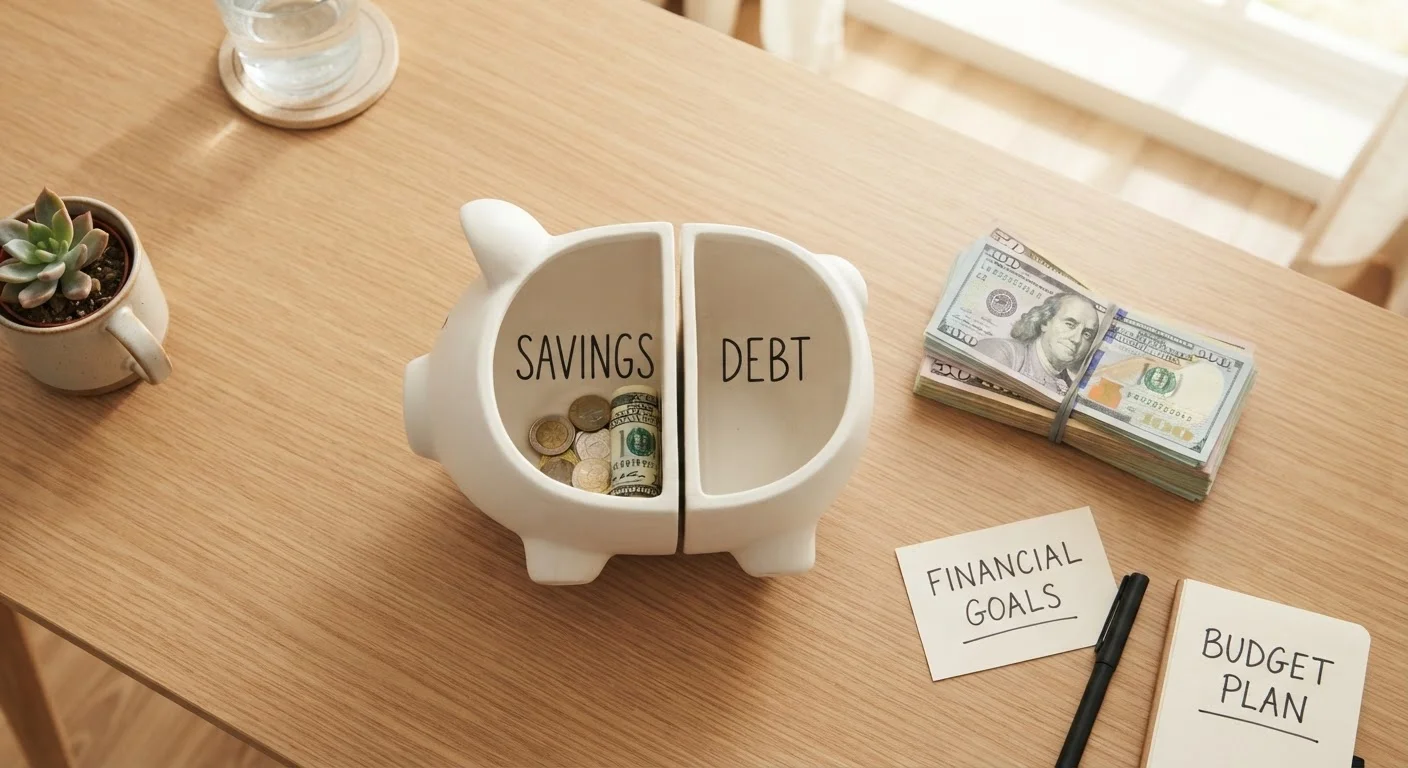


Why Finding Extra Money Matters
When you're carrying debt, the minimum payment keeps you from falling behind — but it rarely moves the needle on the actual balance. Interest accumulates month after month, and at high rates, a significant portion of every payment goes to the lender rather than reducing what you owe. Freeing up even a modest amount of additional cash each month can meaningfully accelerate your payoff timeline and reduce the total interest you pay.
The strategies below are practical and realistic for everyday budgets. None of them require a dramatic lifestyle overhaul. Think of them as levers — pull one or a few, and direct whatever you free up straight toward your debt. If you haven't yet settled on a payoff approach, the debt avalanche vs. snowball comparison can help you decide which method fits your situation best.
Audit every subscription and recurring charge
Most households carry more recurring charges than they realize. Streaming services, gym memberships, app subscriptions, cloud storage plans — they often fly under the radar because they're small individually. Pull up your last two or three bank and credit card statements and highlight every recurring charge. Cancel anything you haven't actively used in the past 30 days. Downgrade tiers where a cheaper plan covers your actual needs. Even cutting $40 to $60 a month from subscriptions adds up to $480–$720 over a year — money that can go directly toward your balance.
Most households pay for subscriptions they haven't used in months without realizing it.
Call your service providers and negotiate
Many people don't realize that cable, internet, and insurance rates are often negotiable — especially if you've been a long-standing customer or if competing rates have dropped. Call your provider, mention you're reviewing your expenses, and ask whether a lower rate or promotional plan is available. Insurance is a different process — you'll want to compare quotes across multiple carriers — but even trimming $20 off a monthly premium frees up $240 per year. For utilities, simple habit changes (adjusting the thermostat, running the dishwasher at off-peak hours) can trim monthly bills without requiring any negotiation at all.
A single 15-minute call to your cable or internet provider can sometimes shave $20 or more off your monthly bill.
Apply windfalls directly to debt
Tax refunds, work bonuses, cash gifts, and rebates all share one thing in common: they're unplanned income. That makes them ideal for debt payoff, because they don't require you to change your daily spending habits. Before lifestyle inflation sets in — the natural urge to spend unexpected money on something enjoyable — commit in advance to applying a set percentage of any windfall to your highest-priority balance. Even earmarking 50% for debt and keeping 50% for yourself is far better than spending the whole amount. If your plan needs a structure tune-up first, run through this pre-payment checklist before directing the funds.
Committing windfalls to debt before you receive them prevents the temptation to spend them elsewhere.
Trim one spending category at a time
Sweeping budget cuts rarely stick. Instead, pick one category — dining out, groceries, entertainment — and focus on reducing it by a specific dollar amount for 30 days. Cooking at home two extra nights per week instead of ordering delivery can save $30 to $60 per month for many households. Once that change feels natural, tackle the next category. This incremental approach is more sustainable and less likely to cause the budget burnout that leads people to abandon their plans altogether. Refer to budgeting basics for practical frameworks to track your progress by category.
Cutting one category at a time is more sustainable than slashing your entire spending plan at once.
Automate your extra payment the day after payday
Automation is one of the most reliable ways to make sure extra debt payments actually happen. Set up an automatic transfer to your loan or credit card account for the day after your paycheck clears — before the money gets absorbed into everyday spending. Even $25 or $50 per paycheck adds up, and over time many people increase the amount as their comfort with the lower spending level grows. Automating your debt payments and savings transfers covers the mechanics of setting this up in a way that also keeps your savings on track.
Automating extra payments right after payday eliminates the decision — and the temptation — entirely.
Generate a small amount of additional income
Sometimes the fastest path to extra debt payments is a modest income boost rather than deeper cuts. Selling items you no longer use — electronics, clothing, furniture — is a one-time source of cash with no ongoing commitment. Picking up occasional freelance work, tutoring, or seasonal gigs can add a predictable extra $100 to $200 per month for some households. The key is to treat that additional income as dedicated to debt from the start, rather than absorbing it into general spending. Even a temporary income increase for three to six months can make a noticeable dent in a balance.
Treating extra income as 100% dedicated to debt from the start keeps the momentum going.
Putting It All Together
None of these strategies requires perfection. The goal is to consistently direct a little more money toward debt each month than you did the month before. Even modest progress compounds: an extra $75 per month on a $5,000 balance at 20% APR can cut your payoff time by more than a year and save hundreds in interest.
One important balance to keep in mind: while you're aggressively targeting debt, don't leave yourself completely without a financial cushion. Even a small emergency fund — say, $500 to $1,000 — can prevent a car repair or medical bill from forcing you to borrow again. See why an emergency fund comes before extra debt payments for guidance on sizing it appropriately. For a fuller picture of balancing both goals at once, splitting your paycheck between saving and debt walks through concrete allocation approaches.
Track your progress to stay motivated
Write down your starting balance and check it once a month after each extra payment posts. Seeing the number move — even slowly — is one of the most reliable motivators for sticking with a plan. If progress stalls for two or three consecutive months, that's a signal to revisit your approach. Signs your plan isn't working can help you diagnose the problem and adjust.
This article provides general financial education and is not personalized financial advice. Consider consulting a qualified financial professional for guidance specific to your situation.