
Why the Framework You Choose Matters
A budget isn't one-size-fits-all. The mechanics of how you allocate money shape your habits, your stress level, and ultimately whether you stick with a plan past the first month. Understanding the structural differences between popular frameworks — before picking one — saves a lot of frustration later.
These four methods are widely recognized in personal finance education and suit different income types, personality styles, and financial goals. Whether you're just starting out or looking to switch approaches, knowing what each framework asks of you is the first step. For a look at broader spending habits, it helps to understand how each method handles day-to-day decisions.
The Four Frameworks at a Glance
Before diving into each method individually, here's how they stack up across the criteria most people care about.
| 50/30/20 Rule | Zero-Based | Pay Yourself First | Envelope Method | |
|---|---|---|---|---|
| Time commitment | Low | High | Low after setup | Medium |
| Best for income type | Steady paycheck | Steady paycheck | Any income type | Steady paycheck |
| Savings focus | Built in at 20% | Custom each month | Primary priority | Depends on envelope setup |
| Spending control | Broad categories | Category-by-category | Minimal structure | Hard limits per category |
| Ease for beginners | Very easy | Challenging | Easy | Moderate |
| Flexibility | Moderate | High but rigid | High | Low to moderate |
| Works with irregular income | Poorly | With adjustments | Well | With adjustments |
Breaking Down Each Method
50/30/20 Rule
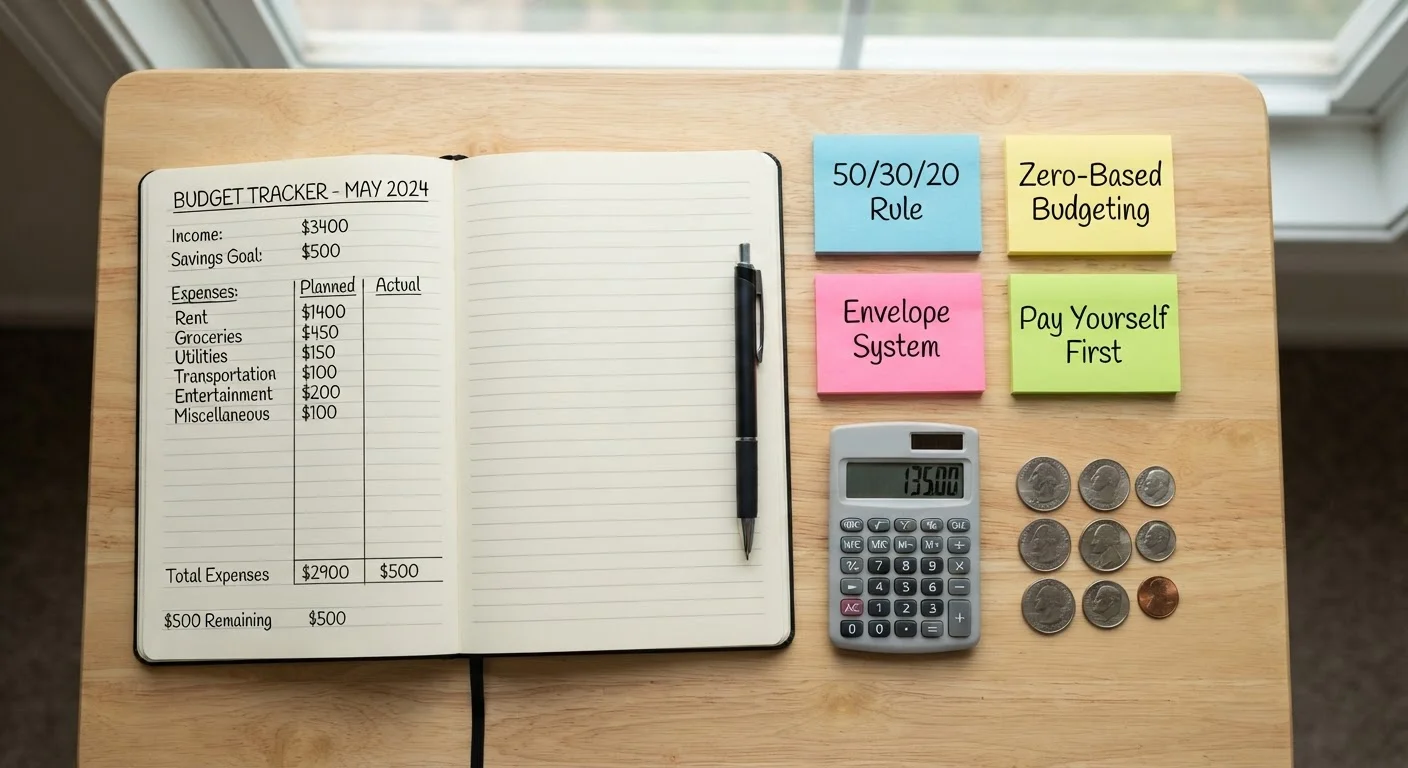
This framework splits your after-tax income into three buckets: 50% toward needs (rent, utilities, groceries), 30% toward wants (dining out, subscriptions, hobbies), and 20% toward savings and debt repayment. It's approachable and requires minimal tracking — a good entry point for anyone new to budgeting. The trade-off is that a strict 50/30/20 split can be unrealistic if you live in a high-cost area or carry significant debt. For a deeper look at how this rule holds up under debt pressure, see how the 50/30/20 rule handles debt payoff.
Zero-Based Budgeting
Every dollar of income gets assigned to a specific category — expenses, savings, or debt — so your income minus your allocations equals zero. Nothing is left unaccounted for. This method requires tracking every transaction and rebuilding your plan each month, which takes real effort. The payoff is total visibility: you'll know exactly where your money goes. For a direct head-to-head, comparing zero-based budgeting to the 50/30/20 rule explains the tradeoffs in detail.
Pay Yourself First
This method flips the usual order: you move money into savings or retirement accounts the moment your paycheck arrives, then live on what's left. It doesn't prescribe how to spend the remainder, making it low-maintenance once the automatic transfers are set up. It works especially well for building emergency funds or growing retirement contributions — core goals covered in savings and debt strategies. The risk is overfunding savings to the point where regular bills become difficult to cover.
Envelope Method
Originally a cash-based system, the envelope method assigns a set amount of money to each spending category — literally in labeled envelopes. When an envelope is empty, spending in that category stops for the month. Digital apps now replicate this mechanic without physical cash. It's highly effective for curbing overspending in specific areas like groceries or entertainment, but it requires active management and can feel rigid. If your income varies month to month, the envelope method can be harder to calibrate — budgeting on an irregular income covers adaptations worth considering.
Choosing the Right Fit for Your Situation
Start by asking two questions: How stable is my income? And how much time am I willing to spend on budgeting each month?
- Stable income, limited time: The 50/30/20 rule or Pay Yourself First will feel manageable.
- Stable income, willing to track closely: Zero-based budgeting offers the most control.
- Variable income: A modified envelope or zero-based approach works better than percentage-based rules, since the baseline shifts monthly.
- Overspending in specific areas: Envelope budgeting targets that problem directly.
It's also worth noting that these methods aren't mutually exclusive. Some people use Pay Yourself First to automate savings, then apply the envelope method to manage discretionary spending — blending frameworks to fit their lives.
This article is for general informational purposes only and does not constitute personalized financial advice. Consider consulting a licensed financial professional for guidance tailored to your situation.