
Why Debt and Savings Both Matter at the Same Time
Many beginners assume they have to choose: either pay off debt or save money. In reality, doing only one and ignoring the other tends to make things harder over time.
If you focus entirely on debt repayment without any savings, a single unexpected expense — a car breakdown, a medical copay, a broken appliance — can send you right back into borrowing. On the other hand, saving aggressively while carrying high-interest debt means the interest charges quietly erode your progress every month.
The goal for most people starting out is to find a workable balance between the two. That starts with understanding what's actually happening with your money. For a broader look at how spending choices fit into this picture, the plain-language guide to smart spending is a useful companion read.
Understanding the Basics: Interest, Principal, and Your Emergency Fund
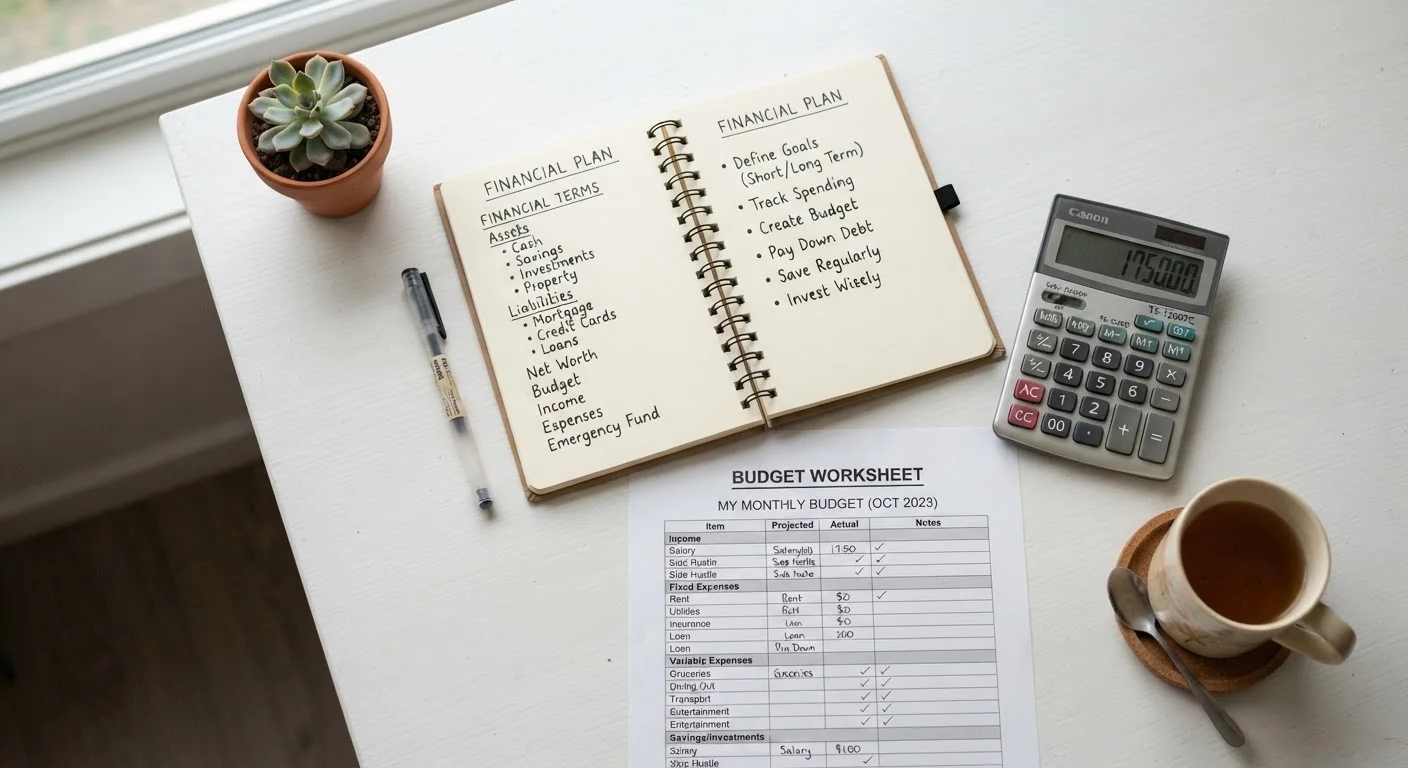
A few key terms come up constantly in any debt and savings conversation. Getting comfortable with them makes everything else clearer. For a more complete reference, see key terms every debt and savings conversation relies on.
Principal
The original amount of money you borrowed, before any interest is added. When you make payments, you want as much of each payment as possible to reduce the principal.
APR
Annual Percentage Rate — the yearly cost of borrowing money expressed as a percentage. A higher APR means more of your payment goes toward interest rather than reducing your balance.
Compound interest
Interest calculated not just on your original balance, but also on any interest already added to it. On debt, compounding works against you; on savings accounts, it can slowly work in your favor.
Emergency fund
A dedicated pool of savings kept liquid and accessible, set aside only for unexpected financial hardships like job loss, medical costs, or urgent repairs.
Liquidity
How quickly and easily you can access money without losing value. Cash in a savings account is highly liquid; money tied up in investments or property is not.
Minimum payment
The smallest amount a lender requires you to pay each month to keep your account in good standing. Paying only the minimum typically extends your debt for years and increases total interest paid.
Your emergency fund is a separate pool of savings set aside only for genuine financial surprises — not vacations or planned purchases. Its job is to keep you from reaching for a credit card when life gets unpredictable. Most guidance suggests aiming for three to six months of essential expenses eventually, but even a small starter fund provides meaningful protection.
How to Balance Paying Down Debt While Building a Safety Net
Once you understand the terms, the practical question is: where does your extra dollar go each month — toward debt or savings?
A reasonable approach for beginners:
- Build a small starter emergency fund first. A commonly cited target is $500 to $1,000. This gives you a buffer so that a minor emergency doesn't derail your plan.
- Then prioritize high-interest debt. If you're carrying credit card balances at high APRs, directing extra money there reduces what you owe faster and stops interest from compounding against you.
- Keep adding to savings incrementally. Even while paying down debt, continue small, regular contributions to your emergency fund. Consistency matters more than amount when you're starting out.
Automate to Remove the Decision
Setting up an automatic transfer to savings on payday — even $25 or $50 — removes the temptation to spend it first. Similarly, scheduling a slightly higher-than-minimum payment on debt means you make progress without having to think about it each month. Small habits done consistently tend to outperform large, irregular efforts.
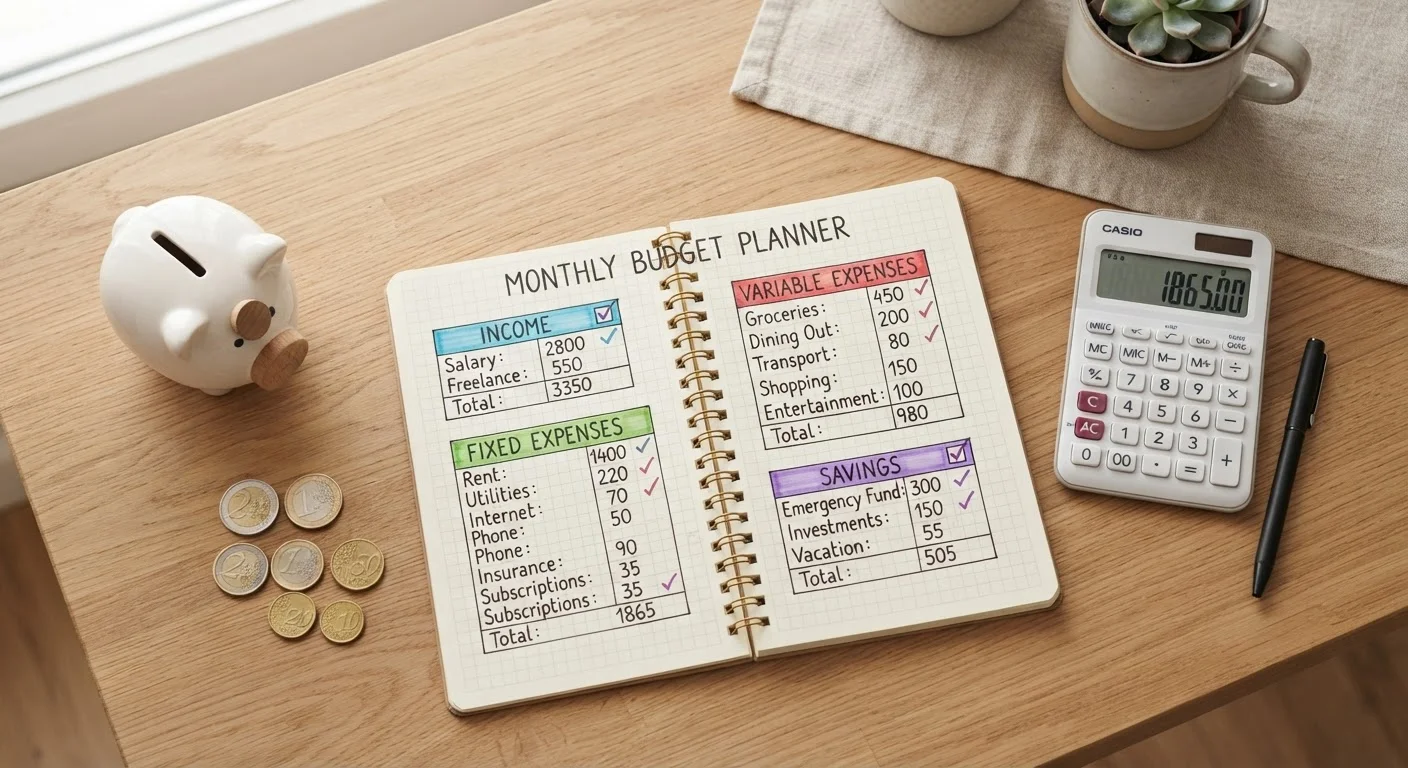
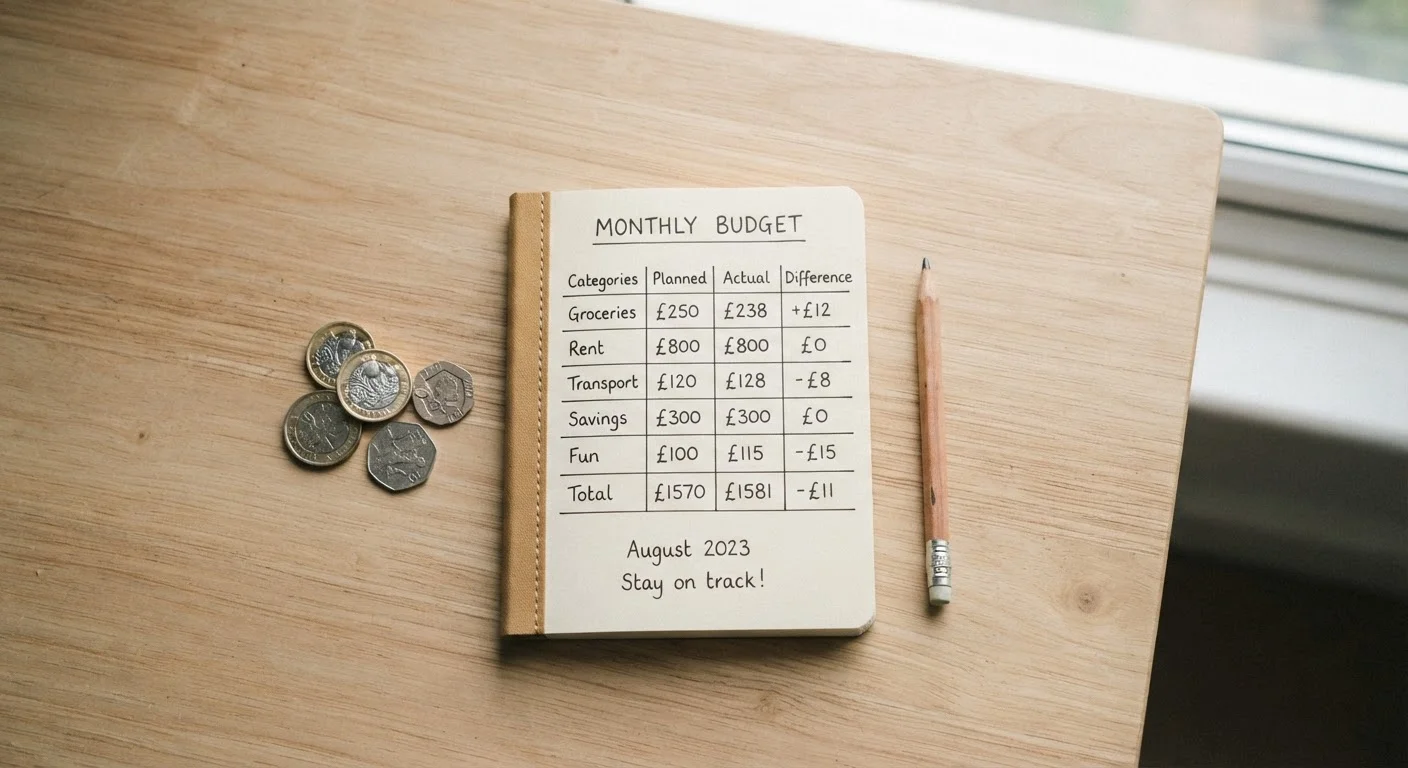
This isn't a one-size-fits-all formula. Your income, the types of debt you carry, and your job stability all affect what the right balance looks like for you. A first monthly budget framework can help you see exactly where your money is going before you decide where to redirect it.
This article is for general informational purposes only and does not constitute personalized financial advice. Consider consulting a qualified financial professional for guidance specific to your situation.
Common Mistakes Beginners Make — and How to Avoid Them
A few patterns tend to trip people up early on:
- Making only minimum payments. Minimum payments on credit card debt are designed to keep you borrowing longer. The interest compounds on the remaining balance, and the total cost grows substantially over time. Paying even a modest amount above the minimum accelerates your progress.
- Treating savings as whatever's left over. If you wait to save until after all spending is done, there's often nothing left. Treating a savings contribution like a fixed expense — something you move first, before discretionary spending — tends to be more effective.
- Ignoring the interest rate difference between debts. Not all debt is equally urgent. A low-interest student loan and a high-interest credit card balance are very different problems. Knowing which debts carry the highest APR helps you direct extra payments where they'll have the most impact.
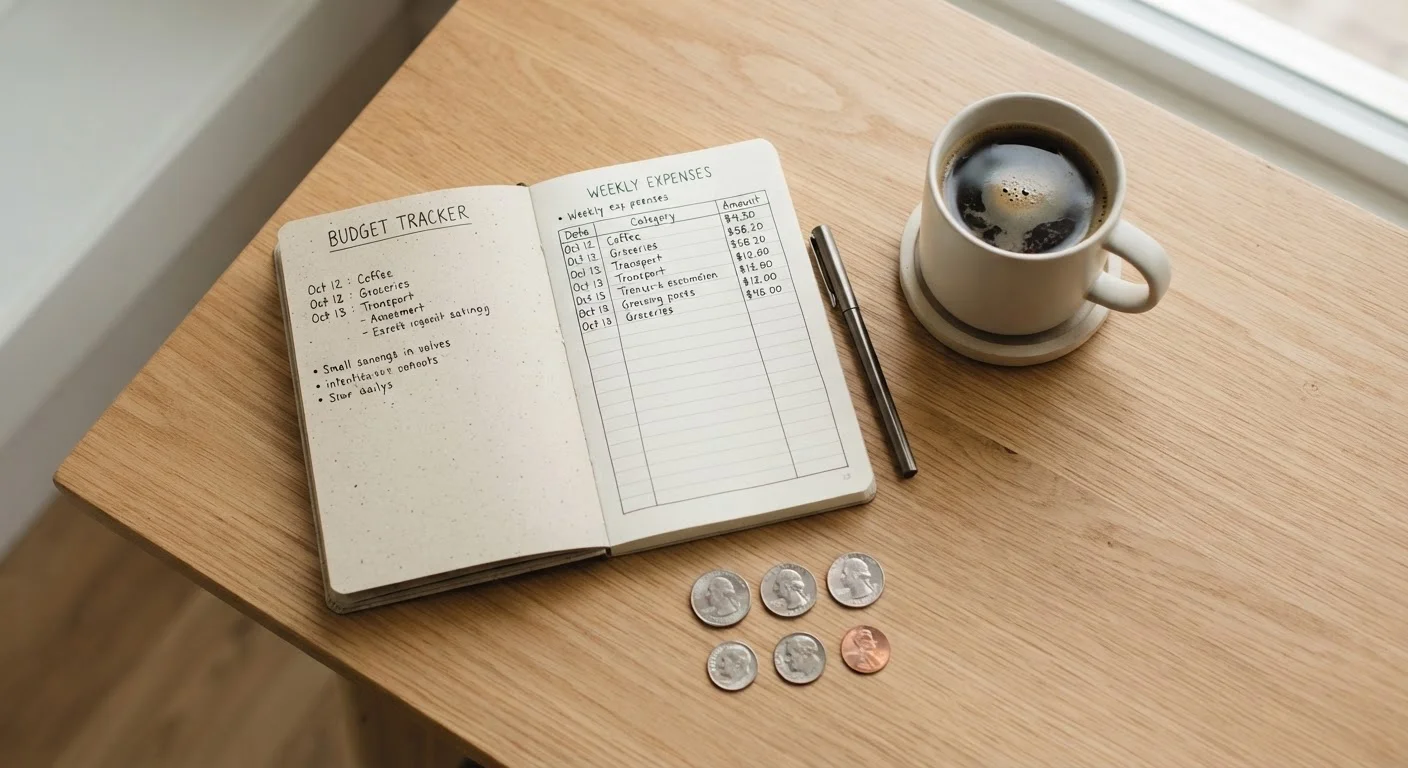
- Starting without a written plan. A rough plan written down — even on paper — is far more effective than a mental commitment. The budgeting basics hub has resources to help you build one.
Your Next Steps
If you've read this far, you already have a clearer picture than most beginners start with. Here's a simple path forward:
- Review your current debts and note the APR on each one.
- Tally your essential monthly expenses so you know what a one-month emergency fund target looks like for your life.
- Decide on a fixed dollar amount to set aside each month — even a small one — and treat it as non-negotiable.
- Put any extra dollars toward your highest-interest debt once your starter emergency fund is in place.
When you're ready to go deeper on how different budgeting approaches handle the debt-savings balance, our article on budgeting frameworks for saving while in debt walks through several practical options. If you share finances with a partner or family, budgeting as a family or couple addresses the added layer of shared decision-making.
Progress doesn't require perfection. It requires a starting point and a direction.