
Why Fatigue Is a Serious Safety Threat
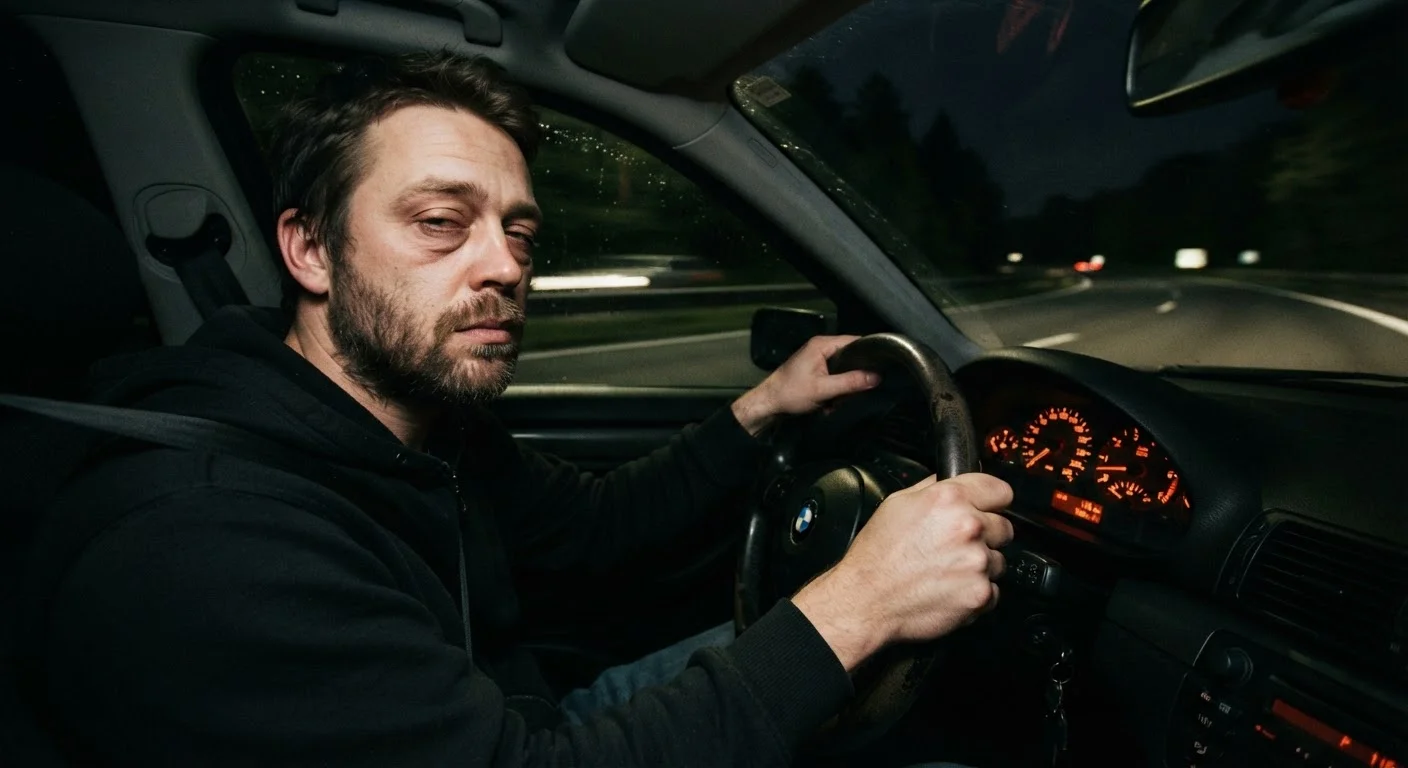
Most drivers have pushed through a tired stretch on the road — windows down, music up, telling themselves they'll be fine. The problem is that fatigue quietly dismantles the very skills needed to make that judgment accurately.
When you're sleep-deprived, your brain slows how quickly it processes information. Your ability to track lane position, anticipate what other drivers will do, and respond to sudden hazards all take a measurable hit. What makes this especially dangerous is that tired drivers often underestimate how impaired they actually are — making the choice to keep driving feel safer than it really is.
Drowsy driving shares more in common with impaired driving than many people expect. Our overview of how impairment affects driving explains how fatigue, alcohol, and other factors produce overlapping effects on the brain and body.
~100,000
Police-reported drowsy driving crashes annually
The National Highway Traffic Safety Administration (NHTSA) estimates roughly 100,000 police-reported crashes per year involve drowsy driving, though the actual figure is believed to be significantly underreported.
0.05%–0.08%
BAC equivalent after 18–20 hours without sleep
Research has found that extended wakefulness can produce impairment levels comparable to these blood alcohol concentrations, which span the legal limit in the U.S.
~475 feet
Distance traveled during a 5-second microsleep at 65 mph
At highway speeds, even a brief involuntary sleep episode covers more than a football field of road with no driver input — illustrating why microsleep is considered especially dangerous.
The Microsleep Problem
The most alarming aspect of drowsy driving isn't falling fully asleep — it's microsleep. These are involuntary episodes where the brain essentially powers down for a few seconds, typically between two and fifteen seconds. The driver's eyes may be open. Their hands may still be on the wheel. But nobody is home.
At 65 mph, a five-second microsleep means traveling roughly 475 feet — about one and a half football fields — with zero input from the driver. There's no braking, no steering correction, no awareness of what's ahead. In that window, a curve, a stopped vehicle, or a pedestrian can appear with no time to respond.
Unlike distracted driving, which involves a conscious choice to look away, microsleep offers no decision point. It simply happens. That's what separates drowsy driving from many other risks on the road — and why it's worth understanding clearly alongside topics like distracted driving myths and realities.
When and Who Is Most at Risk
Fatigue-related crashes aren't evenly spread across the clock. They cluster during two windows that align with the body's natural circadian dips: late night to early morning (roughly midnight to 6 a.m.) and mid-afternoon (around 2 p.m. to 4 p.m.). These are periods when alertness naturally ebbs, regardless of how much sleep you got the night before.
Certain groups carry higher baseline risk:
- Shift workers who drive home after overnight or rotating shifts
- Young drivers, particularly males under 25, who are overrepresented in crash data
- Commercial truck and bus drivers on long-haul routes
- People with untreated sleep disorders such as sleep apnea
- Travelers pushing to reach a destination without scheduling rest stops
Night driving adds an additional layer of risk on top of fatigue — low visibility and reduced mental stimulation accelerate how quickly drowsiness sets in. Our guide to night driving and fatigue covers practical ways to manage both hazards together.
What Actually Helps — and What Doesn't
A lot of the common remedies drivers reach for aren't as effective as they feel in the moment.
What doesn't reliably work:
- Rolling down the window or blasting the A/C
- Turning up the radio
- Drinking coffee or energy drinks as a substitute for sleep
- Eating snacks to stay alert
Caffeine can temporarily reduce feelings of sleepiness, but it doesn't fully restore the reaction time and decision-making ability that fatigue has already degraded. The stimulant effect also wears off — sometimes abruptly.
What actually helps:
- Getting adequate sleep (most adults need 7–9 hours) before a long drive
- Planning regular breaks — at minimum every two hours on long trips
- Pulling over for a 20-minute nap if drowsiness sets in on the road
- Sharing driving duties with another alert driver when possible
These aren't just general wellness suggestions — they're the practical strategies supported by traffic safety research. Understanding your own alertness honestly is also part of defensive driving principles that reduce crash risk overall.
This article is for general informational and safety education purposes only. Always use your own judgment and consult relevant safety authorities when making decisions about road travel.