
How Alcohol Affects the Driving Brain
Alcohol is a central nervous system depressant. Once absorbed into the bloodstream, it interferes with the brain regions that govern judgment, coordination, and processing speed — all critical to safe driving.
At relatively modest blood alcohol concentrations, drivers begin losing the ability to divide attention between multiple tasks simultaneously. Tracking a moving vehicle while monitoring a speed limit sign while watching a pedestrian curb becomes harder than it looks — and alcohol quietly degrades that juggling act. Steering precision, braking distance, and the ability to judge gaps in traffic also decline progressively.
One underappreciated effect: alcohol can create a false sense of confidence. A driver who is meaningfully impaired may genuinely feel sharp. This self-assessment gap is one reason impairment is difficult to self-diagnose.
Impairment Is Not Always Obvious to Others Either
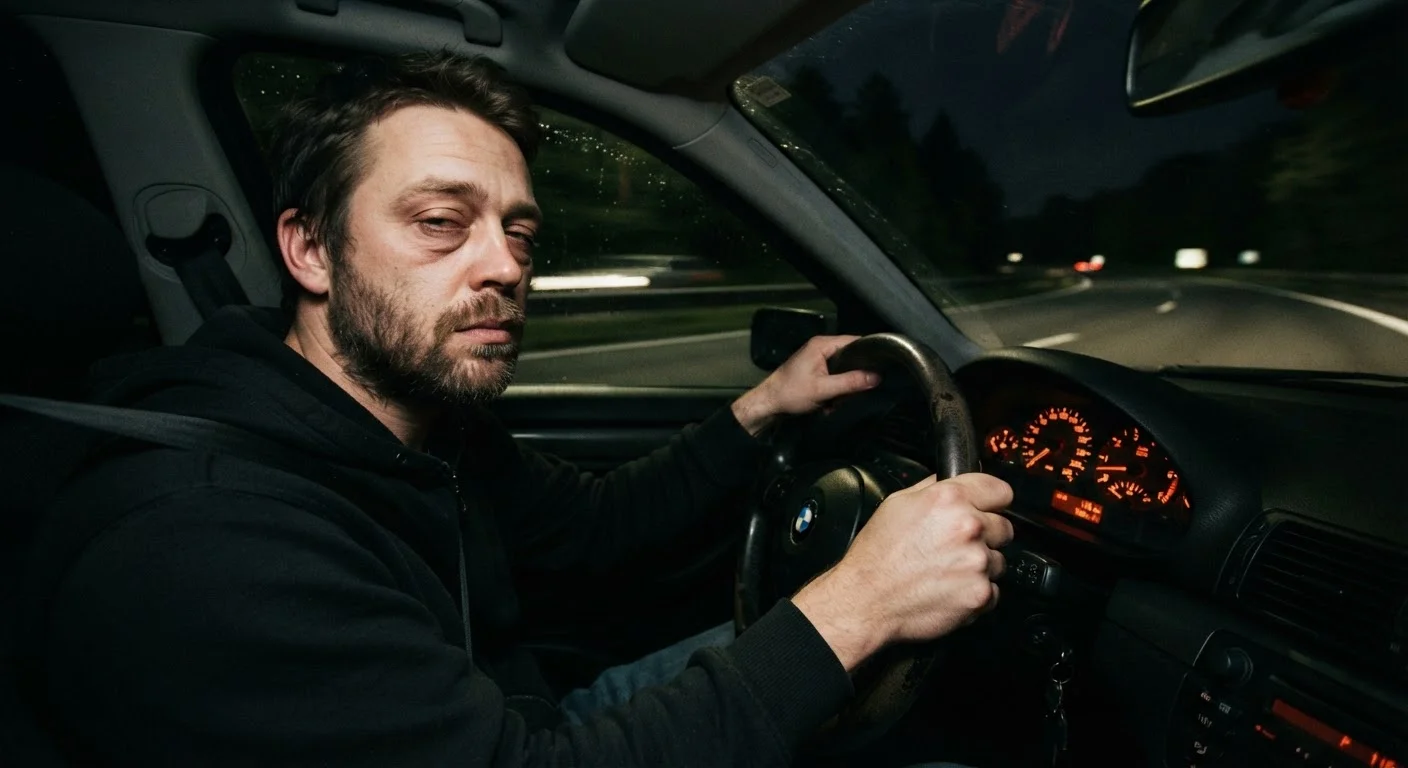
A driver who appears calm and is driving at a moderate speed may still be meaningfully impaired. Many impairment effects — degraded hazard detection, slower reaction time, reduced peripheral awareness — are invisible from outside the vehicle. This is one reason law enforcement uses standardized field sobriety tests rather than relying on casual observation.
For a deeper look at how other cognitive distractions affect driving performance, see our article on distracted driving myths and real dangers.
Cannabis, Medications, and Less-Discussed Impairment Sources
Cannabis affects driving differently than alcohol, but the result is still meaningful impairment. THC — the primary psychoactive compound — disrupts the brain's ability to track moving objects, maintain consistent lane position, and accurately estimate how much time or space is available. Because cannabis tolerance and potency vary widely, impairment is harder to predict or measure than alcohol impairment.
Medications are an often-overlooked category. Opioid pain relievers, sleep aids, some antihistamines, benzodiazepines, and certain antidepressants all carry labeled warnings about operating machinery. These effects are not theoretical — they act on the same neural systems that driving depends on. Combining any two impairing substances, including a legal medication alongside a single drink, can produce effects that are significantly greater than either alone.
0.05%
BAC where some driving skills begin to decline
According to the National Highway Traffic Safety Administration (NHTSA), measurable impairment in certain driving tasks can occur below the legal 0.08% BAC threshold.
~30%
Of U.S. traffic fatalities involving alcohol-impaired drivers
NHTSA data has consistently shown alcohol-impaired driving accounts for roughly 30% of all U.S. traffic crash fatalities in recent reporting years.
18 hrs
Of wakefulness linked to impairment comparable to 0.05% BAC
Research on sleep deprivation and driving performance has found that extended wakefulness can produce psychomotor impairment resembling low-level alcohol intoxication, though individual results vary.
If you take a new prescription, ask your pharmacist directly: "Is it safe to drive while taking this?" That one question can prevent a serious mistake.
What Fatigue Does Behind the Wheel
Fatigue is a form of impairment that most drivers underestimate. Sleep deprivation slows reaction time, narrows attention, and degrades the ability to make quick decisions — effects that closely parallel alcohol impairment. Research has compared extended wakefulness to legally significant BAC levels, though individual responses vary and comparisons have methodological limits.
The most dangerous feature of fatigue impairment is microsleep: brief, involuntary lapses in consciousness lasting one to several seconds. At highway speed, a few seconds of unconscious driving covers a significant distance with no input from the driver. Unlike drowsiness, microsleep often goes unnoticed by the driver experiencing it.
See our full explainer on why drowsy driving is more dangerous than most drivers realize for more on recognizing and managing fatigue risk. Night hours amplify these risks — night driving presents its own visibility and fatigue challenges worth understanding separately.
The Practical Bottom Line for Drivers
Impairment is not a clear line you cross — it's a gradual erosion of skills that begins before most people feel affected. Alcohol, cannabis, certain medications, and fatigue each attack driving ability through different mechanisms, but they share a common outcome: reduced ability to respond to the unexpected events that are a routine part of driving.
The most reliable protection is not trying to estimate how impaired you are. Impairment itself compromises the judgment required to make that call accurately. Planning ahead — designating a sober driver, arranging a ride, or simply not starting the car when fatigued — removes the decision from a moment when your assessment tools are already compromised.
Understanding how different driving environments demand different levels of alertness underscores why full cognitive capacity matters at every speed and setting.
This article is for general informational and educational purposes only. It is not legal advice, and it does not address any individual's specific medical or legal situation. For questions about medications and driving safety, consult a licensed healthcare provider. For legal questions about impaired driving laws in your state, consult a qualified attorney.