
Passport and Visa Requirements
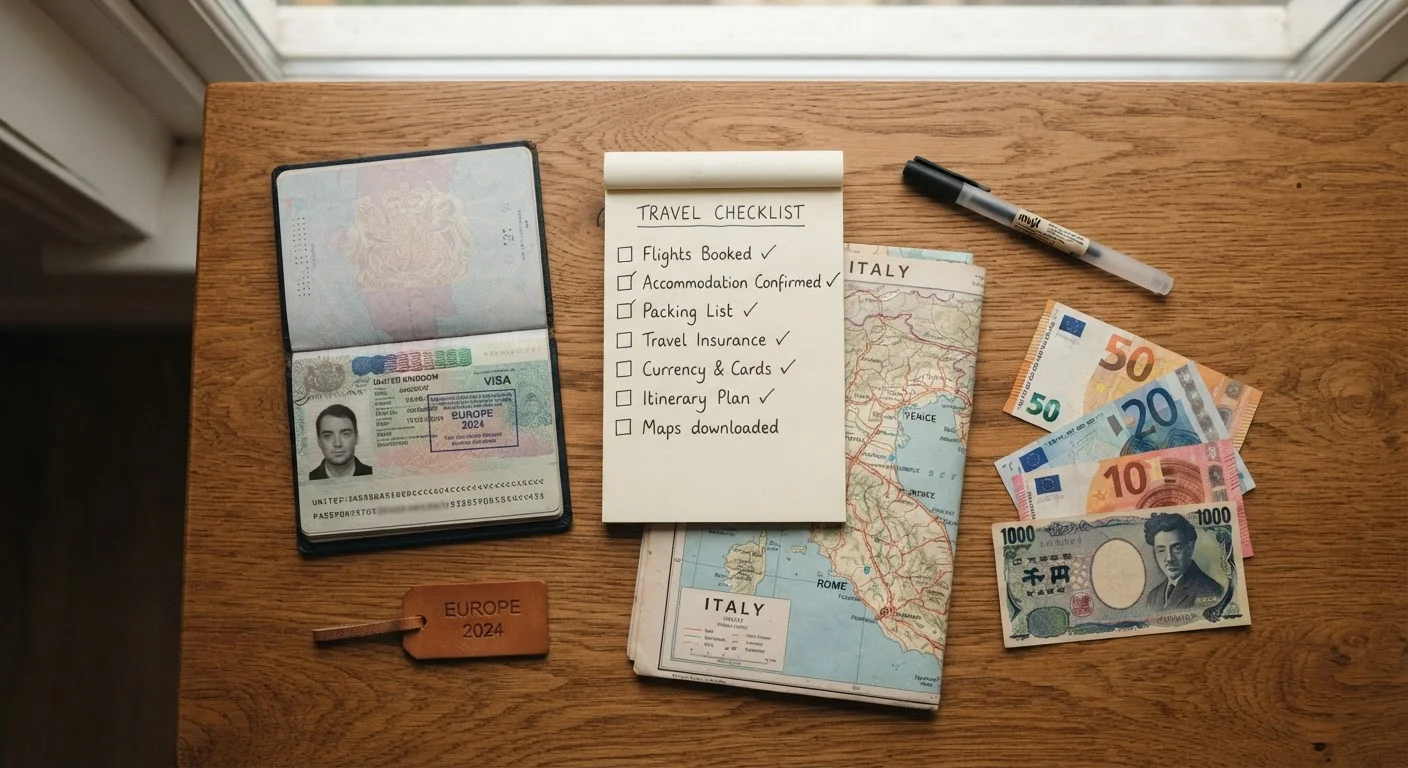
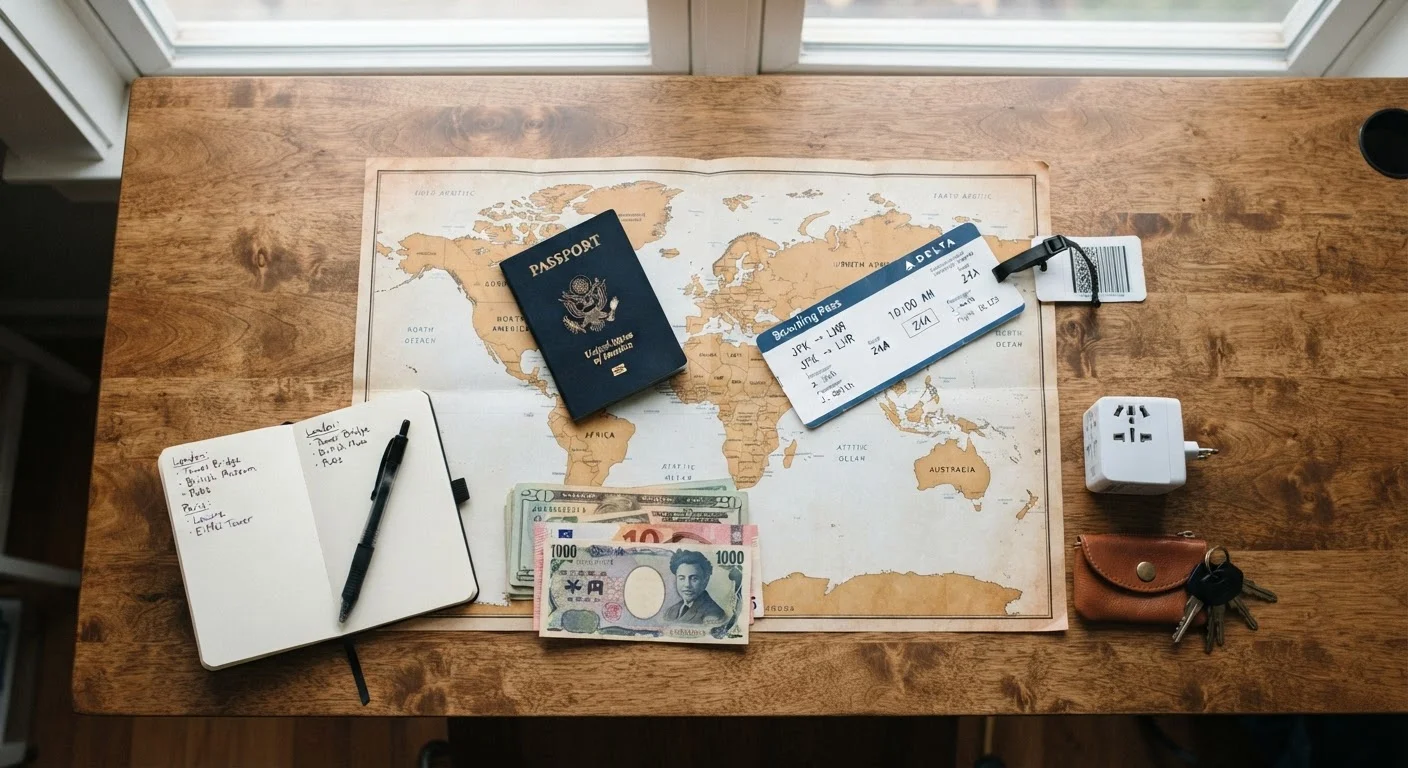
Your U.S. passport is your most critical travel document. Before booking anything, confirm that your passport is valid — and not just technically unexpired. Many countries require your passport to remain valid for at least six months beyond your planned return date. If yours doesn't meet that threshold, apply for renewal well in advance, as processing times can stretch to several weeks or longer during peak periods.
Visa requirements vary dramatically by destination. U.S. citizens enjoy visa-free or visa-on-arrival access to many countries, but others require applying for a visa in advance — sometimes weeks ahead of travel. Always verify requirements directly through the destination country's official embassy or consulate website, and cross-reference with the U.S. Department of State's travel pages. Relying on third-party summaries alone carries real risk of outdated information.
If you're planning a multi-country itinerary, check visa rules for each country individually. Entry requirements don't automatically carry over between neighboring nations. For a practical pre-booking checklist covering documents and entry rules, see this pre-trip planning checklist before you finalize dates.
Apply for or renew your passport at least three to four months before your planned departure — not just a few weeks. Standard processing times can stretch significantly during peak seasons, and expedited service adds meaningful cost.
Passport processing times have historically surged during summer travel peaks, and travelers who underestimate the timeline have missed trips entirely due to delayed documents.
Download your destination's offline map and save your accommodation address before boarding your flight — not after landing with spotty data service and jet lag.
Connectivity on arrival is unreliable in many international airports and transit hubs, and having offline access to navigation reduces stress and cost when you're most vulnerable to confusion.
Keep a digital backup of all critical documents — passport photo page, visa, insurance policy, and emergency contacts — stored in a cloud service you can access from any device.
Lost or stolen passports abroad are a real occurrence; having digital copies stored separately from your physical documents significantly speeds up the replacement process at a U.S. consulate.
Health Prep and Travel Insurance
Health preparation is an area many travelers underestimate until something goes wrong abroad. Start by consulting a travel medicine clinic or your primary care provider at least four to six weeks before departure. Some destinations require or strongly recommend vaccinations — yellow fever, typhoid, and hepatitis A are common examples — and some vaccines require multiple doses over several weeks to take full effect.
The U.S. Centers for Disease Control and Prevention (CDC) maintains destination-specific health guidance that is a reliable starting point, though it should complement, not replace, a conversation with a qualified healthcare provider. This content is general health information only and is not a substitute for professional medical advice.
Travel insurance is a separate but equally important consideration. A basic policy typically covers trip cancellation, lost baggage, and emergency medical expenses. Medical evacuation coverage is particularly valuable when traveling to regions with limited hospital infrastructure — costs for air evacuation without insurance can run into the tens of thousands of dollars. Read policy terms carefully, paying attention to exclusions for pre-existing conditions and adventure activities.
Flights, Layovers, and Time Zones
International flights from the U.S. often involve one or more layovers, especially when traveling to Asia, Africa, or parts of South America. When evaluating itineraries, consider layover duration and airport — a 90-minute connection in a busy hub carries more risk of a missed flight than a three-hour layover in a smaller airport. Build in buffer time, particularly on international-to-international connections where customs or passport control may be required.
Time zones deserve serious planning attention. Long-haul flights to Europe or Asia can shift your internal clock by six to twelve hours. Arriving in the early morning after an overnight flight — then needing to stay awake until local evening — is a common and uncomfortable experience. Knowing your arrival time zone in advance lets you adjust sleep patterns a few days before you leave, which many travelers find genuinely helpful.
For a broader look at managing travel costs from the booking stage onward, this guide to spending less on travel walks through the full picture without cutting corners on the experience.
Money, Currency, and On-the-Ground Spending
Understanding how money works at your destination is practical, not optional. Start by identifying what currency is used locally, whether credit cards are widely accepted, and what the general cost of daily necessities looks like. Exchange rates fluctuate, so building a small buffer into your budget is sensible rather than assuming you'll spend exactly what you plan.
Notify your bank and credit card issuers before you leave. Many issuers flag foreign transactions as potential fraud and freeze accounts without advance notice. Carry a small amount of local currency for arrival — airport taxis, transit cards, or small vendors often don't accept cards or foreign currency.
ATMs at your destination are often the most practical way to access local cash at reasonable exchange rates, but fees vary by bank and by ATM operator. Check whether your bank reimburses foreign ATM fees, and avoid airport currency exchange desks, which typically offer unfavorable rates. If you're heading somewhere with a tighter economy or more informal market, this overview of budget travel in Central America covers realistic daily cost expectations in that region.
Packing and Communication Essentials
International packing requires a few additions beyond what you'd bring on a domestic trip. A universal power adapter is essential — outlets and voltages differ across countries, and the wrong plug or voltage can damage electronics. Pack any prescription medications in their original labeled containers and carry enough supply for your entire trip plus a buffer for delays. Some medications legal in the U.S. are controlled or prohibited abroad — verify with the destination country's embassy before packing them.
For communication, your U.S. phone plan likely charges steep international roaming fees unless you have an international add-on or use an unlocked phone with a local SIM card. Wi-Fi calling and messaging apps can reduce reliance on cellular data when connected to reliable internet, which is increasingly available in hotels, cafes, and transit hubs in most destinations.
If you're new to the full scope of international packing versus domestic trips, the domestic packing list offers a useful baseline — most categories transfer, with international additions layered on top.
Final Checklist Before You Leave
In the final week before departure, run through a condensed but thorough review. Confirm that all documents — passport, visa, travel insurance policy, printed or digital hotel confirmations — are accessible. Share your itinerary with a trusted contact at home. Verify that your destination hasn't had recent entry requirement changes by checking the U.S. Department of State and the destination country's official government sources.
Set up international data access on your phone, confirm your bank accounts are cleared for foreign use, and download offline maps for your destination in case connectivity is unreliable on arrival. If you're traveling across multiple countries, repeat these steps for each leg.
Planning an international trip involves a lot of moving parts — but each layer addressed in advance is one fewer thing to manage under pressure once you're abroad. For those comparing the full scope of international planning against a structured budget itinerary, this walkthrough for budget international trips provides a complementary, cost-focused perspective on the same process.