
Why a Category-by-Category Checklist Works
Most packing mistakes happen in the same few minutes before departure when you're running on adrenaline and reciting items from memory. A structured, category-by-category checklist removes guesswork and catches the things that are easy to forget precisely because they feel obvious — your phone charger, a backup payment method, or your TSA-compliant toiletry bag.
This list is built for a seven-day domestic trip. It covers everything from clothing strategy to what you should handle before you ever leave your front door. If you're preparing for an international trip instead, the logistics are meaningfully different — see our guide to planning a budget international trip for a walkthrough tailored to overseas travel.
Work through the checklist below using the groups as your guide. Check off items as you physically place them in your bag — not as you think about placing them.
Never Check Your Medications
Always pack prescription and essential over-the-counter medications in your carry-on bag. Checked luggage can be delayed, lost, or misrouted. Keeping medications with you ensures you have access regardless of what happens to your checked bag. If you have specific storage requirements (such as refrigeration), verify your accommodation's capacity before you travel.
What to Gather Before You Start Packing
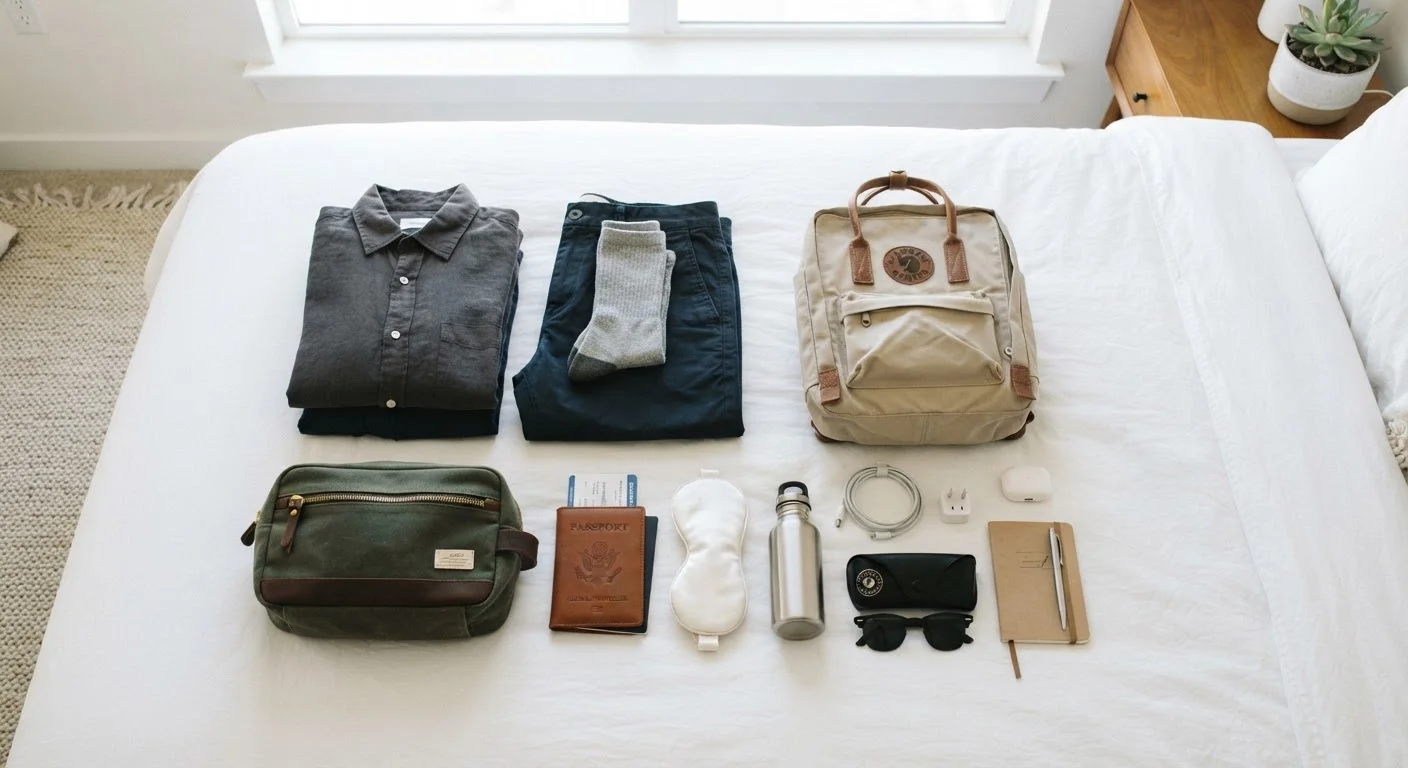
The most efficient packing sessions start before a single item goes into a bag. Pull out everything you're considering packing and lay it on your bed. Then check the weather forecast for your destination — particularly the overnight lows, which travelers most frequently underestimate. A lightweight packable layer weighs almost nothing and can salvage a cold evening that wasn't in the original plan.
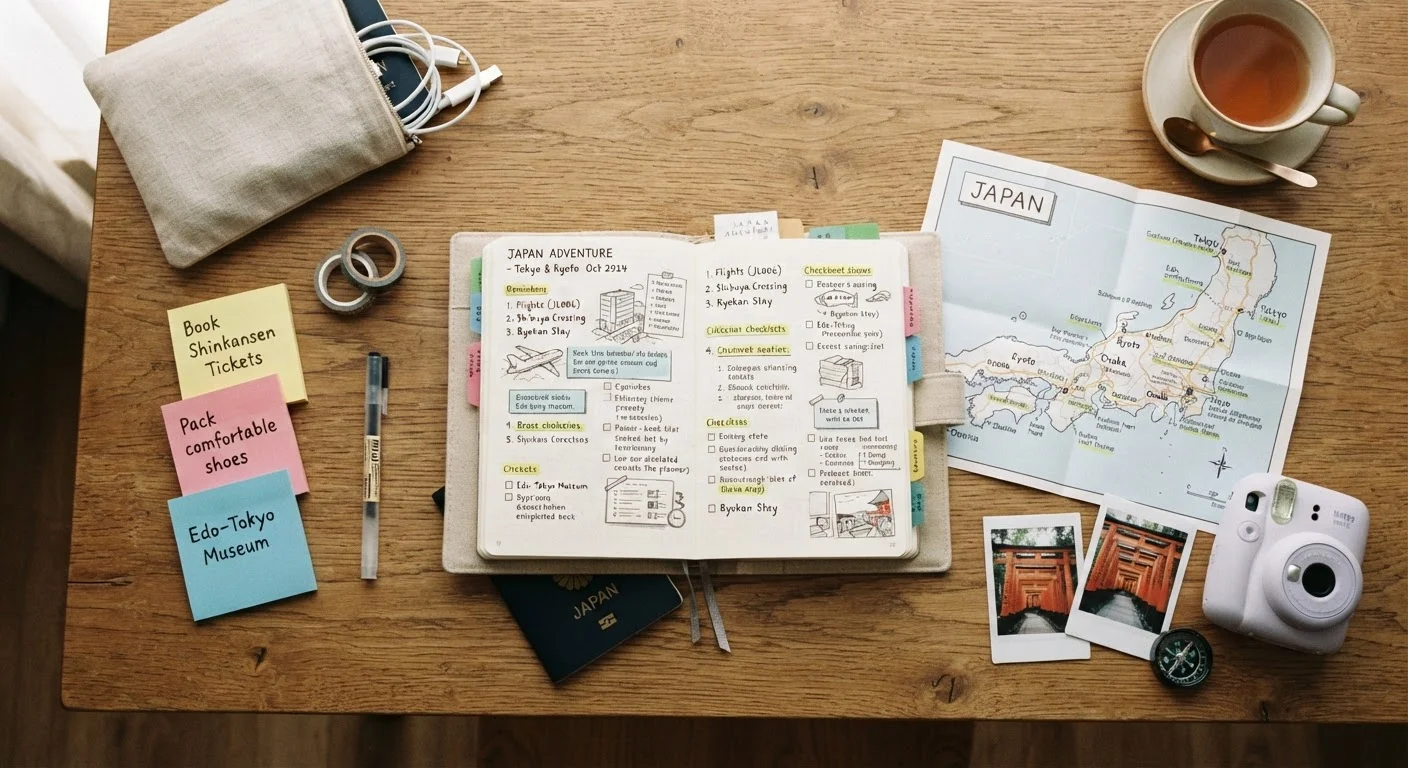
Check your documents next. Confirm your ID is REAL ID-compliant for domestic air travel, locate your reservation confirmations, and download anything you'll need offline. If your trip involves activities that benefit from advance planning — restaurant reservations, museum entry times, or ticketed events — verify those are settled before you pack. Our itinerary-building guide covers how to structure your days without over-scheduling.
Don't Skip the Pre-Departure ID Check
As of May 2025, TSA requires a REAL ID-compliant driver's license or another acceptable form of identification (such as a passport) to board domestic flights. Not all state-issued IDs currently meet this standard. Check your ID's compliance before your trip — not at the security checkpoint.
Overpacking Costs More Than You Think
Checked baggage fees vary by airline and can add meaningful cost to a budget trip, particularly on shorter routes served by carriers with strict fee structures. Weigh your bag before leaving home and audit clothing choices ruthlessly — seven days rarely requires more than a single carry-on when outfits are planned deliberately.
Once logistics are confirmed, use the tool cards below as your equipment baseline before diving into the category checklist.
Packing Cubes
Separate clothing by type or outfit to keep your bag organized and make repacking mid-trip easier.
Handheld Luggage Scale
Weigh your bag at home to confirm it meets airline limits before you reach the check-in counter.
Portable Power Bank
Keep your phone and other devices charged during long travel days or when outlets aren't available.
TSA-Approved Toiletry Bag
Store all liquids in a clear, quart-sized bag to move through airport security quickly and without issues.
Offline Maps App
Navigate your destination without relying on cell service or paying roaming fees in low-coverage areas.
Working Through the Checklist
The checklist groups below are ordered from highest-stakes to most adjustable. Documents and medications come first because they cannot be improvised on the road. Clothing and footwear come next because they take up the most physical space and require the most deliberate editing. Electronics, day-bag essentials, and pre-departure steps round out the list.
A few principles that help keep luggage light without sacrificing comfort:
- Plan outfits, not individual pieces. Laying out seven complete outfits before packing quickly reveals what you don't need.
- Repeat bottoms, vary tops. Pants and shorts are less noticeable repeated than shirts. Build your packing ratio accordingly.
- Shoes take the most space. Two pairs handles nearly every scenario a domestic week-long trip presents.
If you find this checklist useful as a general organizational framework, the same structured approach applies when setting up a new home — our room-by-room home essentials checklist uses a similar category-by-category method for a completely different context.
Travel Documents & Financial Essentials
Clothing & Footwear
Toiletries & Personal Care
Electronics & Charging
Day Bag & On-the-Go Essentials
Luggage & Packing Organization
Before You Leave Home
A Note on What This Checklist Doesn't Cover
This list is intentionally scoped to the packing phase of trip planning. It doesn't cover destination research, booking strategy, or how to evaluate whether a particular trip fits your budget — those are separate decisions that should be made well before you open a suitcase. If you're still in the early planning stages, our pre-trip planning checklist is the right starting point.
Packing well is one part of traveling well. The checklist above gives you a reliable baseline — adapt it to your specific destination, activities, and personal needs rather than treating it as a rigid prescription. What you ultimately bring should reflect where you're actually going and what you're actually doing when you get there.