

Why Budget Travel Requires a Strategy, Not Just Luck
Most people assume budget travel is about stumbling onto a flash sale or knowing a secret hack. In reality, consistent savings come from a repeatable framework — one that starts months before departure and runs through the last day of the trip.
The travelers who routinely spend less aren't luckier; they've built habits around timing, flexibility, and research. Before diving into tactics, it's worth challenging some assumptions. For example, "cheap flights always save money" sounds obvious but frequently isn't — a low-cost carrier that charges separately for bags, seat selection, and carry-ons can end up costing more than a full-service fare. See our budget travel myths examined for a closer look at the assumptions worth questioning before you plan.
This guide covers the full arc: planning and budgeting, booking strategy, daily spending, and the mindset that ties it together. Each section is designed to be used whether you're planning a domestic road trip or your first international adventure.
Start Simple: One Framework, Every Trip
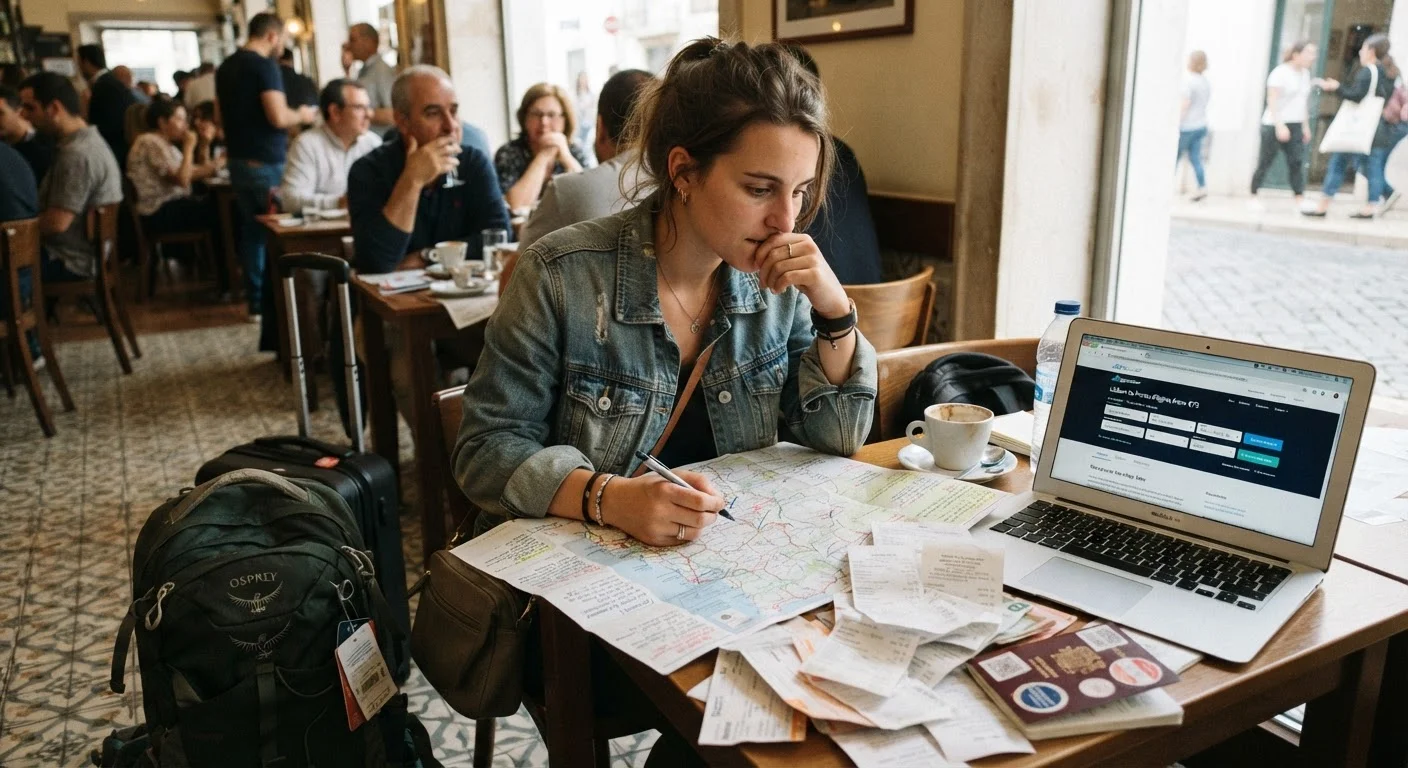
Before researching any specific destination, write down three numbers: the total amount you're willing to spend, the number of travel days, and the daily average that implies. This single exercise prevents the most common budgeting mistake — falling in love with a destination before knowing whether it fits your financial reality.
Build Your Budget Before You Book Anything
Booking flights before you know what the rest of the trip costs is one of the most common planning errors. A flight might look affordable in isolation, but if it leaves no room in your budget for accommodation, food, and activities, you'll spend the trip stressed or in debt.
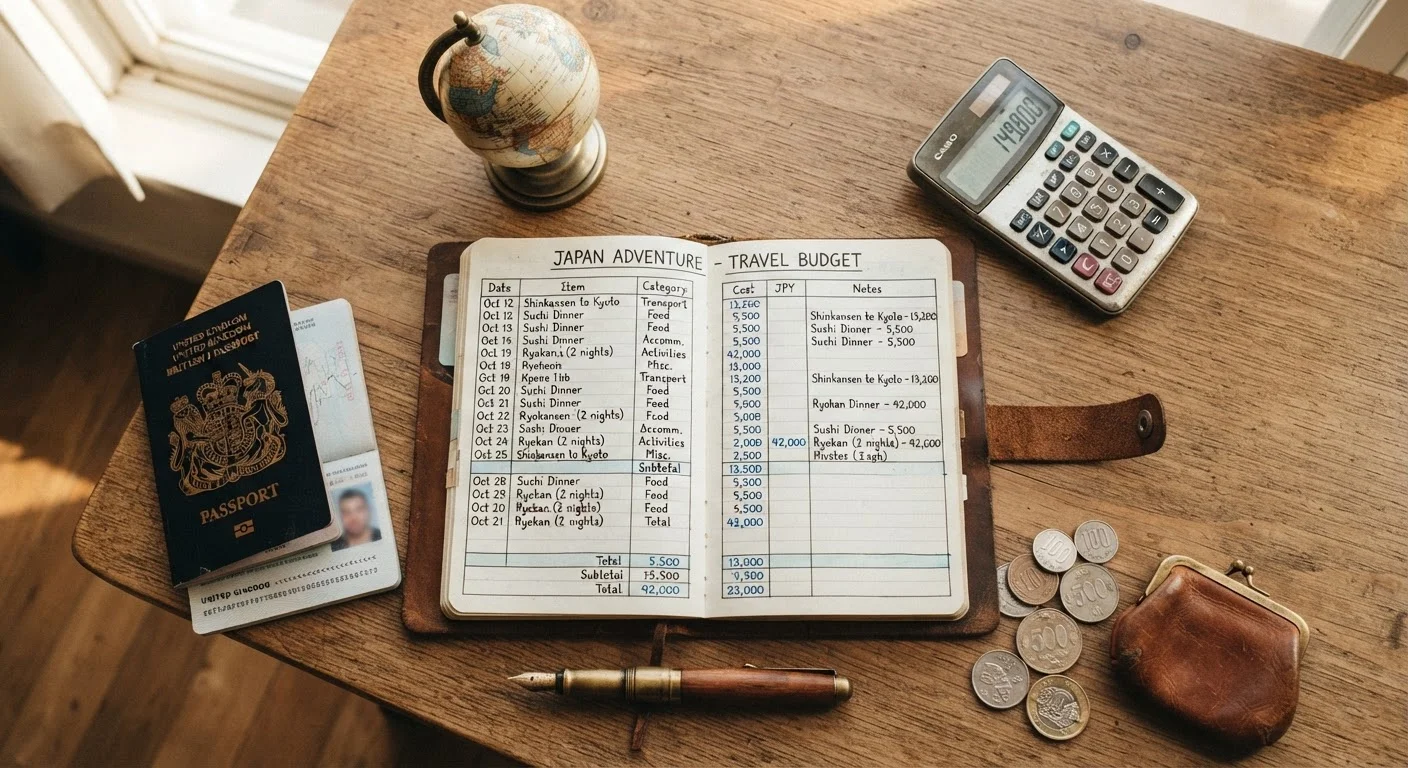
A realistic travel budget covers six core categories: transportation (flights, trains, rental cars, airport transfers), accommodation, food and drink, activities and entrance fees, travel insurance, and a contingency reserve — typically 10–15% of the total. Most travelers underestimate food costs significantly, especially in cities where dining out for every meal adds up fast.
Our realistic travel budget walkthrough goes deeper on each category, including cost ranges for common destination types and the expenses travelers most often forget to include (visas, checked bags, travel vaccinations, and tips).
50–60%
Of trip cost typically from flights and lodging
Industry travel spending analyses consistently show transportation and accommodation dominate overall trip budgets for most travelers.
10–15%
Recommended contingency reserve
Financial planning guidance for travel commonly recommends keeping a buffer of 10–15% of total estimated trip cost to cover unexpected expenses.
$50–$150
Potential savings per round trip by flying carry-on only
Checked baggage fees on budget and full-service carriers in the US vary widely; flying with only a carry-on eliminates this cost category entirely.
Flight and Accommodation: Where the Big Savings Live
Airfare and lodging typically represent 50–60% of total trip cost, making them the highest-leverage areas for savings.
Flights
- Flexibility is the single most powerful lever. Shifting departure by one or two days — particularly avoiding Friday and Sunday — can reduce fares on many routes. Mid-week travel is generally less expensive on domestic routes.
- Book within a general window, not a magic day. For domestic flights, fares tend to be competitive when booked one to three months out. International routes often reward booking further in advance. There is no single universally optimal day to buy.
- Set fare alerts. Most flight search tools allow you to track a specific route over time, giving you a baseline so you recognize when a price genuinely drops rather than just looks low.
- Consider nearby airports. Flying into or out of a secondary airport near your destination can reduce cost, but factor in ground transport time and expense before assuming it saves money.
Accommodation
- Mix accommodation types. Staying in a short-term rental for part of a trip and a hotel for the rest can balance cost and convenience, especially on longer trips.
- Location affects more than the room rate. Accommodation in a walkable central location may cost more per night but save meaningfully on daily transport.
- Read cancellation policies carefully. Non-refundable rates save money only if your plans are certain. A modest premium for flexibility is often worth it.
If you're planning an international trip, our budget international trip guide walks through airfare tracking and accommodation strategy for overseas travel specifically.
On-the-Ground Spending: Food, Transport, and Activities
Daily spending is where many travelers lose control of their budget — not through one large purchase but through dozens of small ones that weren't accounted for.
Food
Eating where locals eat rather than near tourist landmarks is a consistent way to spend less without eating worse. Markets, bakeries, and lunch specials at sit-down restaurants typically offer better value than tourist-facing menus. If your accommodation includes a kitchen, even preparing two or three breakfasts per week from a local grocery store can save $50–$100 on a week-long trip.
Transport
Public transit is almost always less expensive than taxis or rideshares in cities that have it. Research the local transit options before you arrive — many cities offer multi-day passes that represent good value if you plan to move around frequently. For road trips or rural destinations, compare car rental rates including fuel and insurance; sometimes a rental costs less than the equivalent in rideshares.
Activities
Many of the most memorable travel experiences are free or low-cost: hiking, public beaches, free museum days, markets, and neighborhoods worth walking. Paid activities and tours are worth budgeting for selectively — prioritize two or three experiences that genuinely matter to you rather than trying to do everything.
For destination ideas that naturally align with lower daily costs, explore our budget destinations hub.
Before booking any activity or tour, search whether a free or low-cost version exists — many cities offer free walking tours, free museum days on specific dates, or public access to attractions that also have paid tiers.
Travelers frequently assume paid is synonymous with better. In practice, free alternatives often cover the same ground and carry less pressure to rush through an experience.
Set a daily cash allowance in local currency for discretionary spending — markets, street food, small souvenirs — and draw it at the start of each day rather than tapping your card repeatedly.
Cash spending makes costs visceral and countable in a way that card spending doesn't, which tends to reduce impulse purchases without requiring constant budget tracking.
Common Mistakes That Quietly Drain Your Travel Budget
Even well-planned trips can go over budget through a handful of predictable errors:
- Foreign transaction fees
- Using a credit or debit card that charges 2–3% on every foreign purchase adds up quickly. Many banks and card issuers offer fee-free options for international travel — verify your card's terms before departure.
- Dynamic currency conversion
- When a foreign ATM or merchant offers to charge you in US dollars rather than local currency, declining is almost always financially better. The exchange rate offered is typically worse than your bank's rate.
- Over-packing and checked bag fees
- On carriers that charge for checked bags, traveling with carry-on luggage only can save $50–$150 per round trip per person. It also saves time at baggage claim.
- Last-minute airport purchases
- Airport food, water, and travel accessories are significantly marked up. Arriving prepared — snacks, a reusable water bottle to fill after security, any medications — avoids these costs.
- Not reading the fine print on travel insurance
- Travel insurance is worth having, but coverage varies widely. Understanding what is and isn't covered before you need to file a claim prevents unpleasant surprises.
For more context on planning habits that prevent last-minute chaos and extra costs, see our habits of stress-free travelers.
Putting It All Together: The Budget Traveler's Mindset
Budget travel isn't about deprivation — it's about intentionality. The travelers who do it well spend money on the things that genuinely matter to them and cut costs on the things that don't. That requires knowing your own priorities before you book anything.
A few principles that hold across most trips:
- Start with the budget, not the destination. Knowing what you can realistically spend shapes every decision that follows.
- Build in a buffer. Things cost more than expected, plans change, and unexpected opportunities arise. A 10–15% contingency reserve is standard practice for experienced travelers.
- Value your time as part of the equation. A six-hour layover that saves $40 isn't always the right call. Factor in what your time and energy are worth.
- Verify before you travel. Visa requirements, entry rules, health documentation, and local conditions change. Always check official government and embassy sources close to your departure date — do not rely on travel articles, including this one, for current entry requirements.
If you're preparing for your first solo domestic trip, our solo US trip planning guide covers logistics, safety, and destination selection for new independent travelers. And if you're ready to extend your planning across every cost category, the Travel Planning Tips hub is the right next stop.
This article is for general informational purposes only. Travel conditions, prices, regulations, and entry requirements change frequently. Always verify visa, health, and safety information directly with official government sources before traveling.