
The Real Financial Picture Beyond the Sticker Fee
The most visible cost difference between carry-on and checked luggage is the bag fee itself. On most major US carriers, a first checked bag runs roughly $30–$40 each way on domestic routes, meaning a round trip can cost $60–$80 per bag before you've left the airport curb. For two travelers checking one bag each, that's potentially $160 on a single trip.
But the financial comparison doesn't stop there. Carry-on travel isn't always free either. Basic economy fares on several carriers now charge for overhead bin access, and Spirit, Frontier, and similar ultra-low-cost carriers have fee structures where a carry-on can cost more than a checked bag if not purchased in advance. Understanding what your specific ticket includes is essential before assuming the carry-on route saves money.
For a thorough breakdown of how these fees stack up across realistic trip scenarios, see our carry-on vs. checked luggage cost breakdown. Baggage fees are also one of several places travelers routinely overpay — our guide on common travel overspending habits covers the broader pattern.
| Criterion | Carry-On Only | Checked Luggage |
|---|---|---|
| Typical fee (domestic, round trip) | $0–$70 depending on carrier/fare | $60–$80 per bag |
| Airport time added | Minimal — no bag drop or claim | 20–45 min added per direction |
| Packing capacity | Limited; strict size and liquid rules | Up to 50 lbs on most carriers |
| Flexibility during delays | High — easy to rebook or switch | Lower — bag must follow or be retrieved |
| Best trip length | 1–5 nights | 6+ nights or multi-climate trips |
| Specialty items (gear, formal wear) | Difficult or impossible | Accommodated (may have extra fees) |
| Overhead bin risk | Possible gate-check on full flights | Not applicable |
Time and Convenience: The Hidden Costs That Don't Show on a Receipt
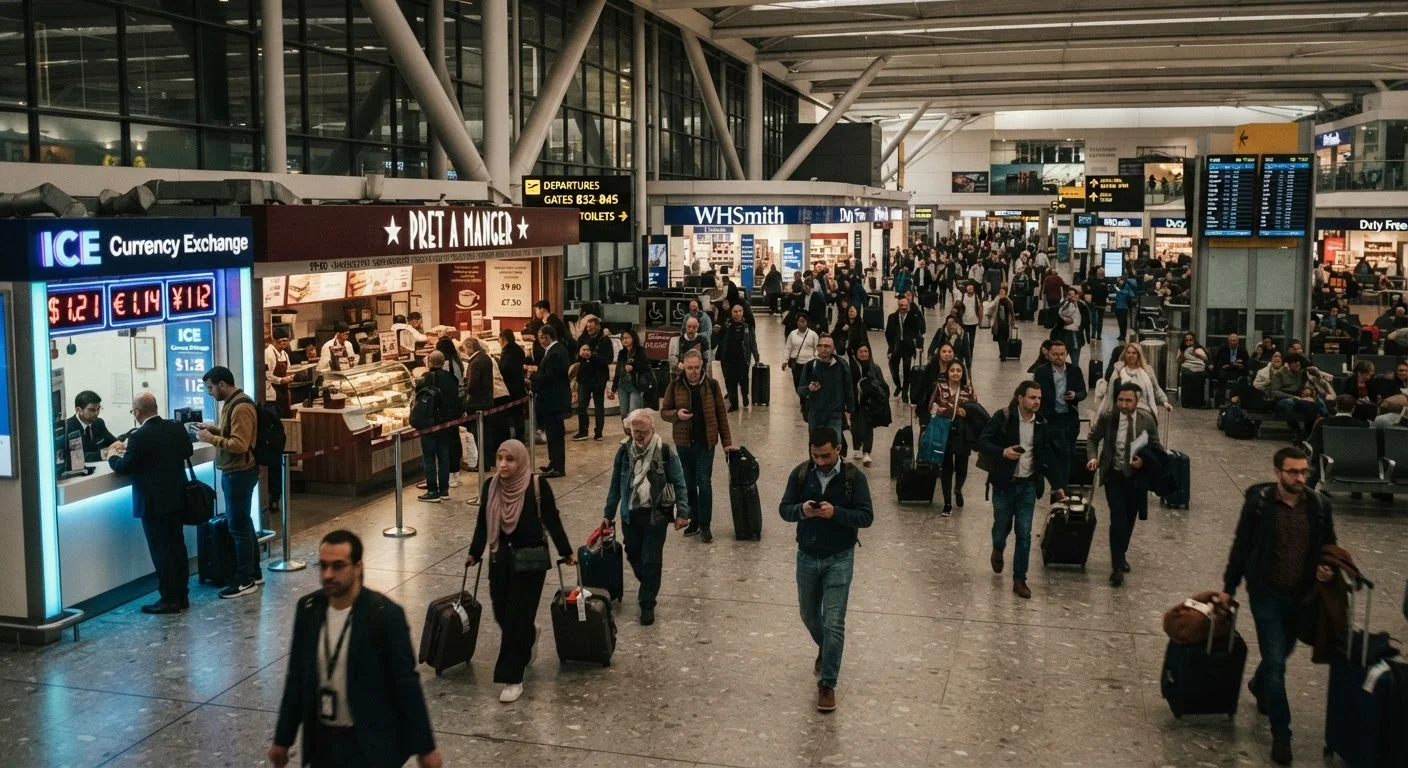
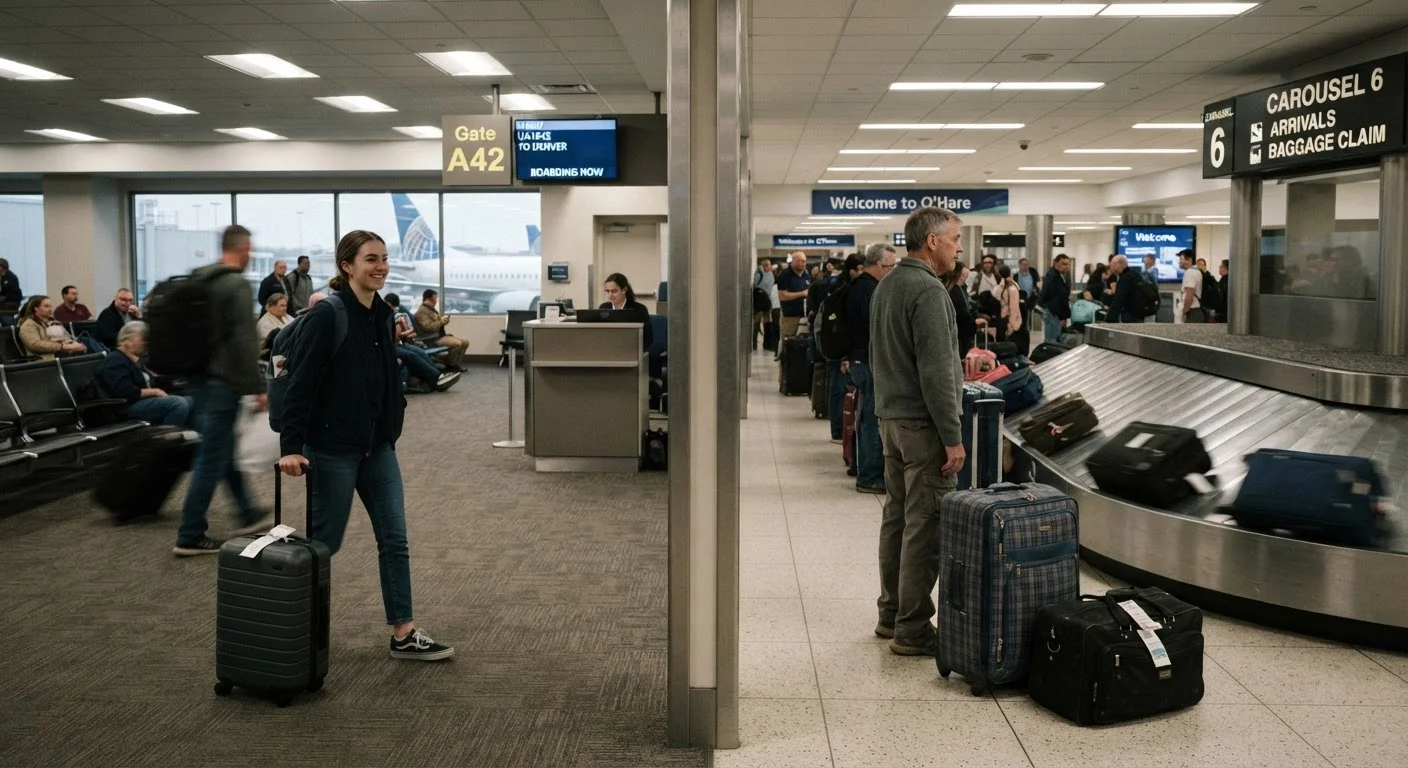
Time is where carry-on travel often wins decisively. Checked bag travelers must arrive earlier to allow for counter check-in (or at minimum, bag drop), and after landing they face baggage claim — often a 20–45 minute wait depending on the airport and flight load. On a trip with two flights each way, that's potentially hours of additional transit time over the course of a journey.
Carry-on travelers board and deplane faster, head directly to ground transport, and maintain a level of flexibility that checked luggage forfeits. If a flight is canceled or rebooked, a carry-on traveler can switch airlines without waiting for a bag to be retrieved or re-routed — a meaningful advantage during irregular operations.
The trade-off is overhead bin competition. On full flights, gate agents may check carry-ons at the jet bridge at no charge, but this introduces unpredictability. Travelers boarding in later groups frequently find overhead space already claimed.
$30–$40
Typical first checked bag fee, each way
Fee ranges reflect standard domestic pricing published by major US carriers; basic economy and ultra-low-cost fares may vary.
20–45 min
Average baggage claim wait time
Industry estimates suggest domestic baggage claim wait times commonly fall in this range, varying by airport size and flight load.
3-1-1
TSA liquid rule for carry-on bags
The Transportation Security Administration requires liquids in carry-ons to be in containers of 3.4 oz or less, in one quart-sized clear bag.
Packing Reality: What Each Option Actually Demands
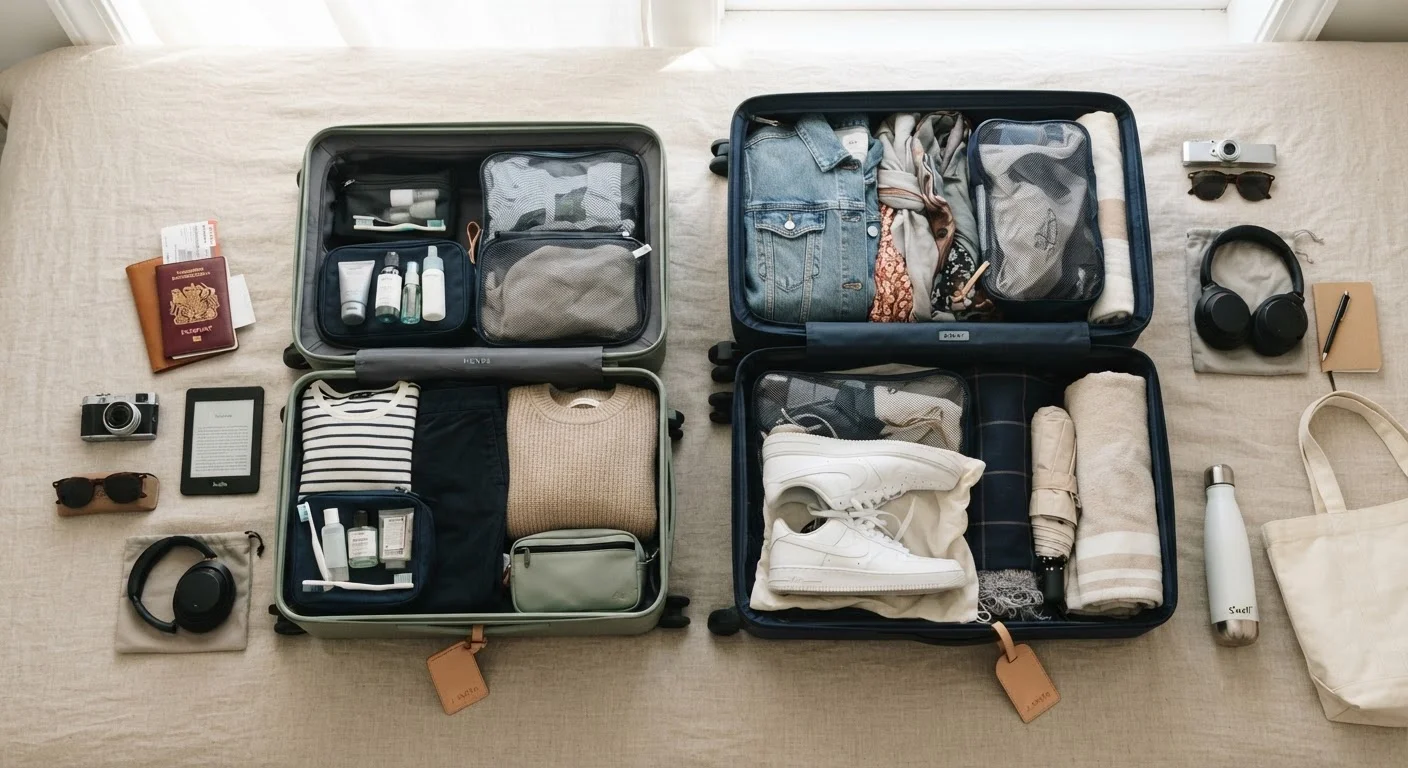
Carry-on only travel works best when it's a deliberate system, not an improvised one. FAA and airline size limits for carry-on bags are typically around 22 x 14 x 9 inches, though this varies by carrier and aircraft. Liquids must follow the 3-1-1 TSA rule (containers of 3.4 oz or less, in a single quart-sized bag). This rules out full-size toiletries, certain sports equipment, and items that simply require volume.
For trips of three to five nights in a single climate, most experienced packers find carry-on only entirely workable. For ten-day international trips involving business meetings, beach days, and a formal dinner, it becomes a disciplined challenge — and for some travelers, an unrealistic one.
Checked luggage gives you genuine flexibility: full-size products, multiple shoe options, specialty gear like ski equipment or golf clubs (often subject to their own oversized fees), and the ability to bring back souvenirs or purchases without anxiety. The cost is both literal (fees) and logistical (the added steps of check-in and claim).
Baggage decisions are also closely tied to your overall transport choice. If you're weighing whether to drive versus fly, our road trip vs. flying cost and time comparison explores how baggage factors into that broader equation.
How to Decide: A Practical Framework
The most useful way to approach this decision is to evaluate four variables for each specific trip: trip length, destination type, your airline and fare class, and any card benefits you hold.
- Trip length: Three nights or fewer generally favors carry-on; beyond a week, most travelers benefit from checking a bag.
- Destination type: Beach destinations with casual dress and consistent weather are far more carry-on friendly than multi-city European itineraries with temperature swings.
- Fare class and carrier: Confirm exactly what your ticket includes before assuming any bag is free. Policies vary significantly and change frequently — verify directly with your airline before travel.
- Credit card benefits: Several airline co-branded cards include a free first checked bag for the cardholder and sometimes companions. If this applies to you, the fee argument for carry-on weakens considerably.
There's no universally correct answer. The goal is to match your luggage strategy to the actual demands of each trip rather than defaulting to habit. For perspective on how similar trade-off decisions work across other travel choices, the direct vs. layover cost comparison applies the same framework to flight routing decisions.
More strategies for reducing total trip spend — beyond just bags — are collected in the Saving on Travel hub.