
What Behavioral Research Actually Says
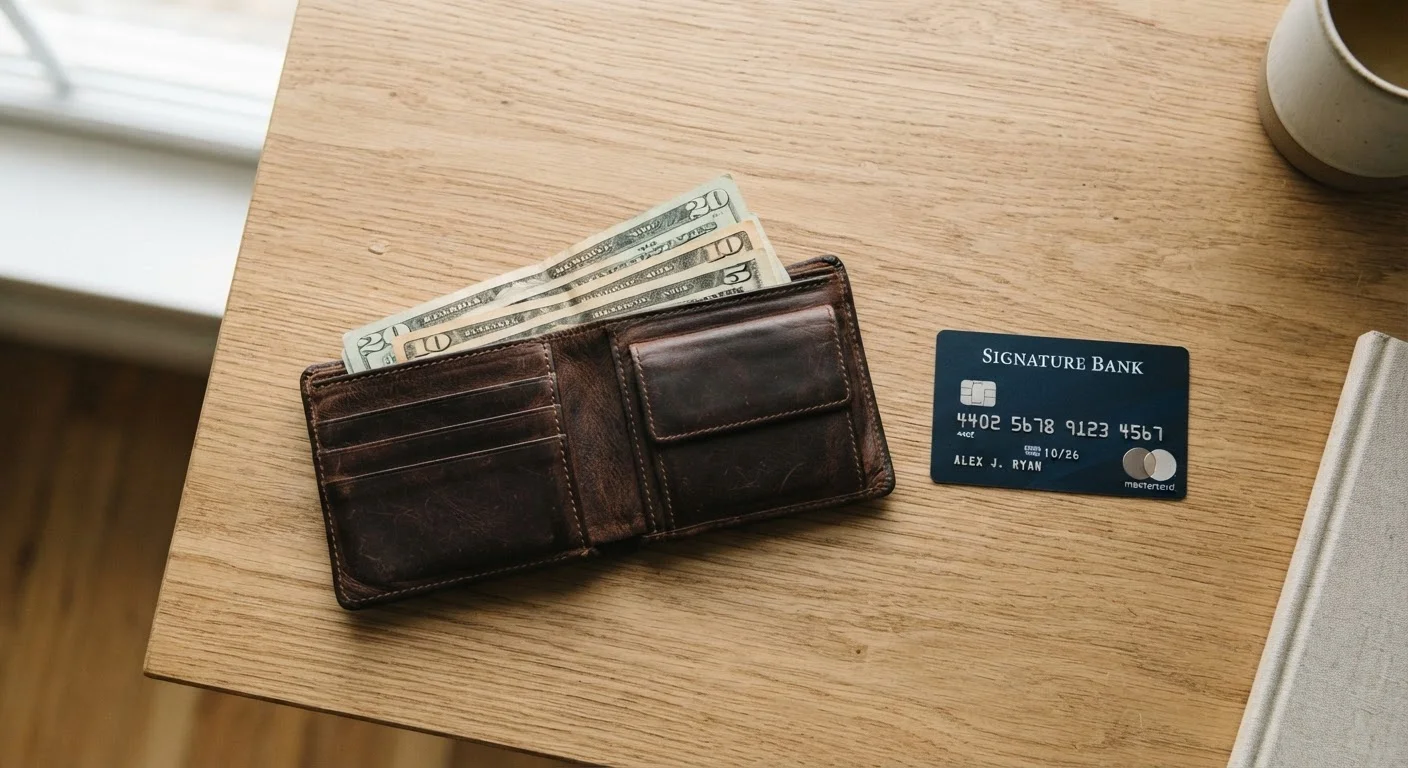
The idea that cash makes you spend less isn't just folk wisdom — it has a foundation in behavioral economics. Researchers Drazen Prelec and Duncan Simester published influential work showing that the act of paying with credit cards reduces what they called the 'pain of paying.' When spending doesn't feel immediate or tangible, people tend to authorize higher amounts more easily.
A well-cited study by researchers at MIT found that participants in an auction setting were willing to bid significantly more for the same items when told they could pay by credit card versus cash. The psychological distance that credit creates between the action and the consequence — writing a check at the end of the month — weakens the natural brake on spending.
That said, researchers also note the effect varies by individual. People who track their spending closely or use budgeting systems may not experience the same gap between cash and credit behavior. For those individuals, the payment method matters less than the tracking habit itself. See our budgeting basics hub for practical tracking frameworks.
| Criterion | Paying with Cash | Using Credit |
|---|---|---|
| Spending behavior | Tends to reduce spending (research-supported) | Can increase spending due to reduced payment pain |
| Interest cost | None | High if balance carried (often 20%+ APR) |
| Rewards / perks | None | Cash back, points, travel perks (if paid in full) |
| Fraud protection | Lost cash is gone permanently | Strong federal protections under the Fair Credit Billing Act |
| Budget visibility | Immediate — you see money leave | Delayed — bill arrives later |
| Online / travel usability | Limited or not accepted | Widely accepted, often required |
| Credit score impact | None (no credit activity) | Positive if used responsibly over time |
The Real Cost of Credit Card Convenience
Credit cards come with a genuine financial risk that advertising rarely highlights: interest. The average credit card interest rate in the U.S. has been well above 20% annually in recent years. Carrying a balance — even a modest one — can quickly erase any rewards you've earned. A 2% cash-back card offers negligible benefit if you're paying 22% APR on a revolving balance.
This is why the credit-versus-cash question is really two separate questions depending on your situation. For someone who pays in full every month, credit cards are essentially a free short-term loan with added perks. For someone who regularly carries a balance, credit cards are an expensive habit dressed up as a convenience. Understanding which category you fall into is the starting point for any honest comparison.
Spending myths that sound like common sense often include the assumption that responsible credit use is easy for everyone — but the data on average balances suggests otherwise. If you're also working to pay down debt while managing daily expenses, our guide on splitting your paycheck covers how to handle both at once.
20%+
Average U.S. credit card APR
The Federal Reserve has reported average credit card interest rates consistently above 20% in recent years, making carried balances expensive.
12–18%
Estimated spending increase with card vs. cash
Behavioral research, including studies cited in consumer finance literature, suggests card users may spend noticeably more than cash payers for equivalent items.
$50
Max liability for unauthorized credit card charges
Under the federal Fair Credit Billing Act, consumers' liability for unauthorized credit card use is capped at $50, and many issuers waive this entirely.
Where Each Method Actually Has an Edge
Cash has a clear edge in discretionary, variable spending categories — groceries, restaurants, clothing, and entertainment — where the temptation to overspend is highest and where impulse purchases are most common. Envelope budgeting systems, which use physical cash divided by category, work precisely because the money runs out visibly. The psychology behind impulse spending explores why these friction-based methods can be effective.
Credit holds a practical edge in specific situations: online purchases (where cash isn't an option), travel bookings where fraud protection and dispute resolution matter, and large recurring expenses that are fixed and predictable. Misuse of your credit card abroad is also easier to dispute than lost cash — a point worth considering if you travel frequently.
A hybrid approach is what many financial educators suggest for budget-conscious households: use cash or a debit card for variable spending categories where you tend to overspend, and reserve credit for planned, fixed expenses where you have full intent and ability to pay immediately. This isn't about punishment — it's about designing a system that matches your actual behavior, not an idealized version of it. For context on when spending more upfront can be the smarter financial move, see the economics of quality.
This article is for general informational purposes only and does not constitute personalized financial advice. Consult a qualified financial professional for guidance tailored to your individual situation.