
Why the First Number You See Does Most of the Work
Walk into any store and the pricing is rarely neutral. Long before you compare options or calculate value, the first number you encounter starts shaping your judgment. That's anchoring: your brain latches onto an initial piece of information and uses it as a reference for every evaluation that follows.
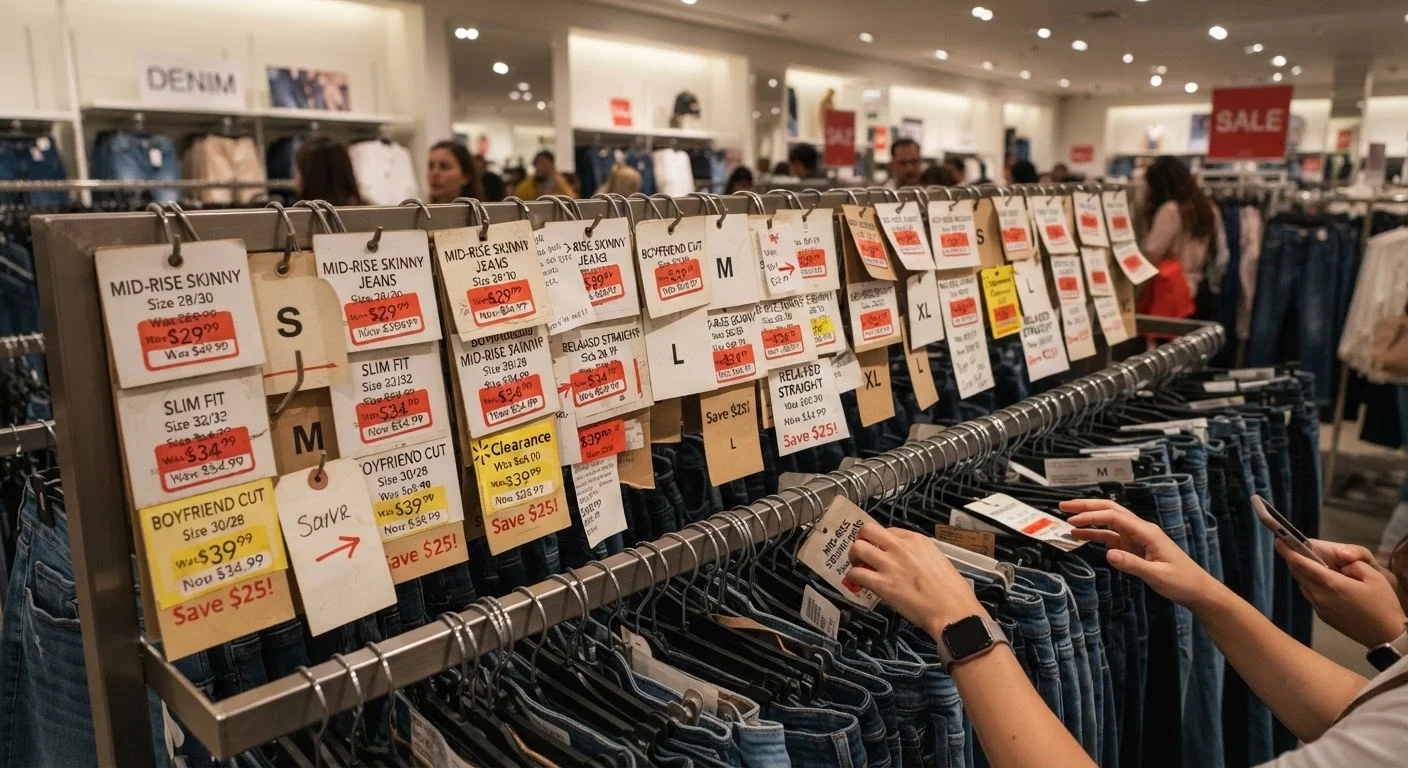
In retail, anchors show up as the large crossed-out price above the sale tag, the bold 'Compare at $120' label on a $74 item, or the premium model listed first in a product lineup. None of these anchors are accidental. Displaying a high number first makes a lower number feel smaller — not because the math changed, but because your perception of value is always relative, not absolute.
The practical problem is that the anchor doesn't have to be accurate to be effective. A retailer can list a manufacturer's suggested retail price (MSRP) that was rarely, if ever, charged in practice. The crossed-out number creates a felt discount regardless of whether that original price reflected real market value. Before you accept any anchor as a legitimate benchmark, it's worth checking what the same or comparable item actually costs at other sellers.
“The basic principle is that we don't have an internal value meter that tells us how much things are worth. Rather, we focus on the relative advantage of one thing over another and estimate value accordingly.”
— Dan Ariely, Behavioral economist and author of 'Predictably Irrational'
How the Decoy Option Quietly Steers Your Choice
Decoy pricing works on a different mechanism: instead of manipulating the number you see first, it manipulates which option looks most reasonable by comparison. A retailer introduces a third option that isn't competitive — it's priced or configured in a way that makes it easy to reject — but its real function is to make one of the other options look like an obvious win.
A common setup: a small item for $6, a large item for $10, and a medium item for $9. The medium exists to make the large look like a far better deal per unit. Without the medium option present, many shoppers would have chosen the small. With it there, the large becomes the 'smart' pick — and average transaction value goes up.
You see this structure across categories: streaming service tiers, fast-food combo sizes, appliance model lineups, and software subscription plans. The middle or near-top option frequently exists as a decoy. Asking yourself whether you actually need what the 'best value' tier offers — rather than simply whether it's a better deal than the decoy — is a useful reset.
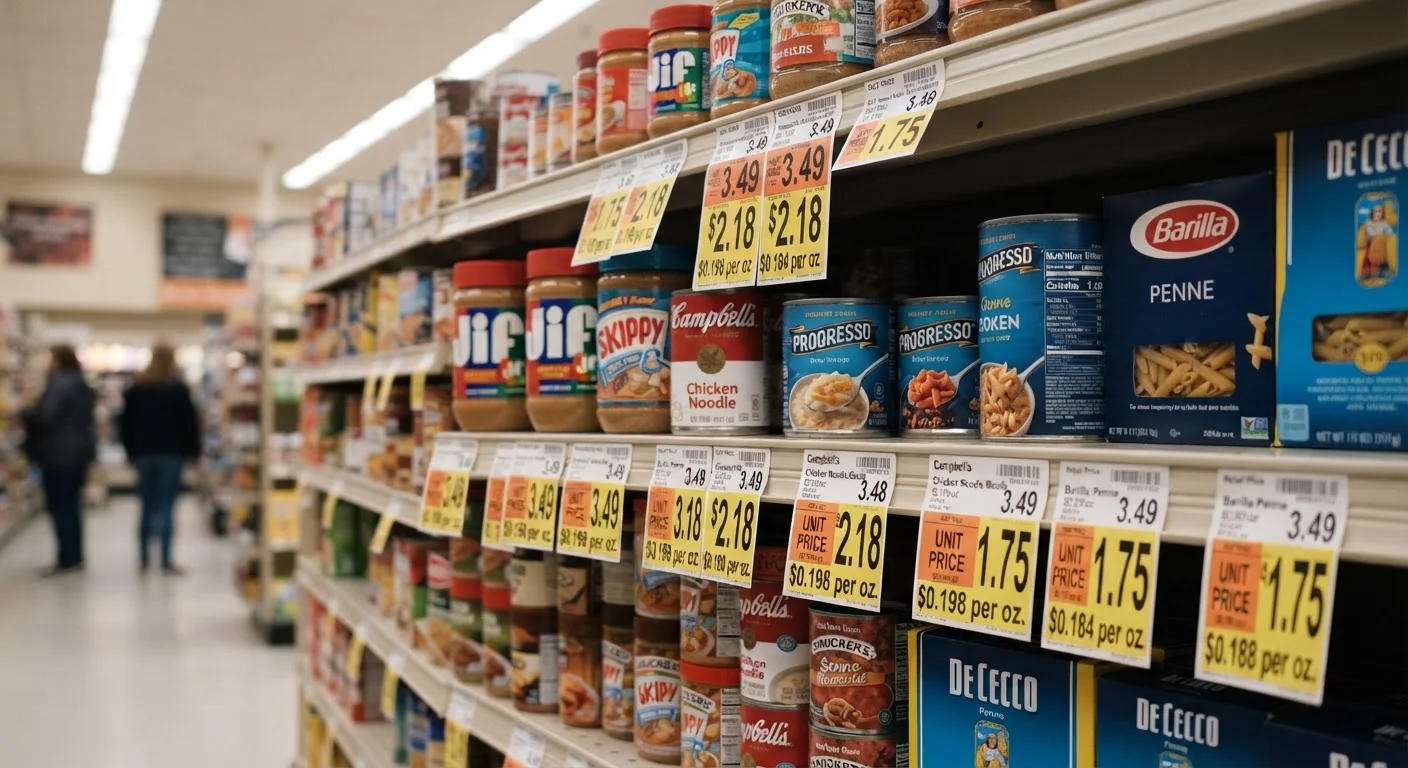
For grocery shopping in particular, unit pricing labels give you a way to evaluate size options on actual cost per ounce or item, cutting through the decoy structure entirely.
~$0.01
Price difference that makes charm pricing effective
Research in behavioral economics has consistently found that prices ending in .99 are perceived as significantly lower than round-dollar prices, despite a one-cent difference.
3-option
Lineup structure most likely to trigger decoy effect
Studies on the asymmetric dominance effect, including work published in the Journal of Marketing Research, show that adding a third, inferior option reliably shifts preference toward a target option in two-option sets.
Up to 50%
How much anchors can shift willingness to pay
Academic research on anchoring, including studies by behavioral economists Ariely, Loewenstein, and Prelec, found that arbitrary initial numbers could shift participants' willingness to pay by substantial margins.
Price Illusions That Aren't Anchoring or Decoys
Anchoring and decoys are the most studied pricing tactics, but they're not the only ones shaping your sense of what's a good deal.
- Charm pricing: Prices ending in .99 or .95 are consistently perceived as meaningfully lower than the next dollar up, even when the difference is a single cent. This effect is well-documented and still widely used.
- Bundle obscuring: Packaging multiple items together makes it harder to evaluate whether each component is priced fairly. The bundle feels like a bargain because you're not comparing individual items.
- Strikethrough inflation: Some retailers set artificially elevated 'original' prices specifically to create a markdown. Several states have reference pricing laws, but they vary in scope and enforcement.
- Limited-context pricing: Showing a monthly payment rather than a total cost — common with furniture, electronics, and vehicles — makes an item feel affordable while obscuring the full expense.
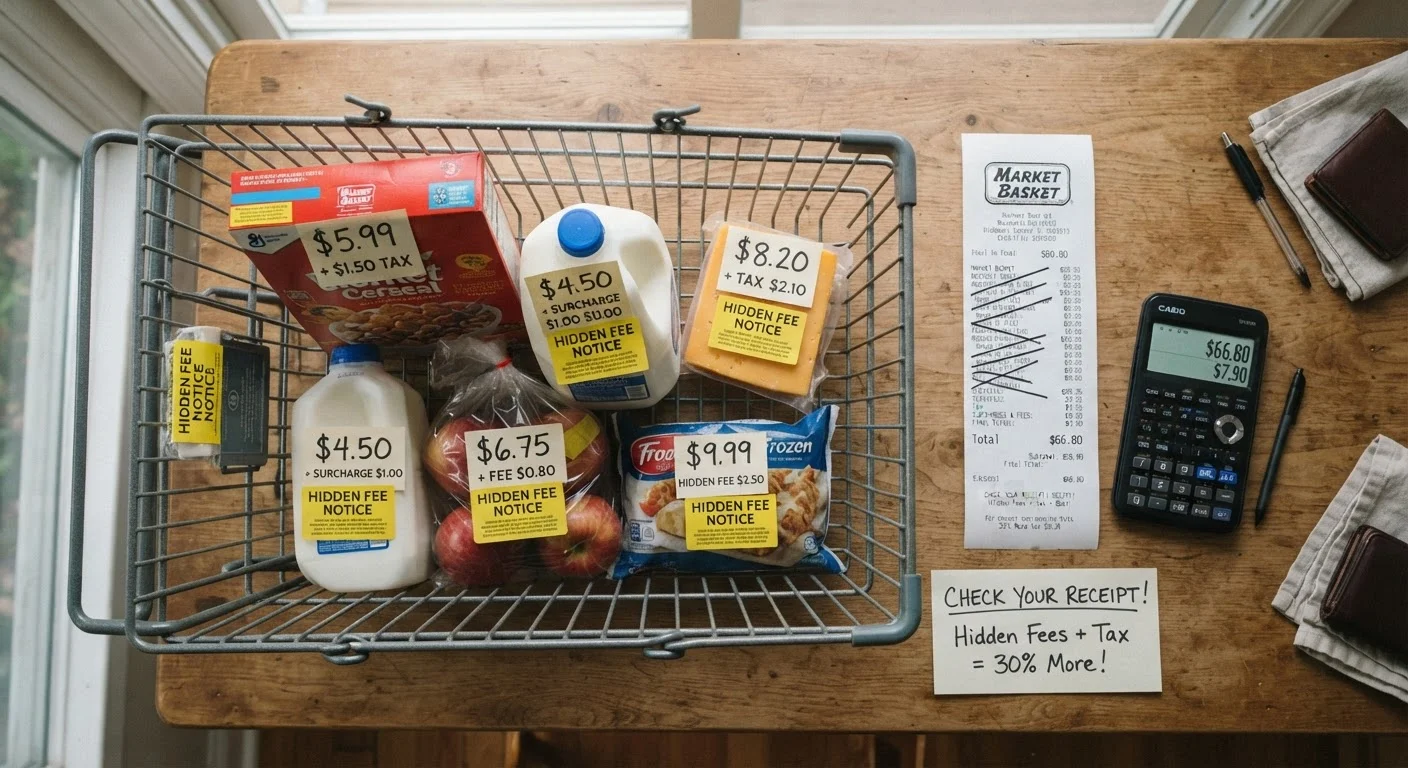
These tactics compound. A product might carry a charm price, appear in a bundle with a decoy tier, and carry an inflated anchor — all at once. Being aware that each element is doing a specific job helps you evaluate them separately. It's also worth noting that what feels like a deal can carry hidden costs on top of the sticker: fees, installation charges, and compatibility requirements can flip the math after the fact.
Practical Steps to Build Your Own Reference Point
The most effective counter to all of these tactics is arriving with your own anchor — a price you've established independently, before a retailer sets one for you.
- Research before you shop. Look up the item across multiple sellers. Note the range of prices you find, not just the lowest. A midpoint from several independent sources is a more reliable reference than any single retailer's displayed 'original' price.
- Use price history tools. For online purchases, browser extensions and price-tracking sites can show you what a product has historically sold for, which quickly reveals whether a 'sale' is meaningful.
- Ignore the anchor, focus on your ceiling. Decide the most you're willing to pay for an item before you see any pricing. Then evaluate what you find against your ceiling, not against a retailer's reference price.
- Question why an option exists. If a product lineup has an option that seems oddly priced relative to the others, consider whether it's there to sell or there to steer. Ask what you actually need, not which option wins the internal comparison.
These same principles apply in high-stakes negotiations. Car dealers, for example, use anchoring extensively — understanding how it works is directly relevant if you're evaluating a trade-in offer or discussing a purchase price. The same caution applies when shopping furniture both online and in-store, where pricing structures differ but anchoring tactics appear in both channels.
Finally, consider the long view: sometimes the higher-priced option genuinely costs less over time. Cost-per-use and longevity are worth calculating separately from whichever option the retailer's pricing structure is steering you toward.
This article is for general informational and educational purposes only. It does not constitute financial, legal, or consumer advice tailored to your individual situation. Pricing regulations and consumer protection laws vary by state; consult relevant authorities or a qualified professional for guidance specific to your circumstances.