
What Unit Pricing Actually Is
Every time you reach for a box of cereal or a bottle of dish soap, there are really two prices at play: the total price on the tag and the unit price — the cost broken down to a standard measure like per ounce, per pound, per count, or per fluid ounce. Most U.S. grocery stores are required by state law to display unit prices on shelf labels, yet surveys consistently find that a large share of shoppers either don't notice them or aren't sure how to use them.
That's a costly habit. The unit price is the only fair way to compare two products that come in different-sized packages. A 32-oz bottle of ketchup priced at $3.49 and a 20-oz bottle priced at $2.49 look very different on the shelf, but the unit prices ($0.109/oz vs. $0.125/oz) tell you plainly which one stretches your dollar further.
Retailers also know that shoppers mostly look at the big number. That's one reason pricing psychology works so well — something our article on anchoring and decoy pricing explores in more detail. Unit pricing is your antidote to that.
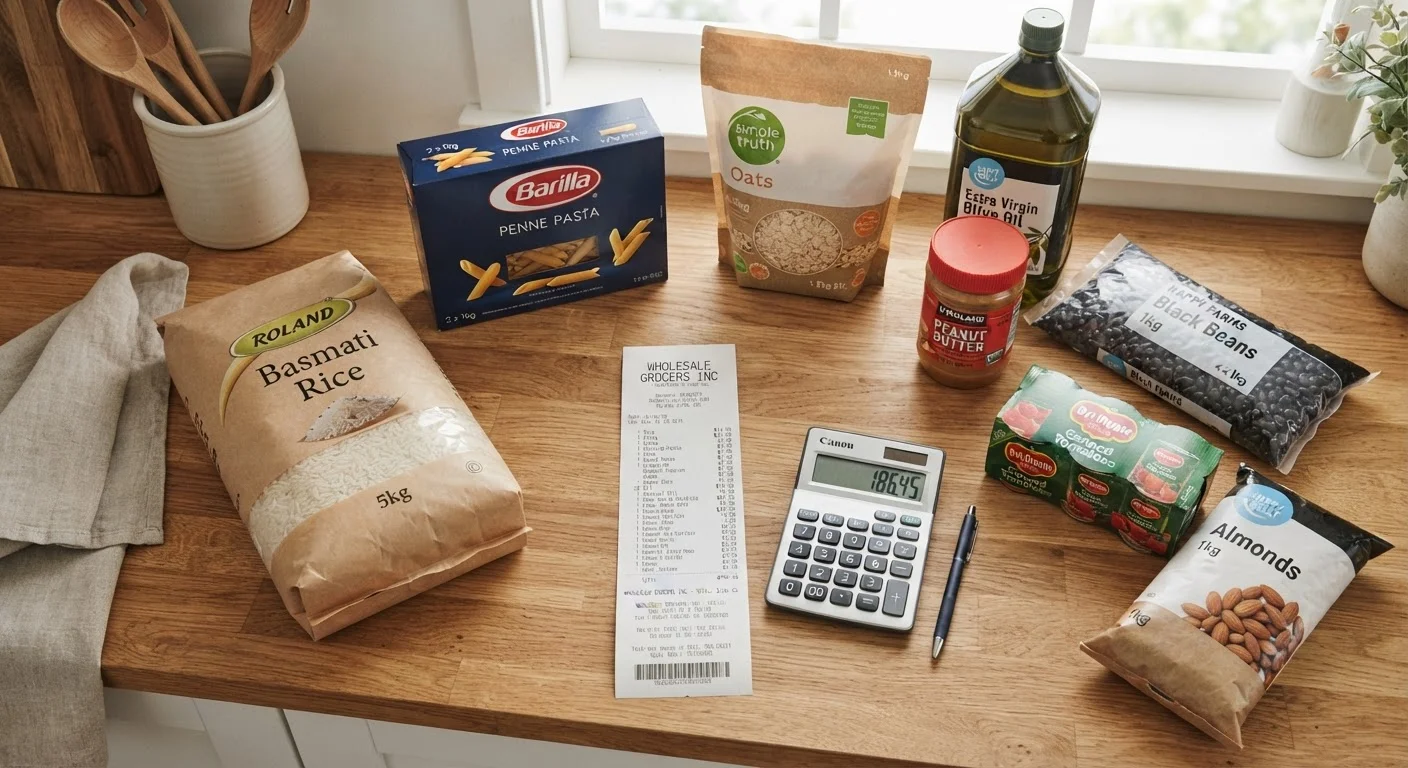
What you will need
How to Read and Use Unit Price Labels
Once you know where to look and what the numbers mean, using unit pricing becomes second nature. Follow the steps below on your next grocery run.
Find the unit price on the shelf label
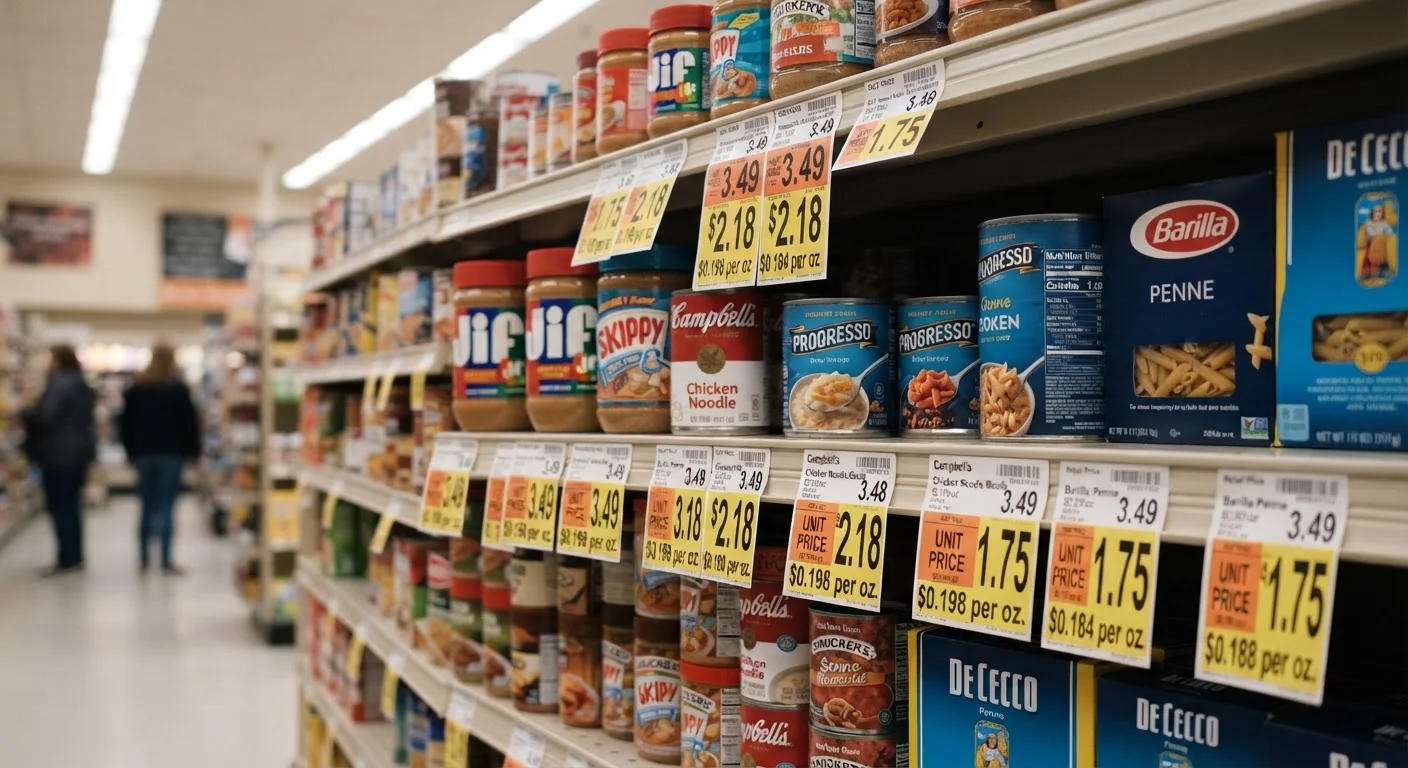
Look at the small shelf tag directly below the product. In most stores, the unit price appears in smaller print — often in the lower-left corner of the tag — alongside the total price displayed in larger text. It typically reads something like $0.18/oz or $1.24/100 ct. If you can't find it, check neighboring tags for the same product in a different size; sometimes the label is misplaced.
Note the unit being used
Pay attention to which unit the store has chosen — ounce, pound, fluid ounce, count, square foot, load, etc. Write it down or remember it. You cannot meaningfully compare two products unless both labels use the same unit of measure. If they don't, you'll need to convert one before comparing (see the pitfalls section below).
Compare unit prices across sizes and brands
Line up the unit prices for every option you're considering — different sizes of the same brand, store-brand alternatives, and competing brands. The lower the unit price (assuming equal quality for your needs), the more value per dollar you're getting. You can jot these down on your phone's notes app or use the calculator to double-check math if a label seems off.
Calculate manually if the label is missing or unclear
If a label is absent, damaged, or the unit listed doesn't match other products, do the math yourself: divide the total price by the number of units (ounces, counts, etc.) in the package. For example, a 15-oz can priced at $1.89 works out to $1.89 ÷ 15 = $0.126 per ounce. Your phone's calculator handles this in seconds.
Factor in practical considerations before deciding
The lowest unit price isn't always the right choice for your household. Ask yourself: Will I use all of this before it expires? Do I have storage space? Is the quality difference worth it for this particular item? A product with a slightly higher unit price can be the smarter buy if the alternative will go to waste or if the quality gap genuinely matters for this use. Also consider whether reading the nutrition label is relevant — our guide on reading a nutrition label without the confusion can help you weigh both price and nutritional value at the same time.
Common Pitfalls and How to Avoid Them
Unit pricing is straightforward in theory, but a few real-world wrinkles can trip you up.
Mismatched units
One of the most common traps: two competing products on the same shelf show unit prices in different units — one in price per ounce, the other in price per pound, or one per 100 sheets vs. per single sheet. Before declaring a winner, make sure you're comparing the same unit. There are 16 ounces in a pound, so multiply the per-ounce price by 16 to convert, or divide the per-pound price by 16.
Bulk isn't always better
The assumption that larger packages always win is one of the spending myths that sound like common sense but don't always hold up. Warehouse-sized quantities can carry a higher unit price than a mid-size package, especially when a sale is running on the smaller size. Check every time — don't assume.
Waste negates savings
A bulk purchase only saves money if you actually use the product before it expires or goes bad. A gallon of yogurt at a lower unit price is no bargain if half gets thrown out. Factor in realistic consumption before committing to a large size. For food-specific budgeting, see our guide on eating well on a tight budget.
Sale prices can flip the equation
A store-brand item might normally beat the name brand on unit price, but a promotional sale can temporarily reverse that. Always compare the current unit price rather than relying on past shopping patterns. And watch for hidden costs that make a good deal more expensive than it looks, like membership fees required to access certain prices.
Make It a Quick Habit, Not a Chore
You don't need to calculate unit prices for every single item in your cart. Focus your effort on the products you buy most often and in the largest quantities — those are where the savings accumulate fastest. For staples like cooking oil, canned goods, paper products, and cleaning supplies, a 30-second unit price check can pay off repeatedly over months of shopping.