

How Dealers Actually Calculate Your Offer
When a dealer appraises your car, they're not thinking about what you paid for it or what it's listed for on retail sites. They're calculating what they can sell it for after expenses — and working backward from there.
That process typically includes:
- Wholesale auction pricing: Dealers reference what similar vehicles are actually selling for at dealer-only auctions, not consumer listings. This is almost always lower than private-party values.
- Reconditioning costs: Every trade-in goes through inspection, cleaning, and often mechanical work before it hits their lot. That expense comes out of your offer.
- Market demand: A pickup truck is worth more in some regions than others. If your vehicle type isn't moving locally, your offer drops accordingly.
- Days on lot: Dealers factor in how long it might take to sell your car. A slow-moving segment means more holding cost, which lowers what they'll pay upfront.
The result is an offer built around the dealer's economics, not your expectations. Understanding this doesn't mean you're powerless — it just means you know what you're up against.
Factors That Drag the Number Down
Several specific conditions cause trade-in offers to come in lower than owners anticipate. Most of these are within a driver's awareness, even if they're not always fixable:
Mileage
High mileage is one of the clearest signals of wear to a dealer. Vehicles with significantly above-average annual mileage (roughly 12,000–15,000 miles per year is a common benchmark) typically receive lower offers because they carry more assumed mechanical risk.
Accident and Service History
Dealers pull vehicle history reports — and so will their future buyers. A reported accident, even one that was repaired well, reduces resale appeal and pulls the trade-in value down.
Condition Beyond Cosmetics
Worn tires, a cracked windshield, or dashboard warning lights all translate directly into estimated repair costs that dealers subtract from your offer. These aren't just aesthetic — they're line items.
Oversupply in the Local Market
If a dealer's lot already has several vehicles similar to yours, they have little incentive to offer top dollar. Supply and demand applies here just as it does anywhere else.
Get Appraisals Before You Shop
Visit at least two or three dealerships for trade-in quotes before you're ready to buy — even if you're not committed to selling there. Online appraisal tools from established automotive data services can also give you a documented baseline in minutes. Having these numbers in hand before negotiations start is one of the most effective ways to avoid leaving money on the table.
How to Strengthen Your Position Before You Walk In
The most effective thing you can do before accepting any trade-in offer is get multiple appraisals. Online tools from established automotive data services can give you a documented range within minutes. Bring those numbers with you — a written competing offer is harder to dismiss than a verbal claim.
It also helps to keep the trade-in negotiation separate from the new vehicle price. Dealers sometimes adjust one number to absorb movement in the other, making it look like you're winning on both when you may only be breaking even. See our guide on common negotiation mistakes for a closer look at how this tactic works and how to counter it.
If the trade-in offer still feels too low after negotiating, consider whether a private sale makes sense for your situation. Selling privately versus through a dealer comes with its own trade-offs — more work but often more money.
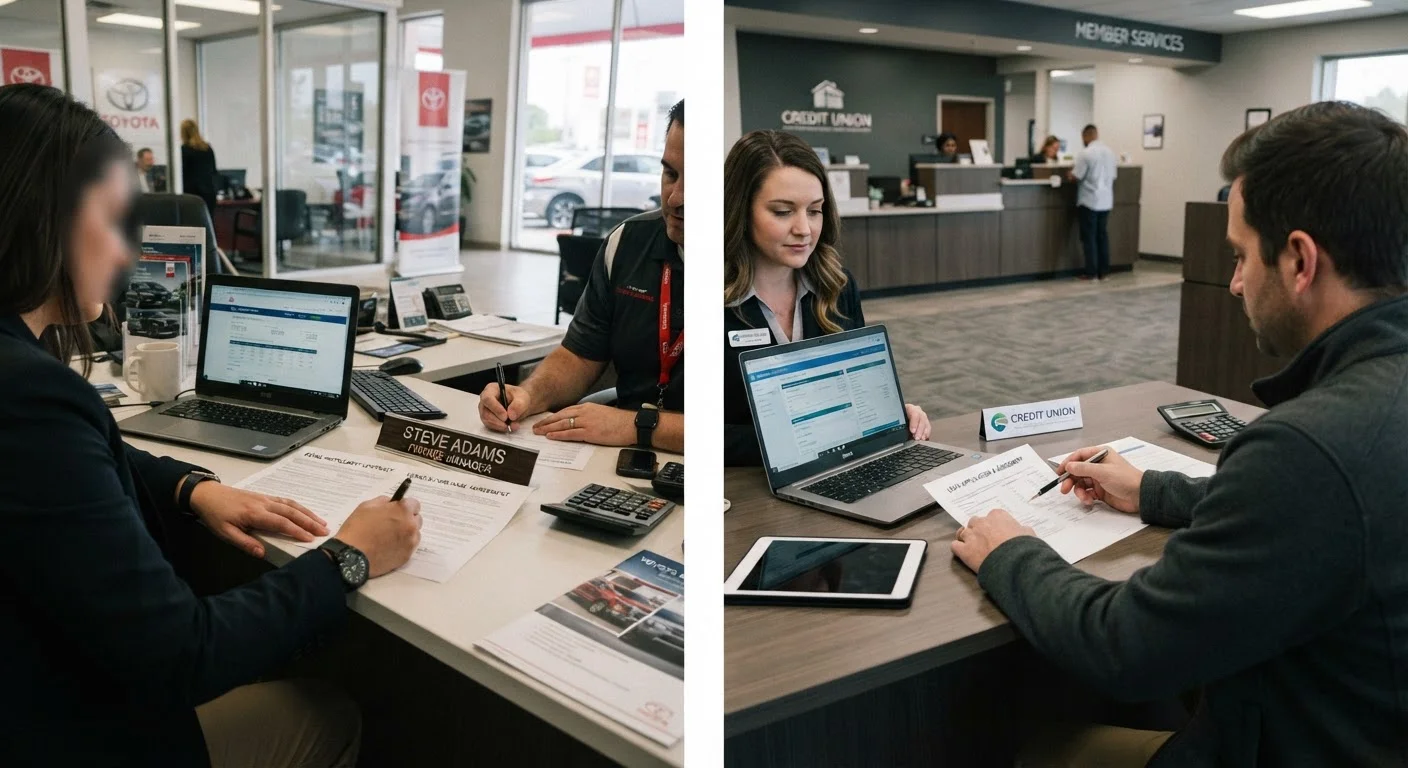
Finally, if you're financing the new vehicle, keep that conversation separate too. How you pay shouldn't influence what your trade-in is worth. For more on that dynamic, our article on dealer financing vs. pre-approval through a bank or credit union explains why bundling these decisions can cost you.
When a Lower Offer Might Still Make Sense
A lower trade-in value isn't automatically a bad deal, depending on your situation. In many U.S. states, the trade-in amount is deducted from the taxable purchase price of the new vehicle — meaning you pay sales tax on a smaller number. On a $30,000 vehicle in a state with a 7% sales tax, a $5,000 trade-in could reduce your tax bill by $350. That partially offsets the gap between trade-in and private-sale values.
Speed and simplicity also have real value. A private sale means listing the car, fielding inquiries, handling test drives, managing paperwork, and waiting. For buyers who are time-constrained or who'd rather roll the transaction into one visit, taking a slightly lower trade-in offer can be a reasonable call.
What matters most is going in with accurate information. Knowing the realistic market value of your vehicle — and understanding the hidden costs that can shift the math on any deal — puts you in the best position to decide whether the offer on the table is one worth accepting.