
How Each Flooring Type Is Made
Understanding what these floors are made of explains most of their practical differences.
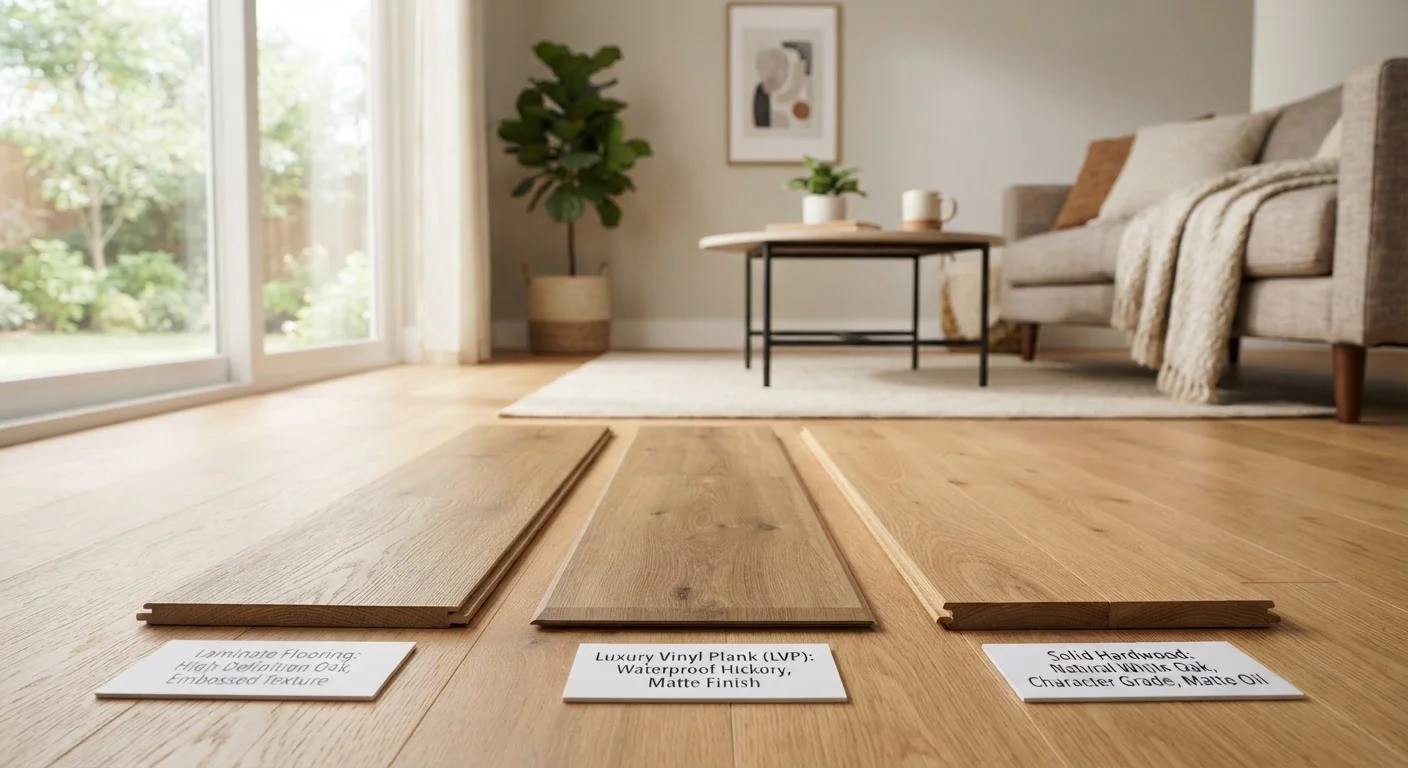
Hardwood is milled from solid timber — typically oak, maple, or hickory — in planks that are the same wood species all the way through. That construction allows it to be sanded and refinished multiple times over decades.
Laminate is a composite product: a high-density fiberboard (HDF) core is topped with a photographic layer that mimics wood grain, then sealed with a clear wear layer. There's no real wood on the surface — only a printed image.
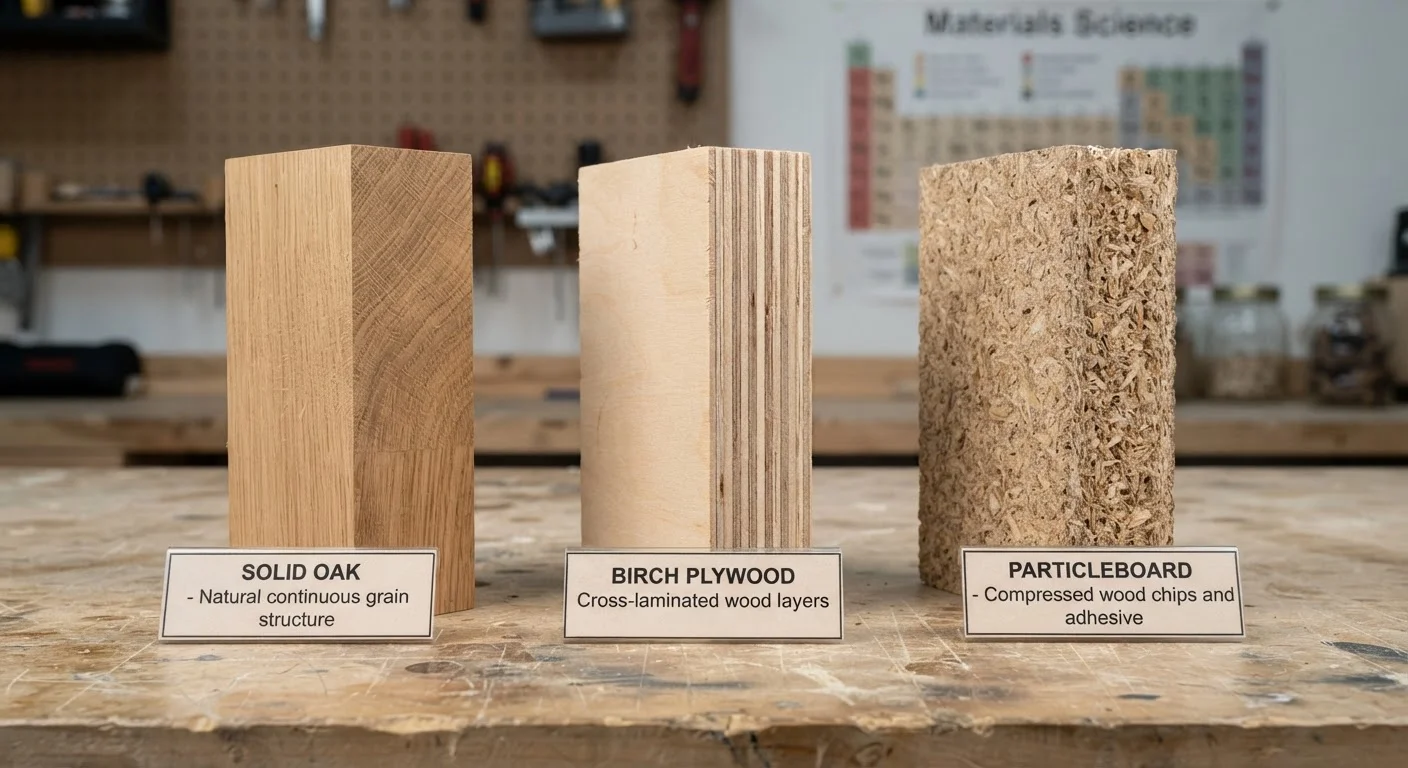
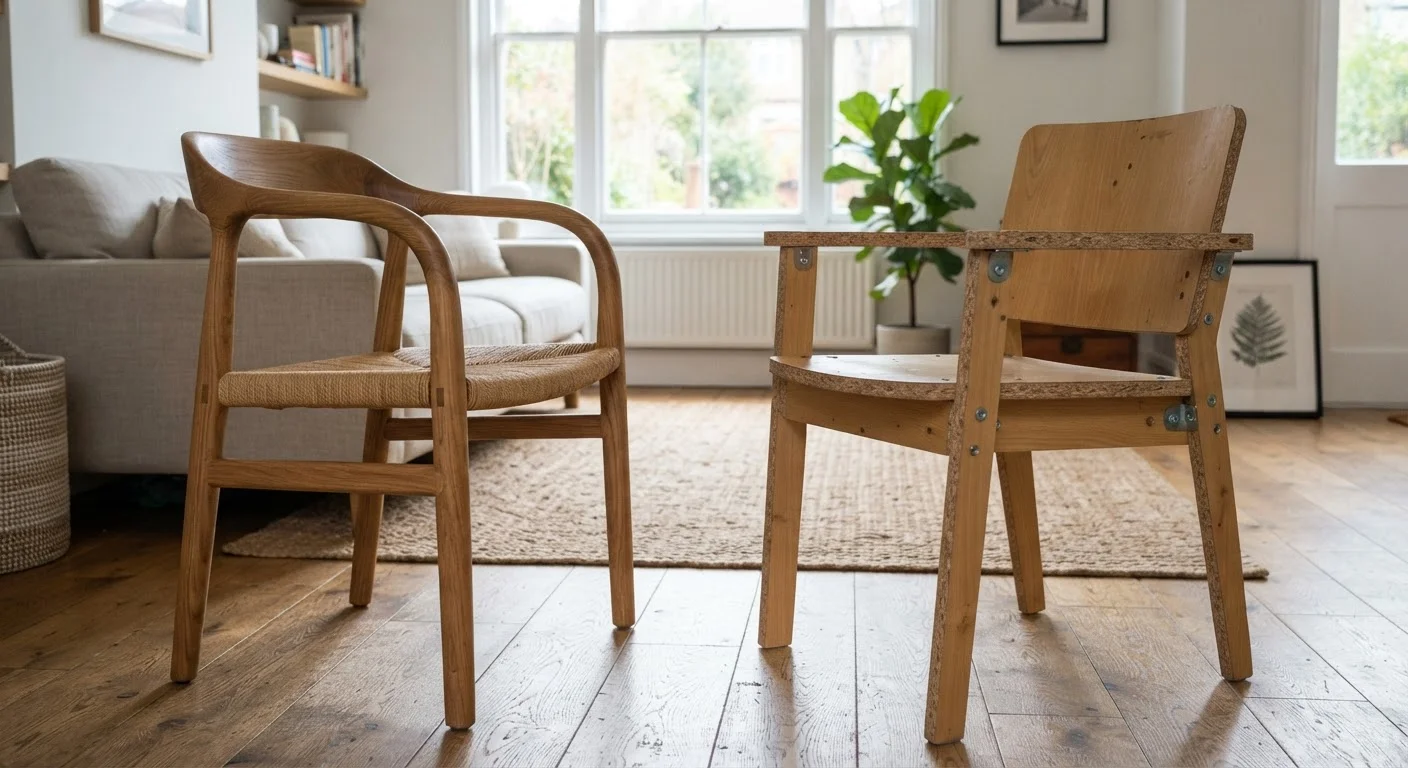
Luxury vinyl plank (LVP) is made entirely from PVC (polyvinyl chloride) layers. A rigid or semi-rigid core sits beneath a printed design layer and a urethane wear coat. Because every layer is synthetic, LVP is inherently waterproof. For a broader look at how material composition affects long-term value, see our piece on solid wood versus engineered wood versus particleboard.
Durability, Moisture Resistance, and Maintenance
These three categories often determine which floor is right for a given room.
| Laminate | Vinyl Plank (LVP) | Hardwood | |
|---|---|---|---|
| Moisture resistance | Low — swells when wet | High — fully waterproof | Moderate — avoid prolonged moisture |
| Refinishable | No | No | Yes — multiple times |
| Typical material cost | $ — lowest entry price | $$ — mid-range | $$$ — highest upfront |
| DIY installation ease | Moderate | Easy to moderate | Moderate to difficult |
| Best room use | Dry, low-traffic areas | Kitchens, baths, basements | Living areas, bedrooms |
| Lifespan (with care) | 15–25 years | 20–30 years | 50+ years if refinished |
| Resale value impact | Minimal | Moderate | Positive |
Moisture resistance is where the options diverge most sharply. LVP is fully waterproof — standing water causes no damage. Laminate's HDF core swells and warps when wet, making it inappropriate for kitchens, full bathrooms, or below-grade spaces. Hardwood can tolerate normal humidity variations but is damaged by prolonged moisture and typically should not be installed below grade.
Scratch resistance favors LVP and high-AC-rated laminate over hardwood, which dents and scratches from everyday wear. However, hardwood can be refinished, effectively resetting surface damage. Laminate and LVP cannot be refinished — once the wear layer is compromised, the floor must be replaced.
Maintenance is straightforward across all three: sweep regularly, avoid harsh cleaners, and wipe spills promptly. Hardwood needs occasional refinishing every 7–10 years depending on traffic; the others require only cleaning.
Cost and Installation Considerations
Flooring costs break down into material, installation labor, and subfloor preparation — all three matter for a realistic budget.
Material costs generally rank from lowest to highest: laminate, LVP, then hardwood. Entry-level laminate can run under $2 per square foot for materials alone, while solid hardwood often starts around $5–$10 per square foot before installation. LVP typically falls in between, though premium products approach hardwood pricing.
Installation is a significant variable. All three can use a floating click-lock system, which is DIY-friendly and doesn't require adhesive or nails. Hardwood can also be nailed or stapled to a wood subfloor — a job most homeowners leave to professionals. Glue-down LVP is another option that professionals often use for commercial-grade stability.
Get Multiple Subfloor Quotes
Before finalizing any flooring budget, have the subfloor inspected. Moisture issues, soft spots, or significant unevenness can add hundreds of dollars to any installation. Getting at least two professional assessments helps you avoid surprises and plan accurately.
Subfloor condition affects every flooring type. An uneven or damaged subfloor needs correction before installation, which adds cost regardless of which product you choose. Factor this into any budget estimate. For more on making value-conscious home decisions, see the difference between cheap and affordable.
Which Flooring Fits Which Room
Room function should drive flooring choice as much as aesthetics or cost.
- Living rooms and bedrooms: All three work. Hardwood adds warmth and lasting value; LVP and laminate keep costs down in large spaces.
- Kitchens: LVP is the practical choice due to spills, standing water, and heavy foot traffic. Laminate is a risk; hardwood requires careful maintenance and is not universally recommended.
- Bathrooms: LVP is the clear pick. Neither laminate nor hardwood is suitable for full bathrooms where moisture is constant.
- Basements: LVP performs well below grade. Laminate and hardwood are not generally appropriate for below-grade installations due to moisture and temperature fluctuations.
- Home offices and rental units: Laminate or LVP offer cost-effective, low-maintenance solutions where heavy refinishing investment is not practical.
For a broader view of setting up a home with longevity in mind, the full picture on home essentials is a helpful reference point.