
The Overcrowded Closet Problem
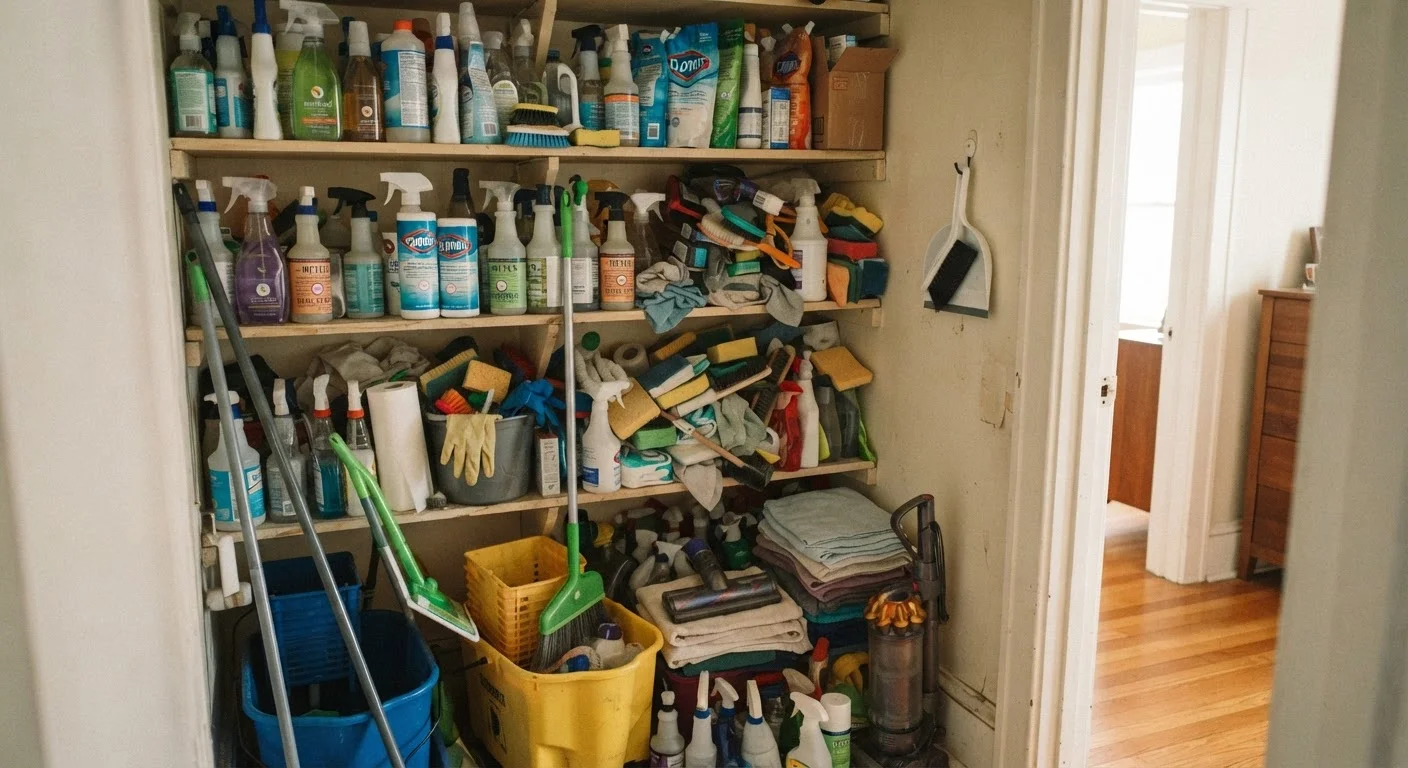
Open the average American cleaning closet and you'll likely find a graveyard of half-used bottles — a spray for the stovetop, another for the countertop, one specifically for "granite," and three variations of bathroom cleaner. The collection grew gradually, product by product, and now it's hard to find what you actually need. This is an extremely common pattern, and it costs real money.
The core issue isn't that people are careless shoppers — it's that cleaning product marketing is exceptionally good at convincing us that each surface, room, or type of grime requires its own dedicated solution. In most cases, that simply isn't true. Understanding what makes a household item truly essential is a useful lens to apply before any new cleaning product makes it into your cart.
Buying a separate cleaner for every surface in the home.
Why it happens: Product labels are designed to make each surface seem unique and delicate, implying that only a dedicated formula will do the job safely.
Stockpiling products because they were on sale, creating redundant inventory.
Why it happens: Discount pricing triggers bulk-buying instincts, even for products you already have or rarely use.
Keeping products for years without checking whether they still work effectively.
Why it happens: People assume cleaning products don't expire or degrade the way food does, so old bottles get pushed to the back and forgotten.
Purchasing trend-driven or heavily marketed 'miracle' cleaners without evaluating genuine need.
Why it happens: Advertising — especially on social media — makes new cleaning products seem like game-changers, prompting impulse purchases that often duplicate what you already own.
Using the wrong product for a task because the right one is buried and hard to access.
Why it happens: An overcrowded closet makes it difficult to locate the correct product quickly, so people reach for whatever is closest.
How to Right-Size Your Cleaning Arsenal
Getting your cleaning supply collection under control starts with an honest audit. Pull everything out, check expiration dates (yes, some cleaners do degrade), and group products by what they actually do — not what their label claims. You'll almost certainly find significant overlap.
62%
Households with unused cleaning products
Consumer research consistently finds that a significant majority of households regularly discard cleaning products they purchased but never fully used.
~$100+
Estimated annual spend on redundant cleaners
Home economists estimate that the average household spends over $100 per year on cleaning products that duplicate the function of items already on their shelves.
A functional cleaning kit for most homes covers a handful of categories: an all-purpose disinfecting cleaner, a non-abrasive scrub or powder for tough buildup, a glass cleaner, a toilet bowl cleaner, a floor cleaner appropriate for your surfaces, and a basic laundry detergent. That's it for the vast majority of households. Anything beyond that should justify its place with a task the core lineup genuinely can't handle.
If budget is part of your motivation for trimming back — and it usually is — this kind of intentional approach fits naturally into stocking a home on a tight budget. Fewer, more versatile products almost always cost less over time than a rotating cast of specialty items. For a broader view of which supply categories are worth maintaining at all, a quick reference guide to standard household supply categories offers a useful starting point.
The same logic that applies to cleaning supplies extends to other areas of the home. Setting up a functional kitchen without overbuying follows an identical principle: a smaller, well-chosen set of tools outperforms a bloated, disorganized one. And for the full picture on how to think about home essentials across every category, see the full picture on home essentials.
Cleaning your home shouldn't require managing a product inventory. When your supplies are streamlined and purposeful, the actual act of cleaning gets faster, simpler, and less expensive — which is the point all along. For more ways to avoid common money-wasting habits at home, explore smart spending strategies.