
Set Your Budget Before You Shop
The single most protective thing you can do as a car buyer is lock in a realistic budget before you fall in love with any vehicle. That budget needs to cover more than just the sticker price.
Add up your expected monthly costs: loan or lease payment, insurance, fuel, and routine maintenance. Sales tax, registration fees, and any dealer documentation fees also come out of your pocket at signing. These can add several hundred to several thousand dollars on top of the price you negotiate.
A useful starting point: researching realistic ownership costs for the vehicles you're considering will prevent sticker-price tunnel vision and ground your expectations before you ever talk to a seller.
Out-the-door price
The total amount you actually pay for a vehicle, including the sale price, taxes, registration fees, and any dealer fees — not just the advertised sticker price.
Pre-approval
A lender's conditional commitment to loan you a specific amount at a specific interest rate, based on a review of your credit and finances before you select a vehicle.
APR (Annual Percentage Rate)
The yearly cost of borrowing money expressed as a percentage. A lower APR means less interest paid over the life of a loan.
Pre-purchase inspection
An evaluation of a used vehicle by an independent, licensed mechanic — separate from the seller — to identify mechanical, safety, or structural problems before you commit to buying.
Gap insurance
Optional coverage that pays the difference between what you owe on a car loan and what your vehicle is actually worth if it's totaled or stolen. Relevant when a loan balance exceeds the car's market value.
Dealer documentation fee
A fee charged by a dealership to process the paperwork for a vehicle sale. The amount varies widely and is often negotiable.
Research Vehicles and Where to Buy
Once you know your budget, narrow the field. Think about how you actually use a vehicle day-to-day — commuting miles, cargo needs, passenger space — rather than shopping by aesthetics alone. Look up reliability data from consumer-facing sources and check what similar vehicles are selling for in your local market.
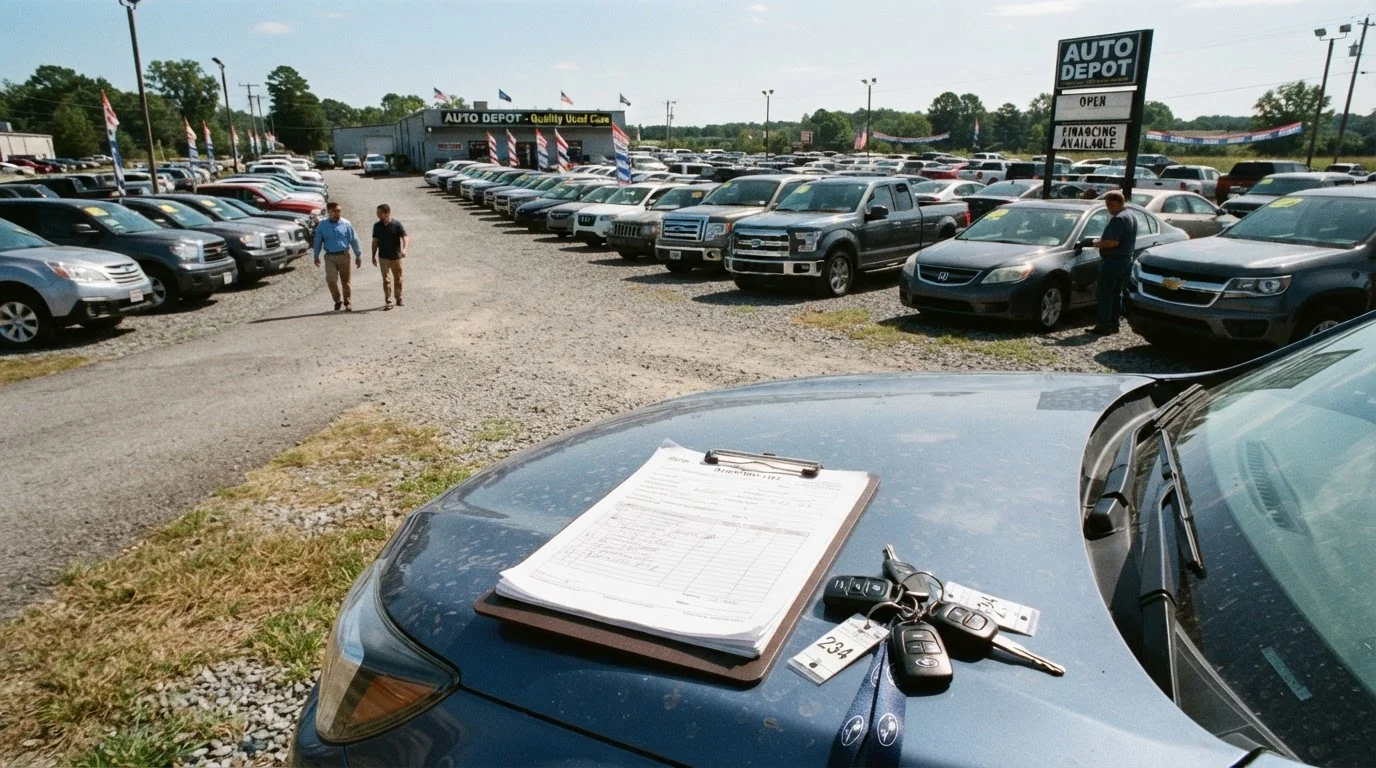
You also need to decide whether to buy from a dealership or a private seller. Each path has real trade-offs. Dealerships typically offer more consumer protections — certified pre-owned programs, return policies, and financing options — while private sellers may offer lower prices with fewer safeguards. Understanding the trade-offs between private sellers and dealerships before committing to a source can save you from a purchase you regret.
Arrange Financing Early
If you're not paying cash, get pre-approved for a loan through your bank or credit union before you set foot in a dealership. A pre-approval letter tells you the interest rate and maximum loan amount a lender is willing to offer you — giving you a concrete benchmark.
When a dealer offers financing, you can compare it directly against your own approval. Dealer-arranged financing sometimes comes with rate markups that aren't immediately obvious. Knowing your own number means you're evaluating their offer on real terms, not just accepting whatever's presented.
Get Pre-Approved Before You Visit
Visiting a dealer with your own financing pre-approval in hand shifts the dynamic in your favor. You'll know your rate ceiling going in, and you can evaluate any dealer financing offer against a real number rather than accepting it at face value. Even if you end up using dealer financing, having your own approval gives you leverage.
Keep in mind: loan term length affects your monthly payment significantly. A longer loan lowers the payment but increases the total interest you pay over time. Run the numbers for different term lengths before deciding what works for your budget.
Inspect, Test Drive, and Negotiate
Test driving isn't optional — it's how you discover whether a vehicle actually suits you. Pay attention to visibility, seat comfort, braking feel, and how the car handles at highway speed. If anything feels off, that's worth noting.
For used vehicles, schedule a pre-purchase inspection with an independent, licensed mechanic before agreeing to buy. They can identify issues that aren't apparent during a drive. This step costs a modest fee and can prevent expensive surprises.
When it comes to price, focus your negotiation on the out-the-door price — the full amount you'll pay — rather than the monthly payment. Stretching loan terms to lower a monthly payment often means paying significantly more overall. For a deeper look at how negotiation commonly goes wrong, see common negotiating mistakes that cost buyers money.
Review the Paperwork and Close the Deal
The finance office is where deals that seemed settled can quietly change. You may be offered add-ons like extended warranties, paint protection, or gap insurance. Some of these products have genuine value; others are priced well above what you'd pay elsewhere. You're not obligated to accept any of them.
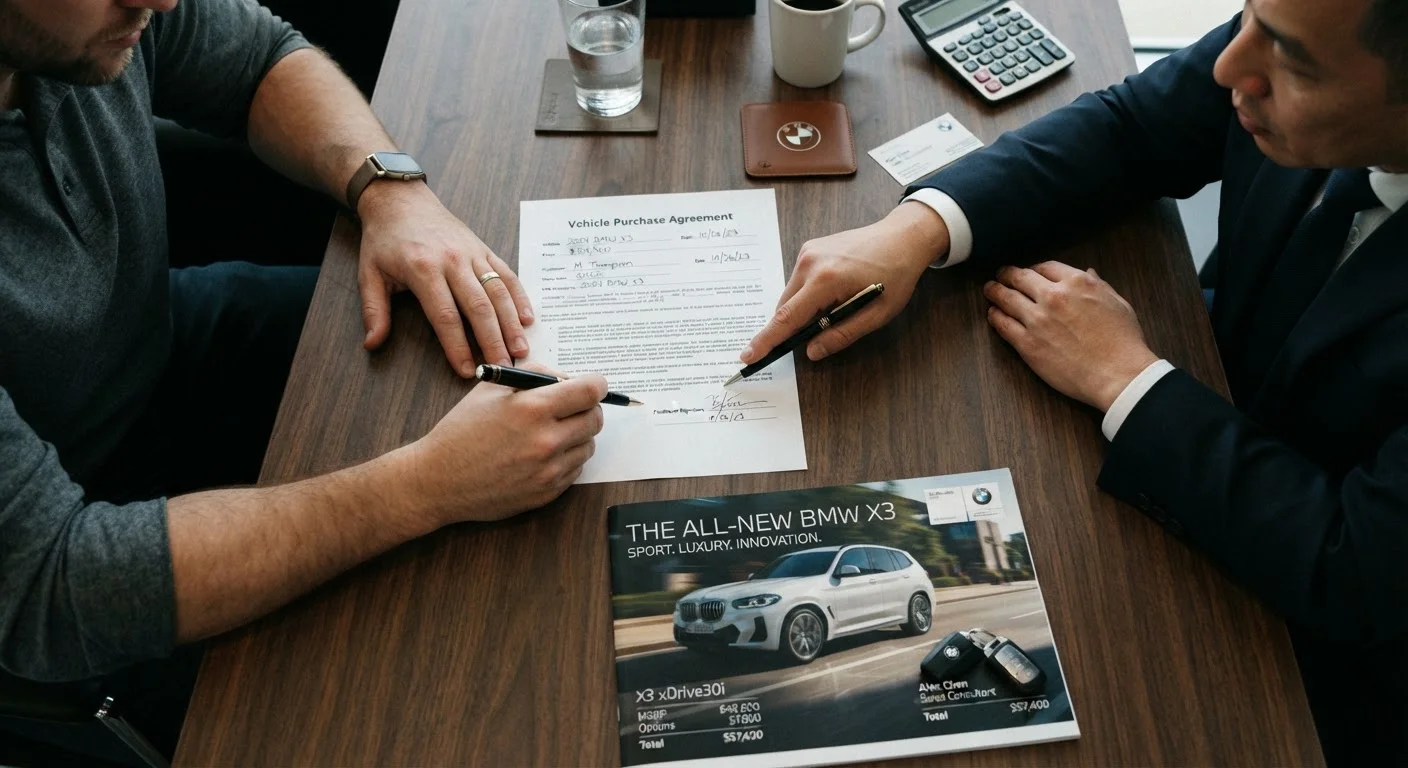
Read every document before signing. Verify that the interest rate, loan term, sale price, and any agreed-upon extras match what was discussed. The full checklist of what to review before signing at a dealership covers the specific documents and numbers to confirm.
Don't let time pressure push you into signing something you haven't read. A legitimate sale will still be there after you've taken a few minutes to review the paperwork carefully.