
What the Monroney Label Actually Is
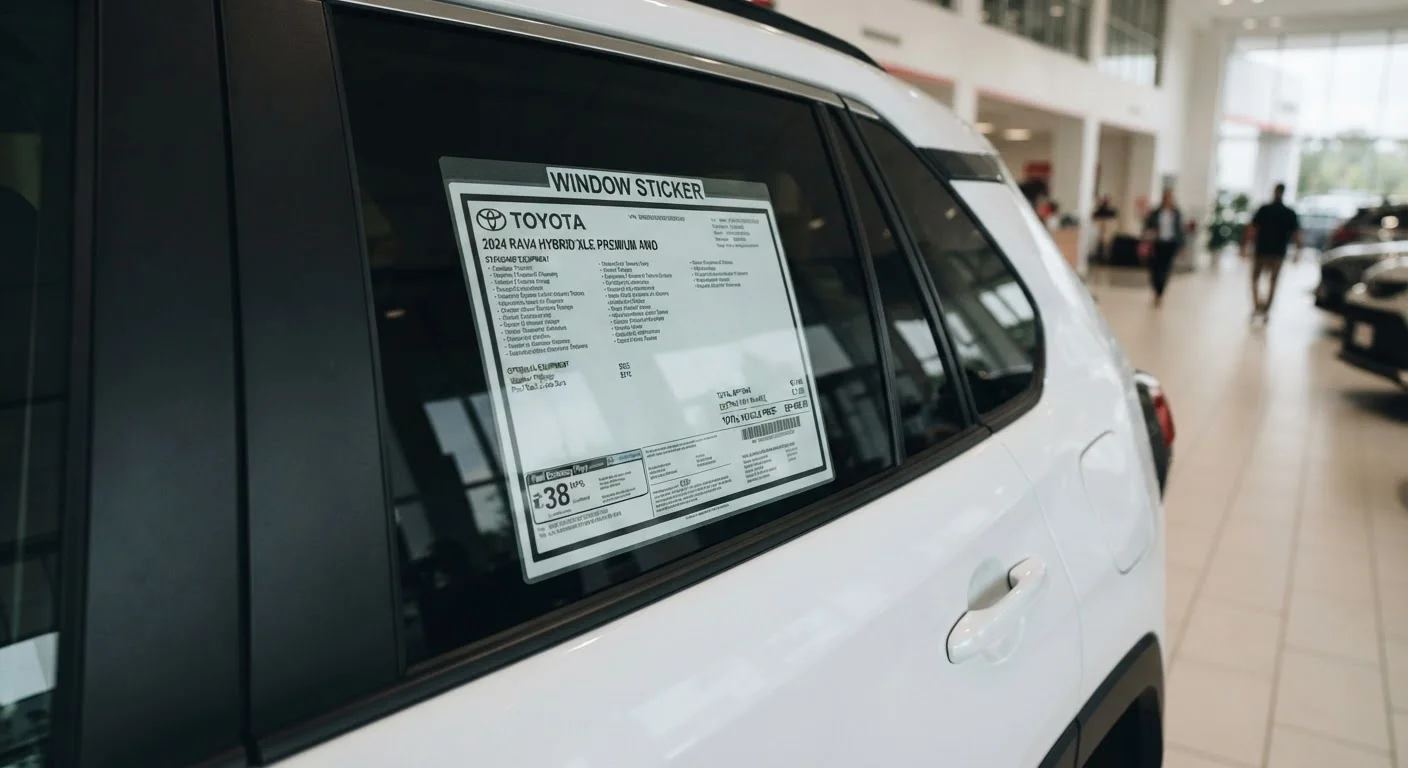
That large printed label on the side window of every new car is officially called the Monroney label, named after the U.S. senator who helped pass the law requiring it. Federal law mandates that every new passenger vehicle sold in the United States display one — and it must stay on the car until the buyer removes it. That makes it one of the most reliable sources of factual information you'll encounter during the car-buying process.
The label is produced by the manufacturer, not the dealership. That distinction matters: the information on it is standardized and regulated, so you can use it to make apples-to-apples comparisons between different vehicles on different lots. Before you do your research before visiting a dealership, knowing how to decode this label is one of the most practical skills you can develop.
Breaking Down Each Section of the Label
The label has several distinct zones. Here's what each one tells you:
Vehicle Identification and Basic Info
At the top, you'll find the make, model, trim level, and a VIN (Vehicle Identification Number — a unique 17-character code assigned to that specific car). This section also lists the country and plant where the vehicle was assembled.
MSRP and Pricing
The MSRP (Manufacturer's Suggested Retail Price) is the manufacturer's recommended selling price. It is not the price you must pay. Dealers can sell above or below MSRP depending on market conditions and negotiation. The base price, any optional packages, destination and delivery charges, and a total MSRP are each broken out separately — which makes it easy to see exactly what's driving the final number.
Standard Equipment
This section lists every feature included in the base trim at no extra charge: safety systems, infotainment features, engine specs, and more. Read this carefully before getting excited about a feature — if it's not here, it likely costs extra.
Optional Equipment and Packages
Below the standard equipment list, you'll find any options the dealer ordered on this specific vehicle — upgraded audio, tow packages, appearance packages, and so on. Each line item shows its individual cost, which is how the total MSRP gets built up. This is also where dealer-installed accessories sometimes appear, so look closely.
Bring a Comparison When You Shop
Before visiting the lot, look up the Monroney label information for vehicles you're considering on the manufacturer's website or fuel economy data on fueleconomy.gov. Walking in with printed comparisons lets you evaluate quickly and confidently without relying on a salesperson's summary.
EPA Fuel Economy
A prominent section of the label displays the EPA's estimated fuel economy in MPG (miles per gallon) for city driving, highway driving, and a combined average. These numbers come from standardized laboratory tests, so your real-world mileage will vary based on how and where you drive. Use them to compare vehicles — not to calculate your exact monthly fuel bill. The label also shows an estimated annual fuel cost based on average driving assumptions.
Safety Ratings
If the vehicle has been tested by the NHTSA (National Highway Traffic Safety Administration) or the IIHS (Insurance Institute for Highway Safety), summary ratings may appear here. Not all vehicles will have ratings at the time of sale, particularly new or recently redesigned models.
Emissions
This section shows the vehicle's emissions certification category. For most buyers, this is background information, but it matters if you're in a state with stricter emissions standards.
Using the Sticker to Make a Smarter Decision
Once you can read the label fluently, use it actively. Compare the total MSRP against your pre-set budget. Add up the optional packages to see whether those extras reflect your actual priorities or just the dealer's inventory choices. Cross-reference the fuel economy estimate against how many miles you drive annually to get a rough sense of ongoing costs — and for a fuller picture of what ownership will actually run you, see our guide on the real cost of owning a car beyond the sticker price.
The sticker is also useful for catching discrepancies. If a salesperson describes features that don't appear anywhere on the label, ask for clarification in writing. And when you're ready to move forward, knowing the label inside and out will make the next steps — reviewing the paperwork, understanding the final numbers — significantly less stressful. See our walkthrough on what to do at a dealership before you sign anything for guidance on that stage of the process.