
The Real Cost Gap: What the Numbers Actually Suggest
When Americans compare Europe travel costs, the instinct is to look at airfare — and transatlantic flights to London or Paris are often cheaper than flights to Warsaw or Bucharest, simply because of route competition. That can make Western Europe seem like the smarter play. But the airfare is usually a one-time cost. Daily spending is where the gap becomes stark.
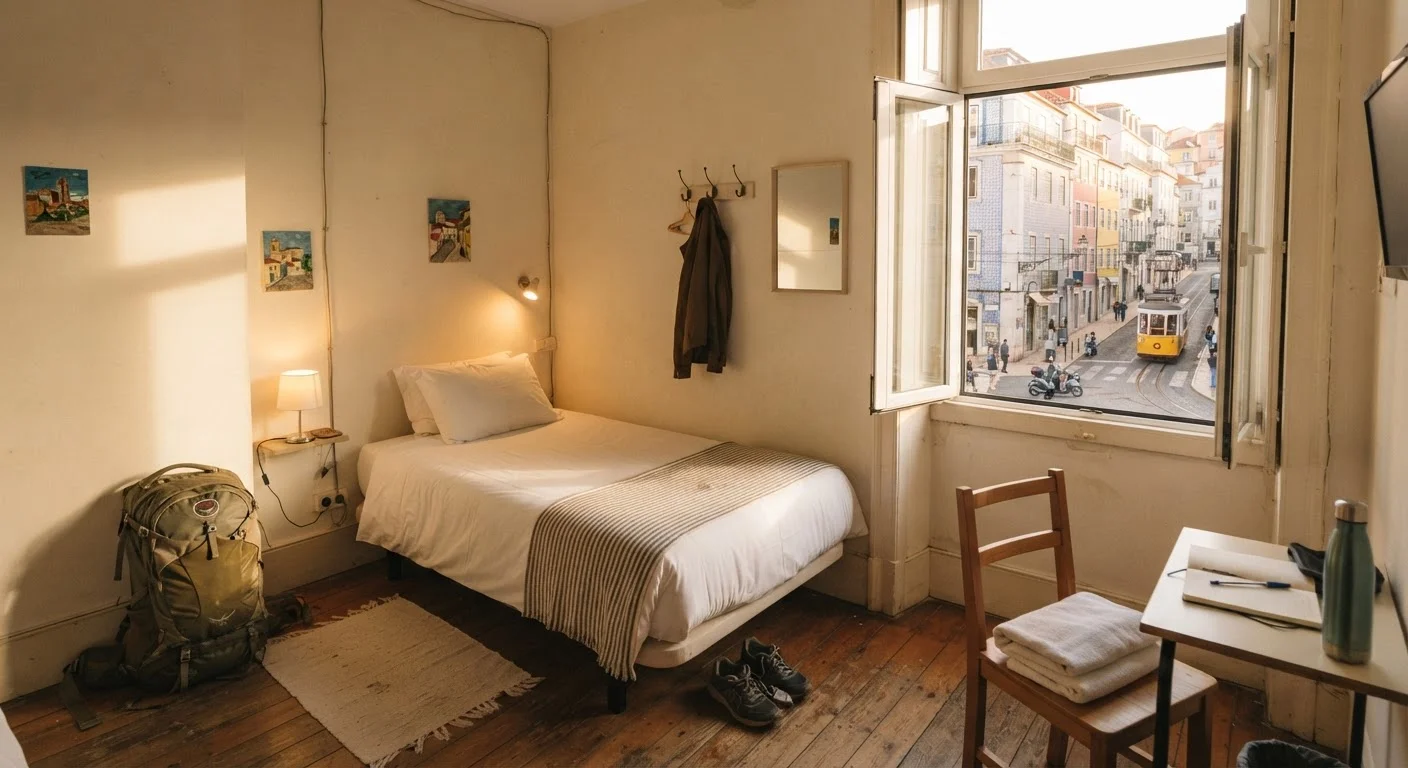
In cities like Prague, Kraków, or Riga, a sit-down meal at a quality local restaurant might run $8–$14 per person. A private room in a well-reviewed guesthouse can cost $35–$60 per night. Public transit day passes often fall under $5. In contrast, equivalent experiences in Paris, Zurich, or Copenhagen routinely cost two to three times as much. Budget travelers frequently report that $80–$100 per day is comfortable in Eastern Europe, while the same lifestyle requires $150–$200 or more in Western European capitals.
That gap compounds fast over a 10- or 14-day trip. Understanding this dynamic is the foundation of any honest Europe comparison — and it's explored in detail in our framework for evaluating destination value.
| Criterion | Western Europe | Eastern Europe |
|---|---|---|
| Average daily budget (mid-range traveler) | $150–$220+ | $70–$110 |
| Sit-down restaurant meal (per person) | $20–$40 | $8–$16 |
| Mid-range private room per night | $100–$180 | $35–$70 |
| City public transit day pass | $8–$18 | $2–$6 |
| US transatlantic flight availability | More routes, more competition | Fewer direct routes from US |
| English-language accessibility | Very high in cities | Moderate; varies by country |
| Inter-city rail reliability | Excellent; high-speed options | Good in major corridors; slower elsewhere |
| Peak season crowd levels | Very high at top sites | Lower overall; growing in capitals |
Infrastructure, Convenience, and the Hidden Costs of Getting Around
Western Europe's transportation infrastructure is a genuine advantage. Rail networks in France, Germany, and the Netherlands are fast, frequent, and deeply integrated. Booking a multi-city Western European itinerary by train is relatively seamless, though high-speed rail tickets can be expensive without advance planning.
Eastern Europe's train network is improving but uneven. Routes between major cities — Warsaw to Kraków, Budapest to Vienna, Prague to Berlin — work well. But travel between smaller Eastern European cities may require longer journey times or connecting buses. Budget airlines like Wizz Air and Ryanair have expanded connectivity significantly across the region, often with very low base fares, though baggage fees and airport locations (many serve secondary airports outside city centers) add friction.
For travelers willing to plan carefully, the Eastern European transit picture is manageable and often inexpensive. For those who prefer point-to-point simplicity without logistics research, Western Europe reduces that burden — at a price.
40–60%
Typical daily cost reduction in Eastern vs. Western Europe
Budget travel analysts and cost-of-living indices such as Numbeo consistently show Eastern European cities running significantly cheaper across accommodation, food, and transit categories.
$35–$70
Typical nightly private room cost in Eastern European cities
Guesthouses and mid-range hotels in cities like Kraków, Sofia, and Vilnius regularly fall in this range, compared to $100–$180+ in equivalent Western European cities.
2–3x
Approximate cost multiplier for comparable meals in Western Europe
A sit-down lunch that costs $10 in Warsaw or Budapest can cost $25–$30 or more in Paris, Amsterdam, or Zurich for a similar level of quality and service.
Where Eastern Europe Delivers Exceptional Value
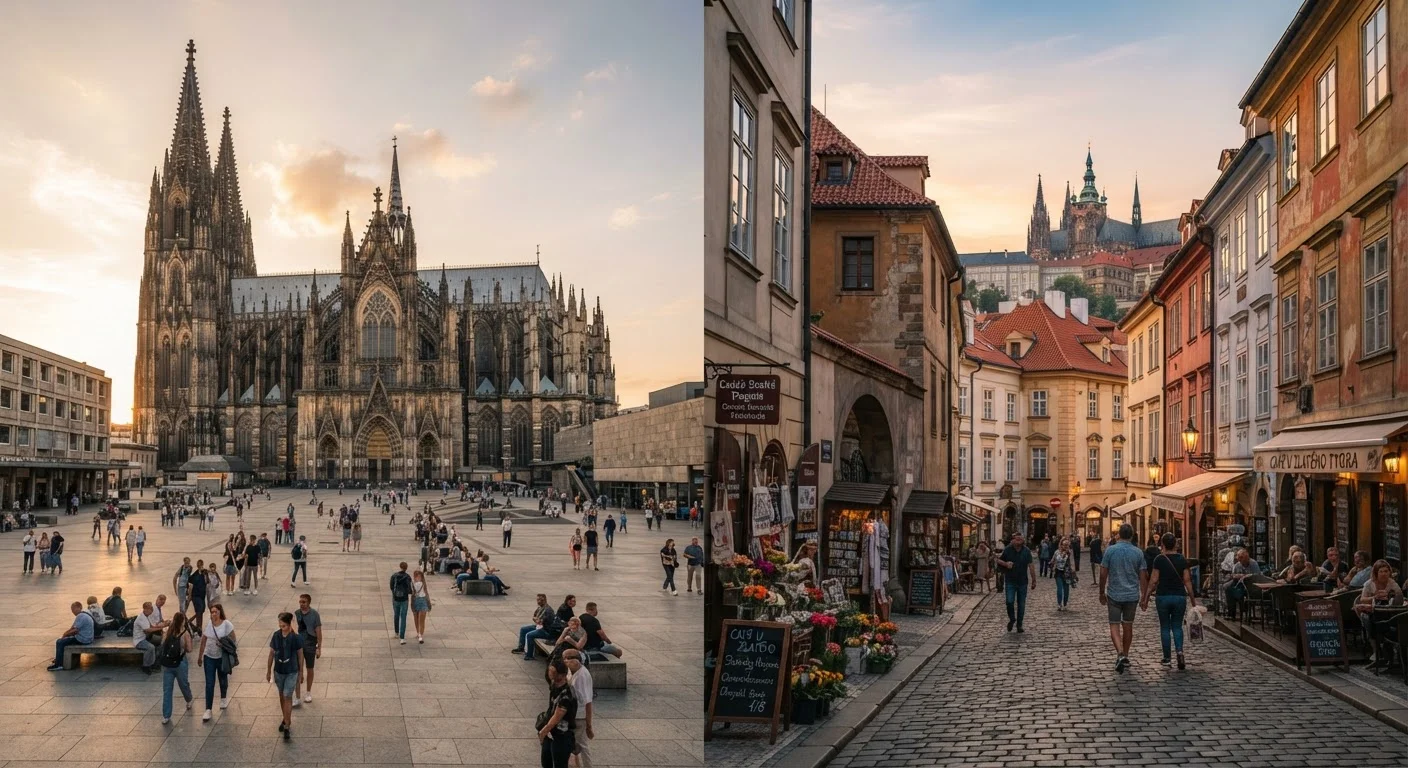
Certain Eastern European destinations consistently punch above their weight in terms of the experience-to-cost ratio. Budapest, Hungary offers thermal baths, a UNESCO-listed riverfront, and a thriving food scene at prices that feel almost anachronistic by Western standards. Kraków, Poland gives travelers medieval architecture, Wawel Castle, and access to Wieliczka Salt Mine — a full cultural itinerary — for daily budgets that would barely cover lunch in London. Tbilisi, Georgia (often grouped with broader Eastern Europe travel corridors) offers extraordinary cuisine, wine culture, and mountain access at some of the lowest costs on the continent.
The Baltic capitals — Tallinn, Riga, and Vilnius — each have well-preserved old towns, distinct cultural identities, and costs that remain well below Western European averages, though they've crept upward as tourism has grown. The value advantage is strongest if you travel outside July and August, when prices spike across popular Eastern European cities.
Travelers who commit to a single destination for an extended stay amplify these savings considerably. Our piece on slow travel and cost savings breaks down exactly how that math works in practice.
When Western Europe Still Makes Sense on a Budget
Western Europe isn't uniformly expensive. Portugal — particularly cities like Porto and smaller towns in the Alentejo region — remains more affordable than its western European peers. Southern Spain outside peak season offers competitive accommodation costs. Rural Italy and Greece, away from the heavily touristed islands and cities, can be approached on a moderate budget with the right lodging strategy.
Additionally, if your itinerary centers on experiences that simply don't exist elsewhere — the Vatican Museums, the Anne Frank House, the Alhambra — the premium may be unavoidable and worth budgeting for deliberately. The honest framing is that Western Europe requires more planning to travel affordably, not that it's impossible.
Accommodation choices are one of the biggest levers regardless of region. The strategies outlined in our guide to stretching accommodation dollars apply across both regions and can meaningfully reduce the cost gap. For Americans building an entire trip from scratch, the end-to-end budget trip planning guide covers the sequencing — from destination selection through daily spending management — in practical terms.
Travel costs, visa requirements, and local conditions change regularly. Always verify entry requirements, current pricing, and travel advisories through official government and tourism sources before booking.