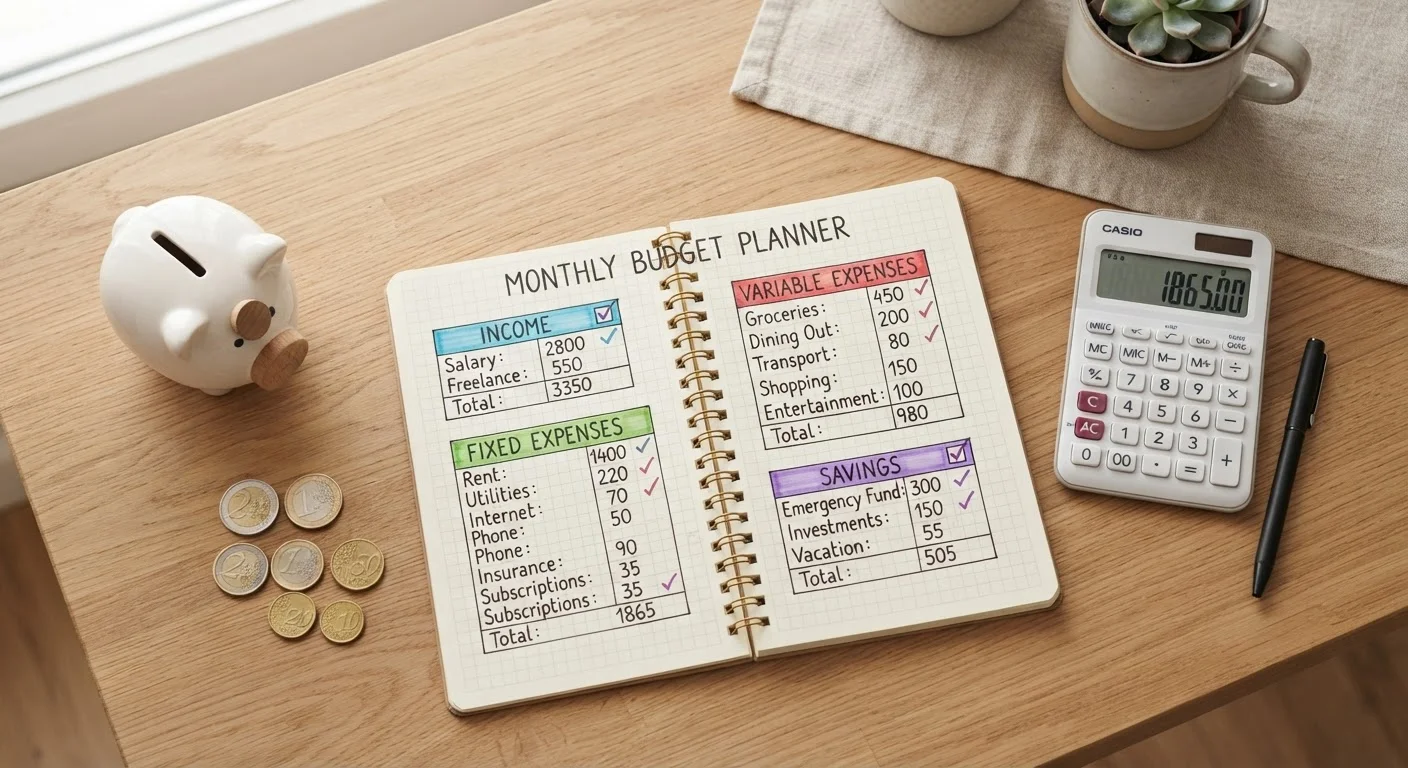
A practical checklist to help you confirm your financial footing before aggressively directing money toward paying down debt.
Key Takeaways
A starter emergency fund should generally be in place before you aggressively pay down debt.
Minimum payments on all accounts must never be skipped, even while building savings.
High-interest debt typically costs more over time than low-yield savings earn.
Your job stability and income predictability matter when choosing how much extra to pay.
A written budget helps you find real dollars to redirect — guesswork rarely does.
Why This Checklist Matters
The urge to throw every spare dollar at debt is understandable — especially when interest charges show up on every statement. But paying down debt aggressively without checking your financial footing first can leave you one car repair away from putting new charges right back on a card.
This checklist is designed to slow you down just enough to ask the right questions. It is general financial information, not personalised financial advice — for guidance on your specific situation, consider speaking with a licensed financial professional.
Confirm you have at least $500–$1,000 set aside in a liquid account before directing any extra money toward debt.Must
Check whether that emergency fund is kept separate from your everyday checking account to reduce the temptation to spend it.Should
Assess whether your job or income is stable — if it's unpredictable, aim to build your starter fund higher before accelerating payoff.Should
Minimum Payments and Account Standing
Verify that you are current on minimum payments for every debt account — missed minimums trigger fees and credit damage that erase the gains of extra payments.Must
Review each account's interest rate and note which debts cost you the most per month.Must
Check whether any accounts are past due or in collections, as those typically need attention before anything else.Must
Budget and Cash Flow Review
Write down your take-home income for the month and subtract all fixed essential expenses (rent, utilities, groceries, insurance).Must
Identify any non-essential spending categories where you could realistically free up dollars to redirect toward debt.Should
Confirm that the extra debt payment amount you have in mind leaves enough buffer for irregular but predictable expenses (car registration, annual subscriptions, etc.).Must
Review the last two months of bank statements to validate that your cash flow picture matches what you think it is.Should
Upcoming Expenses and Life Events
List any large known expenses in the next three to six months — medical bills, home repairs, travel — and estimate their cost.Must
Factor in whether your household has any major life changes on the horizon (job change, new baby, moving) that could affect income or expenses.Should
Consider whether any insurance deductibles or out-of-pocket costs are likely to come due soon before locking in a higher debt payment.Nice to have
Employer and Tax Considerations
Check whether your employer offers a retirement match that you are not yet capturing — an uncaptured match is an immediate return you may be leaving behind.Should
Note whether any of your debts (such as federal student loans) may carry tax-deductible interest, and factor that into which debt to prioritize — a tax professional can clarify your situation.Nice to have
Final Readiness Check
Confirm that your intended extra payment is a specific dollar amount tied to your budget, not just a vague intention to "pay more."Must
Decide in advance which debt receives the extra payment and why — whether you're using the avalanche method (highest interest first) or snowball method (smallest balance first).Should
Set a calendar reminder to revisit this checklist in 60 to 90 days to see whether your financial situation has changed.Nice to have
Tools You'll Need to Get Started
You don't need sophisticated software to run through this checklist. A few straightforward resources will cover everything.
Required
Recent bank and credit card statements
Gives you accurate income, spending, and balance data to work from rather than estimates.
Required
A simple spreadsheet or budgeting notebook
Lets you record monthly cash flow, debt balances, and interest rates in one place.
Required
A free credit report
Helps you confirm all your debt accounts and check whether any are past due or in collections.
Optional
A basic loan amortization calculator
Shows how much interest you'll save by making extra payments at different amounts — many are available free online.
Once you have these on hand, set aside 20 to 45 minutes without interruptions. Being thorough now prevents expensive course-corrections later.
How to Use Your Results
After working through the checklist, you'll have a clearer picture of whether your situation actually supports aggressive debt payoff right now — or whether a split approach makes more sense.
If your emergency fund is thin, consider pausing extra debt payments temporarily to build it to at least one month of essential expenses. The emergency fund basics article explains why this step tends to come first, even when you're carrying debt.
If your foundation looks solid, you're ready to decide how much extra to direct toward debt each month. Our article on splitting your paycheck between saving and debt walks through practical ways to divide your income without leaving yourself exposed.
Don't Skip Minimums to Make Extra Payments
Paying more than the minimum on one account while falling behind on another is a net negative. Late fees, penalty interest rates, and credit score damage can cost far more than any interest savings you achieve. Always cover every minimum payment first, then direct any surplus to your chosen payoff target.
This article is for general informational and educational purposes only and does not constitute personalised financial, tax, or legal advice. Consult a qualified financial professional before making decisions about your own situation.
Personal Finance Editorial Team is the collective byline for our editorial team and contributor network. Articles published under this byline or an editorial pen name are researched, written, and reviewed according to our editorial standards for clarity, consistency, and independence before publication.
The content provided on our blog site traverses numerous categories, offering readers valuable and practical information. Readers can use the editorial team’s research and data to gain more insights into their topics of interest. However, they are requested not to treat the articles as conclusive. The website team cannot be held responsible for differences in data or inaccuracies found across other platforms. Please also note that the site might also miss out on various schemes and offers available that the readers may find more beneficial than the ones we cover.